Top Sports Centres That Have Become Global Architectural Icons
From gravity defying stadiums to community driven sporting spaces these architectural icons prove that the greatest competitions begin long before the first whistle
Sport has always been about precision. The perfectly timed sprint, the impossible angle of a tennis serve, the split second between victory and defeat. But sometimes the real masterpiece is not happening on the pitch or inside the court. Sometimes, it is the building itself. Across the world, architects have started treating sports venues not merely as places where people run, jump, kick and compete, but as living sculptures that capture the drama of human ambition. These are spaces where engineering meets emotion, where concrete learns movement and where a stadium can become as unforgettable as the champions who perform inside it. From mountains carved into football grounds to floating arenas that appear to defy gravity, these architectural marvels prove that sport is not just a game. It is a spectacle, and sometimes the greatest player on the field is the building itself.
Braga Municipal Stadium, Braga, Portugal
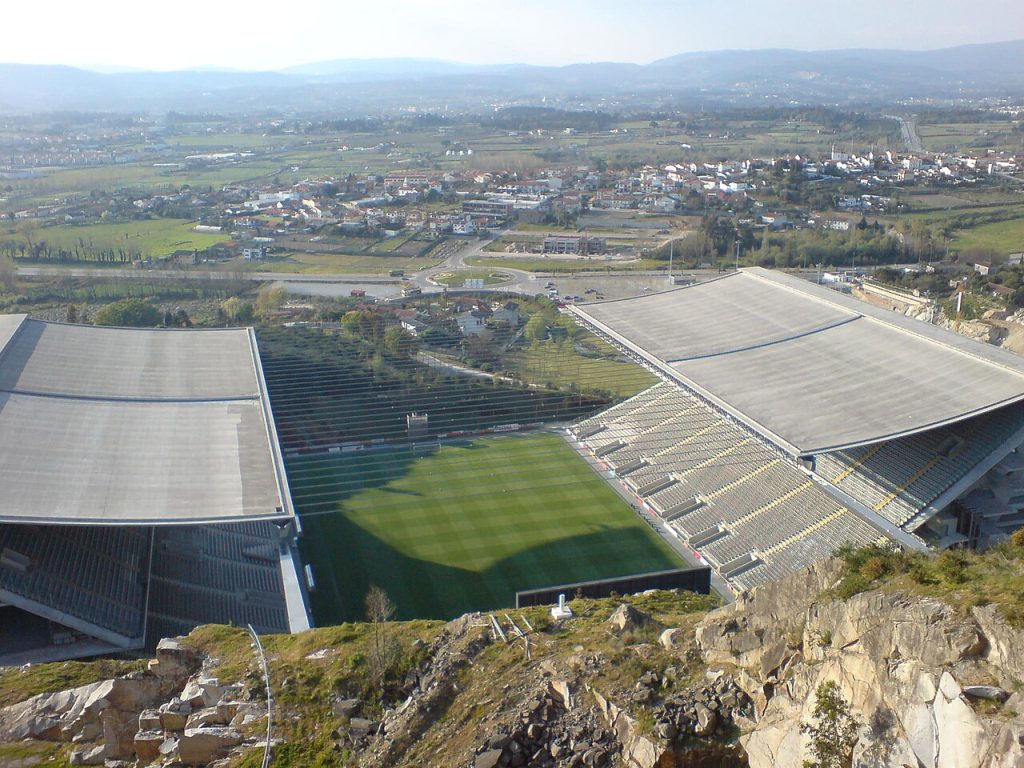
Perched dramatically against the Monte Castro quarry, the Estádio Municipal de Braga feels less like a football stadium and more like someone decided to cut a piece of a mountain and place a pitch inside it. Designed by Eduardo Souto de Moura, the stadium rejects the usual idea of four enclosed stands and instead uses two enormous concrete grandstands connected by steel cables inspired by ancient bridges. The result is wonderfully theatrical. Every match feels like a performance staged between rock, sky and architecture. It is proof that football grounds do not need to shout to make an impression. Sometimes, the smartest design simply lets nature join the team.
Also Read: Meet Hiroshi Nakamura, the Visionary Architect Behind Viral Architectural Icons
Tennis de La Cavalerie, France
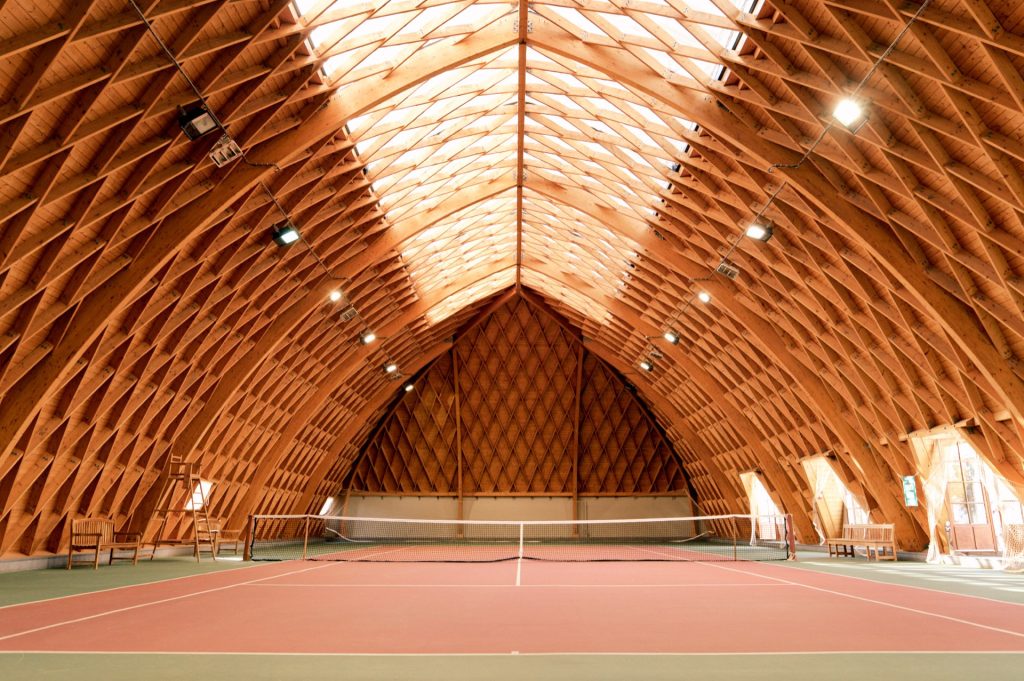
Tennis courts are usually places where elegance and precision meet, and Tennis de La Cavalerie in Paris takes that philosophy beyond the baseline. The design celebrates the rhythm of the game, where every movement matters and every centimetre counts. Unlike giant stadiums built to dominate skylines, this venue focuses on harmony, creating a refined environment where architecture quietly supports the sport. It is a reminder that tennis is not only about power. It is about control, patience and intelligence, and the surrounding space reflects exactly that.
Yoyogi National Stadium, Japan
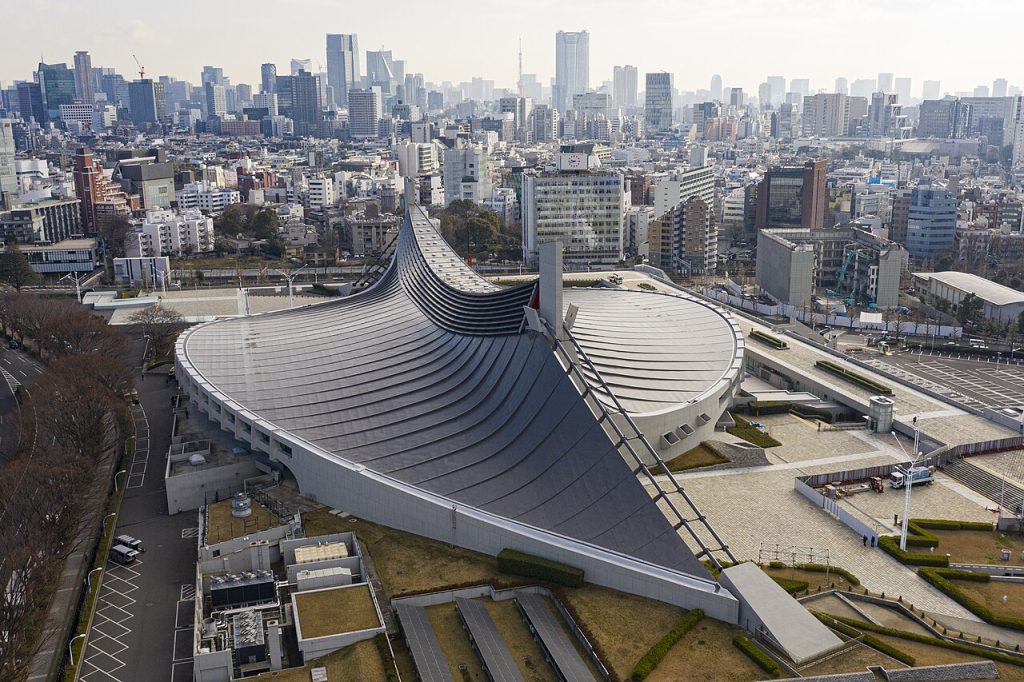
Built for the 1964 Summer Olympics, Yoyogi National Stadium remains one of the most beautiful examples of sports architecture ever created. Designed by Kenzo Tange, its sweeping suspended roof gives the building a sense of motion, almost as if it is frozen mid flight. The structure uses engineering brilliance to create a space that feels both futuristic and timeless. Decades later, it still looks like the kind of place where the future arrived early, parked itself, and decided to stay.
Also Read: Libraries That Became Architectural Marvels Around The World
Arena do Morro, Brazil
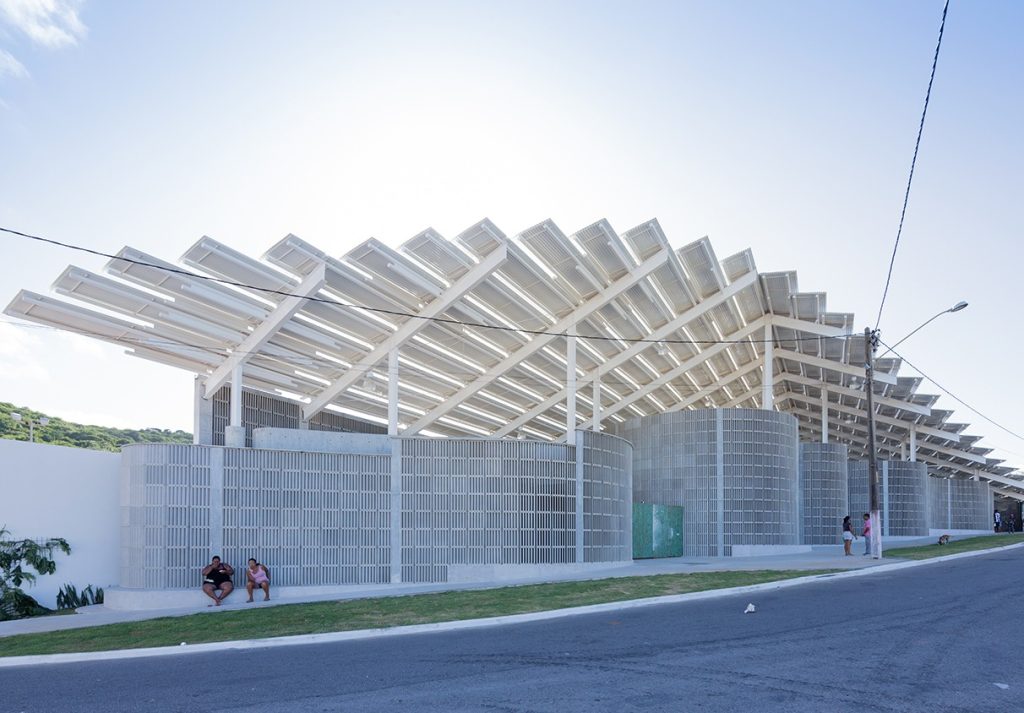
In Natal, Brazil, Arena do Morro proves that great sports architecture does not always need massive budgets or towering structures. Built within a local community, the arena transforms an ordinary neighbourhood space into a vibrant hub for football, basketball and everyday life. Its open design allows air and light to flow naturally, creating a venue that feels connected to its surroundings rather than separated from them. It is architecture with a purpose, showing that the most powerful stadiums are not always built for millions of spectators but for the people who actually use them.
BIT Sports Centre, China
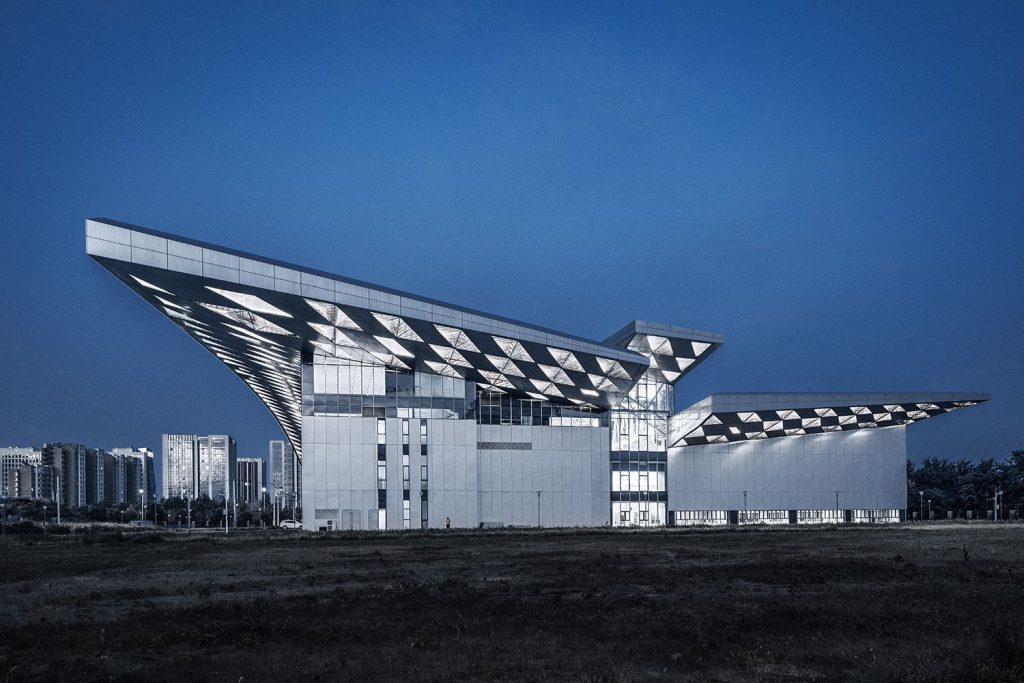
The BIT Sports Centre represents the modern Chinese approach to sports architecture, where technology, efficiency and bold design come together. Created as a multifunctional sporting space, it blends advanced engineering with a clean contemporary aesthetic. The building is designed not only for competition but for community, education and daily activity. It reflects the changing role of sports centres around the world. They are no longer just places where athletes arrive, perform and leave. They have become cultural landmarks where architecture itself becomes part of the experience.
The greatest sports venues are not simply containers for competition. They are monuments to movement, ambition and human creativity. Long after the final whistle, the scoreboards go dark and the crowds disappear, these buildings remain, quietly proving that sometimes the greatest victories happen before the game even begins.