Interview | Pupul Sagar On PALETTE INFINITO: Celebrating 30+ Indian Artists Through Paintings And Sculptures
The curator behind Sagar's Art Stream on building Palette Infinito, curating her own father's work, and why great exhibitions begin long before the art goes up
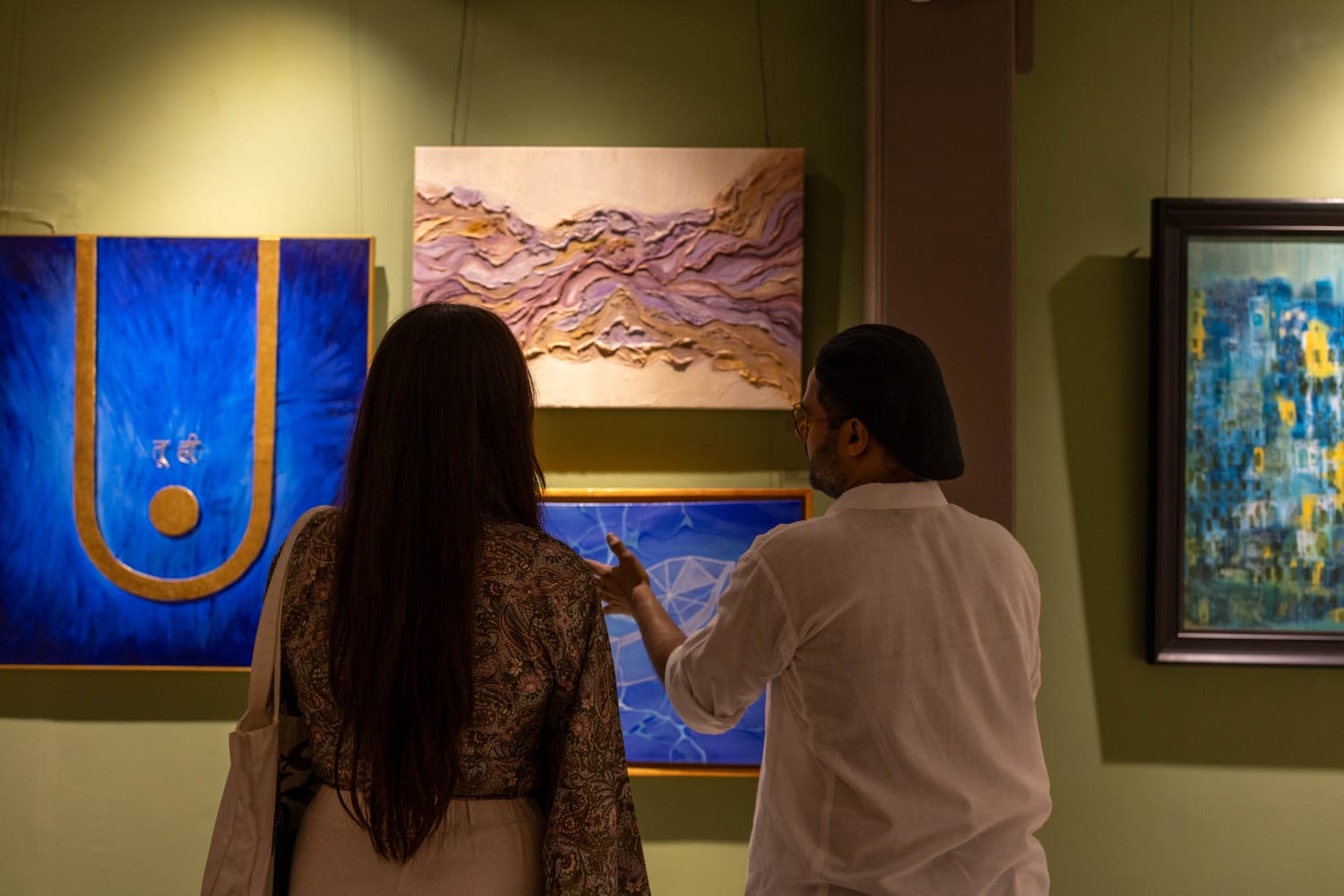
Walk into most group art exhibitions and you can usually guess the logic behind the wall placements within a few minutes: similar styles together, familiar names up front, a predictable route from entrance to exit. Pupul Sagar doesn’t work that way. For Palette Infinito, the curator behind Sagar’s Art Stream chose to bring together four markedly different artists, her own father Romendra Sagar among them, alongside Lalu Prasad Shaw, Gavlav and Mahesh Karambele, and let their differences do the work rather than smoothing them into something safely cohesive. The result, currently on view at Gallery West End in New Delhi, is less a display than a deliberately engineered conversation, one built on negative space, unexpected pairings and the belief that a viewer should discover a show rather than be led through it. Outlook Luxe had a conversation with Pupul Sagar, Art Curator, Sagar’s Art Stream, on the idea behind Palette Infinito, and why she believes an artist’s palette is never truly finite, and how she thinks about sequencing a room full of very different visual languages into one coherent journey.
Palette Infinito brings together artists as different as your father Romendra Sagar, Lalu Prasad Shaw, Gavlav and Mahesh Karambele under one roof. What was the curatorial idea that made this particular mix work?
Pupul Sagar: For me, the idea was never to bring together artists who looked alike. The four masters bring very distinct artistic languages and established perspectives, while the curated artists add another layer of contemporary expression to the exhibition.
The intention was to create a dialogue between different generations, sensibilities and approaches to art. The common thread is individuality, quality and a strong point of view, allowing each artist to retain their own identity while contributing to one larger visual experience.

The name itself, “Palette Infinito,” suggests something boundless. What was the concept you were building toward when the exhibition took shape?
PS: “Palette Infinito” came from the belief that an artist’s palette is never really finite. It is not simply about colours on a canvas. It is about experiences, memories, ideas, emotions, influences and the way an artist chooses to interpret the world.
The infinity symbol was important to me because art itself is constantly evolving. One work can mean something completely different to you five years from now, or even when you see it again after five months. So the idea behind Palette Infinito was to celebrate that endless possibility. Different artists, different visual languages, different interpretations, but no fixed boundary around what art has to be.
Also Read: Marta Maccaglia: The Italian Architect Transforming Lives Through Design in Peru
Curating a show that includes your own father’s work must come with its own dynamic. How did you navigate that as both daughter and curator?
PS: It is certainly a unique dynamic, and I am very conscious of it. As a curator, I have to look at his work independently of my relationship with him. Being his daughter gives me an intimate understanding of his journey and thought process, but that cannot replace curatorial judgement. If anything, I probably become more critical because I want his work to stand on its own merit and hold its place in conversation with the other artists. There is, of course, an emotional layer to presenting his work, but I see that as part of my journey as a curator rather than a conflict.
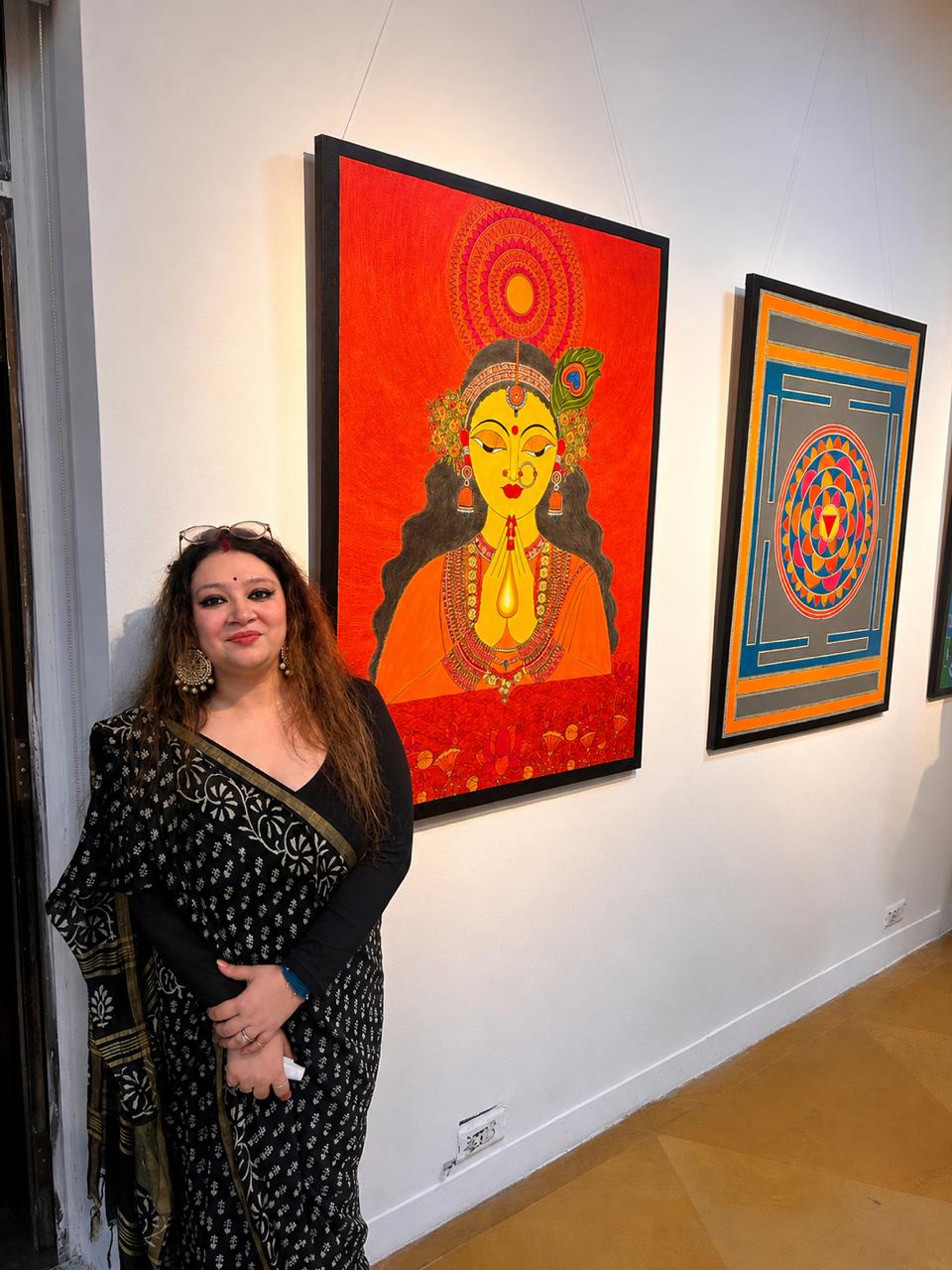
Beyond simply hanging the works, you’ve spoken about creating “distinctive concepts” around exhibitions. What did that look like in practice for this show, from the gallery layout to the audience’s experience of walking through it?
PS: I don’t believe an exhibition begins when the artwork is put on the wall. The experience begins much earlier. For Palette Infinito, we thought about the entire journey: how someone enters the space, what they see first, how the works interact with one another, where the eye naturally travels and where a conversation might happen.
I come from branding and storytelling, so I naturally think in terms of an experience rather than just a display. But the artwork has to remain the hero. The environment should enhance the work, never compete with it. We wanted the show to feel intimate, refined and personal, where a collector could spend time with a work, ask questions and discover something they had not expected to connect with.
Gallery West End in New Delhi is the venue for this exhibition. How did the space itself influence your curatorial choices?
PS: The space was an important part of the conversation because every gallery has its own rhythm, proportions and visual character. Gallery West End gave us an opportunity to create an exhibition that felt intimate rather than overwhelming. I did not want to fill every available wall simply because we had the space. Negative space is also part of curation. It allows a work to breathe and gives the viewer the time and distance to engage with it.
The gallery also allowed us to create different visual moments without making the exhibition feel fragmented. That helped us maintain the diversity of the artists while still creating a cohesive overall experience.
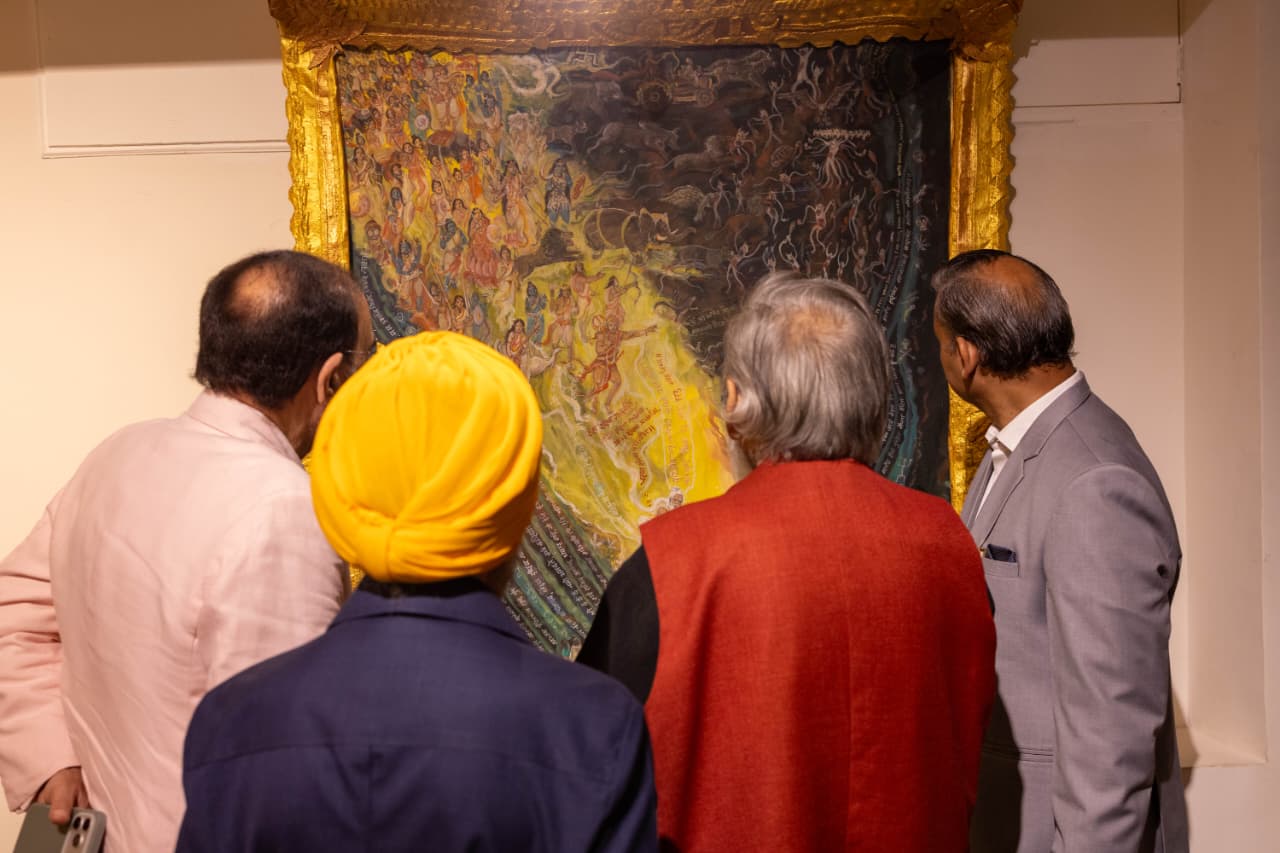
With four artists working across such different styles and sensibilities, how did you sequence or group the works to create a coherent visual journey for visitors?
PS: We looked at the works in terms of visual conversation rather than simply grouping them by artist. Sometimes two works can have completely different subjects but create an interesting dialogue through colour, form, mood or composition. At other times, placing two similar-looking works together can actually reduce their individual impact.
So the sequencing was about creating pauses, contrasts and transitions. I wanted the viewer to discover the exhibition rather than be given a very predictable route through it. There is also something instinctive about this process. You can plan a wall on paper, but ultimately you have to stand in the space, look at the works together and ask: does this feel right? Does this work have enough room? Does the next work change the conversation? That physical process is a very important part of how I curate.
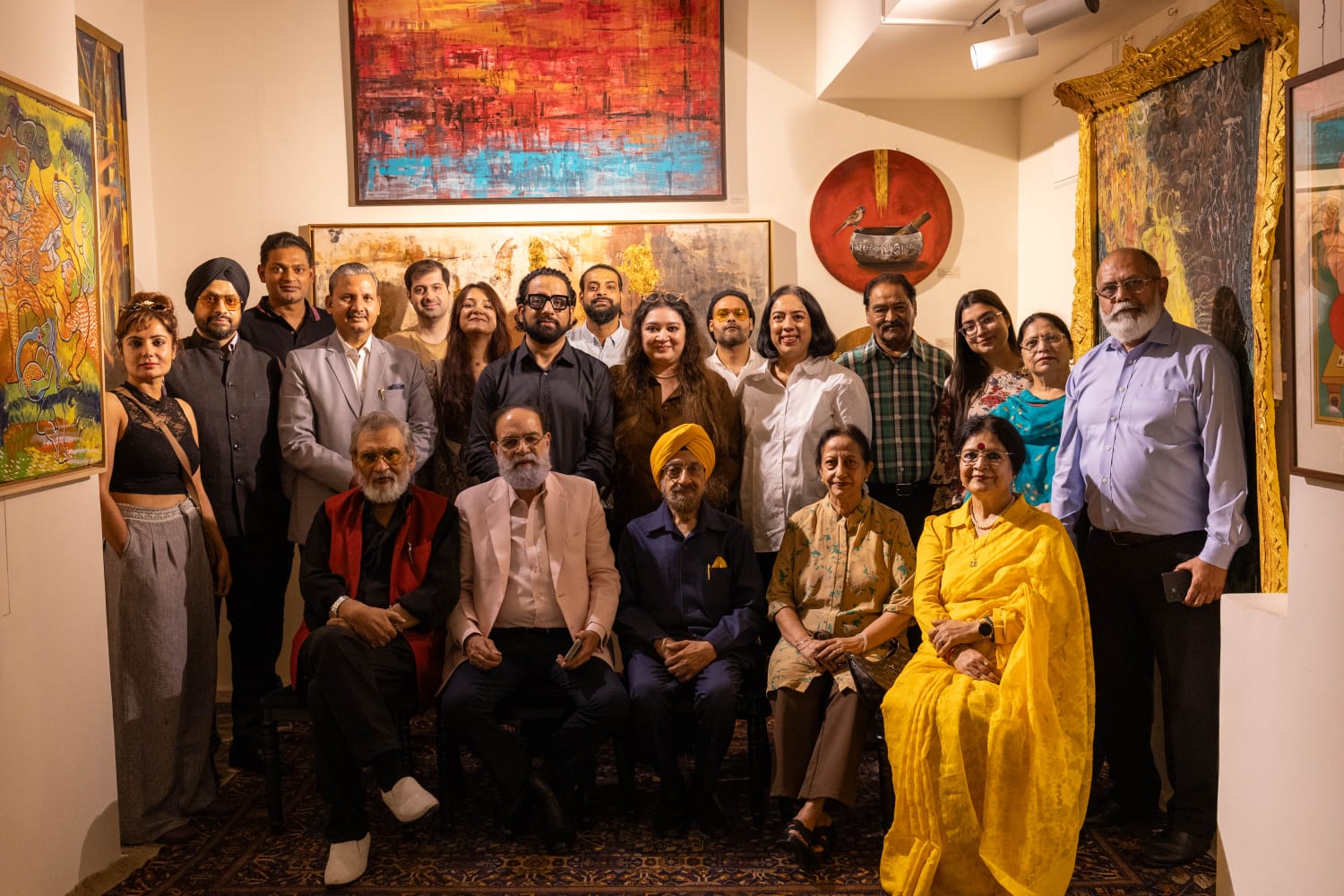
You’ve described your approach to art as shaped by branding and storytelling. How did that background inform the way Palette Infinito was positioned and communicated to audiences and collectors?
PS: My branding background has definitely influenced the way I approach art, but I am very careful about where I draw the line. I don’t believe art should be marketed like a consumer product. What branding has taught me is how to identify a strong idea, articulate it clearly, create a distinctive experience and communicate it consistently. That thinking helped us give Palette Infinito an identity without imposing a commercial narrative on the artists.
I also think storytelling is particularly important in the art world because people don’t only connect with an image. They connect with the artist’s journey, the thought behind a work or the feeling it evokes. My role is to create that bridge between the artwork, the artist and the audience. The decision to connect with a work ultimately has to remain personal.
Sagar’s Art Stream has curated exhibitions across cities from Delhi to Dubai to London. How does the Delhi art audience compare to what you’ve experienced elsewhere, and did that shape this show?
PS: Every audience has its own personality, and I wouldn’t want to reduce that to a simple comparison. Delhi has a very interesting relationship with art because there is a strong cultural ecosystem here, but there is also an audience that appreciates being introduced to artists and work outside the most obvious mainstream conversations.
What I have learned from working across different cities is that collectors everywhere respond to authenticity. The language may change, the setting may change and expectations may change, but genuine engagement with the work remains universal.
For Delhi, we wanted to retain that sense of intimacy. Palette Infinito was conceived as an opportunity for people to spend time with the art, meet people from the cultural and creative community, and have meaningful conversations around the work rather than simply attend an opening and leave.
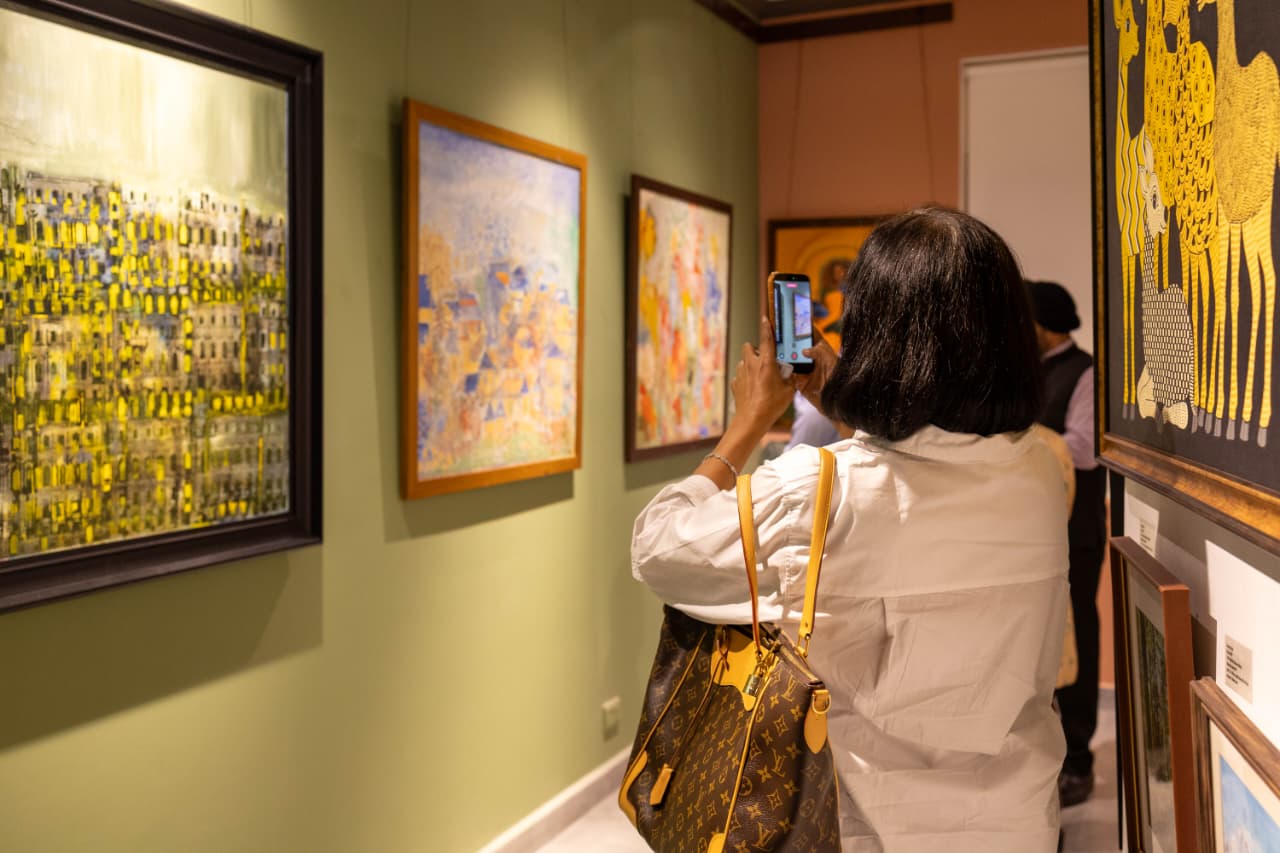
What has the response been so far from collectors and visitors to Palette Infinito?
PS: The response has been very encouraging, particularly in the way people have engaged with the diversity of the exhibition. One thing I have enjoyed is seeing visitors stop in front of works they perhaps would not have immediately chosen based purely on their first impression. That is one of the reasons I love group exhibitions. You come in thinking you know what you like, and another artist or another visual language can suddenly challenge that assumption.
For me, a successful exhibition is not only about immediate sales. Of course, collectors and sales are important to sustaining an artist’s practice, but I also look at the quality of conversations being generated, the new people discovering the artists and whether the exhibition stays with people after they leave.
Is there a particular work or artist in this exhibition that you feel deserves closer attention, and why?
PS: I wouldn’t single out one particular work because each of the artists brings a very different artistic language to the exhibition. As a curator, I would rather let viewers discover what speaks to them personally. Sometimes the work that catches your attention immediately is not necessarily the one you connect with most deeply after spending a little time with it.
Looking at Palette Infinito as a milestone, what does it tell you about where Sagar’s Art Stream is headed next?
PS: I think it tells us that Sagar’s Art Stream is moving increasingly towards creating curatorial experiences rather than simply organising exhibitions. Our vision has always been to create platforms where artists, collectors, cultural communities and new audiences can come together in a meaningful way. We want to continue developing exhibitions and art-led experiences across different spaces and cities, while retaining the intimacy and personal connection that have always been important to us.
Ultimately, I would like Sagar’s Art Stream to be known for thoughtful curation, interesting artistic conversations and for creating experiences that make people curious enough to look a little closer.