Carlos Brana Discusses Innovation, Sustainability, And Growth At Dassault Aviation
India’s private aviation landscape is entering a new era where time, privacy and global connectivity are becoming the ultimate luxuries, and Dassault Aviation’s Falcon 6X represents this shift with a cabin designed like a flying residence
The modern traveller no longer wants to simply fly from one destination to another; they want their journey to continue seamlessly, whether it is a boardroom above the clouds, a private sanctuary between continents or a personalised experience built around their schedule. Among the aircraft leading this transformation is Dassault Aviation’s Falcon 6X, a machine that combines aerospace engineering with the comfort of a luxury residence, offering one of the most spacious cabins in business aviation, advanced digital systems, and long-range capability connecting India with major global destinations. With business aviation demand accelerating across the country and luxury travel expectations evolving, the Falcon 6X represents the next chapter of private flight, where innovation meets craftsmanship at 40,000 feet. Outlook Luxe had an interaction with Carlos Brana, Executive Vice-President, Civil Aircraft, Dassault Aviation, exploring the future of business aviation in India, the growing demand for private jets among a new generation of entrepreneurs and HNIs, and how the Falcon 6X is redefining luxury air travel through advanced technology, exceptional comfort and long-range connectivity.
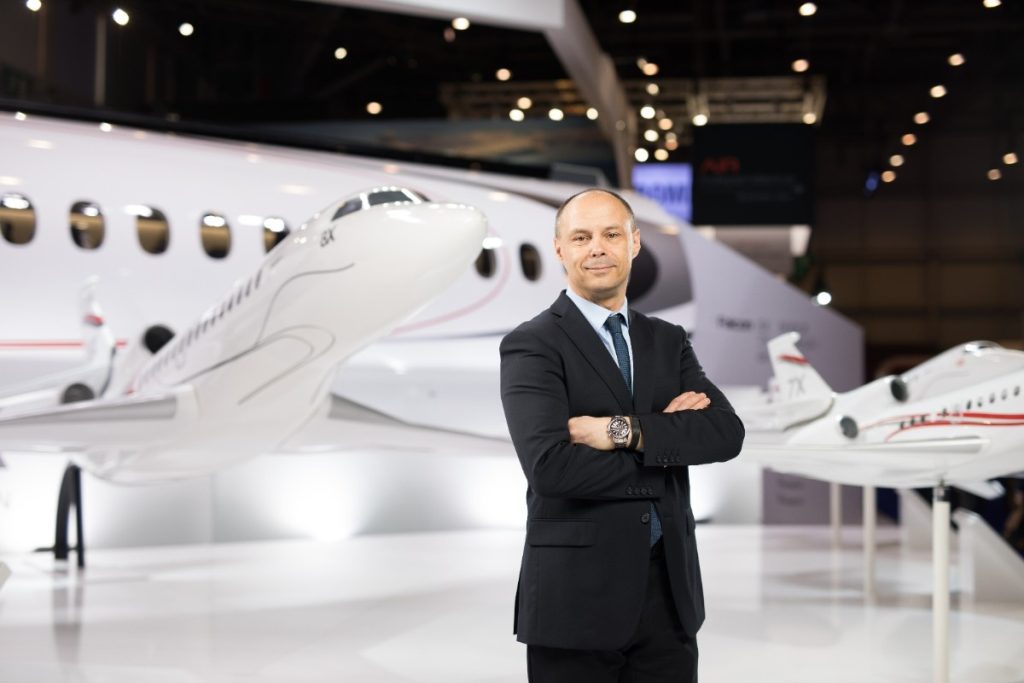
India is now emerging as the fastest-growing business aviation market in the Asia Pacific region. From your perspective, what are the key factors driving this surge in demand for private jets among Indian customers today?
Carlos Brana: India’s business aviation market is the third-largest in Asia Pacific and, undisputedly, the fastest-growing market in the region for business aviation in terms of number of aircraft added. Last year India added 20 business jets, increasing the fleet by 11.9% to 188 from 168, according to the latest Asian Sky data. The large increase in the fleet is due to several factors, starting with the economy. The most popular Dassault business jet in India is the Falcon 2000. The latest model, the Falcon 2000LXS, has 4,000 nautical mile range; sufficient to fly non-stop from Mumbai to anywhere in East Asia, the Middle East, all of Eastern Europe and much of Western Europe. Our newest aircraft in service, the Falcon 6X, has also proven to be popular in India.
There are already two 6X aircraft based in India. The 6X is popular because it has the largest cabin cross-section of any purpose-built business jet in the world, providing more space and comfort. The interior cabin is 1.98m high and 2.58m wide. The aircraft’s 5,500nm range allows you to fly non-stop from Mumbai to anywhere in the Middle East, Europe, and East Asia as well as to nearly all of Africa and Australia. While business jets are primarily used for business travel, business jets are also used for pilgrimage tourism, medical evacuation, destination weddings and mega events, etc. Besides India’s economic growth and need for more efficient modes of transport, another factor driving demand for business jets is clearly the continued growth in the number of high-net-worth individuals residing in India and travelling to India.
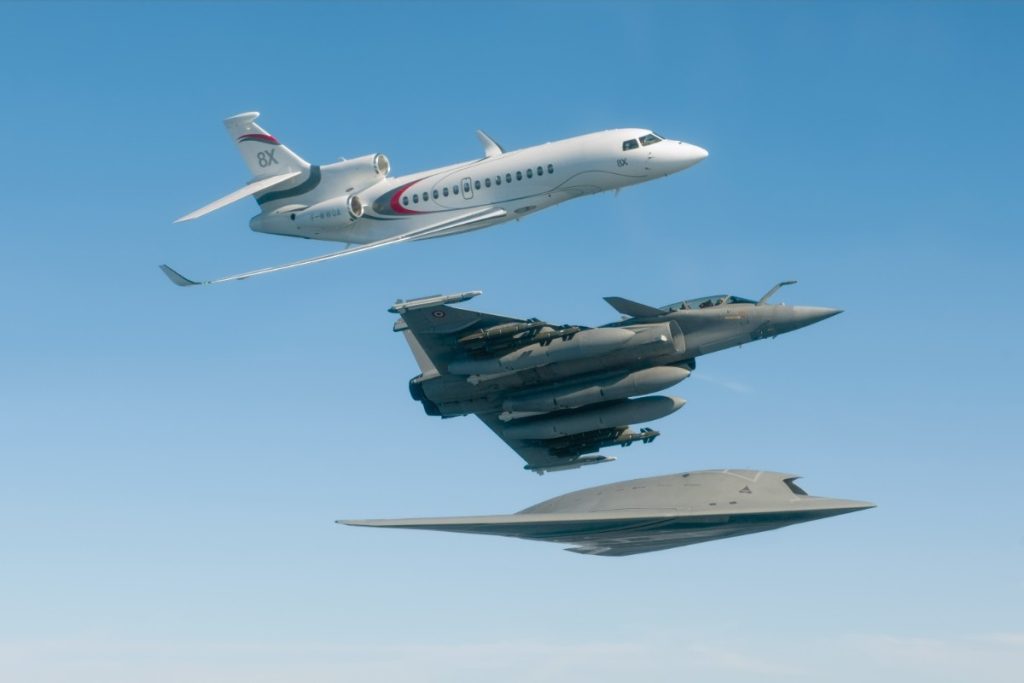
Traditionally, business aviation in India was associated with industrialists and legacy wealth. Are you now seeing a new generation of buyers, such as startup founders, tech entrepreneurs, and younger HNIs, entering the segment?
CB: The profile of the business aviation customer in India has evolved in recent years. While the market has traditionally been driven by ultra-high-net-worth individuals and large conglomerates, we are now seeing a growing interest from younger entrepreneurs, startup founders, and families who value flexibility, time efficiency, and seamless travel.
This shift accelerated post pandemic and has been further supported by the growth of charter operations in India, which have made access to business aviation easier. As per the Asian Sky Charter data, India continued to lead the regional market (South Asian market) with charter fleet rising to 121 aircraft in 2025. As wealth creation and travel priorities continue to evolve in India, business aviation is increasingly being viewed as an enabler of productivity and connectivity rather than luxury.
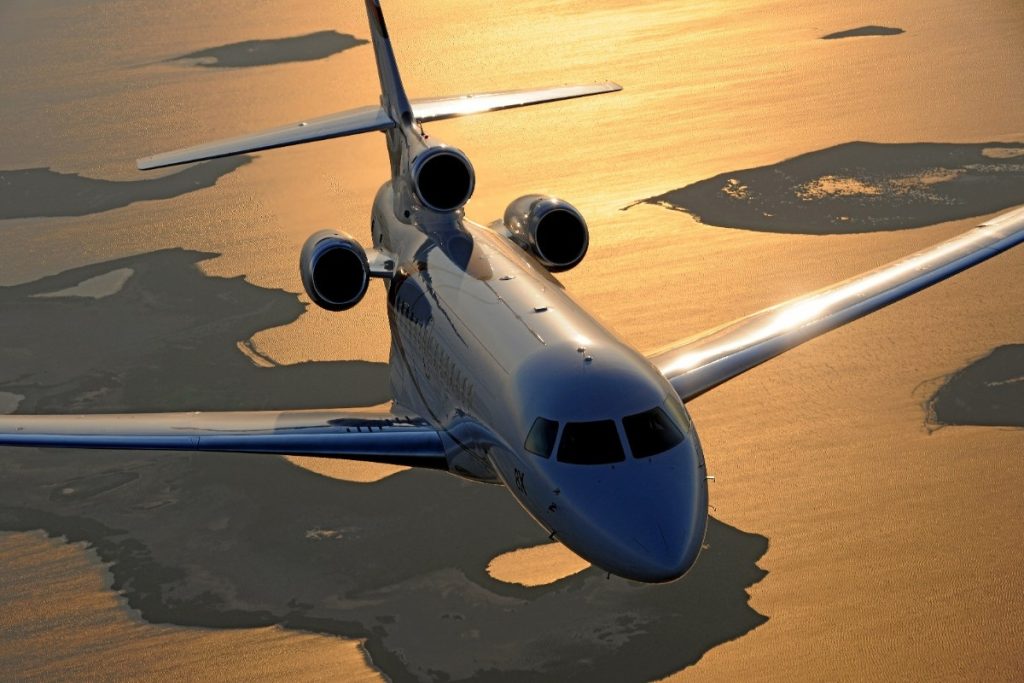
The Falcon 6X arrives at a time when Indian buyers seem increasingly drawn to larger cabins and longer-range aircraft. What specific market trends encouraged Dassault Aviation to position the 6X strongly in India?
CB: We have seen a clear shift in what Indian customers are looking for. Smaller jets still matter for domestic connectivity, but demand for larger, longer-range aircraft has grown considerably. The numbers reflect this. According to the Asian Sky Group Charter Report 2025, the large jet charter fleet in India grew from 22 to 36 aircraft over two years, the most significant expansion in that category across Asia-Pacific. Large and medium jets together now make up 57.9% of India’s charter fleet, and ultra-long-range jets account for 23% of charter demand across the region, with clients often opting for larger aircraft even on shorter routes.
Indian clients increasingly want to fly nonstop to Europe, the Middle East, and Southeast Asia without a layover. Data shows Dubai appeared in four of the top 15 most-searched international charter routes across Asia-Pacific, which tells you a lot about where demand is headed. The Falcon 6X fits this well. It has the largest cabin of any purpose-built business jet, wide enough to stand and move around freely, and a range of 5,500 nautical miles that covers Mumbai or Delhi to London, Dubai, Singapore, and Geneva nonstop. The cabin is also fully customisable, with advanced air filtration and mood lighting, so it works equally well for long business trips or leisure travel.
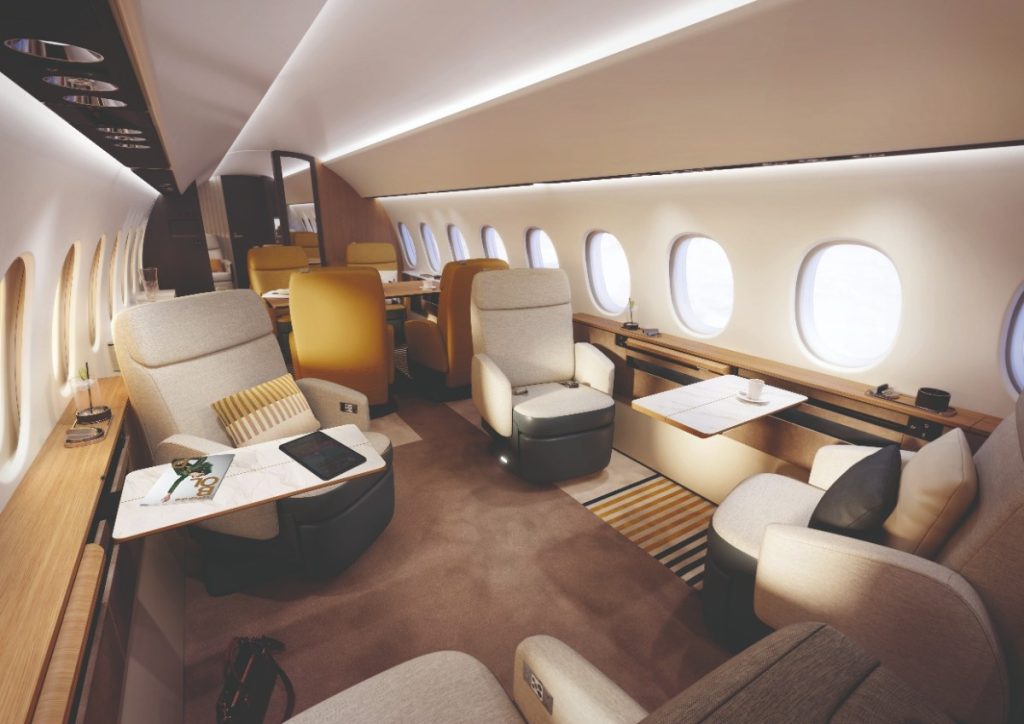
The Falcon 6X offers nonstop connectivity from Mumbai to Europe, parts of the US, Africa, and Australia. How important has long-range capability become for Indian business aviation customers compared to a decade ago?
CB: It has become much more important. Ten years ago, most business aviation activity in India was domestic or regional, connecting major cities or reaching places that commercial airlines do not serve well. Flying internationally in a private aircraft was relatively uncommon. That has changed. The Asian Sky Group Charter Report 2025 shows ultra-long-range jets now account for 23% of Asia-Pacific charter demand, the single largest category, and India’s large jet charter fleet has gone from 22 to 36 aircraft in two years.
Indian business leaders are running operations across Europe, the Middle East, Southeast Asia, and the Americas, and being able to fly point-to-point without going through a commercial hub saves real time and adds a level of privacy and control that matters to them. Leisure travel tells the same story. Wealthy Indian travellers are increasingly going further and they want an aircraft that can get them there without a stop.
India’s aviation infrastructure is evolving rapidly, with new airports and private terminals emerging across the country. How critical is infrastructure development in unlocking the next phase of growth for business aviation here?
CB: Infrastructure development is essential to sustaining the growth we are seeing in India’s business aviation market. The government has made meaningful progress on the broader aviation front. In 2025, new airports and terminals were inaugurated at Navi Mumbai, Patna, Guwahati, Thoothukudi, and several other cities, reflecting a serious national commitment to expanding India’s aviation network. For business aviation specifically, continued investment in dedicated infrastructure — parking capacity, fixed-base operator facilities, MRO capability, and airfield access at secondary cities — will be important in keeping pace with the growth in fleet size and demand. These are the building blocks that allow the sector to operate efficiently and attract new operators and owners. India has the demand and the economic momentum. Infrastructure that keeps up with that will be key to the market reaching its full potential.
India remains a complex market with regulatory and operational challenges for private aviation operators. What changes would you like to see from policymakers to help the sector grow further?
CB: India’s business aviation market is witnessing a decade-high demand, however, for the sector to fully realize its potential, infrastructure development will remain a critical enabler. While India has made meaningful progress in expanding its aviation infrastructure through new airports and the emergence of private terminals across metro cities such as New Delhi and Mumbai, business aviation requires investment and planning.
Areas such as increased parking capacity, more fixed-base operations (FBO) facilities, customer lounges, and business aviation-focused airfields will be essential to support long-term growth. The market has all the fundamentals to become one of the leading business aviation markets, and continued investment in infrastructure will play a decisive role in unlocking that next phase of growth.
Comfort and personalisation are becoming major priorities for luxury travellers globally. How does the Falcon 6X redefine the onboard experience compared to traditional business jets in its category?
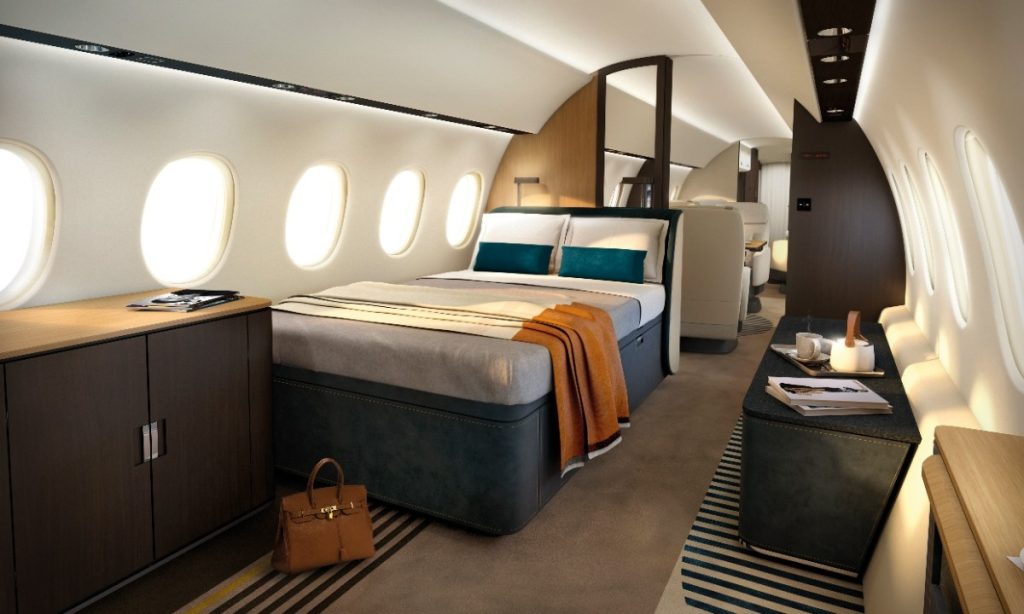
CB: The difference starts with the interior cabin. At 2.58 metres wide and nearly 2 metres tall, it is the largest of any purpose-built business jet. Passengers can stand, walk around, and genuinely use the space, which stretches over 12 metres and has 30 oversized windows and a skylight. It does not feel like a typical aircraft interior. The cabin can be configured entirely to the owner’s requirements, with separate areas for meetings, rest, dining, and entertainment. There is an optional Privacy Suite that works as a meeting room during the day and a sleeping space at night. Mood lighting can be adjusted to help passengers adapt to different time zones, and FalconConnect keeps everyone online throughout the flight.
Air quality is also something we take seriously. The High-Efficiency Particulate Air (HEPA) and Ultra-Low Particulate Air (ULPA) filters collect 99.97% of air particles, and the cabin air is refreshed up to ten times faster than in a modern office building. Dassault’s Falcon cabins are also the quietest in the industry. Passengers arrive feeling rested, which is not something you can say about most commercial airline long-haul journeys.
The Falcon 6X features one of the tallest and widest cabins in business aviation today. Beyond luxury, how does cabin space influence productivity, wellness, and long-haul travel efficiency for modern executives?
CB: Space gives you options that a smaller cabin simply does not. On the Falcon 6X, you can have a bigger working area in one part of the cabin, a private conversation in another, and a rest area in a third, all within the same flight. For wellness, cabin pressure is regulated to reduce fatigue throughout the flight. The filtration system refreshes the air up to ten times faster than a typical office building, and the lighting can be adjusted to help the body adjust to the destination’s time zone. These things add up, especially on a flight from Mumbai to London or New Delhi to Geneva. If someone has a board meeting or a negotiation the morning after landing, the quality of that flight matters. A cabin that lets you sleep properly, work without distraction, and arrive in reasonable shape is not a luxury, it is part of how people perform.