Formula 1 2027 Calendar Revealed: A Guide To The Season’s Must-Visit Race Destinations
Five continents, 24 Grands Prix and 10 Sprint weekends. The 2027 F1 calendar is out, and it is a travel itinerary dressed up as a sport
Formula 1 has done something it does every autumn with the quiet confidence of a company that knows nobody will complain: it has announced next year’s calendar, and once again it has managed to be simultaneously too long, too short, and exactly the right length, depending entirely on your bank balance and your tolerance for jet lag. The 2027 season will run to 24 Grands Prix across 22 countries, with a record 10 Sprint events, up from six this year. If you were hoping Formula 1 might slow down and take a breath, I regret to inform you that the sport has instead decided to accelerate, which, in fairness, is rather on brand.
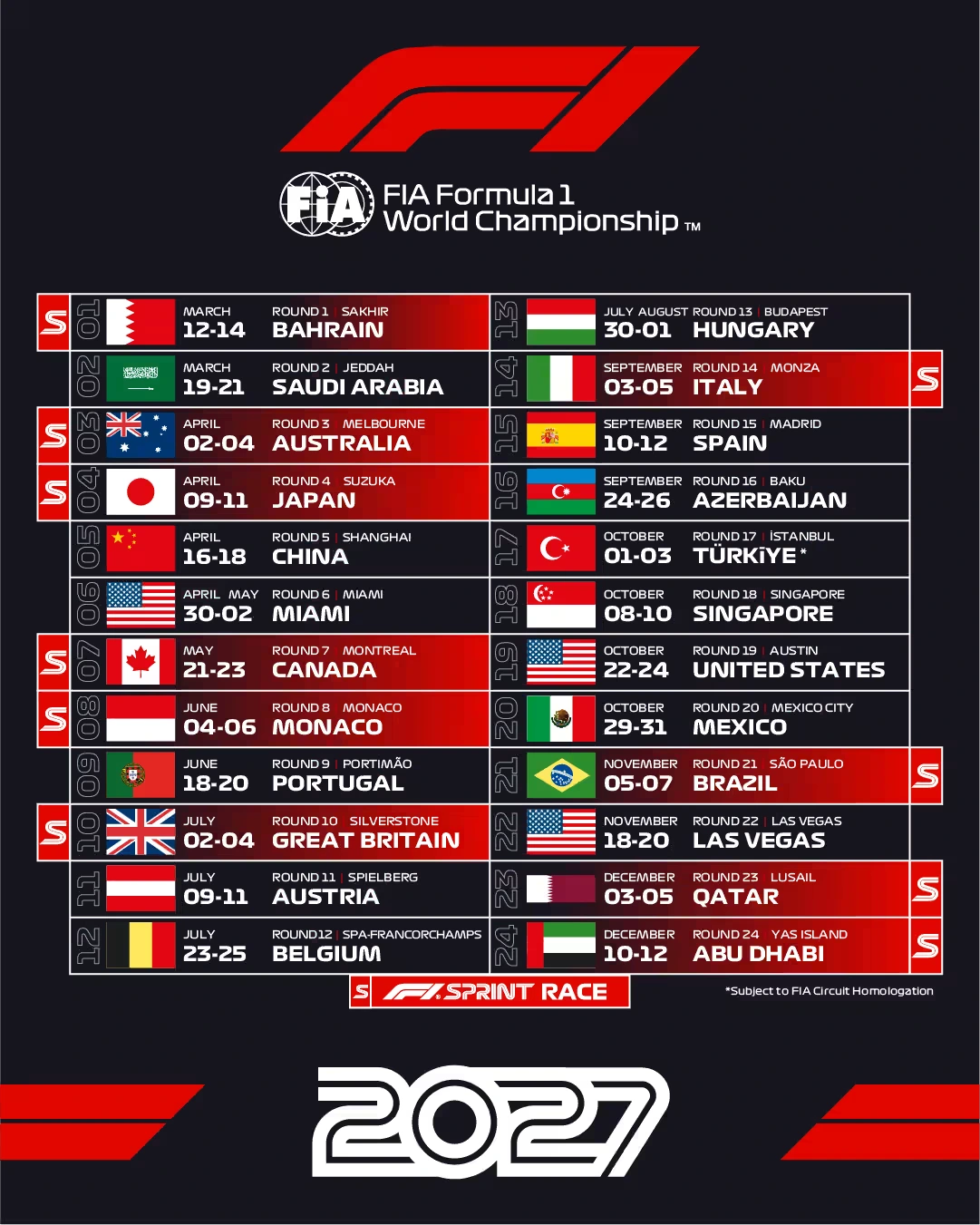
The season opens in Bahrain on 14 March, which is itself a small piece of housekeeping, because it returns the championship to its traditional starting slot after this year’s calendar shuffled things around to accommodate Ramadan. From there it is a proper world tour: Saudi Arabia a week later, then a triple-header of Australia, Japan and China that will leave paddock personnel needing a small lie-down and several time-zone calculators. Miami and Canada follow, dragging the circus across the Atlantic, before Europe finally gets its turn.
Also Read: Aston Martin AMB 002 Roadster Brings Supercar Drama To Two Wheels
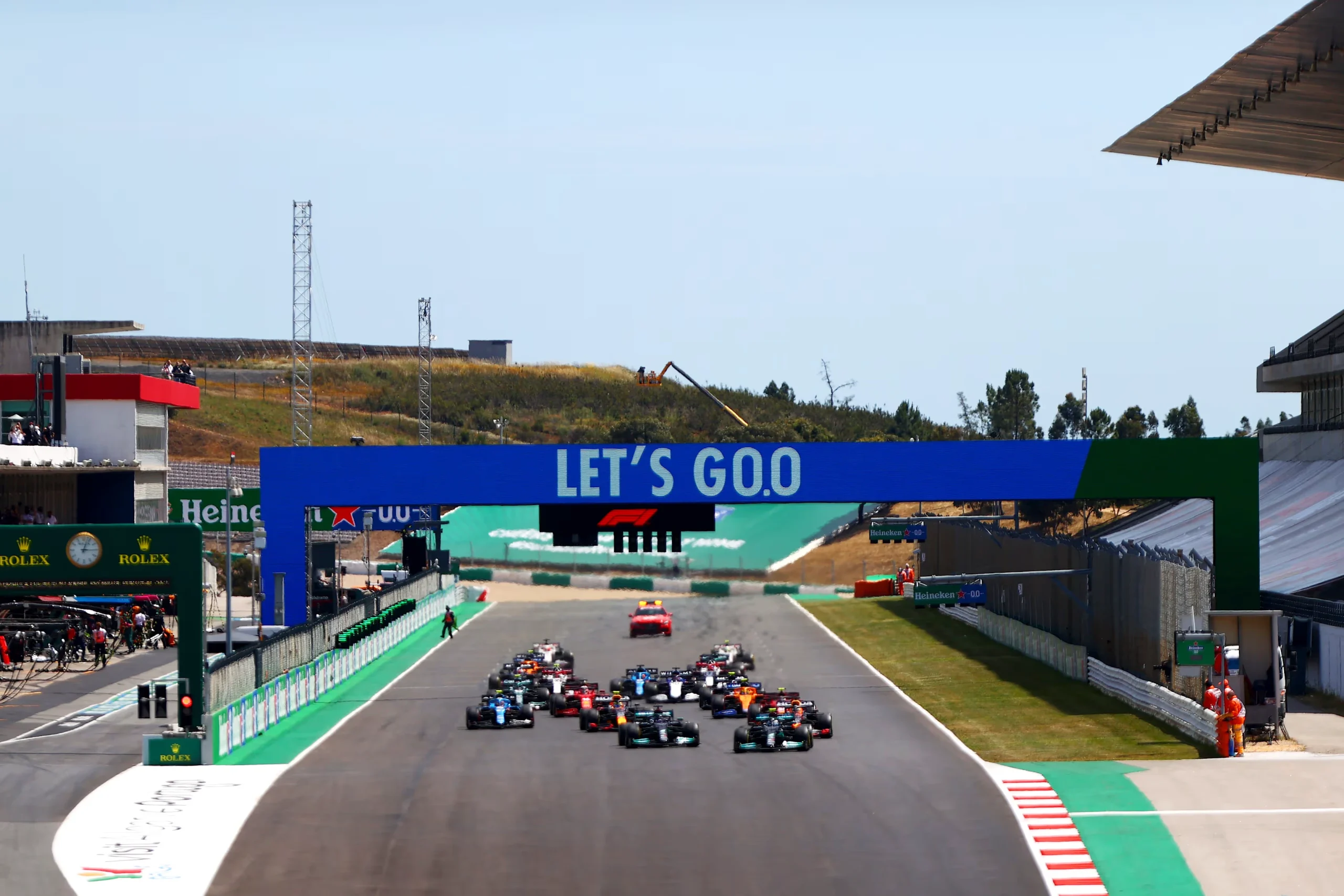
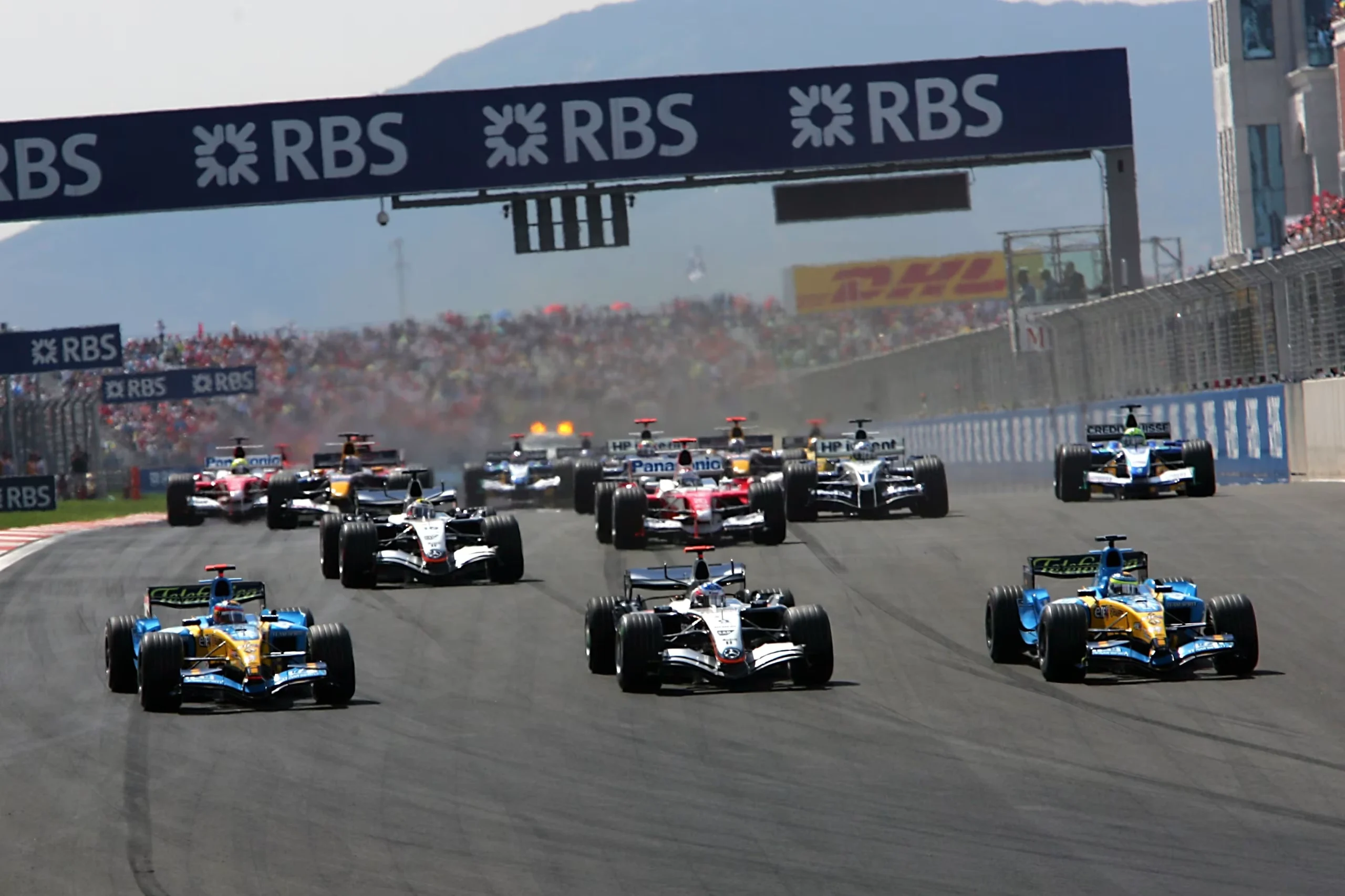
And what a European stretch it is. Monaco, that most glamorous and least overtaking-friendly of circuits, will host a Sprint for the first time in its history, which is either a masterstroke of added drama or a faintly absurd idea depending on which side of the paddock fence you stand. Either way, watching cars queue politely through the tunnel twice in one weekend rather than once feels like exactly the sort of thing only Monaco could get away with. Portugal returns via the Portimão circuit on 20 June, and Turkey comes back to Istanbul Park on 3 October, both venues that fans have been quietly lobbying for since they were dropped, and both, frankly, deserving of the second chance. Barcelona and Zandvoort, meanwhile, have been shown the door, at least for now, with Barcelona pencilled to return in 2028 in rotation with Spa.
The back half of the season builds into its own crescendo: a Middle Eastern-adjacent stretch through Azerbaijan and Singapore, a run through the Americas via Austin, Mexico City and a Sprint weekend in São Paulo, and then Las Vegas lighting up the desert before the championship closes with a Qatar and Abu Dhabi double-header, both Sprints, on 5 and 12 December. It is, in other words, an ending built for maximum drama and minimum rest.
Also Read: BRABUS Shadow 1000: The USD547,000 Speedboat Built For High-Speed Luxury
For the travelling fan, this calendar is less a schedule than a dare. Ten Sprint weekends means ten additional slices of wheel-to-wheel racing layered onto the usual programme, which is marvellous news if you are trying to justify the cost of a grandstand seat, and slightly less marvellous news if you were hoping to plan a holiday around F1 without accidentally booking every remaining Friday of your calendar year.
The genuinely committed will now be plotting a route that takes in a Middle Eastern opener, a Far Eastern triple-header, the unmistakable theatre of Monaco with its new Saturday sprint, the return of two beloved former venues, and a Las Vegas finale season that never quite lets up. There is, admittedly, something magnificently indulgent about all this. Twenty-four races is a lot of races. Ten Sprints is a lot of Sprints.
And yet Formula 1 has spent the better part of a decade proving that “too much” is precisely the amount its audience wants, provided the champagne is cold and the circuits keep getting more interesting. The 2027 calendar does not slow down for anyone, which is, one suspects, rather the point.