Inside Breguet’s Legacy: The Complications That Changed Timekeeping
The extraordinary inventions of Abraham-Louis Breguet continue to influence watchmaking with their perfect balance of science, artistry and innovation
Long before mechanical watches became symbols of luxury and personal expression, one name was already transforming the very foundations of timekeeping. Abraham-Louis Breguet was not simply a watchmaker; he was an inventor who approached horology as a science, constantly searching for solutions to the invisible forces that affected mechanical precision.
Born in 1747, Breguet entered a world where watches were already remarkable objects, yet still limited by the challenges of accuracy, durability and readability. Instead of accepting these limitations, he studied the physics behind movement and created innovations that would influence generations of watchmakers. From the revolutionary Tourbillon that challenged gravity to the overcoil that improved precision, Breguet’s creations became the foundation of modern haute horlogerie. His inventions were not just technical achievements; they were milestones that changed how the world measured time.
The Tourbillon: The Invention That Challenged Gravity
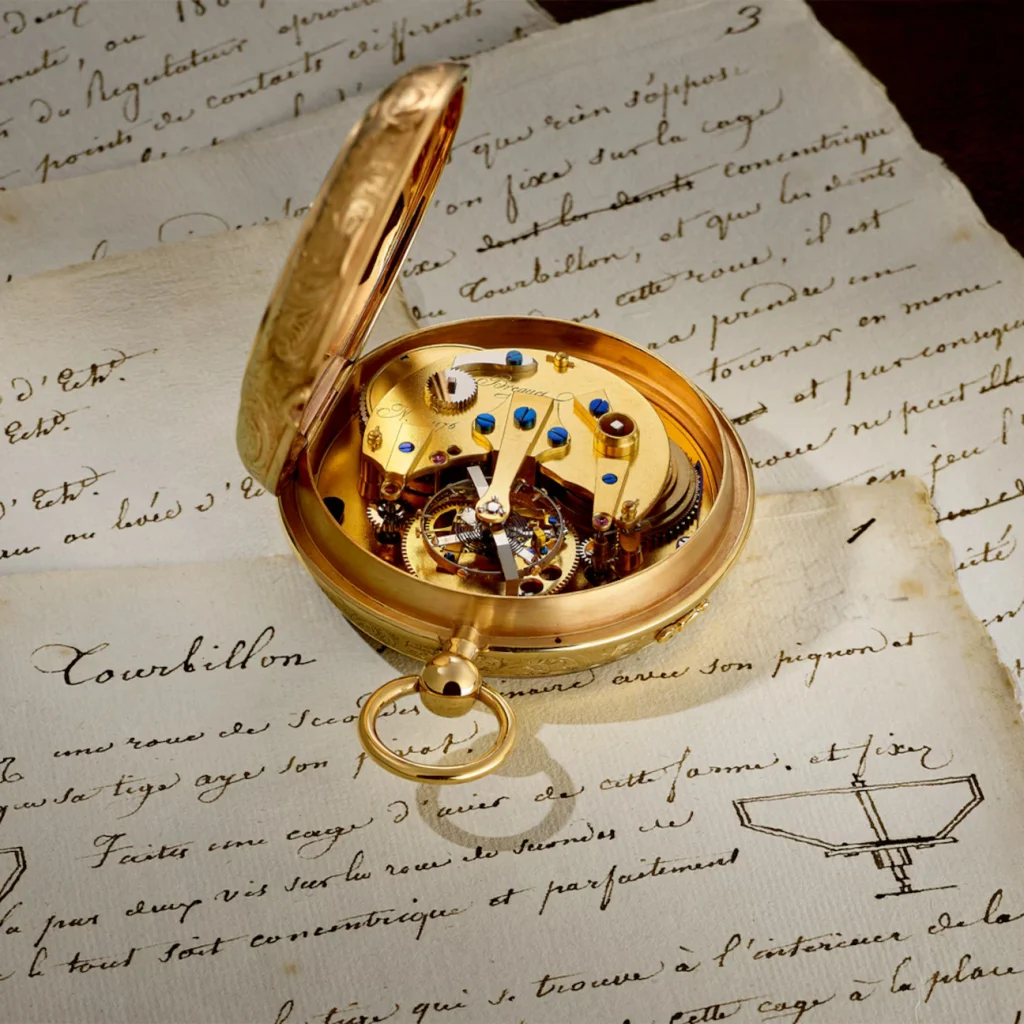
Among all of Breguet’s creations, the Tourbillon remains his most celebrated achievement. Patented in 1801, the mechanism was created to solve one of the greatest problems faced by pocket watches of the era: the effect of gravity on accuracy. During Breguet’s time, pocket watches were usually carried vertically inside a pocket. When a watch remained in one position for long periods, gravity affected the balance wheel and escapement, causing slight variations in timekeeping.
Breguet realised that gravity could not be defeated, but its influence could be balanced. His solution was to place the escapement and regulating organ inside a rotating cage that continuously changed position. By constantly moving through different vertical orientations, the mechanism averaged out positional errors and improved accuracy. The Tourbillon became one of the greatest demonstrations of mechanical ingenuity, transforming a challenge of physics into a masterpiece of engineering.
Also Read: Inside the New Breguet Tradition Collection: Five Contemporary Masterpieces Revealed
The Breguet Overcoil: Perfecting The Heart Of The Watch
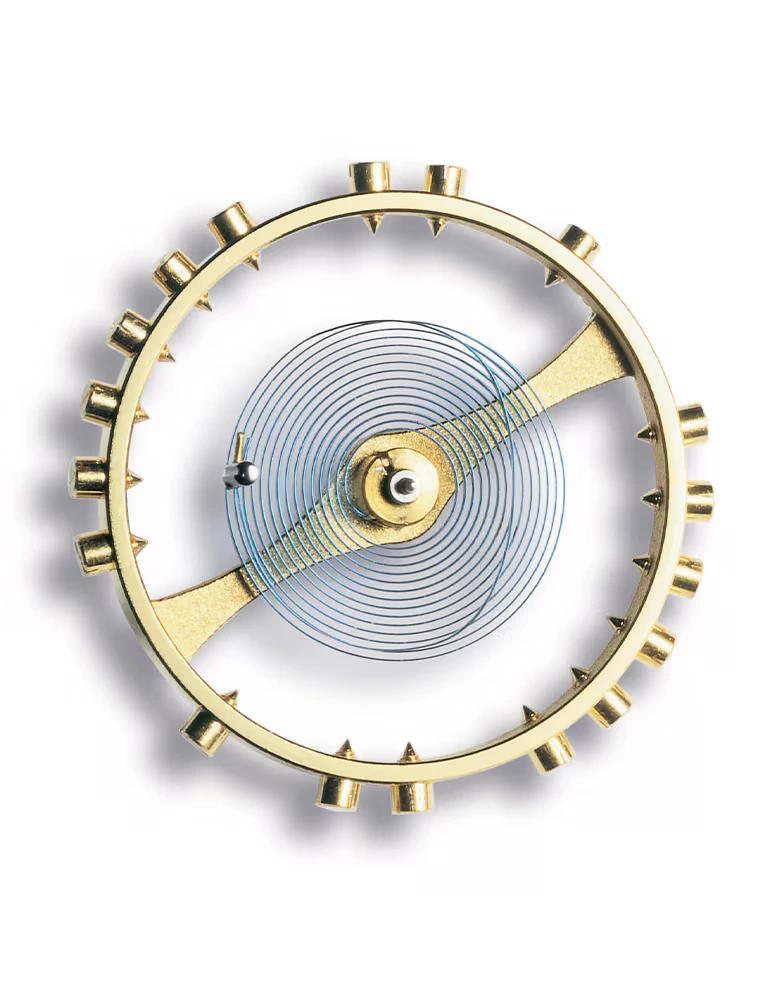
Another of Breguet’s major contributions was the Breguet overcoil, an improvement to the balance spring that enhanced the precision of mechanical movements. The balance spring is one of the most important components of a watch because it controls the rhythm of the movement. However, traditional flat springs could suffer from uneven expansion and contraction, affecting the balance’s motion.
Breguet developed a raised terminal curve at the end of the balance spring, allowing it to breathe more evenly as it expanded and contracted. This improved the concentric movement of the spring, allowing the balance wheel to maintain a more consistent oscillation. Even today, the Breguet overcoil remains a symbol of refined watchmaking, used by many high-end manufacturers seeking improved chronometric performance.
Pare-Chute: The First Step Towards Shock Protection
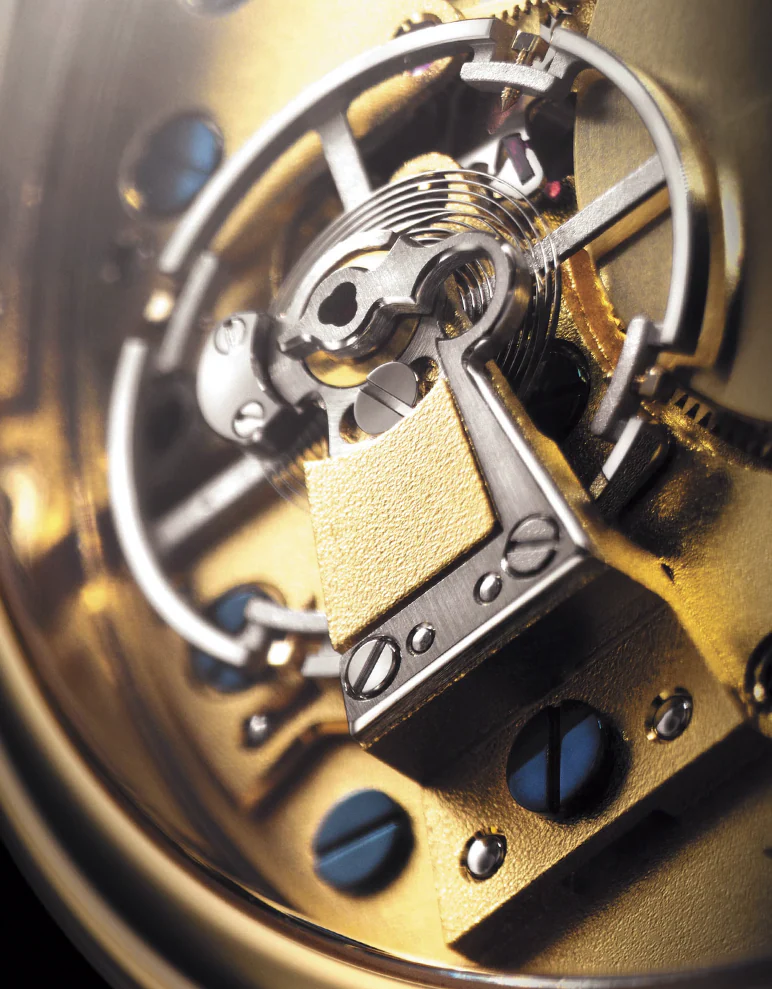
In the world of delicate mechanical watches, protection against sudden impacts has always been a major challenge. The balance staff, one of the most fragile components of a movement, could easily be damaged by shocks. Breguet addressed this issue with the Pare-chute, one of the earliest shock protection systems in watchmaking history.
The invention allowed the balance pivot to absorb a certain amount of impact by using a specially designed mounting system that could move slightly during a shock before returning to its original position. At a time when watches were intricate but extremely vulnerable, the Pare-chute represented a major advancement in durability. Modern shock absorbers found in mechanical watches owe much to this early innovation.
Also Read: Breguet’s 225th Anniversary New Tourbillon Models Honour The Legacy Of Abraham-Louis Breguet
Breguet Hands: A Design That Became A Signature
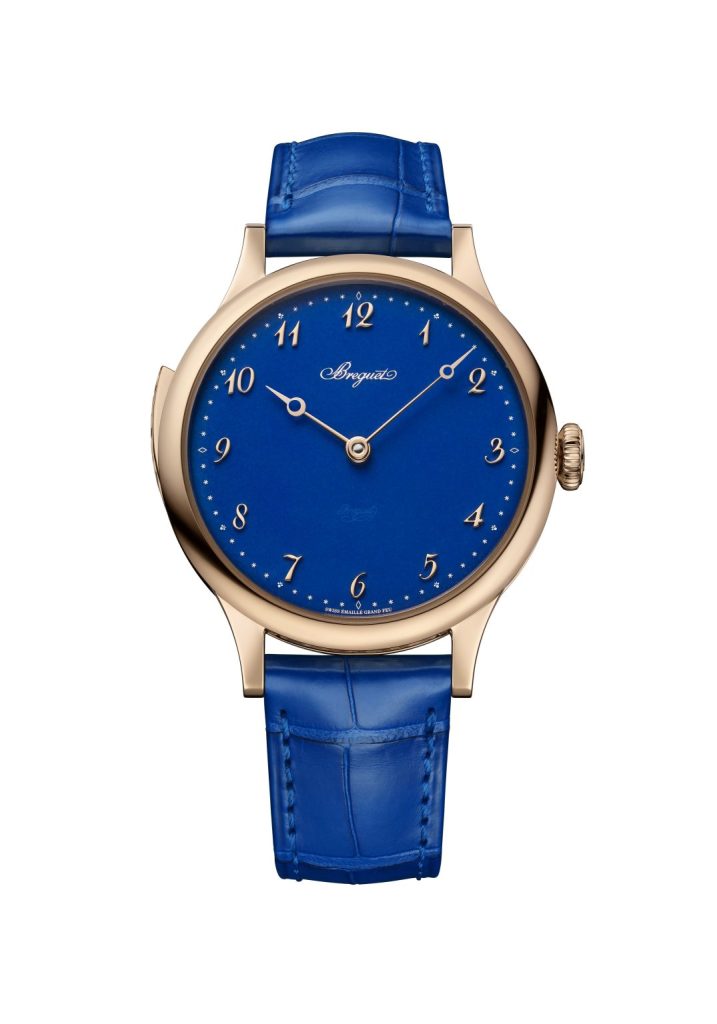
While many of Breguet’s inventions transformed the mechanics of watches, his influence also extended into aesthetics. The famous Breguet hands became one of the most recognisable design elements in watchmaking. Created in the late 18th century, these slender hands featured an elegant open-circle tip, often described as a “moon” or hollow shape.
Their purpose was not only decorative. The design improved legibility while maintaining a refined appearance suitable for Breguet’s sophisticated timepieces. Over centuries, Breguet hands have become a visual signature, appearing across countless watches and continuing to represent elegance, clarity and classical watchmaking style.