Top Decorative Finishes Used In Watches And Why They Matter To Collectors
From hand engraved bridges and mirror polished steel to Geneva stripes and perlage, discover the decorative finishes that transform a mechanical watch into a work of art and explain why collectors obsess over every detail
There are two kinds of watch buyers in the world. The first looks at a watch and asks a perfectly reasonable question: ‘What does it do?’ The second peers through a loupe, disappears into a trance for twenty minutes, and emerges muttering enthusiastically about bevelled edges, striped bridges, and the angle of a polished screw head. Unsurprisingly, it is the second group that usually ends up spending the price of a sports car on a wristwatch. Because in fine watchmaking, the magic often has very little to do with telling the time. Any £20 quartz watch can do that with alarming efficiency. The true theatre happens beneath the sapphire crystal, where artisans spend countless hours decorating parts that many owners may never even see. These finishes serve no practical purpose. They do not improve accuracy, increase power reserve, or make the watch more waterproof. Yet they remain among the most prized elements in horology.
Why? Because decorative finishing is the ultimate demonstration of craftsmanship. It is proof that a manufacture values beauty as much as engineering. Whether it is a hand engraved bridge, a perfectly executed black polished steel component, or hundreds of tiny circular grained patterns hidden beneath a movement plate, these details reveal the skill, patience, and heritage behind a watch. For collectors, such decorations are more than visual flourishes. They are signatures of authenticity, indicators of quality, and often the difference between a good watch and a truly great one. From centuries old techniques still performed by hand to finishing standards that define entire manufactures, these details form the hidden language of haute horlogerie. Outlook Luxe takes a look at the top nine decorative finishes that continue to captivate collectors and define the art of watchmaking.
Engraving
If decorative watchmaking has a pure expression of artistry, it is engraving. Long before machines could cut metal with microscopic precision, master craftsmen used hand tools to transform bridges, rotors, balance cocks, and cases into miniature canvases. The tradition remains one of the most respected forms of horological decoration today. Hand engraving involves removing tiny amounts of metal using specialised gravers to create intricate patterns, floral motifs, coats of arms, geometric designs, or bespoke commissions. Every stroke requires remarkable control, as a single mistake can ruin an otherwise perfect component. Even among luxury manufacturers, true hand engraving remains relatively rare because of the time and expertise involved.
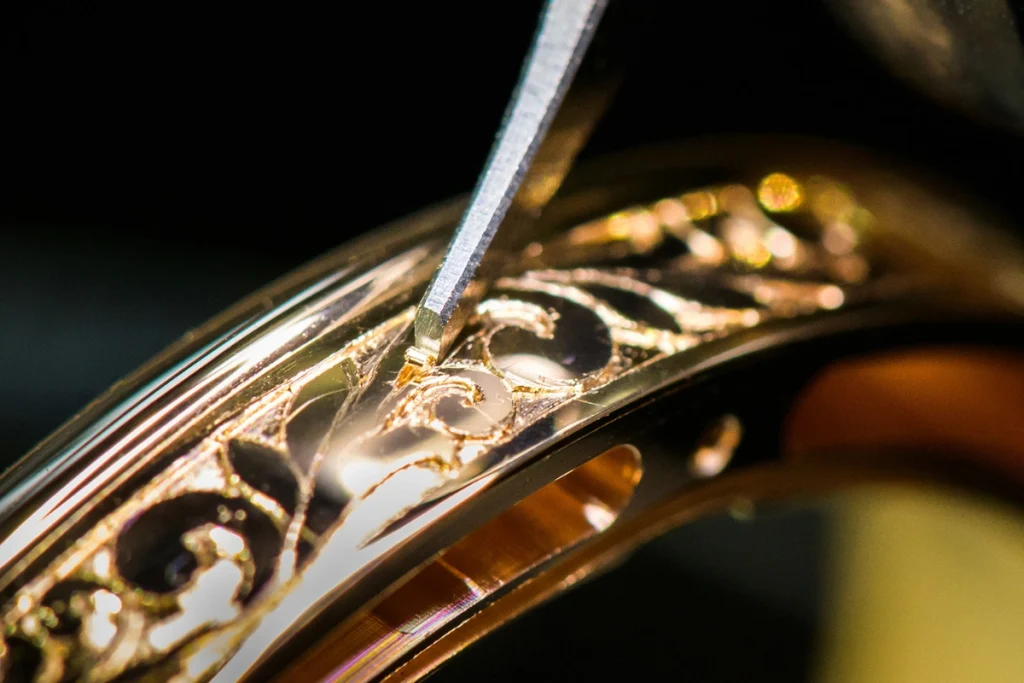
Collectors value engraving because it introduces individuality into an otherwise mechanical object. No two hand engraved pieces are completely identical. Brands such as A. Lange & Söhne have become famous for hand engraved balance cocks, while independent watchmakers often use engraving to express their artistic identity. Beyond aesthetics, engraving connects modern watches to centuries of decorative craftsmanship. It transforms a movement from an industrial assembly into a personal work of art. For collectors, discovering a beautifully engraved component beneath a caseback is similar to finding an artist’s signature hidden within a masterpiece. It reflects patience, tradition, and human skill in an age increasingly dominated by automation.
Côtes de Genève
Among all decorative finishes in watchmaking, none is more instantly recognisable than Côtes de Genève, or Geneva Stripes. Characterised by parallel waves of shimmering lines across bridges and rotors, it has become synonymous with Swiss luxury watchmaking. The finish is created by dragging a rotating abrasive wheel across a metal surface in overlapping passes. Each stripe reflects light differently, producing a dynamic visual effect that changes as the movement is viewed from different angles. The process appears simple but requires exceptional consistency to ensure perfectly aligned stripes without uneven spacing.
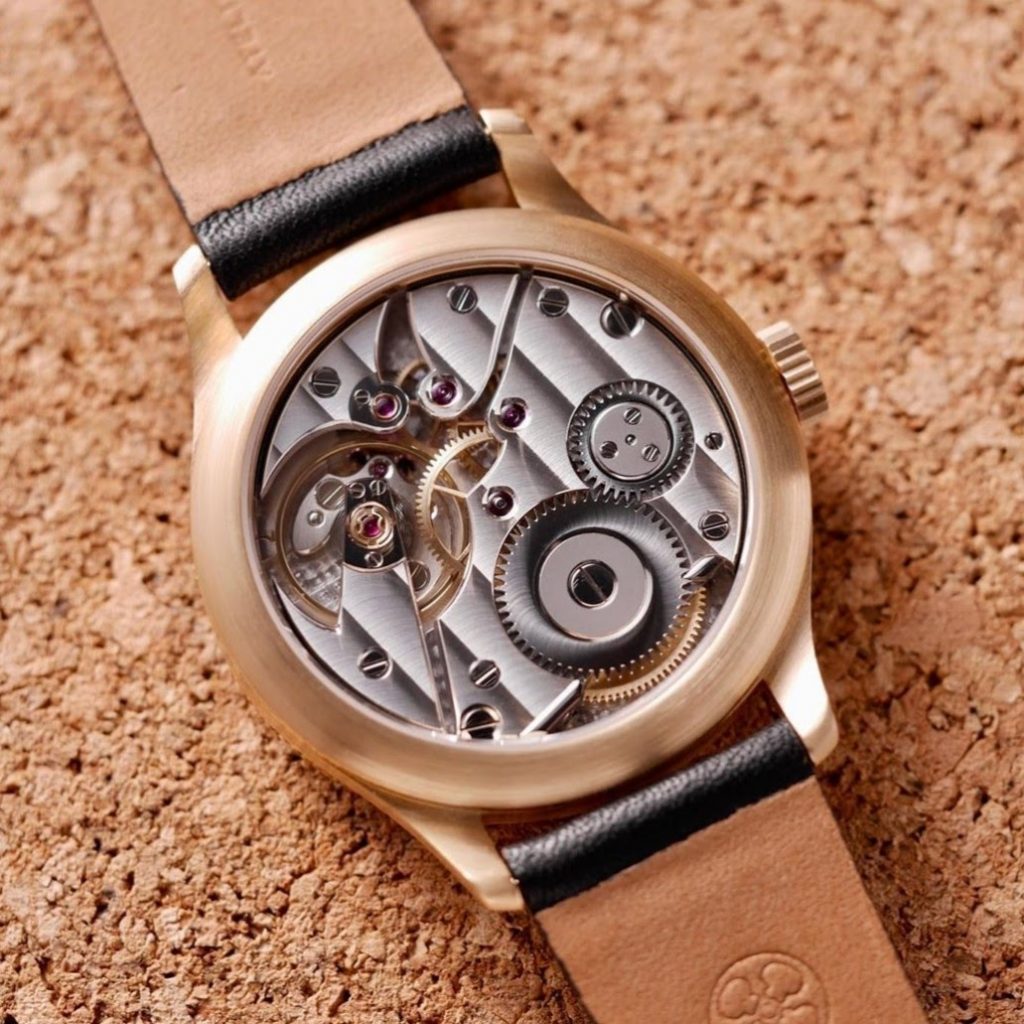
Originally developed in Geneva workshops during the nineteenth century, the technique eventually became one of the defining signatures of high quality Swiss movements. Today it can be found in everything from accessible luxury watches to the most prestigious grand complications. Collectors appreciate Geneva Stripes because they immediately communicate refinement and attention to detail. While they do not improve performance, they reveal the amount of effort invested in the movement’s presentation. Executed properly, the stripes create depth, elegance, and visual rhythm across otherwise functional components. Many of the finest examples are still completed by hand, allowing artisans to control pressure and alignment with remarkable precision. For enthusiasts examining a movement through sapphire crystal, few finishes provide the same sense of sophistication and traditional Swiss watchmaking heritage as Côtes de Genève.
Black Polishing
Black polishing is often described as the highest expression of watch finishing, and for good reason. It is extraordinarily difficult, exceptionally time consuming, and visually breathtaking when executed correctly. The technique involves polishing a steel component against a perfectly flat surface coated with fine abrasive paste. Over many hours, the metal becomes so flawlessly smooth that it reflects light in a unique way. Viewed from one angle it appears brilliantly reflective, while from another it turns completely black. Hence the name black polishing.
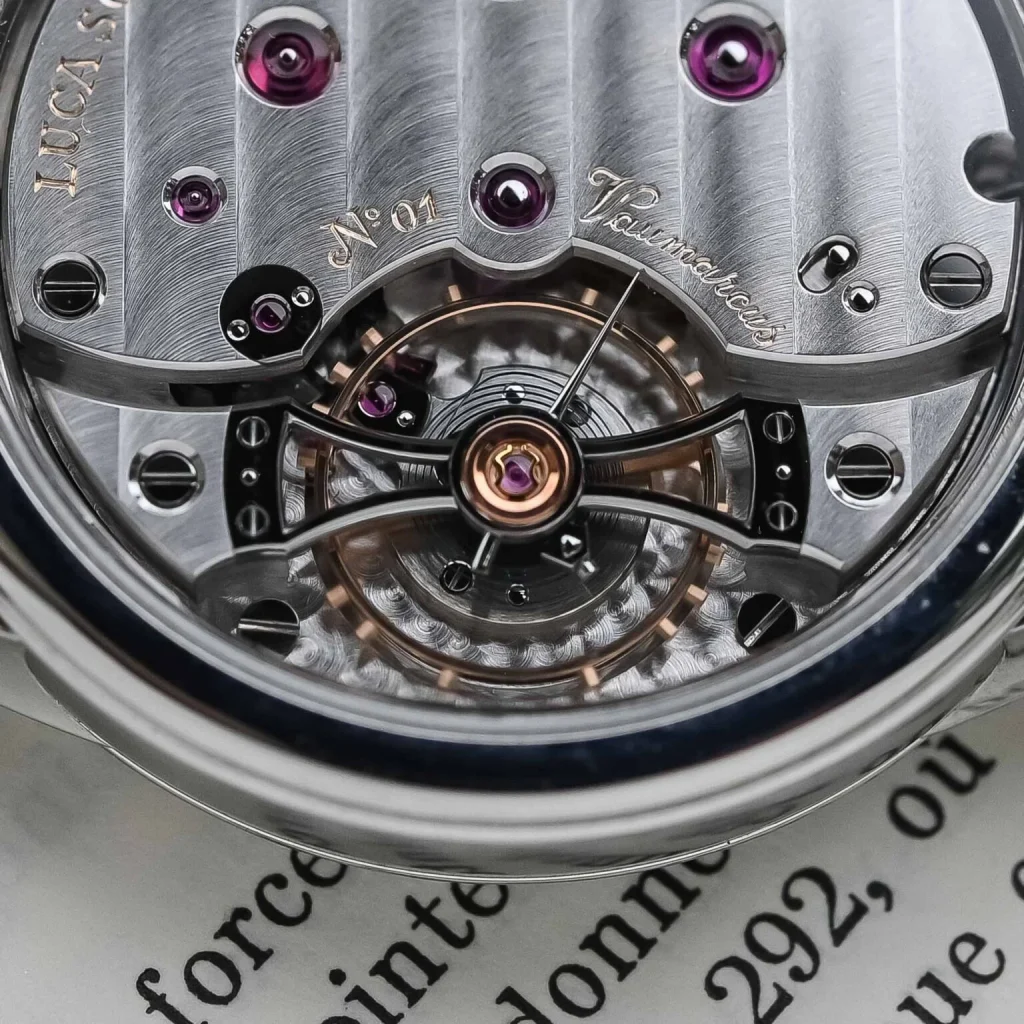
This finish is commonly applied to chronograph levers, tourbillon bridges, cap pieces, and other visible steel components. Because achieving a perfect surface is nearly impossible, black polishing remains a benchmark of finishing excellence among elite manufacturers and independent watchmakers. Collectors obsess over black polished parts because they represent an almost obsessive commitment to perfection. Every microscopic imperfection must be removed before the desired effect can be achieved. Even dust particles can compromise the finish. Brands such as Philippe Dufour and Greubel Forsey have elevated black polishing into an art form. When collectors discuss finishing at the highest level, black polishing is often the first technique mentioned. It represents countless hours of human labour dedicated entirely to beauty, precision, and craftsmanship.
Perlage
Perlage, also known as circular graining, may be one of the most widespread decorative finishes in watchmaking, but that does not diminish its importance. Consisting of countless overlapping circles applied across plates and bridges, it creates a subtle texture that immediately enhances the visual appeal of a movement. The finish is achieved by pressing a rotating abrasive peg against the metal surface repeatedly in a carefully controlled pattern. Each circular mark overlaps the previous one, producing a field of shimmering dots that catch light beautifully.
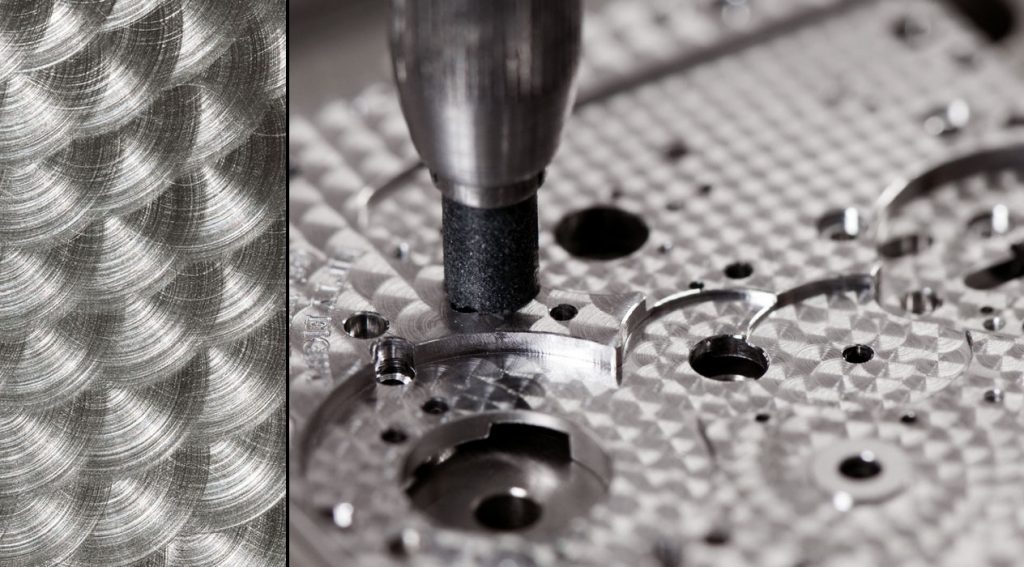
Historically, perlage also served a practical purpose by helping trap microscopic dust particles within the movement rather than allowing them to migrate between gears. While modern manufacturing has largely eliminated this necessity, the decorative value remains significant. Collectors appreciate perlage because it demonstrates a manufacturer’s willingness to finish surfaces that may never be seen once the watch is assembled. In many movements, perlage is hidden beneath bridges and invisible to the wearer. Its presence therefore signals dedication to traditional craftsmanship rather than simple marketing appeal. Well executed perlage creates depth, texture, and complexity beneath the visible layers of a movement. It transforms plain metal surfaces into intricate decorative landscapes that reward close inspection through a loupe.
Snailing
Snailing is one of watchmaking’s most elegant decorative techniques, producing concentric circular patterns that radiate outward from a central point. The finish resembles the spiral shape of a snail shell, giving rise to its distinctive name. The process is frequently applied to ratchet wheels, crown wheels, barrels, and subdials. By rotating the component while applying a fine abrasive tool, craftsmen create evenly spaced circular grooves that interact beautifully with light.

Unlike Geneva Stripes or perlage, snailing generates a strong sense of movement. As light travels across the surface, the pattern appears almost animated, creating visual energy within otherwise static components. Collectors value snailing because it adds sophistication without overwhelming the movement’s architecture. It often appears on functional components that would otherwise seem plain or industrial. The decorative finish transforms these parts into attractive focal points while maintaining mechanical integrity. The best examples feature perfectly consistent spacing and depth, requiring careful execution and extensive experience. Although subtle compared to some decorative techniques, snailing contributes significantly to the layered complexity that distinguishes finely finished movements from mass produced alternatives.
Chamfering
Ask any serious collector to identify a sign of exceptional finishing and chamfering will almost certainly feature near the top of the list. Also known as anglage, chamfering involves beveling the edges of bridges and components before polishing them to a brilliant shine. At first glance, the finish may appear deceptively simple. In reality, hand chamfering demands immense patience and precision. Craftsmen carefully remove material along component edges before polishing the resulting bevel until it gleams under light.
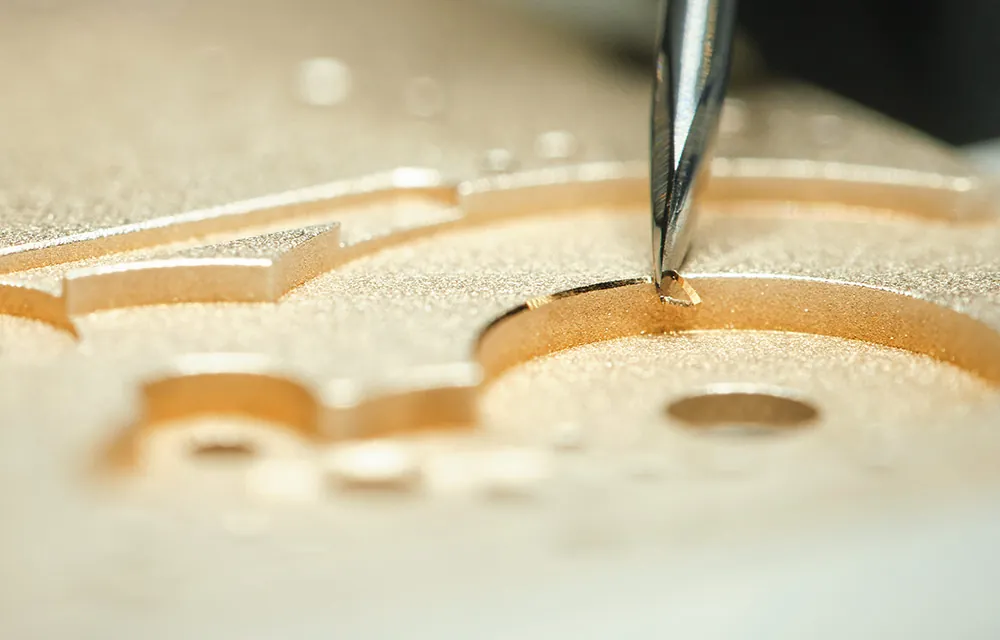
The challenge increases dramatically when internal angles are involved. These sharp inward corners cannot be produced by machines and therefore serve as evidence of genuine hand finishing. Collectors frequently inspect such details when evaluating movement quality. Chamfering enhances both aesthetics and functionality. Visually, polished bevels frame movement components with elegant reflective surfaces. Mechanically, removing sharp edges reduces the risk of burrs and imperfections. Independent watchmakers and haute horlogerie brands often devote extraordinary amounts of time to hand chamfering. In some cases, a single bridge may require many hours of meticulous work. For collectors, beautifully executed anglage is among the clearest indicators of artisanal craftsmanship. It demonstrates a dedication to finishing that extends far beyond necessity and enters the realm of artistic expression.
Blued Screws
Among the smallest components in a movement, blued screws often have one of the biggest visual impacts. Their vibrant blue colour provides striking contrast against silver bridges, gold engravings, and polished steel components. The finish is created through a controlled heat treatment process. Steel screws are carefully heated until they reach approximately 300 degrees Celsius, at which point a thin oxide layer forms on the surface, producing the distinctive blue hue. True thermal bluing requires precise temperature control. Excessive heat can alter the colour or compromise the component. Because of this, achieving a consistent shade across multiple screws demands considerable expertise.
Collectors appreciate blued screws for both aesthetic and historical reasons. The technique dates back centuries and remains a hallmark of traditional watchmaking. Unlike painted or chemically coloured alternatives, genuine heat bluing reflects authentic craftsmanship. The vivid colour also enhances movement architecture by introducing visual contrast and highlighting structural elements. In finely finished calibres, blued screws act almost like jewellery accents, drawing attention to carefully assembled components. Though small in scale, they symbolise the attention to detail that collectors seek in high quality mechanical watches.
Frosting
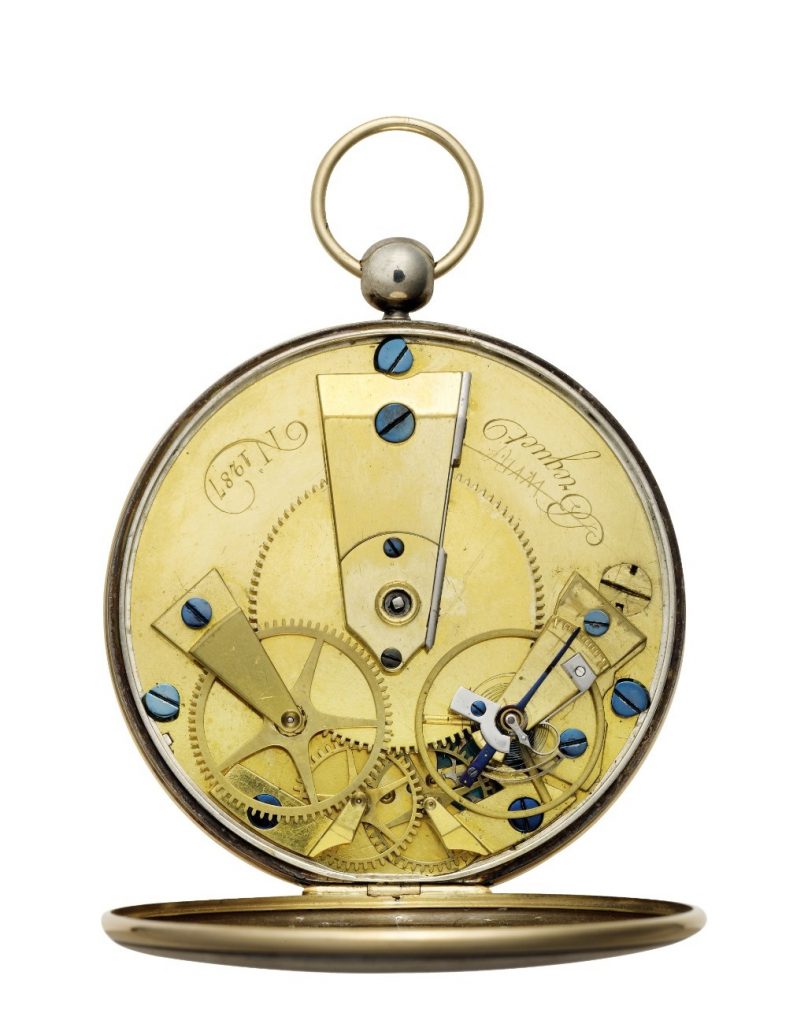
Frosting is one of watchmaking’s oldest decorative finishes and has experienced a remarkable revival in recent years thanks to independent watchmakers and historically inspired designs. The technique produces a soft, granular texture that resembles freshly fallen snow or finely brushed precious metal. Traditionally, frosting was achieved using abrasive compounds and brushes applied by hand. Modern interpretations often employ specialised tools while maintaining the appearance of historic methods.

The finish diffuses light rather than reflecting it sharply, creating a warm and understated aesthetic. Frosted bridges provide a striking contrast to polished bevels, black polished steel components, and engraved details. Collectors admire frosting because it evokes the earliest era of precision watchmaking. Many eighteenth and nineteenth century pocket watches featured frosted movements, making the technique deeply connected to horological heritage. Independent brands such as Kari Voutilainen and F. P. Journe have helped reintroduce frosting as a prestigious finishing technique. Its subtle appearance may not attract immediate attention, but enthusiasts recognise the craftsmanship and historical significance it represents. In a world increasingly dominated by bright surfaces and industrial perfection, frosting offers texture, warmth, and timeless elegance.
Geneva Seal
Unlike the other finishes on this list, the Geneva Seal is not a decorative technique but a certification standard. Yet it remains one of the most prestigious indicators of finishing excellence in watchmaking. Established in 1886 by the Canton of Geneva, the seal was created to preserve and promote the region’s reputation for exceptional horology. Watches bearing the certification must satisfy strict requirements covering finishing quality, craftsmanship, construction, and performance. To qualify, movement components must exhibit specific decorative finishes, including polished bevels, properly finished screw heads, refined surfaces, and meticulously decorated bridges. Every visible element is scrutinised according to rigorous standards.

Collectors regard the Geneva Seal as an assurance of quality rather than merely a decorative feature. It signifies that a movement has been crafted according to some of the industry’s highest expectations for finishing and execution. Prestigious manufactures such as Vacheron Constantin have long embraced the certification, using it to demonstrate their commitment to traditional watchmaking excellence. For enthusiasts, the Geneva Seal represents more than decoration. It serves as independent recognition that a watch embodies the artistry, precision, and craftsmanship that define true haute horlogerie.