

Luxury has become a strange thing. Once upon a time it meant hand-carved stone, timber shaped by skilled craftsmen and homes built to survive centuries. Today, it often means touchscreen panels controlling automated curtains, buildings wrapped entirely in glass and enough electronic systems to launch a small satellite into orbit. The result? Structures that require enormous amounts of energy merely to remain comfortable. Buildings that seal themselves off from nature while claiming to celebrate it. Homes that somehow feel less human despite being packed with more technology than ever before. And then there is Bijoy Jain.
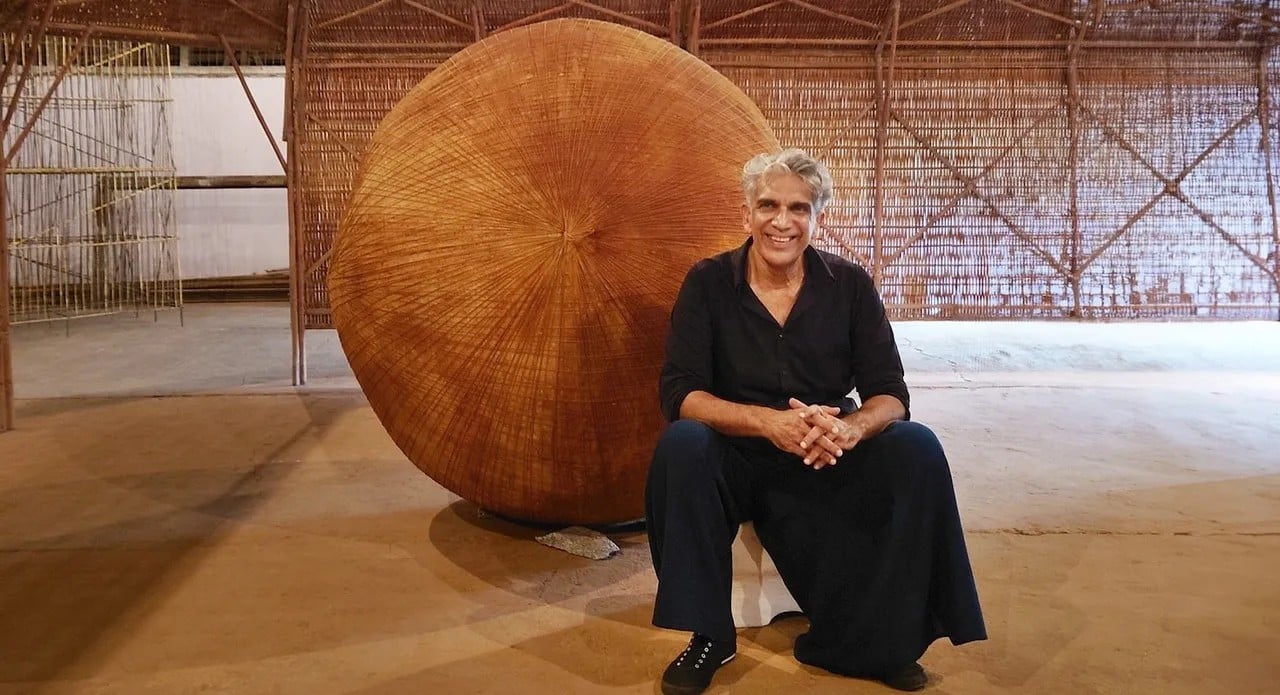
While much of contemporary architecture is obsessed with speed, scale and spectacle, Jain has spent decades pursuing something far more radical: slowness. Not the fashionable sort of slowness discussed in design conferences, but genuine architectural patience. Buildings that breathe naturally. Spaces that age gracefully. Structures designed not to dominate their environment but to belong to it. From his practice, Studio Mumbai, Jain has emerged as one of India’s most influential contemporary architects and one of the most respected voices in sustainable luxury design anywhere in the world. His work has transformed global perceptions of Indian architecture, proving that sustainability and luxury need not exist at opposite ends of the design spectrum.
Building An Architecture Of Atmosphere
Most architects begin with drawings. Jain begins with materials. For Studio Mumbai, architecture is not simply about walls, roofs and floor plans. It is about atmosphere. About the way sunlight moves across stone throughout the day. About how humidity interacts with timber. About the sound of wind passing through carefully positioned openings. About shadows that evolve hour by hour and season by season. This approach creates buildings that feel less like objects and more like living environments.
Stone, timber, earth, water and natural light become active participants in the architectural experience rather than decorative afterthoughts. Climate is not treated as an obstacle requiring mechanical intervention but as a design collaborator guiding every decision. The result is architecture that appears deceptively simple yet possesses extraordinary depth and complexity.
Studio Mumbai And The Return Of Craftsmanship
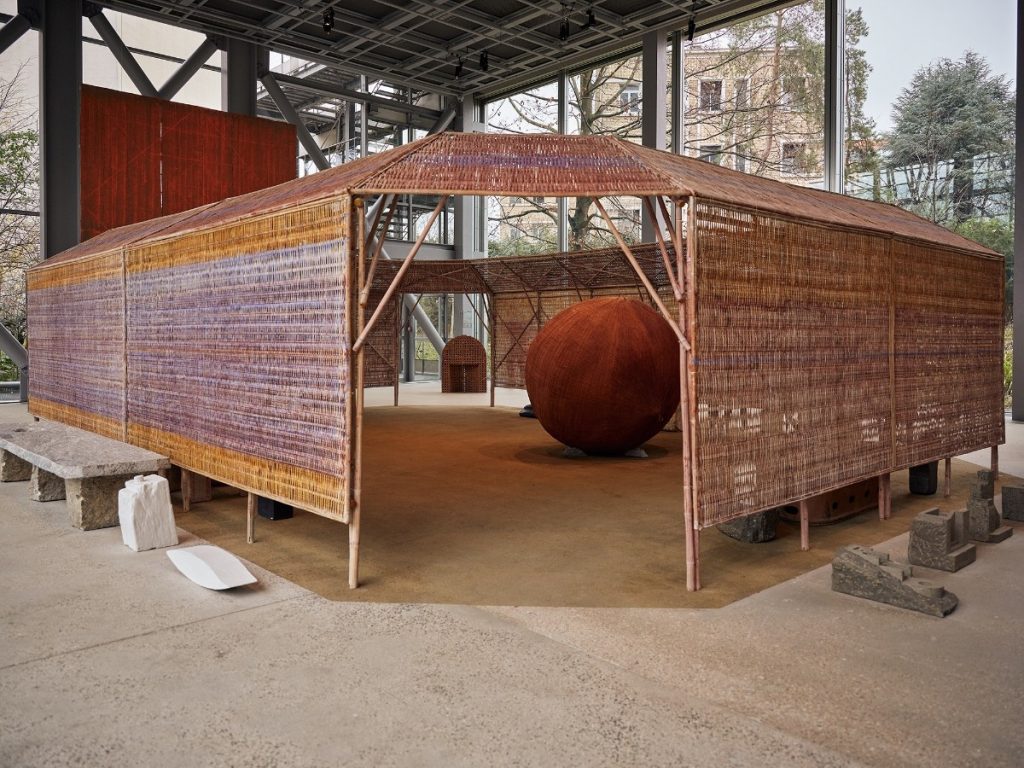
One of the defining characteristics of Studio Mumbai is its commitment to traditional Indian craftsmanship. At a time when much of global construction relies on prefabrication, industrial materials and standardised components, Jain has consistently championed handcraft, local knowledge and artisanal skill. His projects often involve close collaboration with carpenters, stone masons, metalworkers and craftspeople whose techniques have been refined over generations.
This process is not driven by nostalgia. It is driven by intelligence. Traditional building methods evolved precisely because they responded effectively to local climates, available materials and cultural patterns of inhabitation. By integrating these techniques into contemporary architecture, Studio Mumbai creates buildings that are both deeply rooted and remarkably relevant. This fusion of craft and modernity has become one of the firm’s most recognisable signatures and a defining feature of its interpretation of sustainable luxury.
Saat Rasta Housing: Reimagining Urban Life
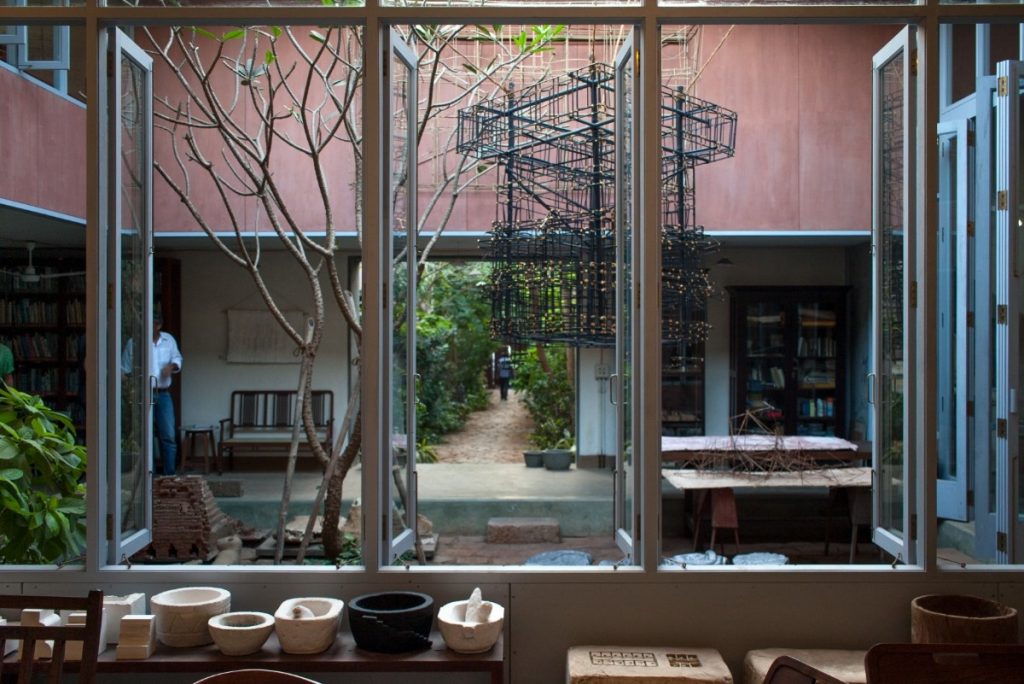
One of the most significant examples of Jain’s architectural philosophy can be seen in the Saat Rasta Housing project in Mumbai. Designing housing within one of the world’s most densely populated cities presents immense challenges. Space is limited, environmental pressures are considerable and maintaining quality of life often becomes secondary to maximising density.
Jain approached the problem differently. Rather than treating housing as a collection of isolated units, Saat Rasta explores relationships between people, climate and community. Shared spaces become essential social infrastructure. Natural ventilation reduces dependence on mechanical cooling systems. Carefully considered spatial arrangements foster interaction while preserving privacy. The project demonstrates how architecture can enhance collective living without sacrificing comfort or dignity. It acknowledges the realities of urban density while creating environments that remain humane, breathable and connected to their surroundings.
Also Read: How Cornelia Hahn Oberlander Transformed Canadian Landscape Design
Utsav House: A Sanctuary Of Sensory Design
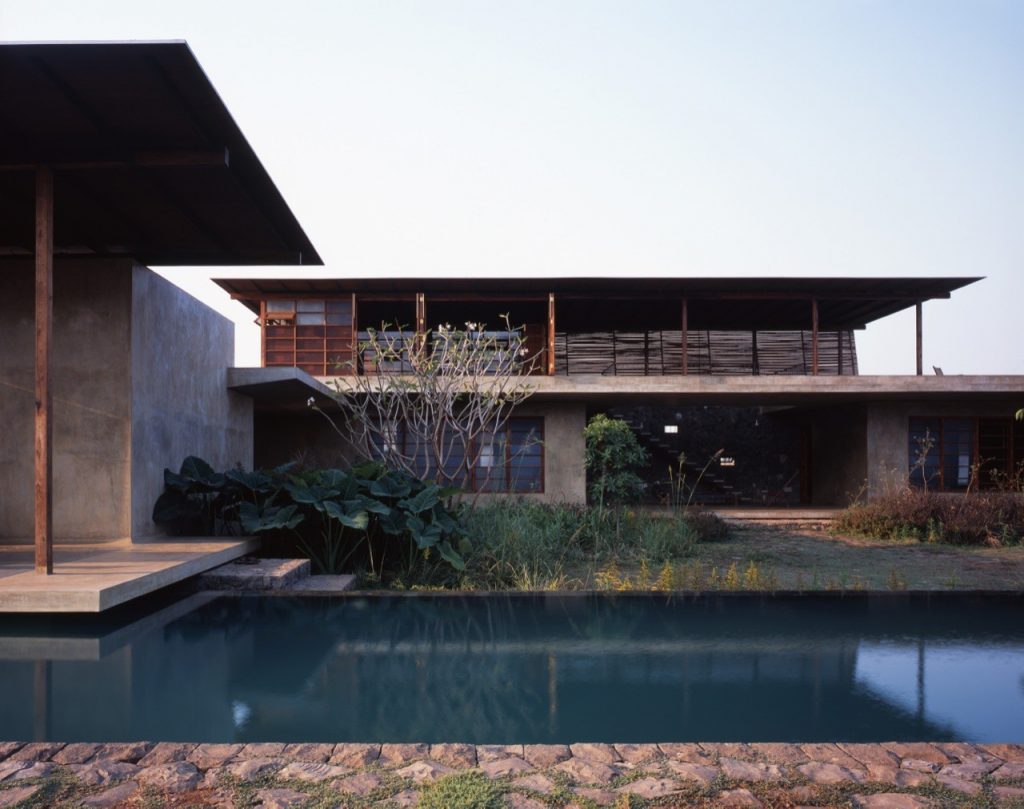
If Saat Rasta addresses the complexities of city life, Utsav House explores architecture at its most intimate scale. he residence embodies many of the principles that have made Studio Mumbai internationally acclaimed. Handcrafted materials, open thresholds, filtered daylight and natural ventilation work together to create an environment experienced through all the senses rather than simply observed visually.
Every surface possesses texture. Every opening frames light differently throughout the day. Air circulates naturally through the spaces, carrying subtle changes in temperature, scent and atmosphere. Nothing feels excessive. Nothing feels rushed. Instead, the house encourages a slower engagement with daily life. Occupants become more aware of changing seasons, shifting weather patterns and the subtle rhythms of inhabiting space. It is architecture designed not merely to shelter but to deepen experience.
Also Read: India’s Most Coveted Residential Addresses And Why They Are So Exclusive
An Indian Voice With Global Influence
Perhaps Bijoy Jain’s greatest achievement is demonstrating that Indian architecture does not need to imitate global trends to achieve international relevance. Through Studio Mumbai, he has created a distinctly Indian architectural language rooted in climate, craft, material intelligence and human experience. His buildings celebrate local traditions while engaging contemporary challenges. They honour the past without becoming trapped by it. In a world accelerating towards greater complexity, Jain offers something increasingly rare: architecture that slows us down. And perhaps that is the ultimate luxury today—not owning more things, but inhabiting spaces that allow us to experience time, nature and daily life more deeply than before.