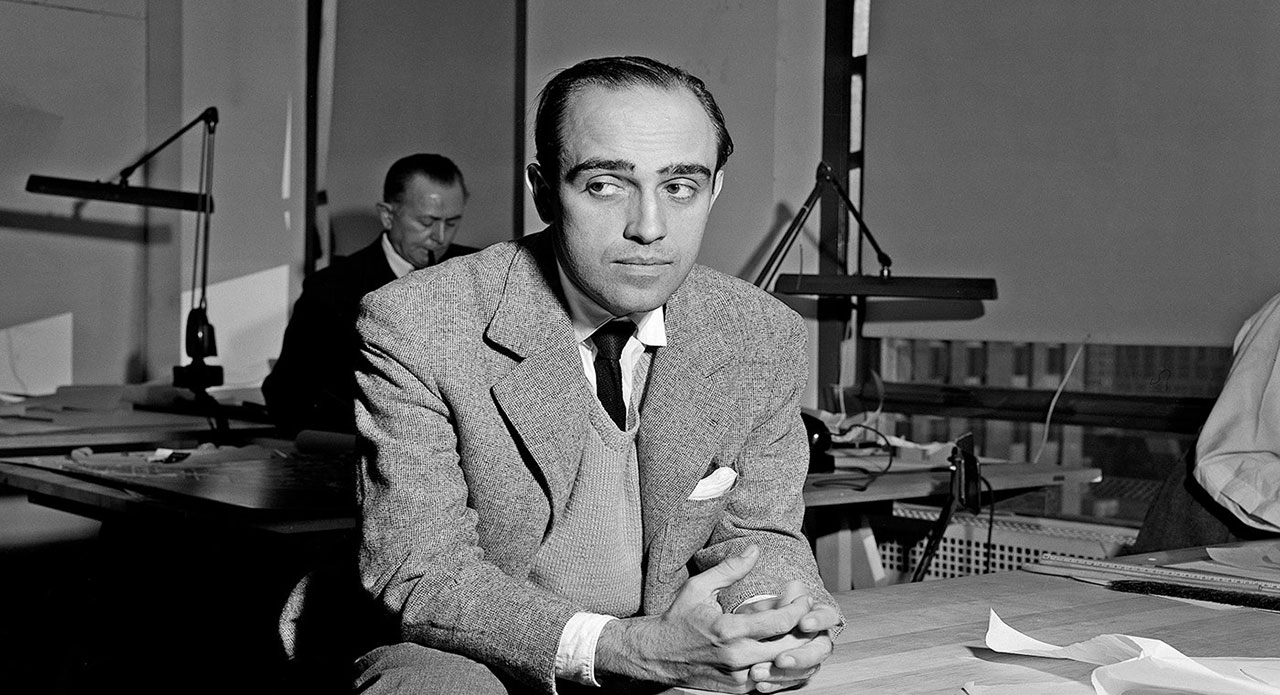


If modern architecture were a racetrack, Oscar Niemeyer would be that dangerously brilliant driver who storms in, ignores the instructions, takes every corner sideways, and still manages to cross the finish line looking annoyingly elegant. While the rest of the architectural world was busy drawing sensible straight lines and praising the virtues of right angles, Niemeyer sauntered in, glanced at the ruler, and probably tossed it out of the nearest window. Why should buildings be stiff and practical, he argued, when they could swoop, glide, and flirt with the sky? This was a man who looked at reinforced concrete—the construction equivalent of boiled potatoes—and sculpted it into forms so seductive you’d think gravity had taken the day off. Brazil’s skyline, and indeed much of the modern world’s architectural imagination, was never the same again. Niemeyer didn’t just design buildings. He designed emotions, civic pride, and the irresistible urge to stare upward in disbelief.

A Life Written In Curves
Oscar Niemeyer’s story begins in Rio de Janeiro, where he was born in 1907 and quickly developed the kind of architectural appetite that made straight lines feel like a personal insult. He joined the office of Lucio Costa, one of Brazil’s leading architects, and from there catapulted into global fame with his astonishing contributions to the Ministry of Education and Health building—a project guided by Le Corbusier himself. While the world was dabbling cautiously in modernism, Niemeyer jumped headfirst into it, adding his signature fluidity and sense of movement. His early works already hinted at his belief that architecture wasn’t simply the art of solving problems but an opportunity to let imagination run riot.
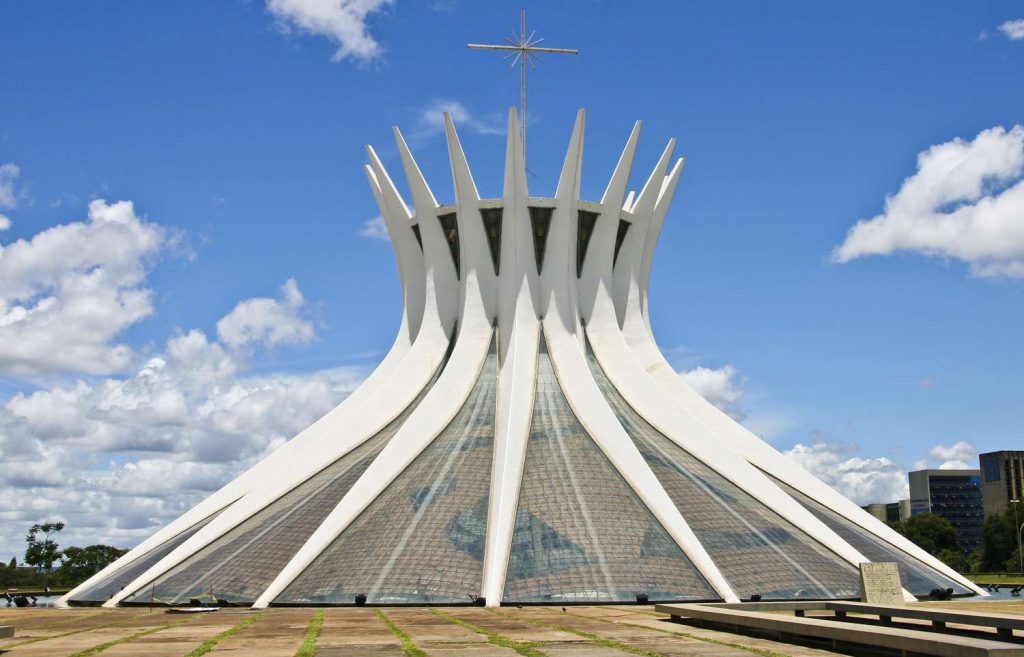
Brasília A City That Looks Like It Was Drawn After Three Espressos
If there’s one project that sealed Niemeyer’s place in architectural immortality, it is Brasília—the audacious new capital of Brazil, built in the middle of nowhere with the confidence of a nation betting everything on the future. Niemeyer was responsible for the city’s major public buildings, and he approached the task with the glee of a sculptor given an unlimited supply of clay. The result? Structures like the Cathedral of Brasília, all sweeping hyperbolic curves, and the National Congress building, with its iconic pair of saucer-like domes. These were not just government buildings; they were architectural exclamation marks, each one daring you to admit that modernism could be emotional, sensual, and utterly unhinged from convention.
The Man Who Made Concrete Feel Like Silk
What set Niemeyer apart from other modernists was his refusal to worship at the altar of pure functionality. Where others insisted that shape must follow purpose, Niemeyer declared that beauty could be a purpose in itself. His mastery of concrete allowed him to create fluid, organic structures—forms inspired by the human body, the curves of mountains, and the rolling waves of the Brazilian coastline. While many architects were content to let their buildings sit politely on the ground, Niemeyer’s designs often felt as though they were floating, dancing, or preparing to take flight. His work was modernism, yes, but modernism with a pulse.
Icons, Legends, And The Niemeyer Touch
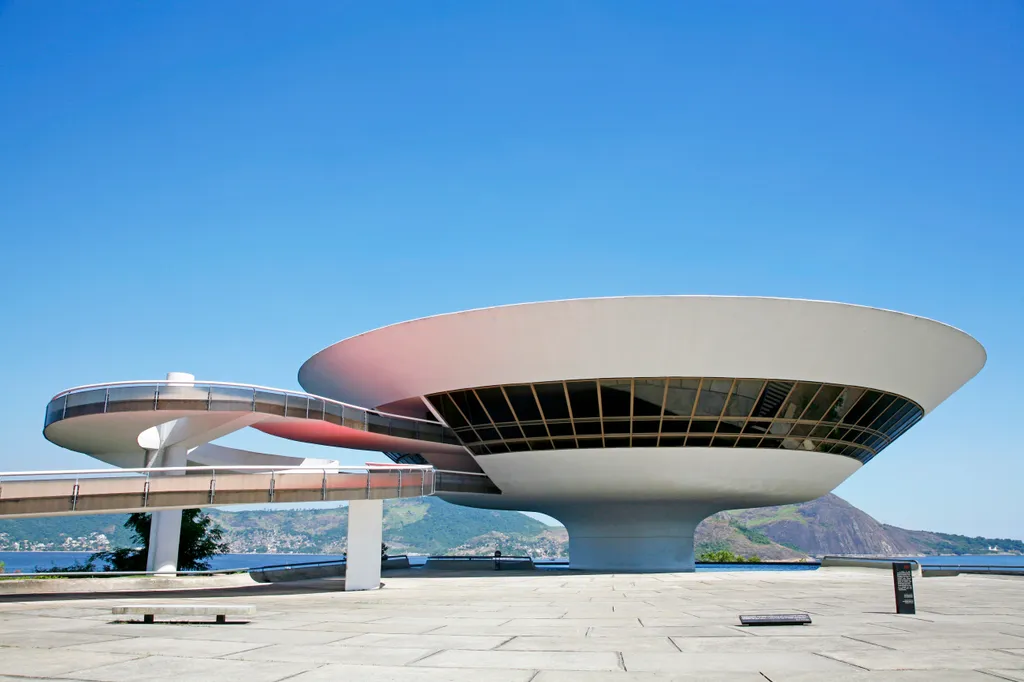
Among his most celebrated works are the Niterói Contemporary Art Museum, which looks like a UFO that politely decided to land by the sea; the Oscar Niemeyer Museum in Curitiba, with its giant “Eye” hovering above the plaza; and the headquarters of the French Communist Party in Paris—a gleaming, futuristic dome that feels like a set piece from a retro sci-fi film. Each building carried Niemeyer’s unmistakable DNA: sweeping forms, sculptural bravado, and a kind of joyful defiance that turned static structures into experiences. He collaborated with giants like Le Corbusier yet maintained an artistic independence that made his architecture unmistakably, almost defiantly, his own.
A Legacy That Still Radiates Across Continents
Niemeyer lived to the age of 104, long enough to witness global architecture evolve through multiple eras—and long enough to remind everyone that modernism need not be rigid, austere, or predictable. His belief in the power of curves, beauty, and experimentation continues to influence architects worldwide. In a profession often dominated by caution, Niemeyer insisted on audacity. In a world obsessed with efficiency, he fought for wonder. And in an age of grey, he painted with concrete as though it were sunlight.
The Spirit Of A Rebel Architect
Ultimately, Oscar Niemeyer was more than a designer; he was a visionary who used architecture as a form of resistance, expression, and joy. He reshaped the aesthetic identity of a nation and expanded the vocabulary of global modernism. His buildings may be made of concrete, but they pulse with life—fluid, bold, unapologetically dramatic. And in a century crowded with architectural voices, Niemeyer’s remains unmistakably the loudest, the curviest, and—and let’s be honest—the most fun.