

In a world obsessed with toughness ratings and technical resilience, porcelain dials stand apart by doing the opposite. They whisper instead of shout. Smooth, luminous, and deceptively delicate, porcelain has long been associated with fragility — an unlikely candidate for the rigours of daily wear. And yet, in the rarefied realm of high end watchmaking, porcelain has staged a quiet revival, transforming vulnerability into virtue.
What draws collectors to porcelain is not bravado but restraint. Its appeal lies in its serenity — a surface so pure and flawless that it feels almost unreal. Unlike lacquer or enamel, porcelain possesses a depth that seems to glow from within, catching light softly rather than reflecting it harshly. It is elegance distilled to its most honest form.
The Origins of Porcelain On The Dial
Porcelain dials date back to early pocket watches of the eighteenth and nineteenth centuries, when legibility and permanence were paramount. Fired at extremely high temperatures, porcelain offered a bright white surface that resisted fading and provided sharp contrast for hand painted numerals. However, its susceptibility to cracking and chipping eventually made it impractical as watches became smaller and more mobile.
As wristwatches rose to prominence, porcelain quietly disappeared, replaced by metals, enamel, and later industrial finishes. It survived only in restoration workshops and museums — a reminder of a gentler, more patient era of horology. The modern resurgence of porcelain dials has little to do with nostalgia and everything to do with craftsmanship. As collectors grew weary of mass production and uniformity, independent watchmakers began revisiting forgotten techniques that demanded time, discipline, and an uncompromising hand. Porcelain, with its unforgiving nature, became a badge of honour.
Creating a porcelain dial is a high risk endeavour. The material must be shaped, dried, fired, glazed, and fired again. Any imperfection can cause cracking or warping, sending days of work into the discard pile. Unlike enamel, porcelain allows no easy correction. Perfection is not adjusted — it is achieved or abandoned.
Also Read: Top Salmon Dial Watches: The Best Models Every Collector Should Know
The Beauty of Imperfection Perfected
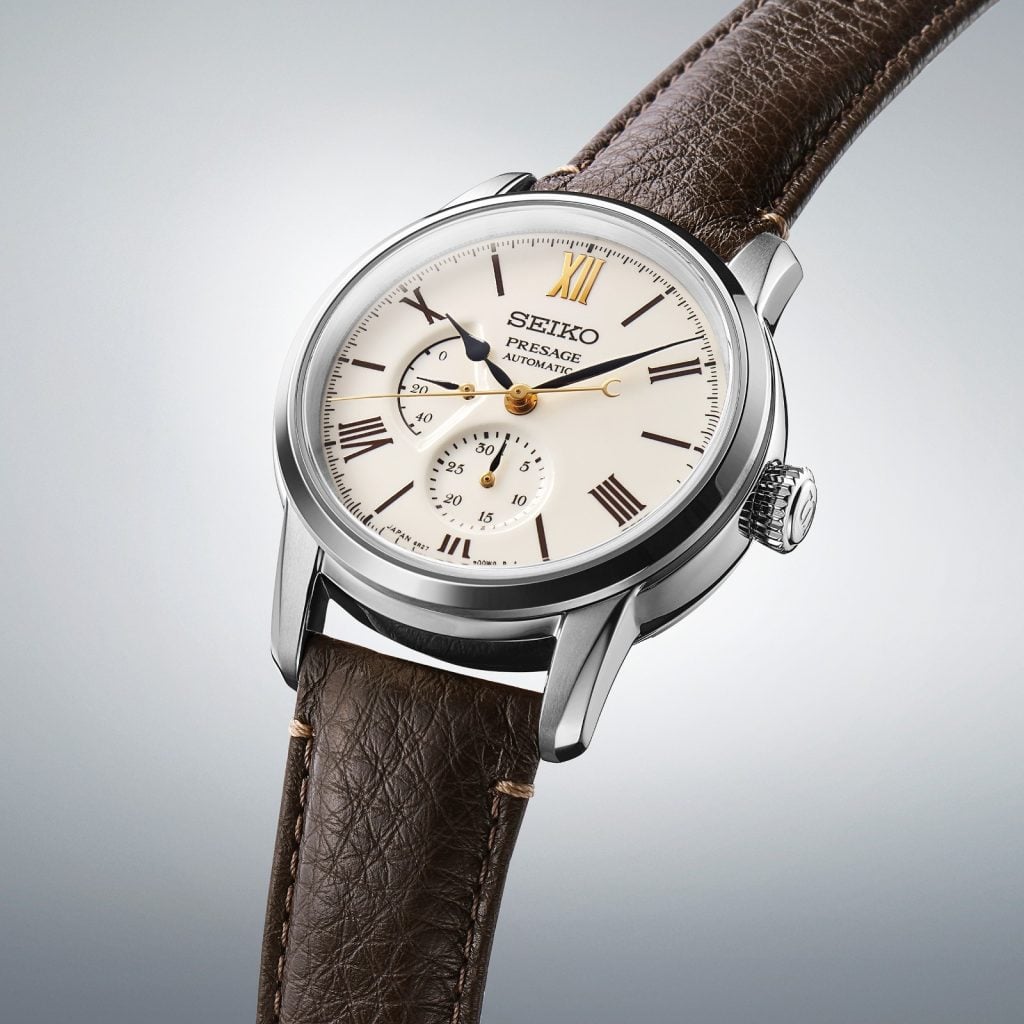
What sets porcelain apart is its organic purity. Each dial carries minute variations, subtle shifts in tone that make every piece unique. The surface is neither glossy nor matte but exists somewhere in between — soft, tactile, and deeply human. Printed numerals sit crisply on the surface, often using traditional techniques that echo early watchmaking practices. In an era dominated by CNC machining and laser precision, porcelain dials feel almost radical. They remind us that beauty can still come from hands rather than machines, and that fragility handled with respect becomes strength.
Who Is Using Porcelain Today
Select independent watchmakers have become torchbearers of porcelain dial craftsmanship. Brands like AnOrdain have reintroduced porcelain to a new generation, pairing classical dial making with contemporary design language. Habring², Furlan Marri, and niche ateliers across Europe have explored porcelain’s expressive potential, often in small, highly limited runs. At the upper echelons of horology, porcelain is treated as a statement rather than a trend. It signals patience, confidence, and an understanding that true luxury does not need to impress immediately — it reveals itself slowly.
Why Porcelain Matters In Modern Watchmaking
Porcelain dials challenge the modern definition of durability. They are not meant to be abused, rushed, or taken for granted. Instead, they demand care — and in return, they offer timelessness. A well made porcelain dial will not fade, tarnish, or age unevenly. Its beauty remains suspended in time, untouched by fashion cycles.
For collectors, owning a porcelain dial watch is an act of appreciation rather than consumption. It represents an alignment with slower values — patience over speed, craft over convenience, substance over spectacle.
Also Read: What Is Onyx? How This Deep-Black Stone Becomes a Luxury Watch Dial
The Quiet Power Of Porcelain
Porcelain dials are not about technical dominance or mechanical bravado. They exist at the emotional edge of watchmaking, where fragility becomes formidable through mastery. In a landscape crowded with innovation, they stand still — serene, luminous, and uncompromisingly honest. Because sometimes, the most powerful statement a watch can make is not how much it can endure, but how beautifully it can remain unchanged.