How Claude Parent Became The Most Radical Figure In 1960s French Architectural Design
Claude Parent designed spaces that challenged the body, confused the eye, and completely rejected the idea that architecture should behave itself
Most architects spend their careers trying to make buildings calm, practical, and easy to live in. Claude Parent looked at that entire philosophy and essentially decided it was unbearably dull. Emerging from the French architectural scene of the 1960s, Parent became one of the most radical and deeply marginal figures of his generation, producing buildings that seemed to reject comfort, symmetry, and even gravity itself. While postwar Europe embraced neat modernist towers and rational planning, Parent introduced sloping floors, destabilising interiors, and structures that forced people to physically engage with space rather than simply occupy it. His architecture was not designed to soothe. It was designed to provoke. And naturally, much of the establishment thought he had completely lost his mind.
France in the 1960s: A Culture Ready To Revolt
The timing of Parent’s arrival mattered enormously. France in the 1960s was experiencing intellectual rebellion on every level. Cinema was abandoning traditional storytelling, artists were rejecting conventional aesthetics, and students were preparing for the cultural explosions that would eventually define May 1968. Yet architecture remained strangely rigid, dominated by functional modernism and repetitive concrete housing blocks that prioritised efficiency over emotion. Parent saw this as a failure of imagination. Alongside theorist Paul Virilio, he began developing ideas that challenged not just how buildings looked, but how human beings physically experienced them. Their theories would become some of the most controversial concepts in modern architectural history.
The Oblique Function Changed Everything
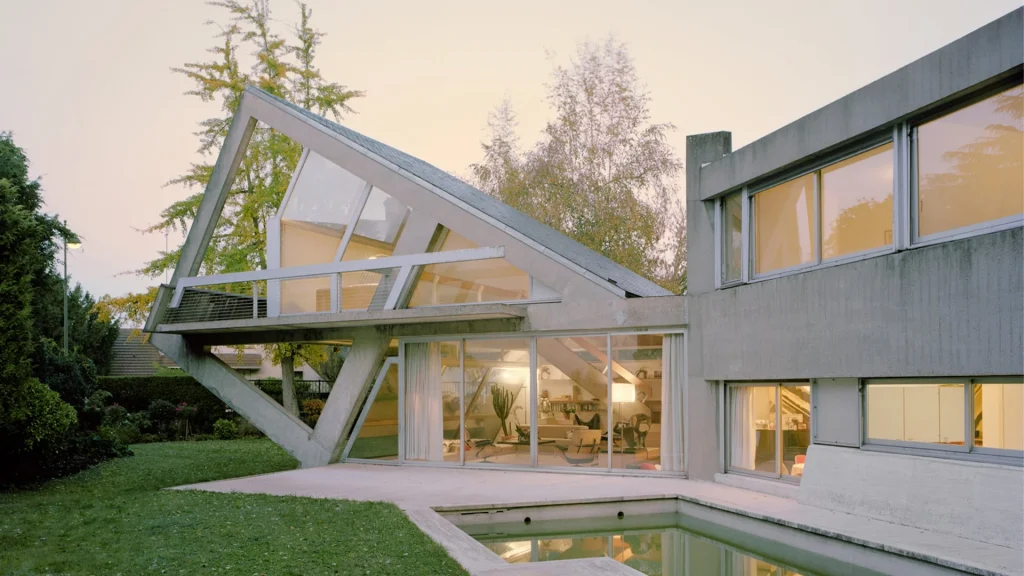
At the centre of Parent’s philosophy sat the “Function of the Oblique,” a theory developed with Virilio that completely rejected the traditional idea of horizontal living. Parent believed flat floors encouraged passivity and predictable behaviour. In his view, architecture had become too static, too safe, and too disconnected from the body. By introducing slopes, inclines, and unstable spatial arrangements, he wanted buildings to generate movement, awareness, and interaction. Rooms no longer behaved conventionally. Walls could become circulation spaces, floors could feel like landscapes, and movement itself became part of daily experience. Walking through one of Parent’s designs often felt less like entering a building and more like navigating a physical argument against architectural conformity.
Architecture As Physical Experience
What made Parent so radical was that he treated architecture almost like psychology made concrete. He did not see buildings as containers for life, but as forces capable of influencing human behaviour. His interiors demanded participation. People had to constantly adjust their balance, their posture, and their awareness of space. It was architecture that refused invisibility. Critics often accused his work of being impractical, and in some cases they were absolutely right. But practicality was never the point. Parent wanted architecture to interrupt routine and challenge the body’s relationship with its environment. Long before experiential design became fashionable, he understood that buildings could create emotional and physical reactions far beyond simple function.
Also Read: How Roberto Conte Captures The Power Of Brutalism Through Light, Mass, And Atmosphere
The Church That Looked Like A Concrete Fortress
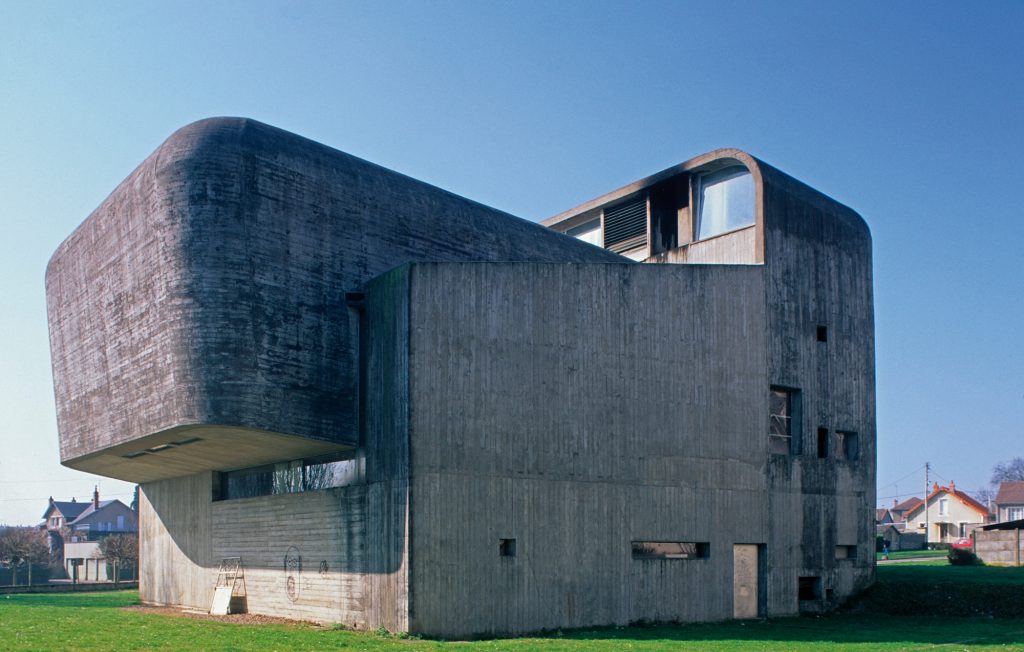
One of Parent’s most iconic projects remains the Church of Sainte-Bernadette du Banlay in Nevers, completed in 1966. The structure looks less like a traditional church and more like an enormous concrete bunker abandoned after an apocalyptic war. Massive angular forms collide with brutal force, narrow openings control the entry of light, and the building carries an overwhelming sense of tension and weight. Yet despite its harshness, the church possesses an undeniable spiritual atmosphere. Parent stripped away decorative nostalgia and replaced it with raw physical presence. The result divided opinion immediately. Some considered it visionary brutalism. Others thought it resembled military infrastructure. Today, however, it stands as one of the defining examples of radical postwar French architecture.
Why Claude Parent Remained Marginal
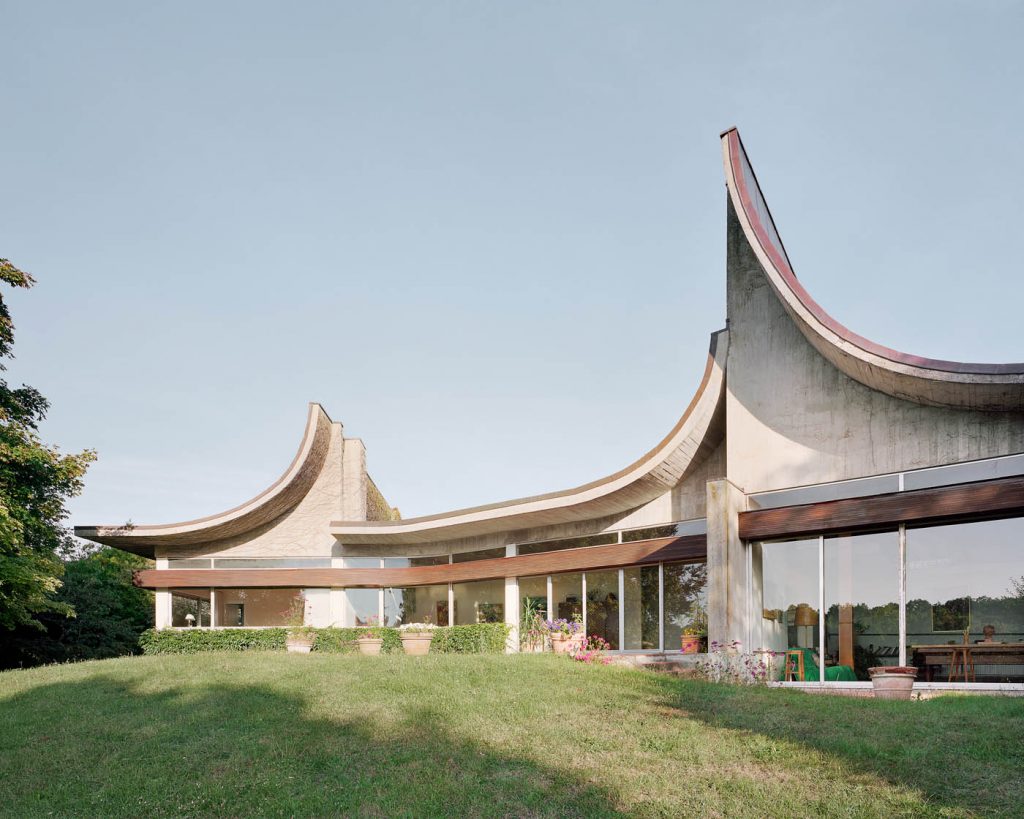
The problem with revolutionary ideas is that most clients prefer stability. Developers wanted efficient buildings. Governments wanted affordable housing. And ordinary people generally like floors that remain level beneath their feet. As a result, Parent spent much of his career operating outside the architectural mainstream. His ideas were admired intellectually but rarely embraced commercially. Yet influence does not always arrive through popularity. Over time, his theories began shaping later generations of experimental architects interested in movement, instability, and spatial tension. Elements of his thinking can now be found in deconstructivist architecture, contemporary museums, and experiential public spaces that prioritise emotional interaction over rigid functionality.
Also Read: Who Is Eugene Tssui? Inside the Visionary Work Of The Architect, Sculptor, And Fashion Innovator
The Legacy Of A Man Who Refused Comfort
Today, Claude Parent feels remarkably contemporary precisely because modern architecture has once again become obsessed with polished sameness. Luxury towers increasingly resemble oversized electronic devices, clean but emotionally empty. Parent’s work still feels disruptive because it refuses visual comfort and demands physical engagement. He believed architecture should not quietly fade into the background of life. It should confront you, challenge you, and occasionally make you uncomfortable. That philosophy ensured he remained marginal during much of his career, but it also guaranteed his lasting relevance. Because while most architects were designing buildings people could merely live inside, Claude Parent was designing buildings people could actually feel.