How Ricardo Bofill Transformed An Abandoned Cement Factory Into A Dream Home
Most architects dream of designing the perfect home, but very few decide that the ideal starting point is an abandoned cement factory surrounded by industrial ruins and towering silos
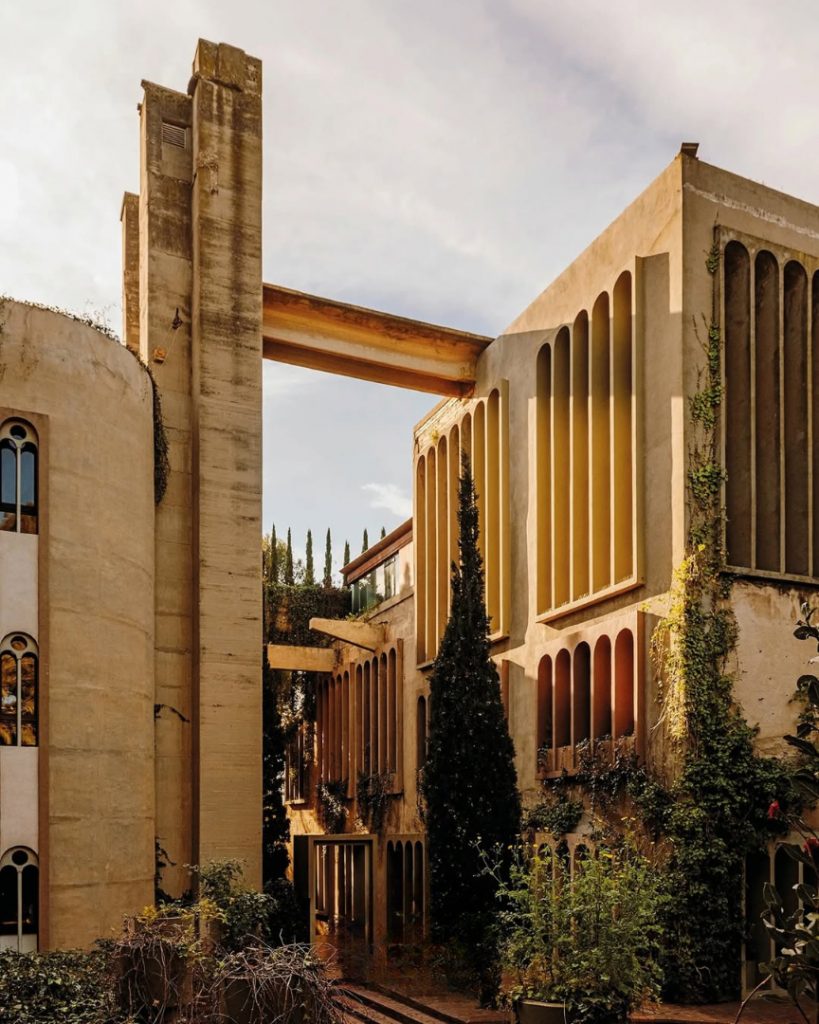
There are normal people who look at an abandoned cement factory and see dust, decay, rust, and the sort of place where pigeons go to die. Then there was Ricardo Bofill, who looked at a collapsing industrial complex outside Barcelona in 1973 and thought, “Yes. I shall live here.” Which tells you almost everything you need to know about the man. Because while most architects spend their careers sketching polite modern villas filled with expensive chairs nobody is allowed to sit on, Bofill decided to turn a post-industrial nightmare into one of the most cult architectural spaces on Earth. The result became known simply as La Fábrica, or “The Factory”, a former cement plant reborn as home, studio, laboratory, garden, archive, and architectural philosophy all at once. And decades later, it still feels less like a residence and more like the secret headquarters of a man planning to redesign civilisation itself. Yet that is precisely what Ricardo Bofill did in the 1970s, transforming a forgotten industrial complex into one of the most extraordinary private residences and creative studios ever conceived. Part brutalist monument, part surreal sanctuary, and part architectural manifesto, the Factory remains a living expression of how imagination can completely rewrite the meaning of space.
The Day Ricardo Bofill Fell In Love With A Cement Factory
There are normal people who look at an abandoned cement factory and see dust, decay, rust, and the sort of place where pigeons go to die. Then there was Ricardo Bofill, who looked at a collapsing industrial complex outside Barcelona in 1973 and thought, “Yes. I shall live here.” Which tells you almost everything you need to know about the man. Because while most architects spend their careers sketching polite modern villas filled with expensive chairs nobody is allowed to sit on, Bofill decided to turn a post-industrial nightmare into one of the most cult architectural spaces on Earth. The result became known simply as La Fábrica, or “The Factory”, a former cement plant reborn as home, studio, laboratory, garden, archive, and architectural philosophy all at once. And decades later, it still feels less like a residence and more like the secret headquarters of a man planning to redesign civilisation itself.
Reinventing Industrial Ruins
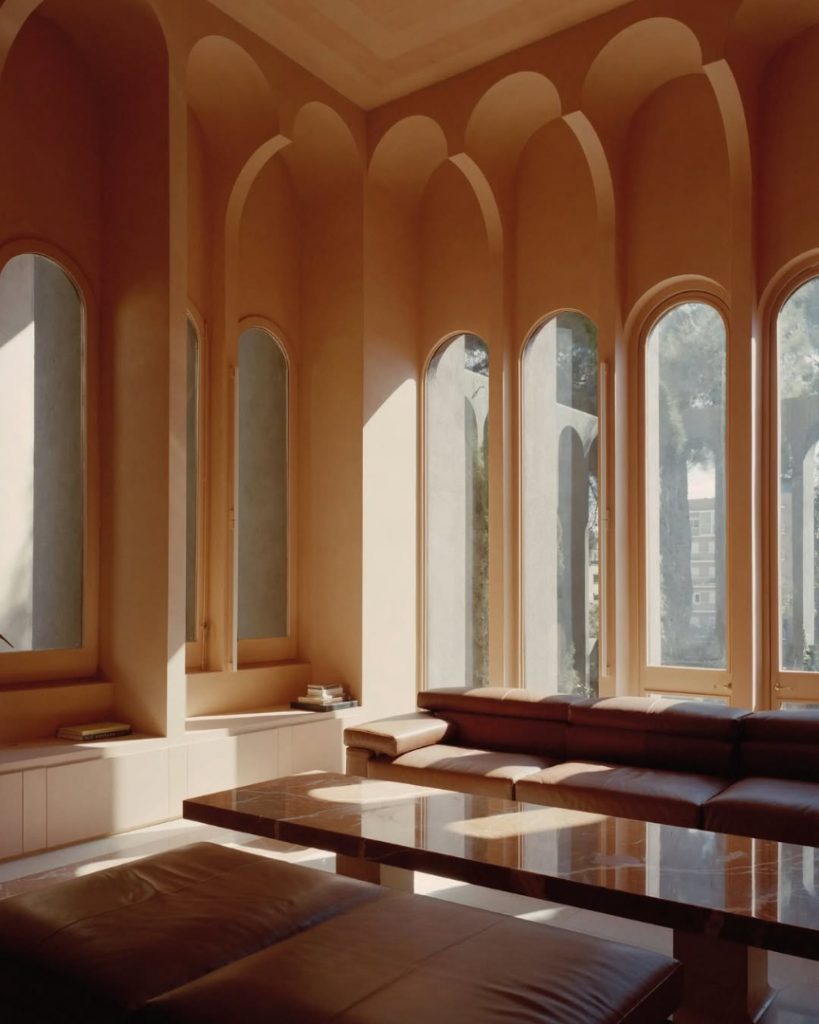
Originally built during World War I, the abandoned cement factory consisted of more than 30 silos, tunnels, machine rooms, underground chambers, and enormous concrete structures spread across a vast industrial site. Most developers would have demolished the entire thing within about seven minutes. Bofill instead spent years selectively removing sections of the complex while preserving the most sculptural elements. Staircases that once served machinery became ceremonial pathways. Giant cylindrical silos were transformed into offices and archives. Empty industrial halls evolved into cathedral-like creative spaces flooded with natural light.
Also Read: How Claude Parent Became The Most Radical Figure In 1960s French Architectural Design
What makes La Fábrica remarkable is that Bofill never attempted to erase its industrial scars. The exposed concrete, colossal geometries, and weathered surfaces remain proudly visible. Unlike traditional luxury homes obsessed with perfection, this place celebrates rawness, scale, and contradiction. Brutalism collides with romanticism. Ruin merges with elegance. Nature aggressively invades concrete walls covered in vines, eucalyptus, palms, and cascading greenery. The building feels simultaneously ancient and futuristic, like the remains of a lost civilisation that somehow discovered minimalist furniture.
The Cathedral Of Creativity
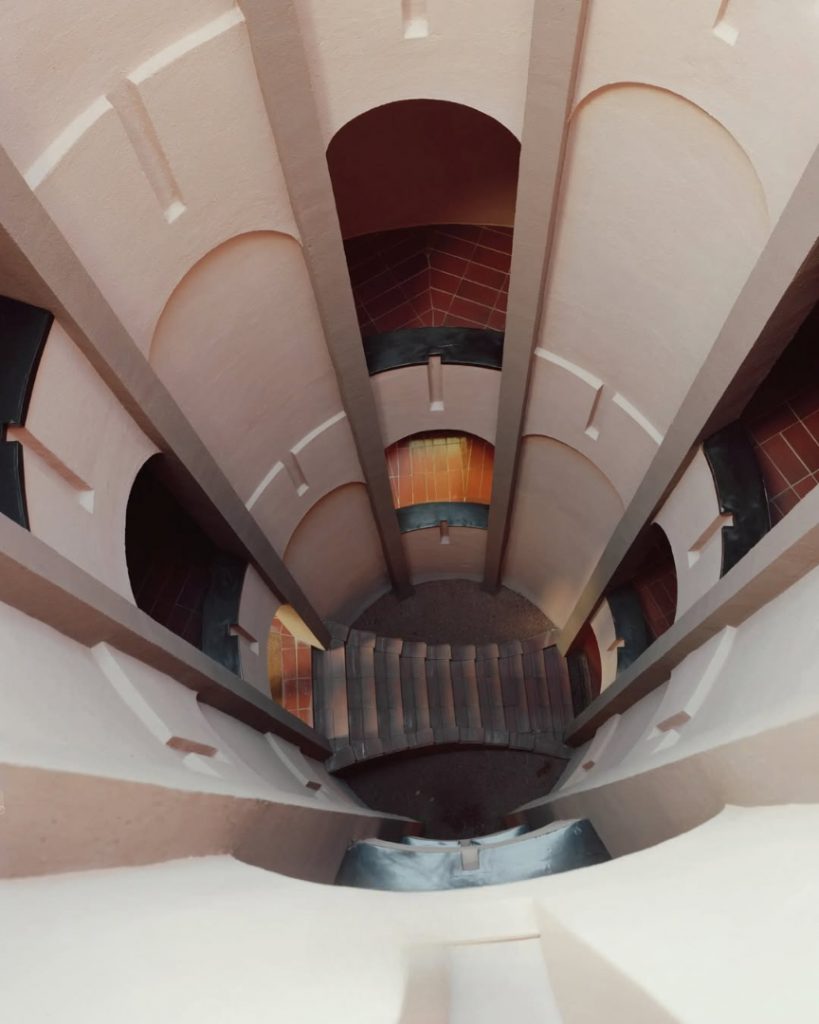
At the heart of the complex sits the studio itself, headquarters of Ricardo Bofill Taller de Arquitectura. And this is where things become properly surreal. Former industrial spaces were converted into gigantic creative halls with impossibly tall ceilings, dramatic arches, oversized windows, and monastic silence. One room, known as “The Cathedral,” looks less like an office and more like a futuristic church dedicated entirely to architecture.
Massive wooden tables sit beneath towering concrete volumes while shafts of sunlight cut through the structure with theatrical precision. The scale is intentionally overwhelming. Bofill believed architecture should provoke emotion, and La Fábrica constantly oscillates between intimacy and intimidation. It is a place where even making coffee probably feels philosophically important.
Also Read: Who Is Eugene Tssui? Inside the Visionary Work Of The Architect, Sculptor, And Fashion Innovator
Unlike the sterile glass offices dominating contemporary architecture firms today, the Factory operates almost like a living organism. Spaces evolve continuously. Rooms are repurposed. Vegetation grows uncontrollably. Time itself becomes part of the architecture. Which is perhaps why the project became enormously influential among architects, designers, photographers, and fashion brands searching for spaces that feel emotionally alive rather than digitally perfect.
Why La Fábrica Became A Cult Design Icon
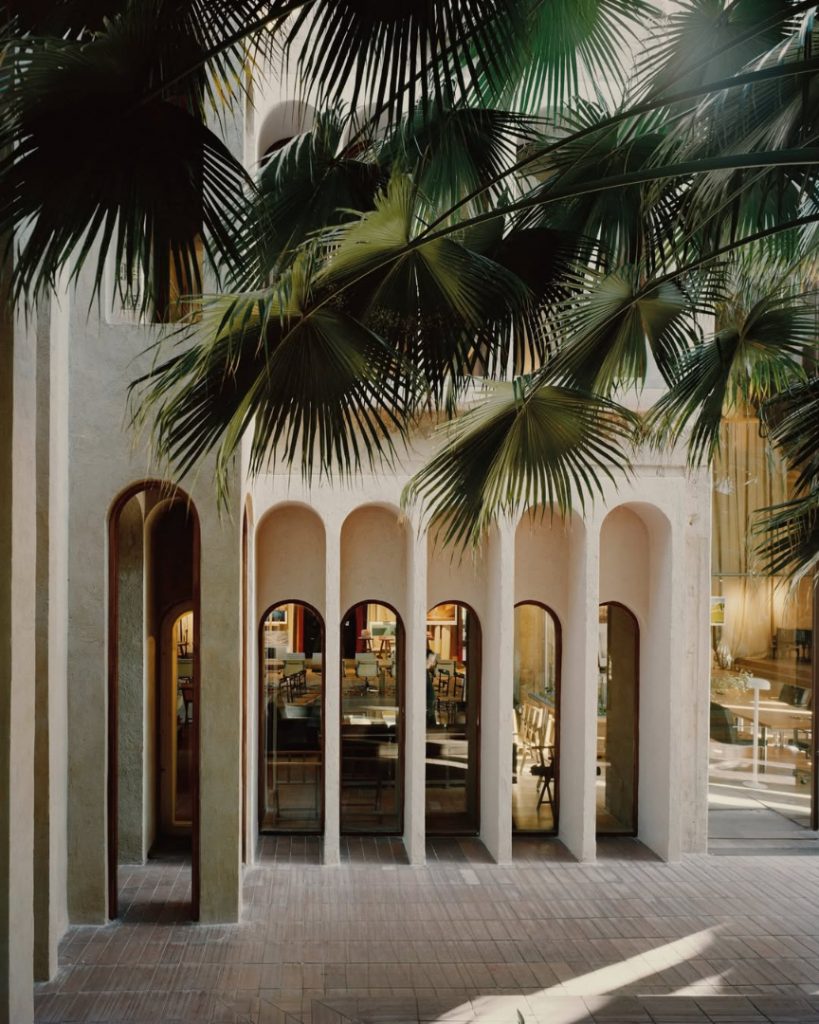
Long before Instagram discovered concrete minimalism and overgrown brutalist aesthetics, Ricardo Bofill had already created the ultimate architectural fantasy world. La Fábrica became legendary precisely because it rejected conventional ideas of luxury. There are no marble excesses, no polished billionaire clichés, no desperate attempts to appear modern. Instead, it embraces atmosphere, memory, texture, and scale.
Its influence now stretches far beyond architecture. Fashion editorials, luxury campaigns, furniture brands, and filmmakers have all borrowed from its visual language. The Factory helped redefine how industrial spaces could be transformed into emotional environments rather than merely functional ones. It proved that adaptive reuse could become deeply poetic. And perhaps that is why La Fábrica still fascinates people decades later. Because it represents something increasingly rare in modern design: courage. The courage to see beauty where others see failure. The courage to preserve imperfection. And the courage to transform an abandoned industrial ruin into one of the most important creative sanctuaries in architectural history.