How Rudolf Steiner Turned Spiritual Ideas Into Architectural Masterpieces
A journey into the visionary world of Rudolf Steiner, where architecture moved beyond structure and became an exploration of movement, spirituality and human experience
Architecture has always been a reflection of what humanity believes, values and imagines. Some architects design for cities, some design for functionality, and others attempt to create something that reaches beyond the physical world. Few explored this boundary as deeply as Rudolf Steiner, whose buildings remain among the most unusual and thought provoking creations in architectural history. Steiner was not a traditionally trained architect, yet his work challenged some of the most established principles of design. He rejected the idea that buildings needed to follow historical styles, strict symmetry or conventional decoration. Instead, he believed architecture could express movement, transformation and the relationship between human beings and their surroundings. His buildings were not simply spaces to occupy. They were designed as experiences.For Steiner, a wall was not just a wall, a staircase was not just a staircase and a room was not just a room. Every shape, material and transition had the potential to influence how people felt, moved and perceived space. The result was architecture unlike anything else of its time.
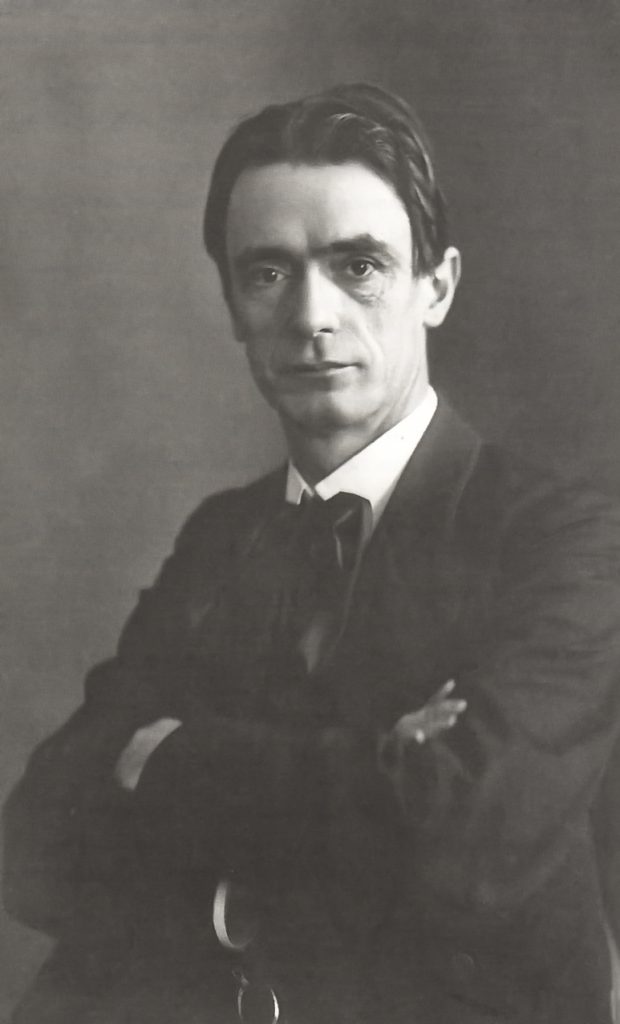
The Architect Who Designed Through Spiritual Principles
Born in Austria, Steiner became known primarily as a philosopher, educator and founder of anthroposophy, a spiritual movement focused on understanding the connection between humanity, nature and consciousness. Architecture became one of the ways he expressed these ideas. Unlike traditional architects who often began with function, geometry or historical references, Steiner approached design through a more abstract question: how can space affect human experience? His answer was architecture that appeared organic, almost as if it had grown rather than been constructed. Buildings were shaped with flowing transitions, unusual angles and sculptural forms that avoided rigid classical rules. This approach placed Steiner’s work somewhere between expressionism, organic architecture and spiritual modernism.
Also Read: Inside the World’s Most Remarkable Cathedrals Built Over Generations
The Goetheanum: Steiner’s Greatest Architectural Experiment
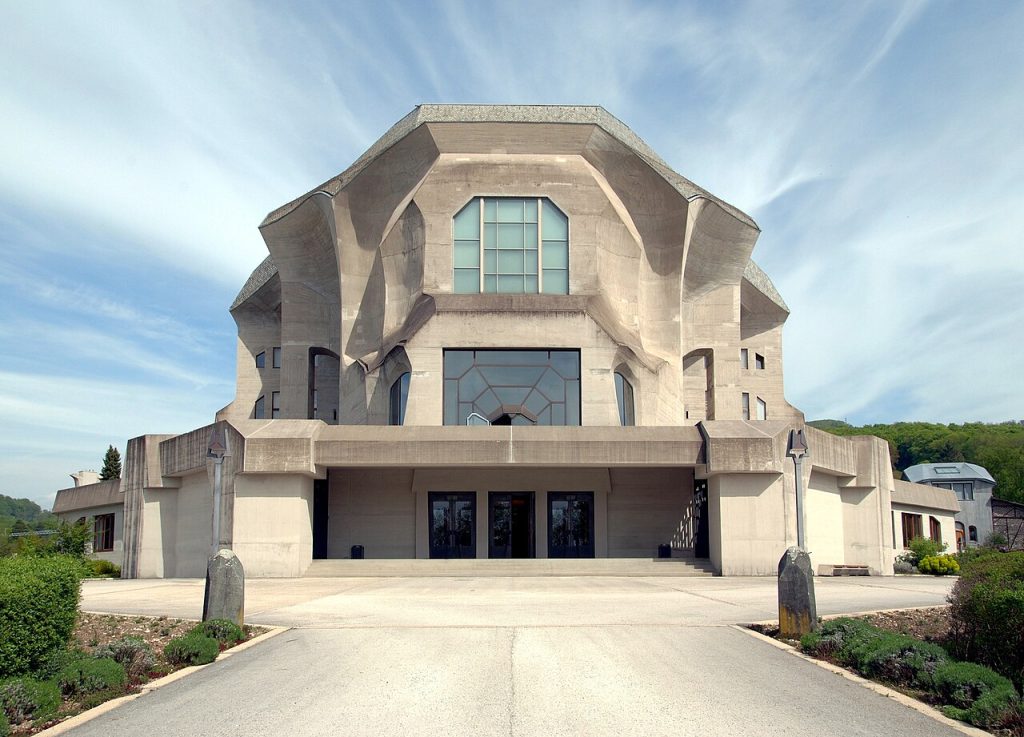
The Goetheanum remains the clearest representation of Steiner’s architectural vision. Located in Dornach, Switzerland, the original Goetheanum was designed as a cultural and spiritual centre for the anthroposophical movement. Unlike the monumental stone buildings of earlier eras, Steiner created something entirely different. The First Goetheanum was constructed primarily from timber and featured two enormous intersecting domes. Its sculptural forms, curved surfaces and expressive details created a building that felt closer to a living organism than a traditional structure. The interior was equally revolutionary. Spaces were designed with theatrical qualities, using colour, light and carved forms to create an atmosphere of transformation. However, the building was destroyed by fire in 1922. Rather than rebuilding the same structure, Steiner used the opportunity to create an even more ambitious vision.
The Second Goetheanum: Concrete Transformed Into Sculpture
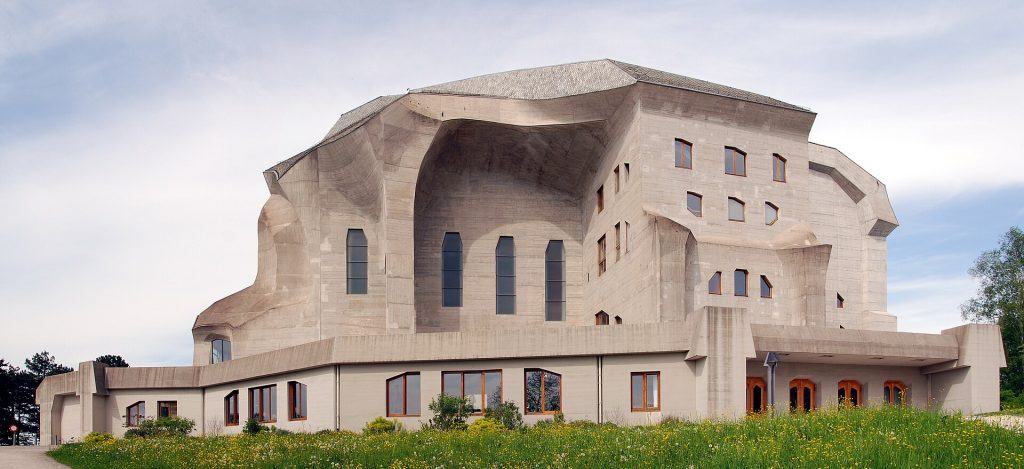
The Second Goetheanum represented one of the most unusual uses of reinforced concrete in modern architecture. At the time, concrete was mainly associated with industrial buildings and engineering. Steiner approached it differently. Instead of treating concrete as a rigid material, he shaped it into flowing, carved forms. The building’s massive walls appear sculpted rather than constructed, with unusual angles, curved transitions and dramatic volumes. The structure contains lecture halls, performance spaces and areas for cultural gatherings, reflecting Steiner’s belief that architecture should encourage community and intellectual exchange. The Second Goetheanum proved that even a heavy industrial material could become expressive and emotional.
The Surrounding Buildings: Creating A Complete Architectural Language
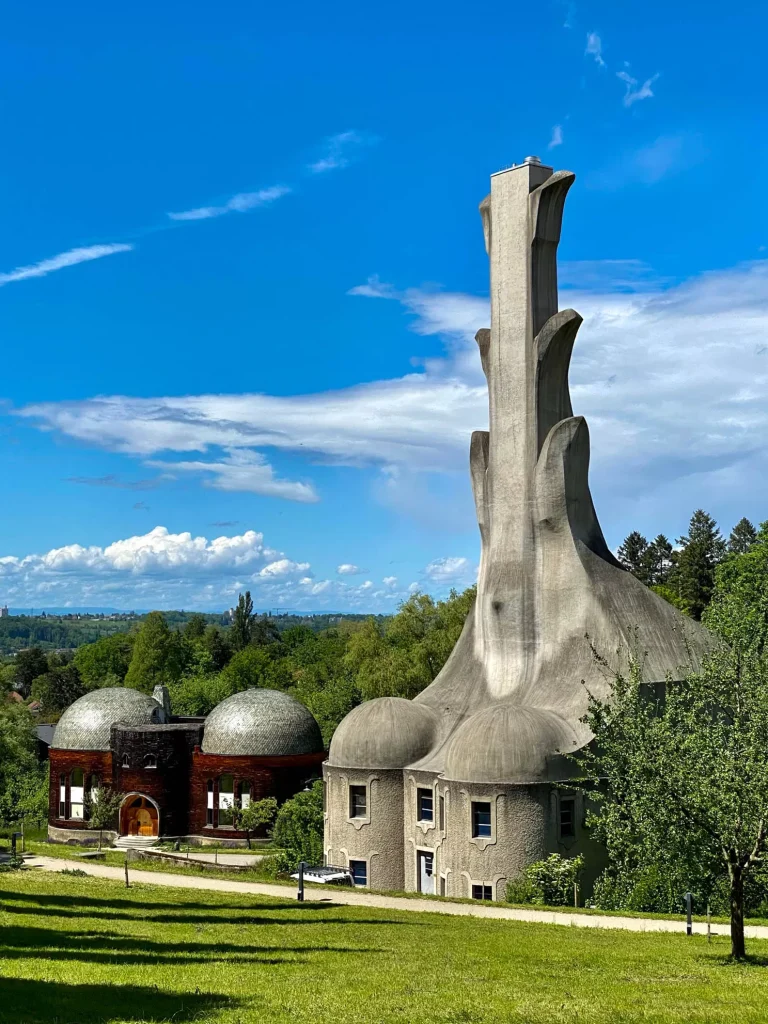
Around the Goetheanum, Steiner developed a collection of buildings that continued the same philosophy. Structures such as the Boiler House, Glass House, Haus Duldeck, Transformer House and Hochatelier each explored different forms while maintaining a shared architectural identity. No two buildings look exactly alike. Yet together they form a complete environment where architecture feels connected rather than isolated. Steiner avoided repetition because he believed every building should respond to its purpose and surroundings. This created a neighbourhood of structures that feels less like a planned development and more like an evolving landscape.
Also Read: Patrik Schumacher Unveils New Identity For Zaha Hadid Architects
Why Steiner’s Architecture Was Different From Modernism
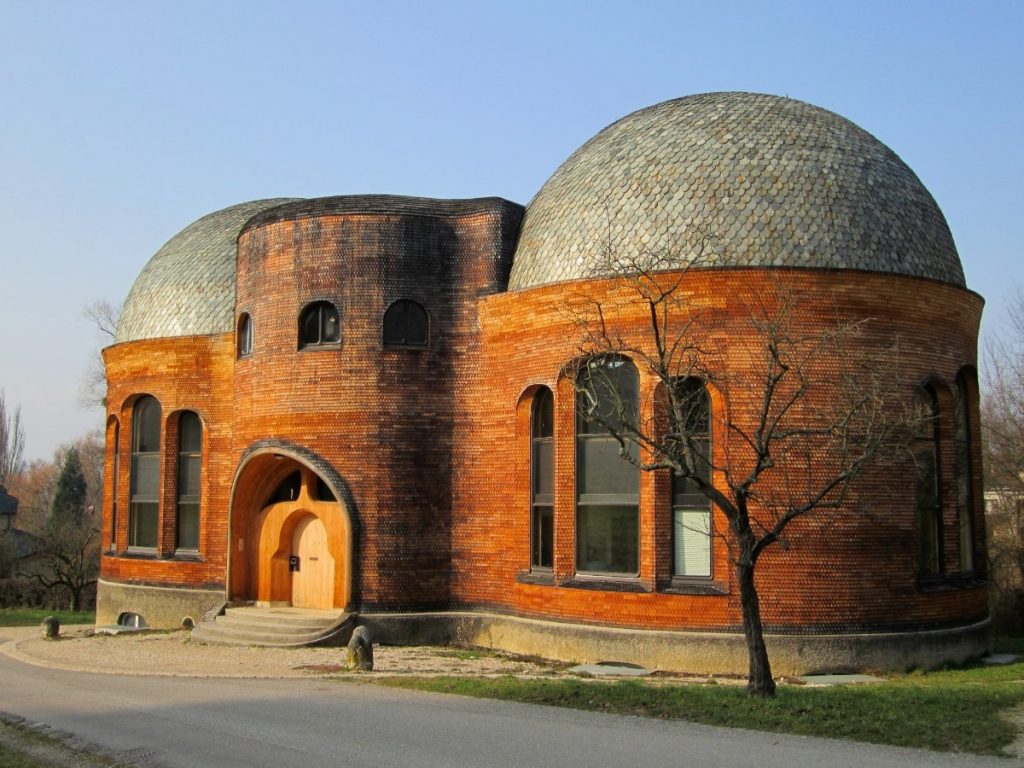
During the early 20th century, architecture was moving towards minimalism, industrial materials and functional design. Movements such as Bauhaus promoted simplicity and efficiency. Steiner’s approach went in another direction. He believed architecture should not remove emotion from buildings. Instead of reducing design to pure function, he wanted buildings to engage the senses and imagination. His work suggested that architecture could influence the inner life of people. This made his buildings difficult to categorise. They were modern but not minimalist. Experimental but not purely technological. Spiritual but physically grounded.
Rudolf Steiner’s Influence On Future Architecture
Although Steiner’s work remained outside mainstream architectural movements for many years, his ideas influenced later generations of designers who explored organic forms, natural materials and human centred spaces. His belief that buildings should connect with human experience can be seen in many contemporary architectural philosophies today. Architects continue to explore similar questions: can buildings affect emotions? can spaces shape behaviour? can architecture become more than shelter? Steiner’s work answered these questions decades before they became central discussions in modern design.
The Legacy Of A Visionary Who Built Ideas Into Stone
Rudolf Steiner’s architecture remains fascinating because it refuses to fit neatly into one category. His buildings are not simply historical monuments or experimental structures. They are physical expressions of a philosophy that believed architecture could transform the relationship between humans and the world around them. In a century filled with glass towers, steel structures and digital design, Steiner’s work still feels surprisingly different. Because he was never only designing buildings. He was designing experiences.