Meet Ana María Gutiérrez, The Colombian Architect Redefining Bamboo Architecture
Through handcrafted construction, vernacular knowledge and the remarkable structural potential of guadua bamboo, Ana María Gutiérrez is creating a contemporary architectural language rooted in the Colombian landscape
There was a time when bamboo was dismissed as the poor cousin of concrete and steel. It was regarded as temporary, rural and too humble for serious architecture. Yet in the hands of visionary designers, it has become one of the world’s most remarkable structural materials, capable of creating buildings that are elegant, resilient and deeply sustainable. Few architects understand this transformation better than Ana María Gutiérrez. Working in Colombia, where guadua bamboo has shaped communities for centuries, she has spent years proving that one of nature’s oldest materials can also be one of architecture’s most progressive. Her buildings do not merely use bamboo as an aesthetic gesture. They allow it to determine structure, atmosphere, climate and experience, creating spaces where craftsmanship, engineering and landscape exist as one continuous architectural language.

Building With The Wisdom Of Place
Ana María Gutiérrez develops her work through Fundación Organismo, an interdisciplinary collective dedicated to ecological research, vernacular construction and community-based design throughout rural Colombia. Rather than imposing architecture upon the landscape, the foundation works with local communities, artisans and builders whose knowledge of guadua bamboo has been passed through generations.
Here, architecture becomes less about imposing form and more about continuing a cultural tradition while responding to contemporary environmental challenges. For Gutiérrez, bamboo is not simply a renewable material. It is part of a complete construction philosophy where buildings emerge naturally from climate, craftsmanship and local identity.
House Of Thought
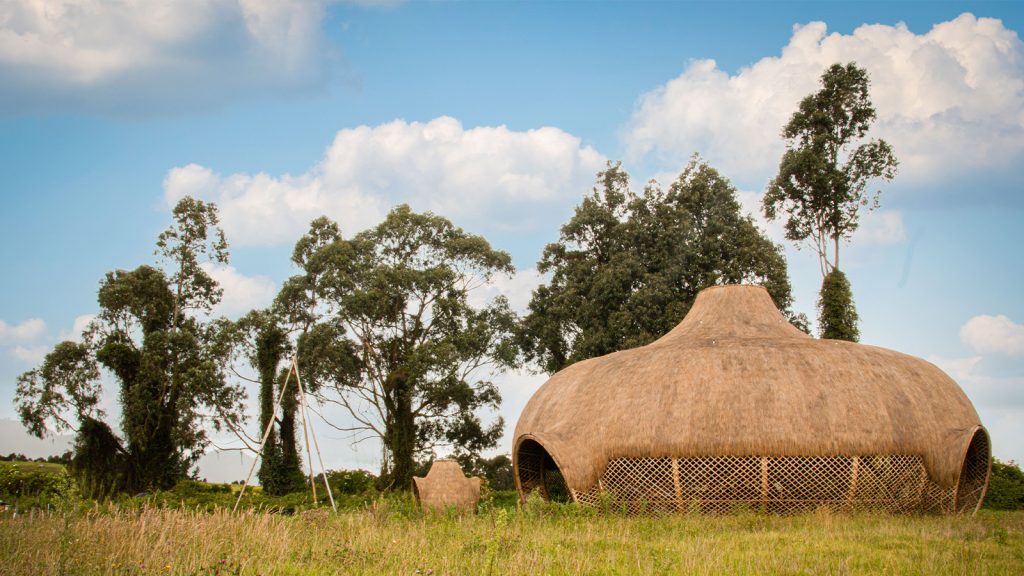
In projects such as the House of Thought, bamboo becomes the defining architectural element rather than an ornamental finish. The structural framework, roof geometry, spatial rhythm and enclosure all emerge directly from the properties of guadua bamboo. Every column, beam and joint celebrates the material’s natural strength while expressing remarkable craftsmanship. Instead of hiding construction, Gutiérrez allows it to become the architecture itself, creating interiors that feel warm, tactile and deeply connected to nature.
Also Read: Masters of Steel: Architects Behind the World’s Most Iconic Structures
Centro De Regeneración Organizmo
At the Centro de Regeneración Organizmo in Tenjo, Gutiérrez expands these principles into a broader ecological campus. Here, bamboo structures are integrated with gardens, natural landscapes and communal spaces, creating an environment where architecture supports education, regeneration and environmental awareness. The buildings rely on passive climatic strategies, handcrafted construction and locally sourced materials, demonstrating that sustainability is not achieved through technology alone but through intelligent design and respect for place. The project reflects an architecture that grows from the land rather than standing apart from it.