Weaving Threads Of Craftsmanship: How Karishma Swali Is Taking Indian Craft Global
Karishma Swali has spent years placing Indian craftsmanship at the heart of global fashion and design. Through Chanakya, the School of Craft, archival work and Chorus, she is creating new pathways for women artisans while keeping centuries-old techniques relevant to a changing luxury landscape
The skills of India’s extraordinary community of artisans and craftspeople have been utilised by various fashion and design houses for decades. Yet, the credit and contribution has largely remained under the radar. Carrying forward her family’s legacy and putting our country’s handcrafted prowess on the global stage is Karishma Swali, creative director of Chanakya International and Chanakya School of Craft, chairperson of Chanakya Foundation, and co-founder of Chorus. She’s reshaping how the world encounters Indian craftsmanship, not as a backdoor for cheap labour but a living heritage with skills passed down generations. Documenting and preserving India’s craft history along the way, Swali is also bringing it to the fore by collaborating with brands such as Dior, Prada, Louis Vuitton, and more.
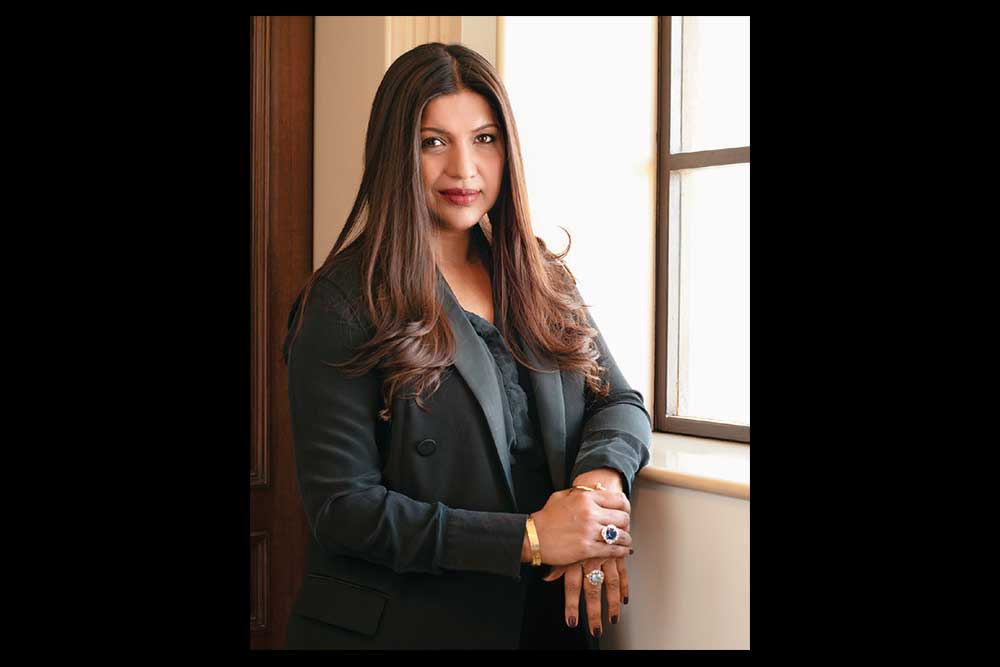
How it Started
What makes her journey interesting is not just what she’s achieved so far, but how instinctively it all started. “My relationship with craft began very intuitively. As a child, I would accompany my father Vinod Shah to the Chanakya International atelier that he founded in 1986. I remember being drawn to the quiet concentration of the artisans, the precision of their hands and the patience inherent in every gesture. Many of them came from 13th- and 14th-generation lineages, and growing up around them taught me to see craftsmen as the bearers of an extraordinary intellectual and material inheritance,” Swali reminisces.
Also Read: ‘This Exhibition Begins At Home’: Bhavna Kakar On Bringing rare Pre-Partition Phulkaris In Delhi
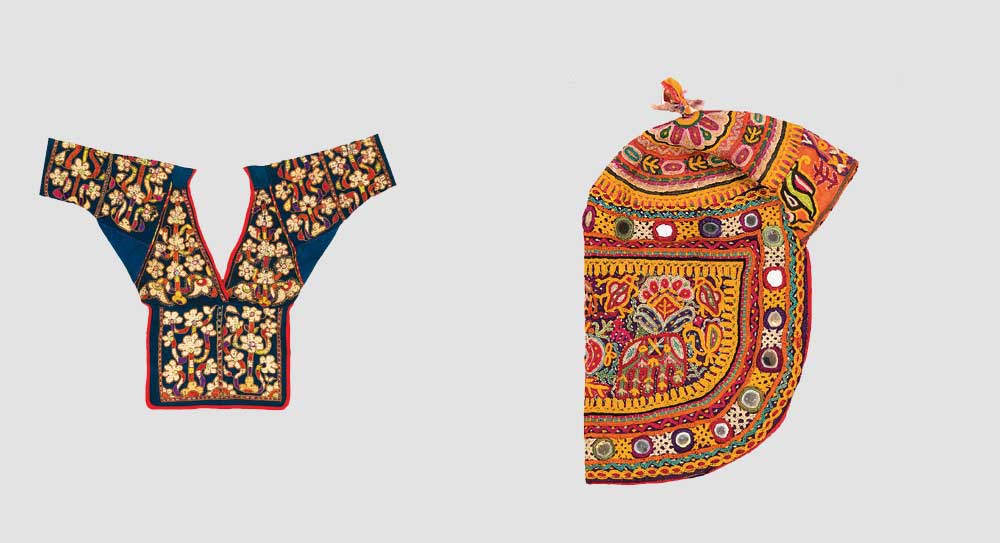
In a bid to absorb these skills, she learnt to draw and trace on cloth, practised aari embroidery alongside master artisans, and travelled across India spending time with craft communities. “This deepened my understanding of how much knowledge resides in the hand: tacit, cumulative and continually enriched through practice. Whether through couture, textiles, sculpture or monumental works of art, handmade has an extraordinary capacity to carry knowledge across generations while continually finding new forms of expression,” she adds.
Learnings on the Way
Swali’s father, she says, remains her most enduring influence even today. “He has always been a seeker. He is constantly questioning, learning and looking more deeply with a genuine sense of wonder. I think that spirit of seeking is also inherent in craft. There is always something more to understand, refine or discover through material and the hand,” she adds. While her pursuit for excellence continues in a rigorous manner, she’s learnt from him that it can still be a joyful process.
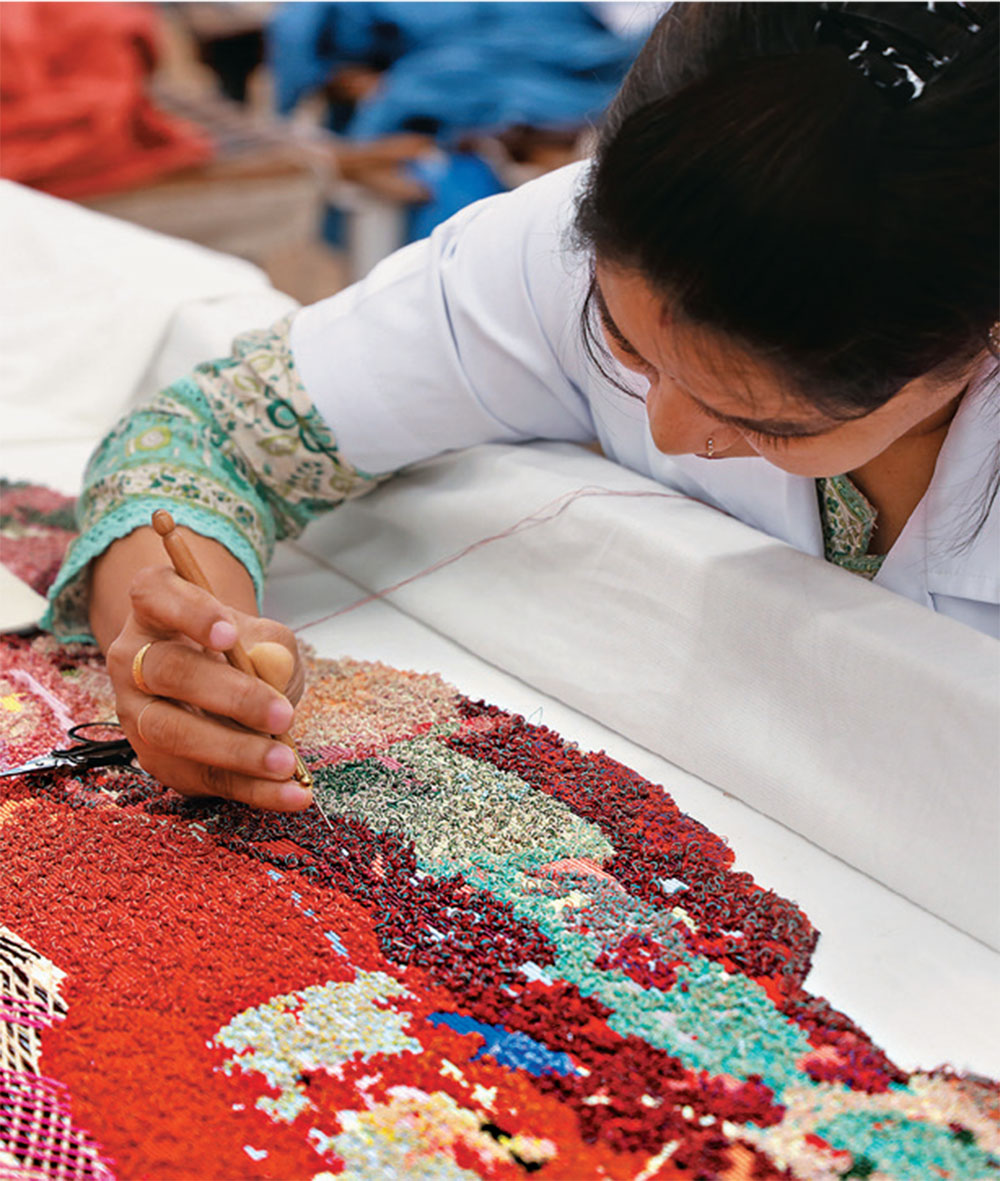
Her time spent in the ateliers exploring materials and understanding techniques gave birth to the idea of creating a space where this knowledge could be learned, experimented with and transmitted to others. In 2016, Swali founded the Chanakya School of Craft in Mumbai, as a non-profit foundation, with women at its centre. To date, the school has educated over 1,400 women in 300 gestures, including hand embroidery, weaving, and macramé. Over time, it has also evolved into an artistic practice with its own contemporary lexicon. “Our curriculum exposes our students to the facets of culture and design. Training women in colour theory, semiotics and art history, in a simple and engaging manner, helps the students embrace craft in all its aspects. As they gain confidence and exposure, they bring new perspectives, contemporary sensibilities and personal histories into traditions that were once defined otherwise,” reveals Swali. Many graduates join Chanakya’s ateliers contributing as skilled practitioners to global collaborations, others build independent practices of their own, and some return to the school as faculty, becoming mentors and custodians of knowledge.
Indian Craft on the World Stage
Fostering cross-cultural exchange between India, Italy and France has remained an important part of her journey, allowing knowledge, ideas and creativity to move fluidly across cultures. Over the years, Chanakya has developed creative partnerships with more than 50 international fashion houses. These include Dior, Fendi, Loewe, Ferragamo, Louis Vuitton, Celine, Prada and Stella McCartney among others. She explains, “Our relationships with fashion houses are deeply collaborative. Each season typically begins with a meeting where we present a capsule of textile and embroidery concepts. Depending on the brand, they may also share a theme or creative direction, but the first proposals around texture, technique, and surface often come from us. It then evolves into a collaborative dialogue. The brands bring their perspective, particularly in silhouettes and overall creative vision, while we focus on developing and refining embroidery and textile elements to complement that direction.”
Also Read: How Couture Embroidery Techniques Are Inspiring Luxury Interiors
The 2,400 craftspeople working in its ateliers to bring these creative visions to life through their hands, are compensated by championing a living-wage model rather than a minimum-wage model, one that enables greater security and independence. In addition is a wider commitment to their wellbeing, continuity of employment and the intergenerational transmission of knowledge.
One of the most iconic moments in the atelier’s history remains the monumental embroidered scenography for Dior’s Fall 2023 presentation at the Gateway of India in Mumbai, including a 46-foot toran realised through more than 20 craft techniques. “The toran holds a significant place in my heart because the artisans who made it were present at its unveiling. The displayed work and its makers were within the same frame, which doesn’t happen nearly enough,” shares Swali.
Through Chanakya, Indian craftsmanship has been showcased at many revered global platforms such as La Biennale di Venezia, Musée Rodin in Paris, Vatican Apostolic Library, Frieze London, Mobilier National, Art Basel and India Art Fair. “These presentations, for us, are part of a larger cultural continuum, one of creating contemporary contexts for knowledge that has travelled through generations, while demonstrating its capacity to continually generate new artistic languages,” she adds.
Collaborations, Milestones and Exhibitions
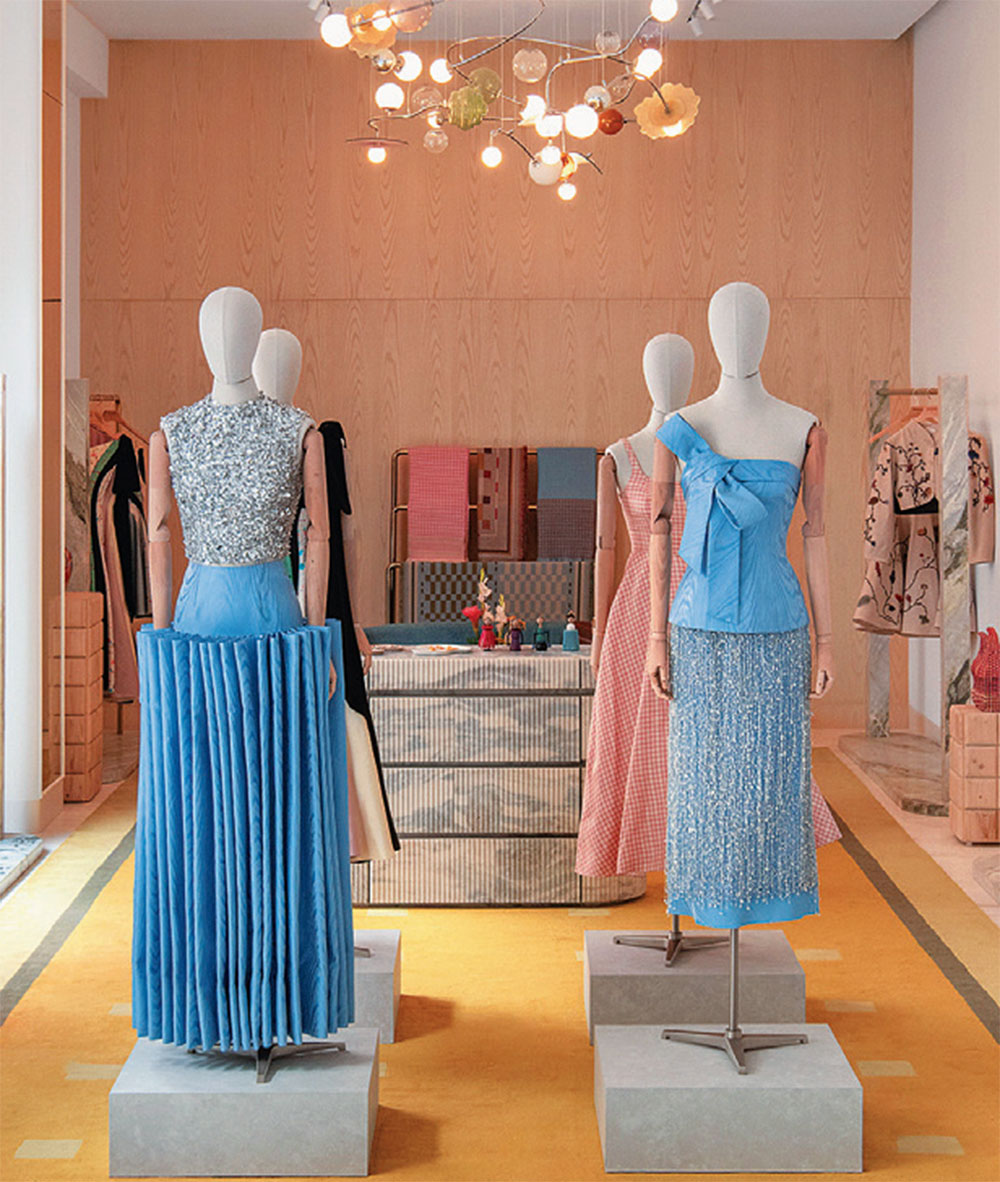
Adding another feather in her cap is Swali’s collaboration with her daughter Avantika in the form of Chorus, a brand spanning textile, objects, food and more, that they established in 2025, complete with a cafe in Mumbai and physical stores in Delhi and Mumbai. “Chorus has been conceived as an ode to making with the hand whether it is a garment, a piece of glassware or a handmade soap. The brand was built on the idea that craft is a way of thinking that can move into almost anything, and food also felt like its natural extension,” she explains.
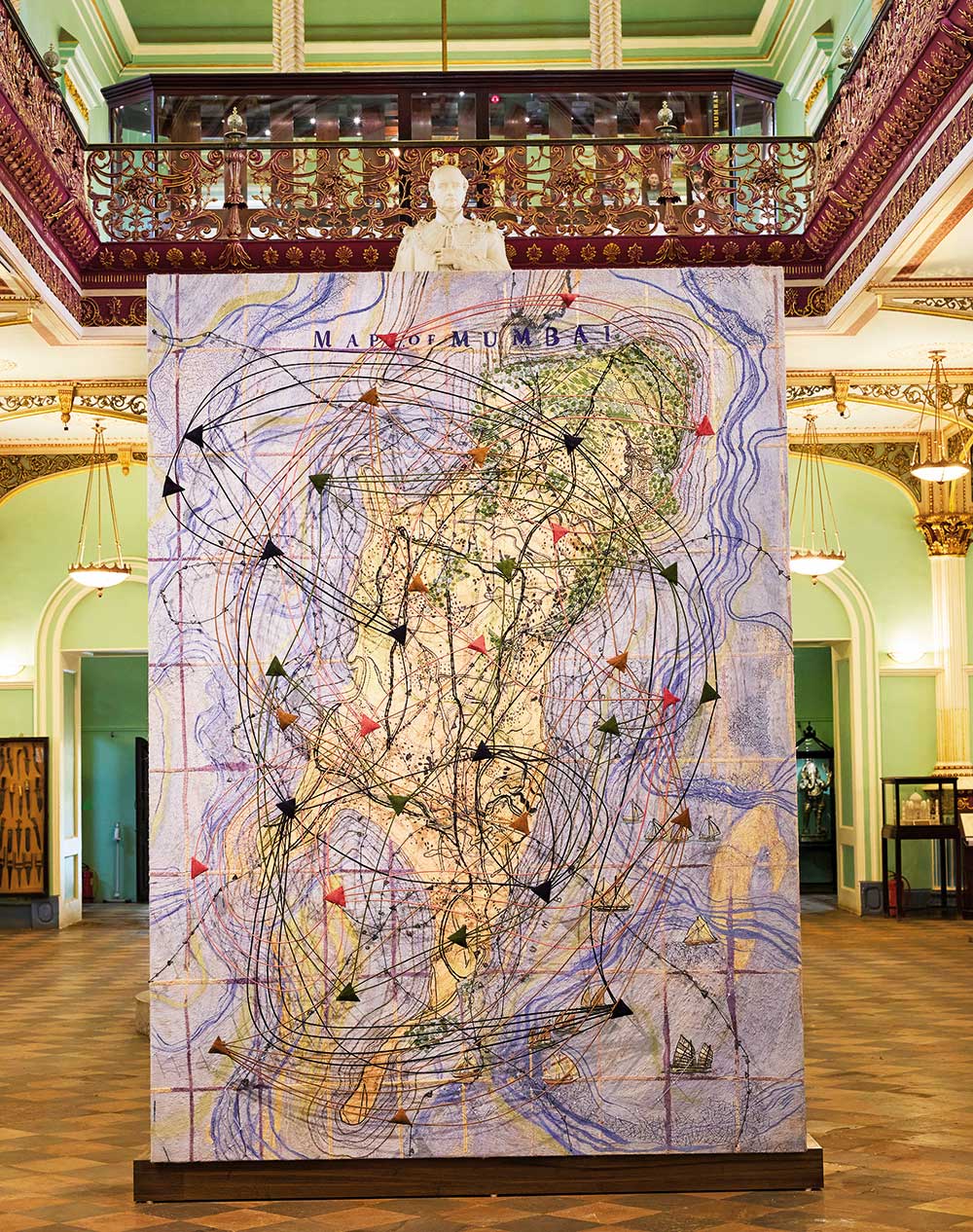
With 2026 marking 40 years of Chanakya International and 10 years of Chanakya School of Craft, the milestone celebrations take the form of three exhibitions in Mumbai. En Route, is on view at the Dr Bhau Daji Lad Museum until 20 October. “Through monumental embroidered maps and globes, it considers cartography as a record of movement, cultural exchange and the transmission of knowledge,” she reveals. Also on showcase are Garden of Gestures at the Chanakya Ateliers until September 30, and Belong at Experimenter, Colaba until October 17. “It brings together expansive textile works and sculptural forms to consider belonging through the body, ecology and inherited systems of knowledge,” says Swali.
With a repository of more than 10,000 historical textiles and craft explorations in Chanakya’s archives, Swali hopes to keep the momentum going by taking this archival knowledge and giving it a new, contemporary life. In essence, this idea has driven her so far that however ancient its origins, handmade can always keep evolving.