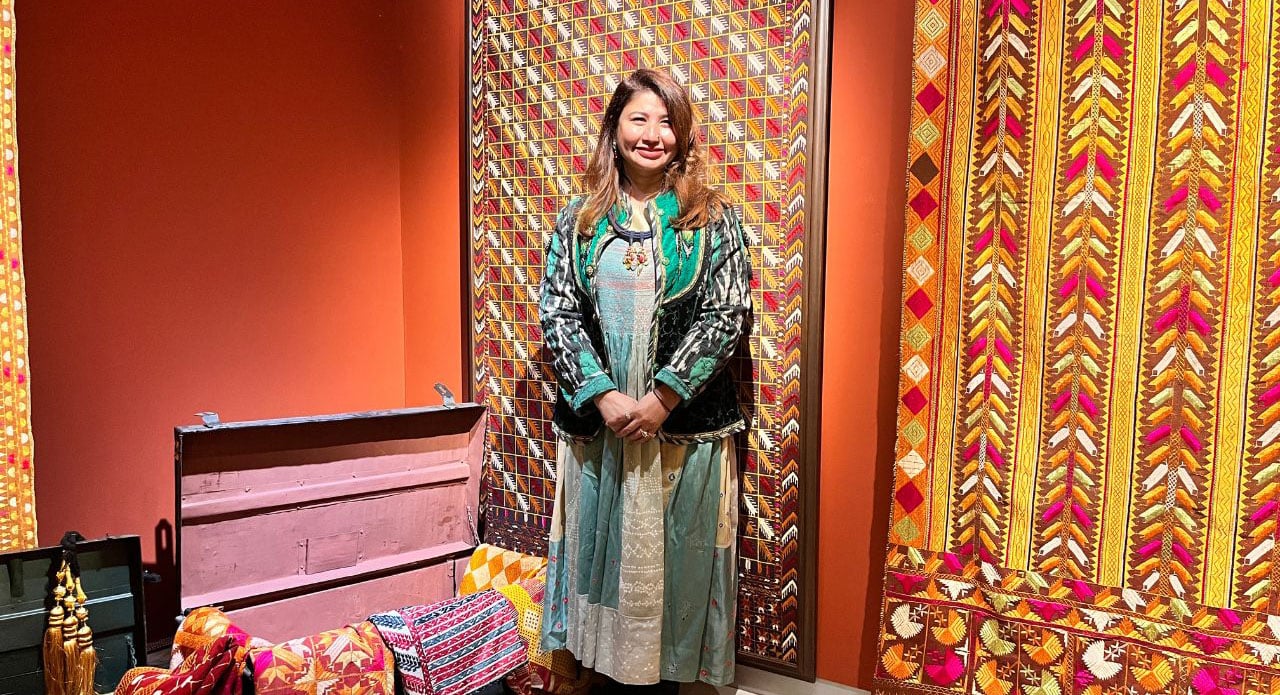


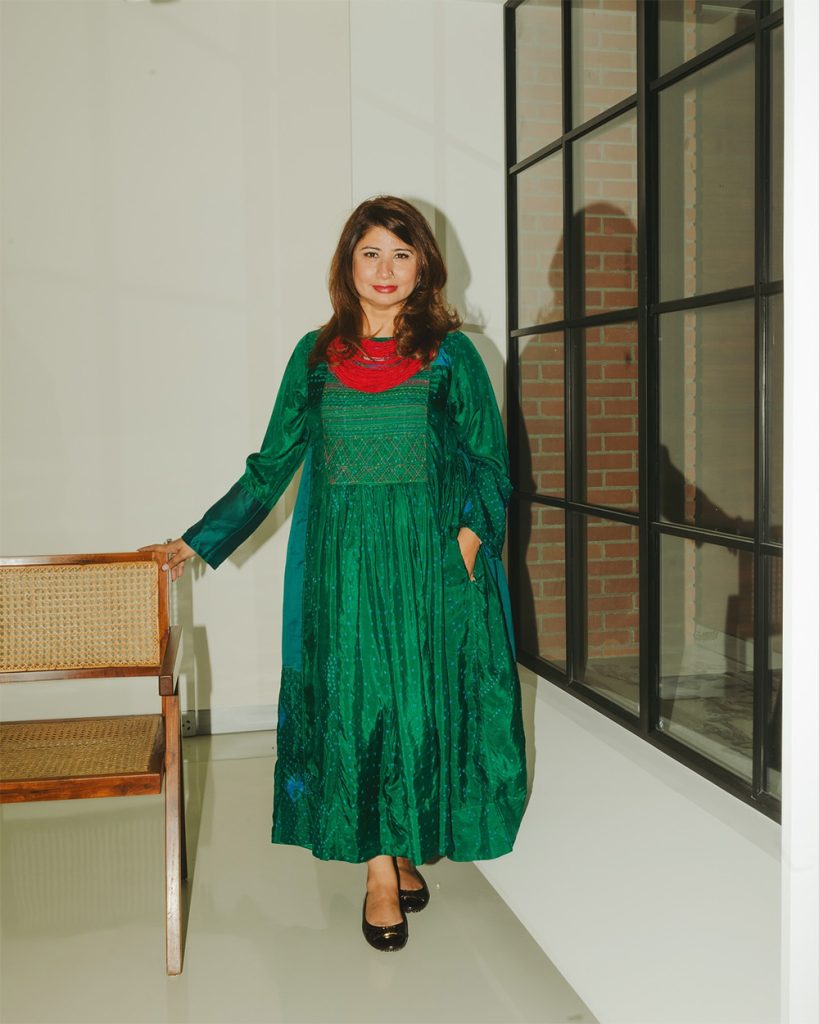
“Phulkaris and Baghs are part of my life. They were a part of my household as an inheritance. I grew up hearing stories about it,” says a teary-eyed Bhavna Kakar, overwhelmed with emotions as she reveals how this textile tradition of Punjab was threaded with stories of birth, love, community, ritual, and also marred with “painful” memories of Partition.
“This exhibition begins at home. Long before I understood Phulkari and Bagh as history or craft, they lived in my world as intimate presences. Some were worn, some preserved, some quietly transformed. They belonged to my mother, and to the women before her: the proud Khukrana women of the Sabharwal–Bhasin family and then passed on to my mother Shyama Bhasin-Kakar.”
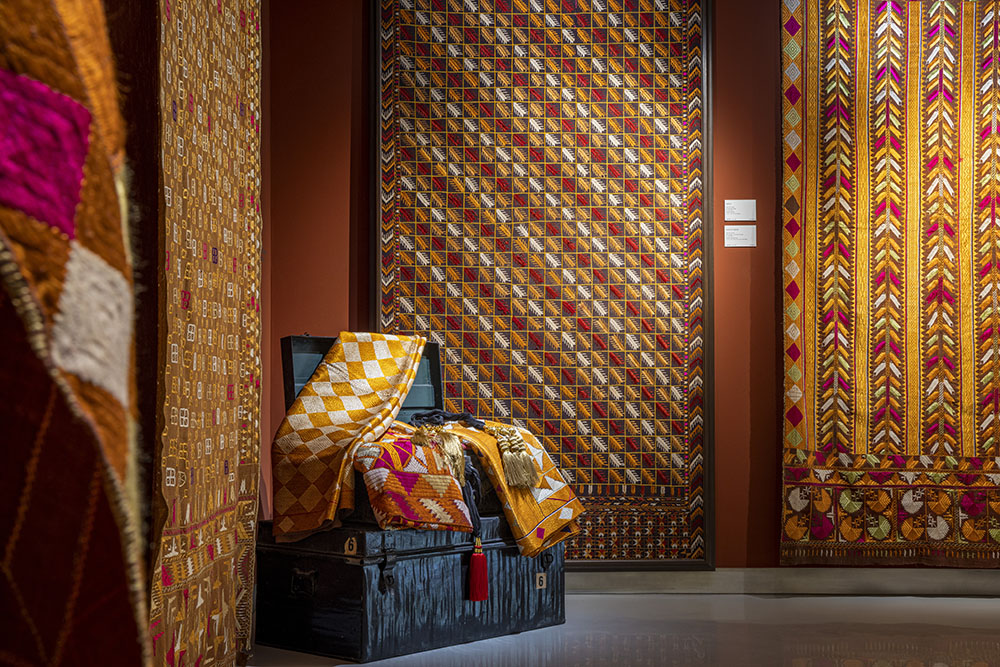
A moment passes as she clears her throat and wet eyes. Her gaze lingers on a hanging red Vari-da-Bagh Phulkari beside her from her personal collection. Gathering herself, she speaks about a deeply personal exhibition, ‘Sut te Saah: Stories Woven in Phulkari,’ currently on display at Gallery Latitude 28 till January 26. Presented by Kakar and curated by oral historian Shreya Sharma, it brings 40 rare Pre-Partition Phulkaris and Baghs from Kakar’s family and the private collections of designer Amit Hansraj to give visitors a view of India’s rich textile traditions and how they were tied to social customs, faith, everyday life and personal memories. “Phulkari carries the breath of its makers. These textiles were never just decorative; they were a way for women to speak, to remember, to hope, to pray,” says Kakar as we move around the exuberant display. It came to life with a playlist of Punjabi boliyas (rhythmic folk couplets) from the peppy, Lathey di Chadar to more festive ones like Kale Rang Da Paranda, running in the background.
Life written in Phulkari
The exhibition’s theme follows the folk verse, “Sut te saah ne rachan meri kahāṇī/ Phulkari de phullāñ vich likhi zindagānī. “It means thread and breath have woven my story; in the flowers of Phulkari, my life is written,” points Kakar, spotlighting Phulkari’s use in different phases of life.
Suitably, the show is divided into three interlinked sections. In the first, ‘Sankraman /Transition’, Phulkaris’ use during birth, marriage and the subsequent changes in life is on view. It starts with a display of red Chope Phulkari in maroon adorned with a double-running stitch. “Chope Phulkari is defined by continuity. Traditionally begun by the maternal grandmother on the day a granddaughter was born, it was worked slowly over the years, its first stitch marking the start of a life rather than the approach of a wedding,” tells Kakar, adding that the Chope is gifted to a bride during wedding rituals, often during the Chooda ceremony (a Punjabi pre-wedding ritual) Chooda ceremony.
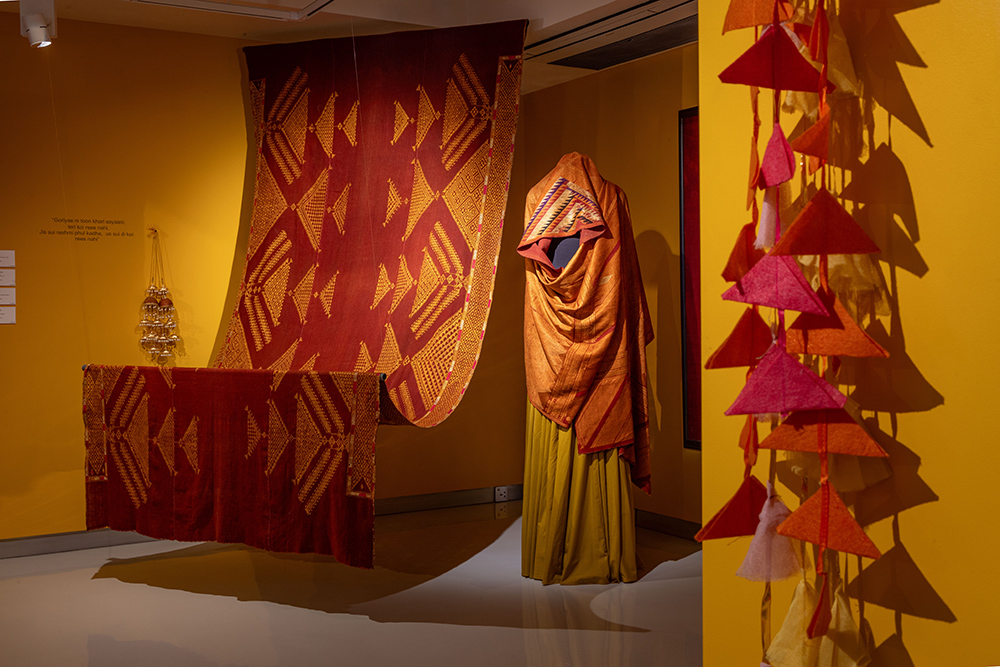
The next comes Vari-da-Bagh, which is given by the mother-in-law, and signifies the bride’s entry into her marital home and Ghunghat Bagh, which works as a veil, shaping how the bride is seen and how she moves within social space after she marries. “This Vari-da-Bagh hails from the early 20th-century Gujranwala. It’s my maternal great-grandmother’s who travelled from Gujranwala to Ambala City with my Nani during Partition, and later all over India with my mother through the many moves of her life as an Armed Forces wife,” says Kakar with glinting eyes, pointing to the floating Phulkari on display and adding, “I walked beneath it at my wedding, not out of compulsion but by choice, feeling its weight as both protective and gentle.”
Fabric Of Prayers
The second section, ‘Vishvaas ate Katha / Belief and Narrative’ delves into Pulkaris and their connection to faith, displaying Darshan Dwar phukaris. “The term Darshan Dwar means ‘the gateway to darshan,’ with darshan referring to the act of seeing and being seen by the divine, and dwar meaning a door or threshold. Typically worked on a red khaddar base, Darshan Dwar Phulkari is organised around architectural motifs that resemble gateways or pillared frames,” says Sharma, showing us a 20th-century piece from the Majha region in Pre-Partition Punjab, adding that these Pulkaris are offered to gurudwaras, temples or local shrines as an act of gratitude, often after the fulfilment of a wish.
The Circle of Life
Just beside that, the third section ‘Rihaish / Dwelling and Everyday Life’ begins. It turns focus onto Sainchi Phulkaris, used in everyday life; within homes, fields, and daily rituals. Their motifs of wheat, chillies, and belan (rolling pin) were woven onto fabric, portraying Phulkari as a constant companion of daily life. The show ended with Thirma Phulkari, which stood distinctive with its white base and red embroidery, often adorned by elderly women and widows in Punjab.
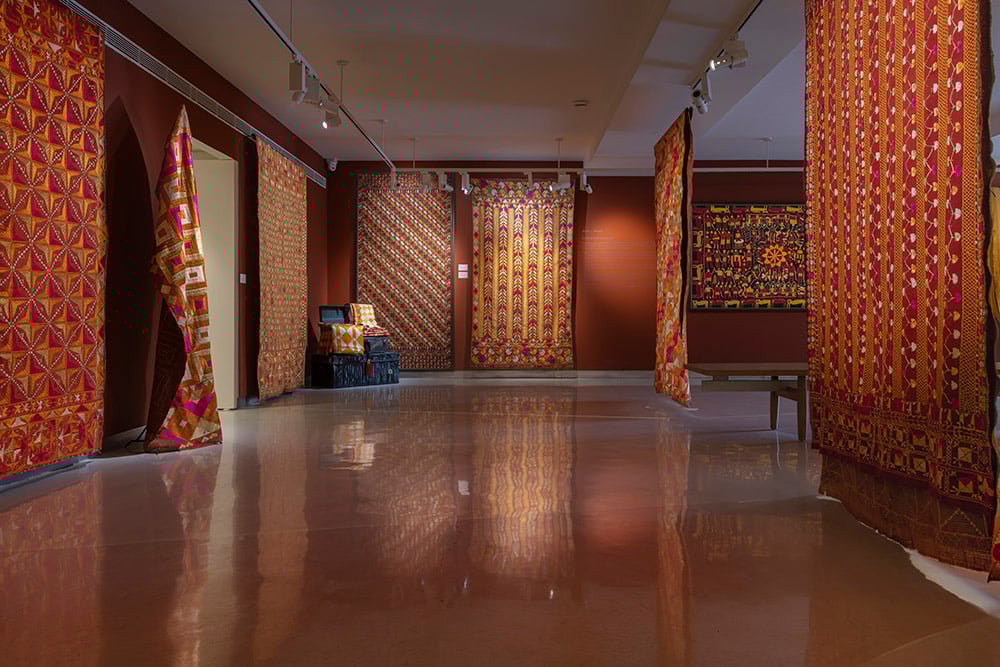
Gazing at it, we felt a circle of life was completed, where each Phulkari denoted every transition of life, almost tracing the arc of human experience. “Together, these textiles trace a deeply human journey: from birth to marriage, from domestic warmth to communal ritual, from celebration to loss. They map the lived experiences of Punjabi women across generations, reminding us how life itself gets held and remembered in thread,” says Kakar on a poignant note.