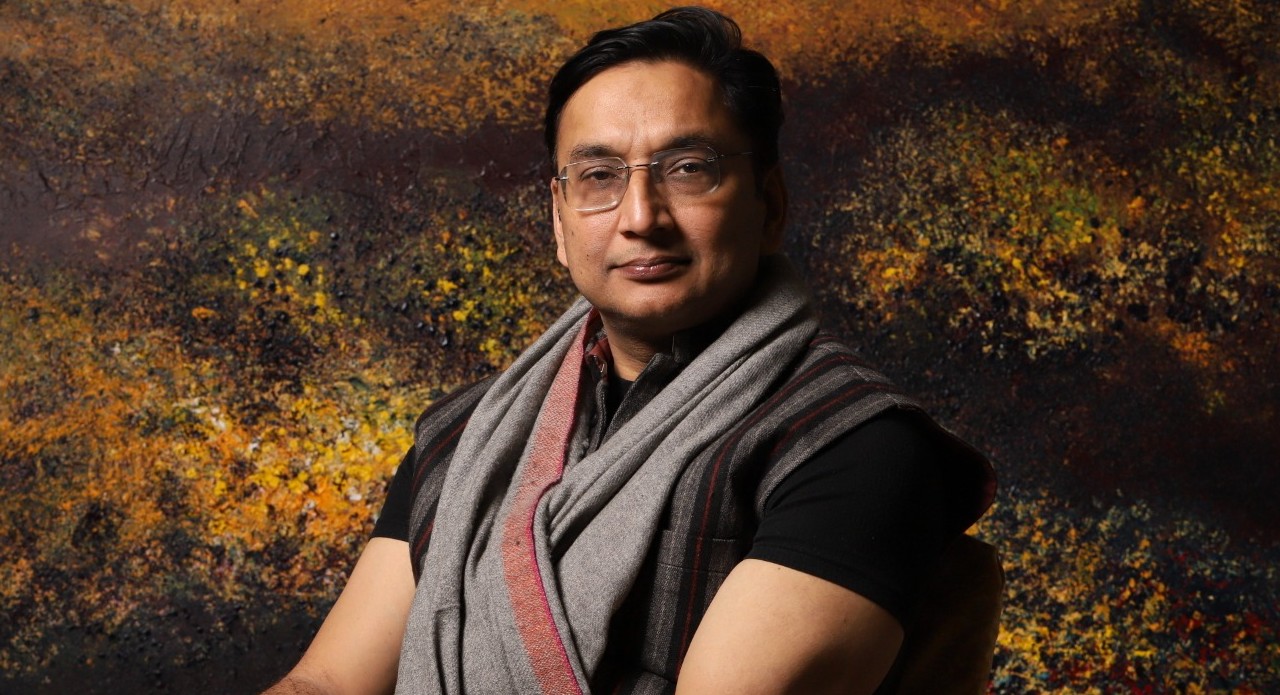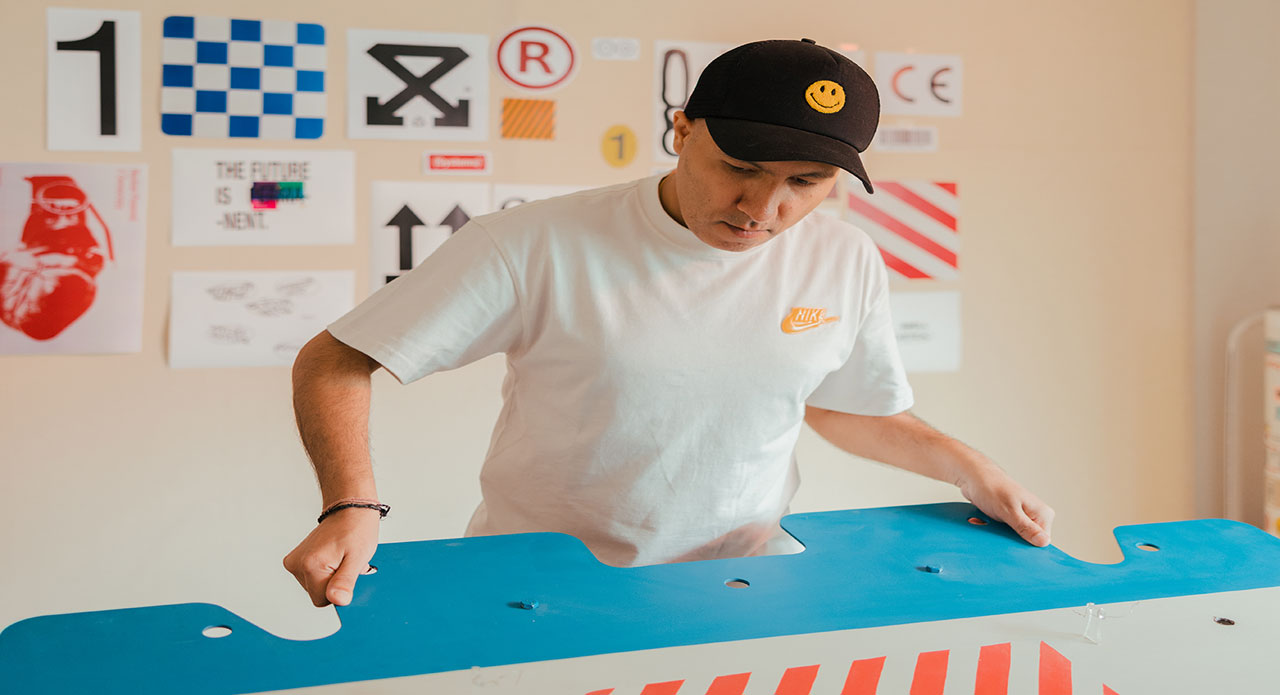


Kunel Gaur’s practice begins where design stops behaving and materials start thinking. Drawing from the visual grammar of graphic design, architecture, street culture, and industrial systems, his work reassembles the codes of mass production—typography, signage, hardware, packaging—into sites of quiet emotional charge. Across sculptural studies, assemblages, and interface-driven compositions, colour and structure hover in productive tension, never fully merging, always negotiating. In an interaction with Outlook Luxe, Kunel Gaur reflects on this space between precision and presence, describing it as a way of listening to materials and allowing emotion to surface within engineered form. Presented at Method, a space built on the belief that art is an act of continual revolution, Gaur’s work finds its natural habitat: a terrain where systems soften into feeling, structure gives way to sensibility, and contemporary life is examined through the very materials that shape it. The exhibition “Signs of Life” by Kunel Gaur is currently on view at Method, D-59, Defence Colony, New Delhi and will run until January 25, 2026.
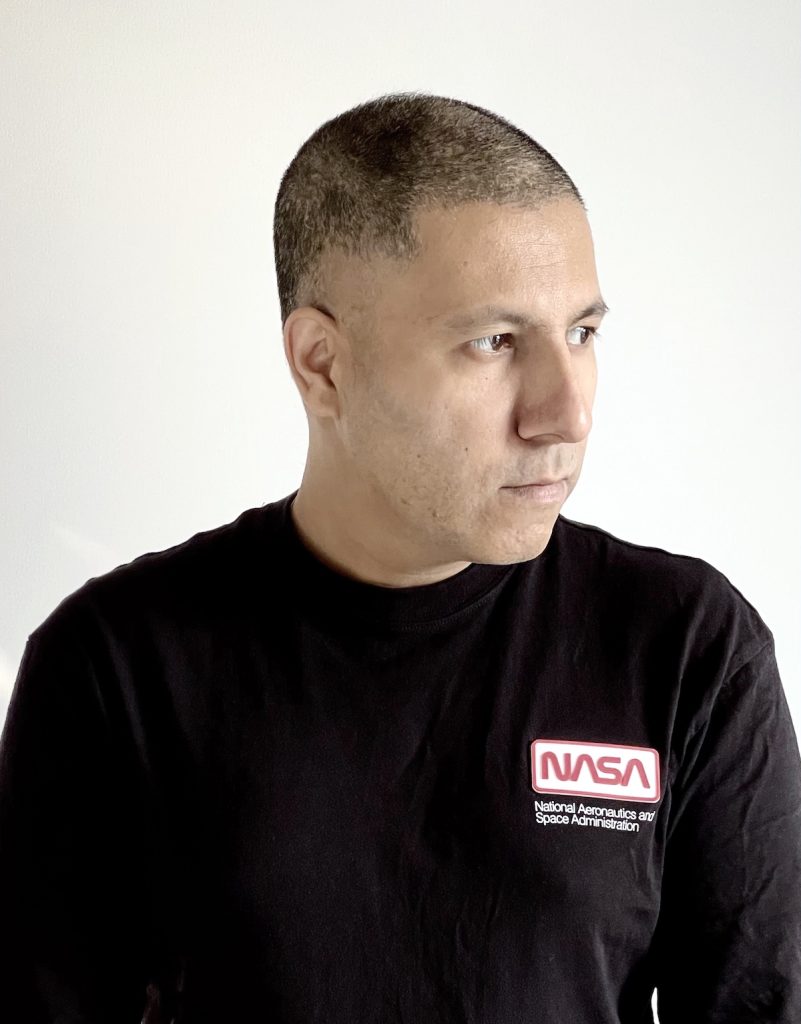
Q1. “Signs of Life” arrives after nearly two years of intense development. What was the initial spark that set this body of work in motion?
Kunel Gaur: The initial spark came with displacement. Moving to Toronto meant rebuilding my studio practice almost from scratch, working with unfamiliar materials and systems. I began scavenging, sourcing, and assembling industrial components that were meant for functional contexts. Stainless steel, hardware, and structural elements demanded a slower, more empirical approach. One built on trial, error, and repeated testing.
That period of experimentation felt like observation rather than intention, where ideas emerged from material resistance instead of being imposed on it. Over time, those early trials began to generate their own logic. Signs of Life is not a departure from that process, but its evolution. A moment where experimentation turns reflective. In many ways, it marks a personal renaissance, shaped by learning how to listen to material and allow new forms to reveal themselves.
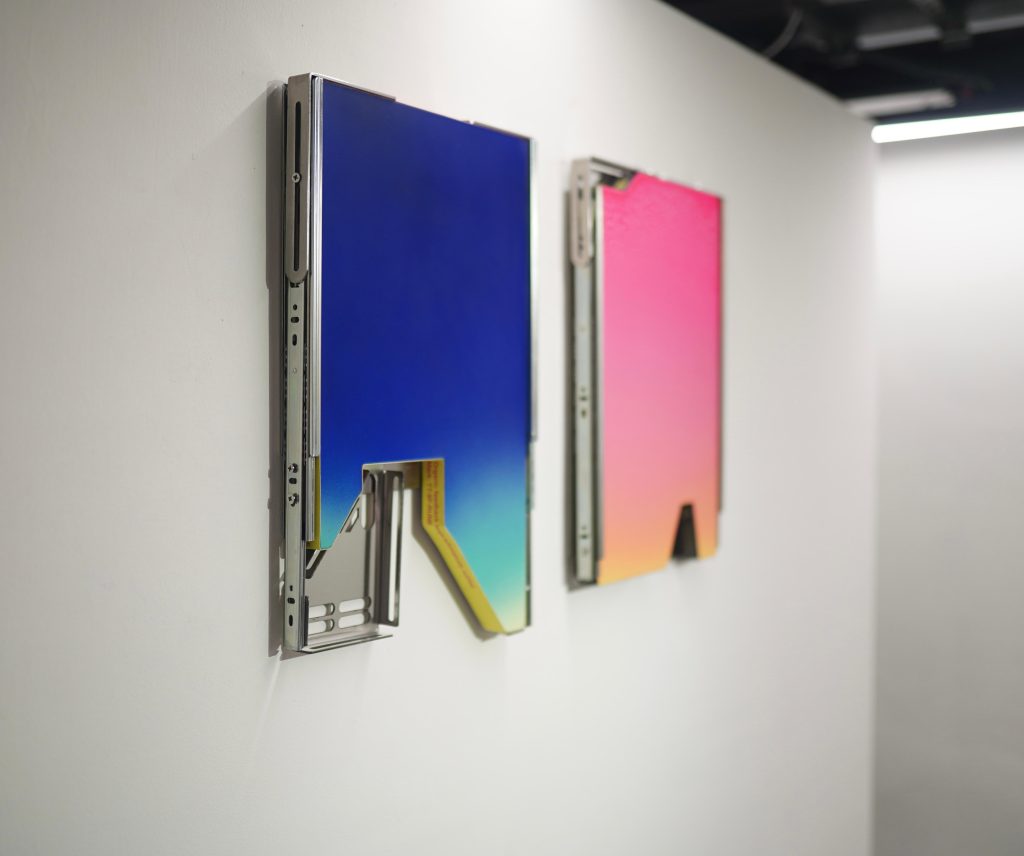
Q2. How does this exhibition sit within your larger artistic trajectory—from graphic design to engineered form and material culture?
KG: My practice has always been shaped by an interest in form, architecture, and materials that are designed to do something. Coming from a background in graphic design, I spent years working within glossy brand environments, which eventually led to a counter-movement in my own work. A growing attraction toward functional typography, systems, and the visual language of machines.
Over time, that sensibility began to move off the page and into space. I started experimenting with ways to merge graphic logic and engineered form, allowing type, structure, and material to coexist as objects rather than images. What emerged were works that sit somewhere beyond discipline. Neither design nor sculpture in the traditional sense, but post-human in their orientation. Signs of Life reflects this ongoing attempt to reconcile those parallel histories into a singular material language.
Q3. You describe these works as encounters between colour fields and engineered form. What does that “interface” represent to you?
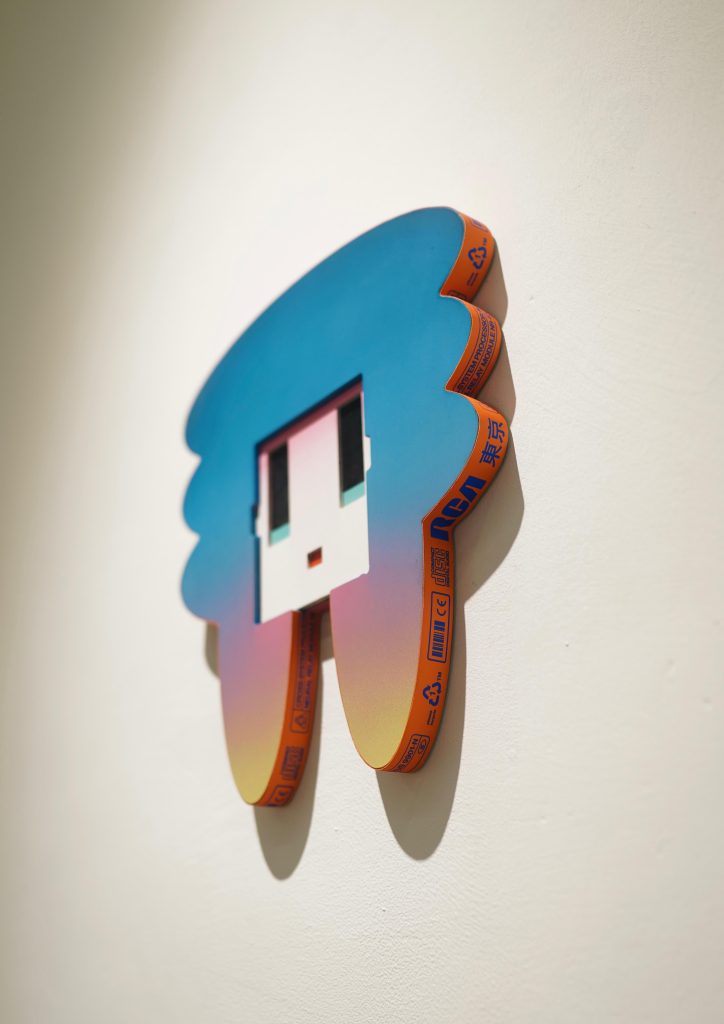
KG: For me, that interface is a meeting point rather than a merger. Colour fields and gradients carry something emotional, almost organic. They behave like atmosphere, emotion, or memory. Engineered forms, on the other hand, belong to the tactile world we have built around ourselves. Precise, structured, and often indifferent to feeling.
What interests me is the tension between the two. When they come into proximity, neither side dominates. Instead, they begin to register one another. The work lives in that in between space, where sensation brushes against structure, and where opposites coexist without resolving. That quiet negotiation is really what Signs of Life is about.
Q4. Is this interface—this evolving zone between the human and the material—meant to be read as a metaphor for contemporary life, or as a literal design language?
KG: I see it more as an ongoing study. The works are part of a process I want to continue returning to, allowing the ideas to shift as the materials and my own understanding evolve.
The merging you mention is an open question for me rather than a conclusion. It is a way of thinking through our position within much larger systems, and our relationship to matter, time, and scale. By staying with this inquiry and letting it unfold slowly, I am hoping to arrive at a clearer sense of where we sit within the vastness that surrounds us.
Q5. Your recent work is marked by a crisp, almost hyper-engineered precision. What materials or fabrication processes were essential to achieving that?
KG: That precision comes from a long comfort with making things by hand. I have always been a tinkerer. Growing up, I was assembling computers, working with motors, lights, and basic electronic components, often just to understand how they behaved. That curiosity stayed with me.
When I began working with industrial materials and building objects at scale, that same instinct took over. The studio became a place of trial, adjustment, and repetition. Over time, familiarity with the processes brought a certain clarity to the work. What appears precise is really the result of sustained engagement with materials and construction, allowing the objects to settle into their own logic through use and repetition.
Also Read: Best Art And Culture Events To Attend In India In December 2025
Q6. You often operate within visual systems. What kind of system underpins “Signs of Life”?
KG: The system underlying Signs of Life operates across two scales of the same inquiry. On one end is the macro, where emotion, memory, and experience dissolve into atmosphere. When you zoom out far enough, detail gives way to blur, colour loosens its edges, and gradients begin to appear.
On the other end is the micro, where life is dense and specific. Personal stories, fear, love, obsession, culture, fashion, brands, and visual language exist at close range, carrying texture and friction. Across the works, these two conditions move back and forth. Sometimes emotion appears as colour and surface. Sometimes it becomes image, typography, and code, held within metal and hardware. The system is not fixed. It is a continuous oscillation between intimacy and distance.
Q7. Does architecture influence your sense of scale and spatial behaviour in this exhibition? How?
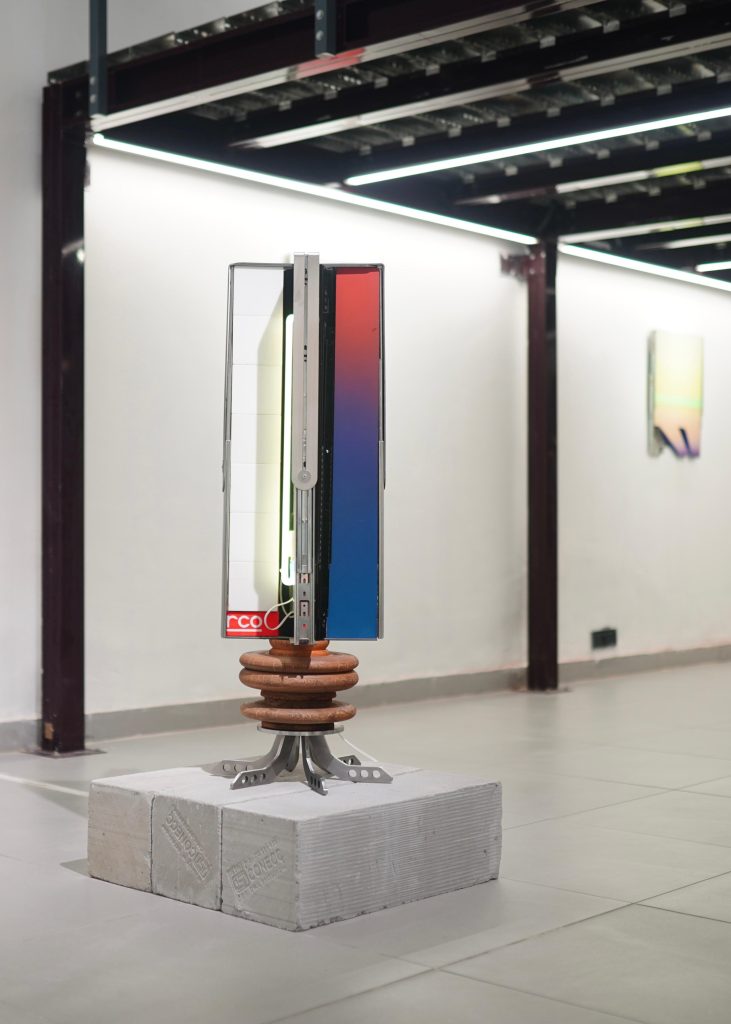
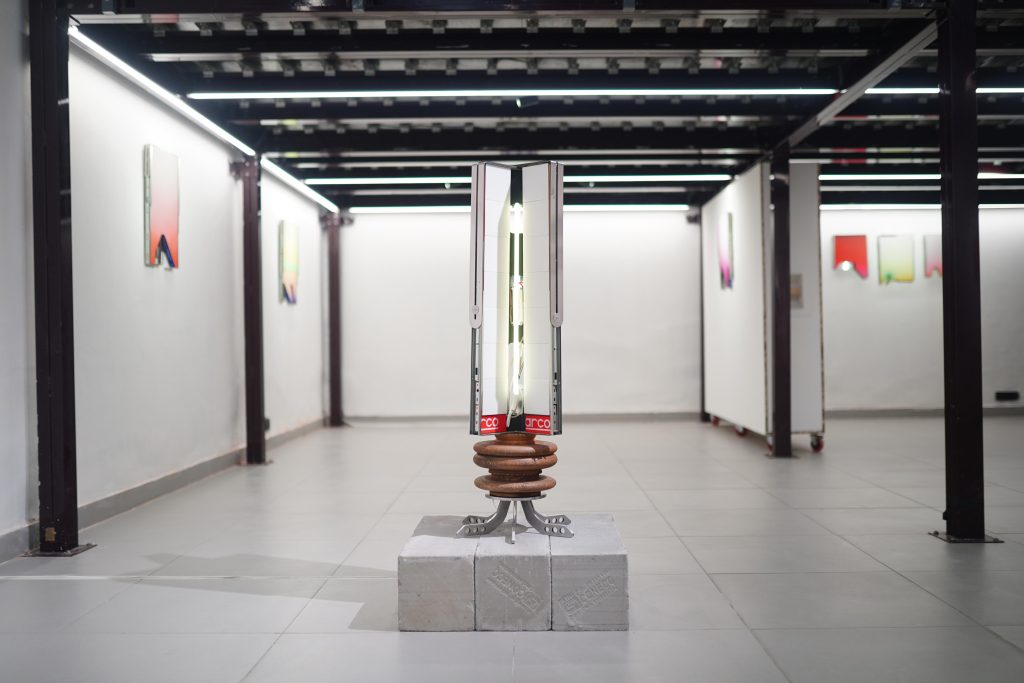
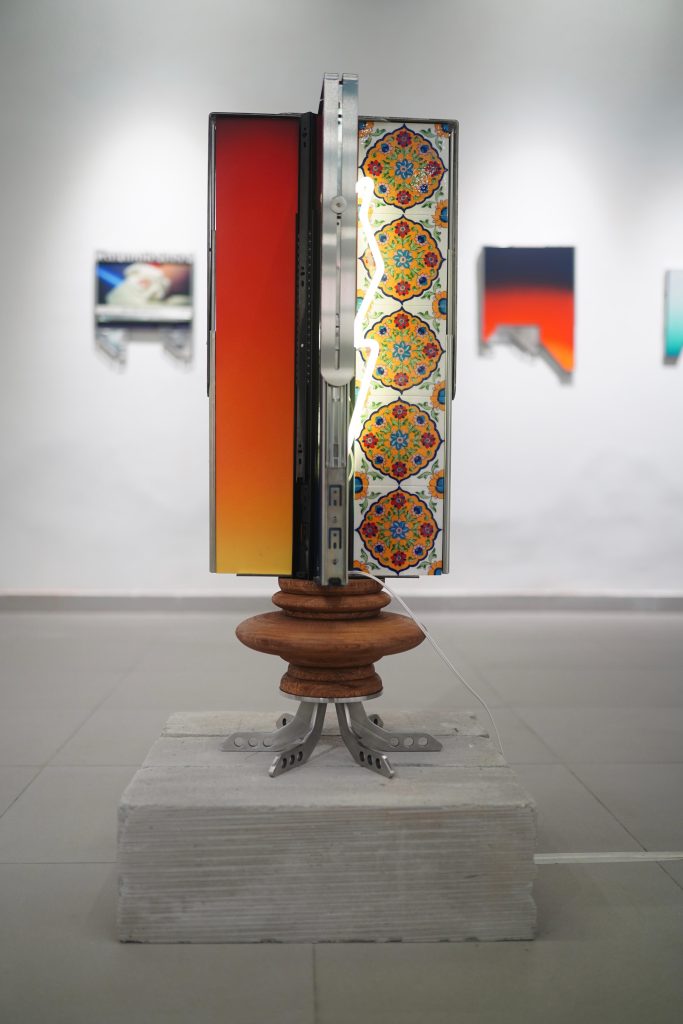
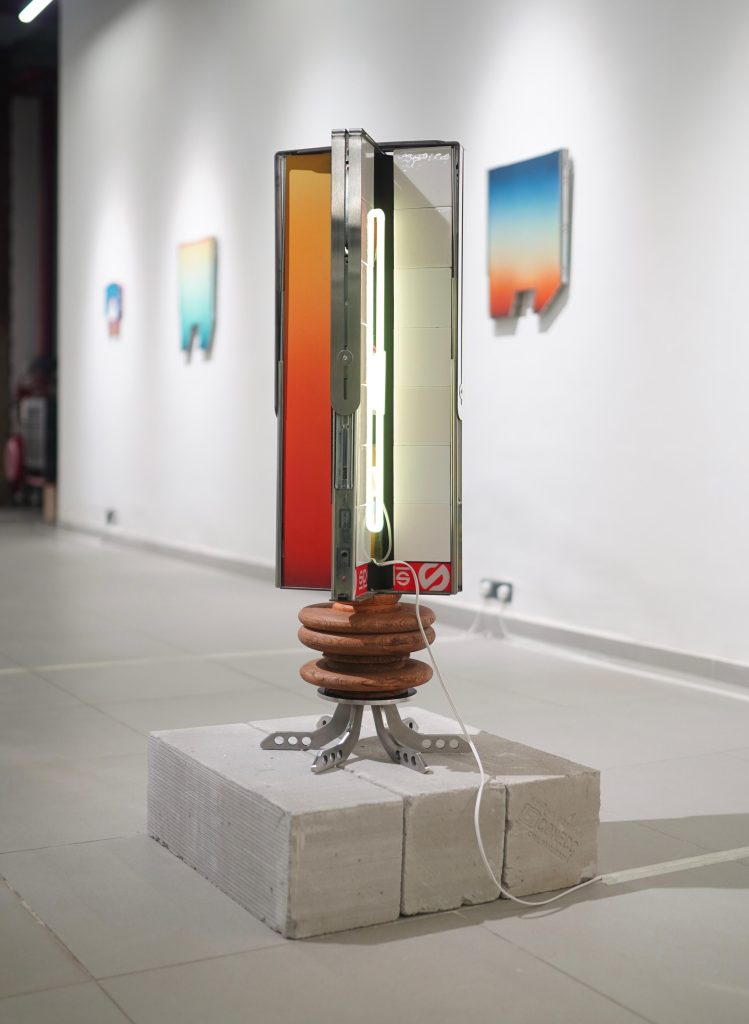
KG: Architecture does influence my sense of scale and spatial behavior, but only to a certain extent. It becomes most apparent in the standalone sculptural works, where materials such as ceramic tiles and timber come together as fragments that feel drawn from different sites.
Rather than reading as structures, these elements merge into singular forms through proximity and balance. The addition of cold cathode neon introduces a quiet luminosity, allowing the works to feel less constructed and more present. They exist almost as beings shaped by material consciousness, guided by how surfaces, weight, and light choose to coexist in space.
Q8. The exhibition hints at something evolving—not human, not material, but emergent. Is this a commentary on how we inhabit increasingly hybrid environments?
KG: I see it more as a reflection of our inner evolution. It is about how we think, feel, and adapt as a society that is deeply invested in innovation, curiosity, and forward motion. Not as critique, but as observation.
My practice is guided by the idea of Form Follows Psychology, where structures and aesthetics emerge from emotional intimacy, introspection, and subconscious associations. Growing up during the technological optimism of the 1990s, I developed a hands on relationship with early tactile technologies, which formed a lasting emotional and psychological bond with how systems and materials behave. The work borrows the visual grammar of architecture and engineered systems, but reframes them as carriers of thought rather than instruments of use. What emerges is not an answer, but a presence shaped by how we internalise the worlds we build.
Q9. If viewers take away only one insight about “Signs of Life”, what would you want it to be?
KG: That even within structure and precision, there is a quiet emotional presence. And noticing it changes how we see the world we have built.
Q10. What do you feel these works say about life—our lives—right now?
KG: We are living at the edge of a convergence that has been unfolding for decades. What began with devices (a few decades back) has accelerated through artificial intelligence, robotics, and even emotional mediation. While this can sound unsettling at first, it is gradually becoming part of everyday life as social frameworks and regulations catch up.
What feels clear is that a new renaissance is unfolding. The merging of human sensibility and machine intelligence is no longer speculative. The eight billion people alive today are the first to experience this shift from within, not as observers, but as participants.