‘We’re Not Trying To Imitate Anyone’: Krésha Bajaj On Dubai Fashion Week Showcase
Krésha Bajaj presented her Autumn 2026 collection, Tempered, at Dubai Fashion Week, in her second showcase at the global runway. She spills the tea on the new collection and growing Indian representation in international fashion shows
India’s fashion and design talent knows no bounds. Every year, in the Big Four Fashion Weeks, India is witnessing an increasing representation. From Rahul Mishra, who’s a regular at Paris Haute Couture Week, Gaurav Gupta’s show at Paris Haute Couture Week 2026, Dhruv Kapoor’s Milan Fashion Week 2026 showcase, and Raw Mango’s debut at London Fashion Week.
Recently, Manish Malhotra and Krésha Bajaj took over the runway at Dubai Fashion Week 2026.
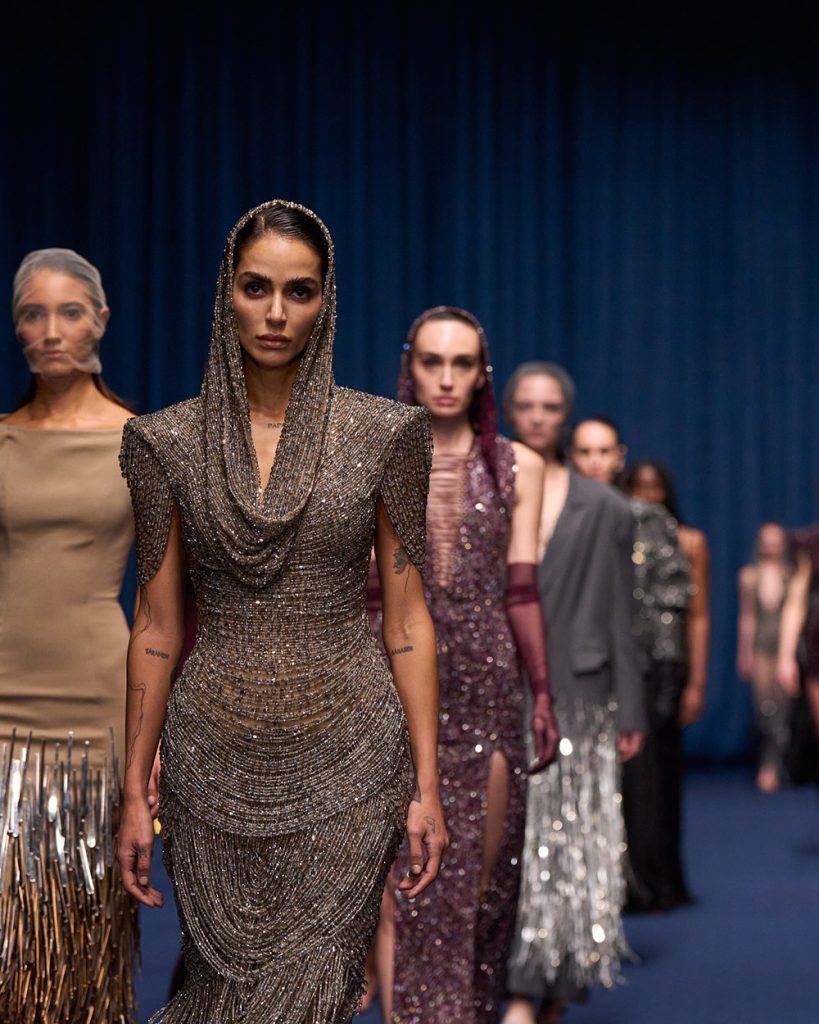
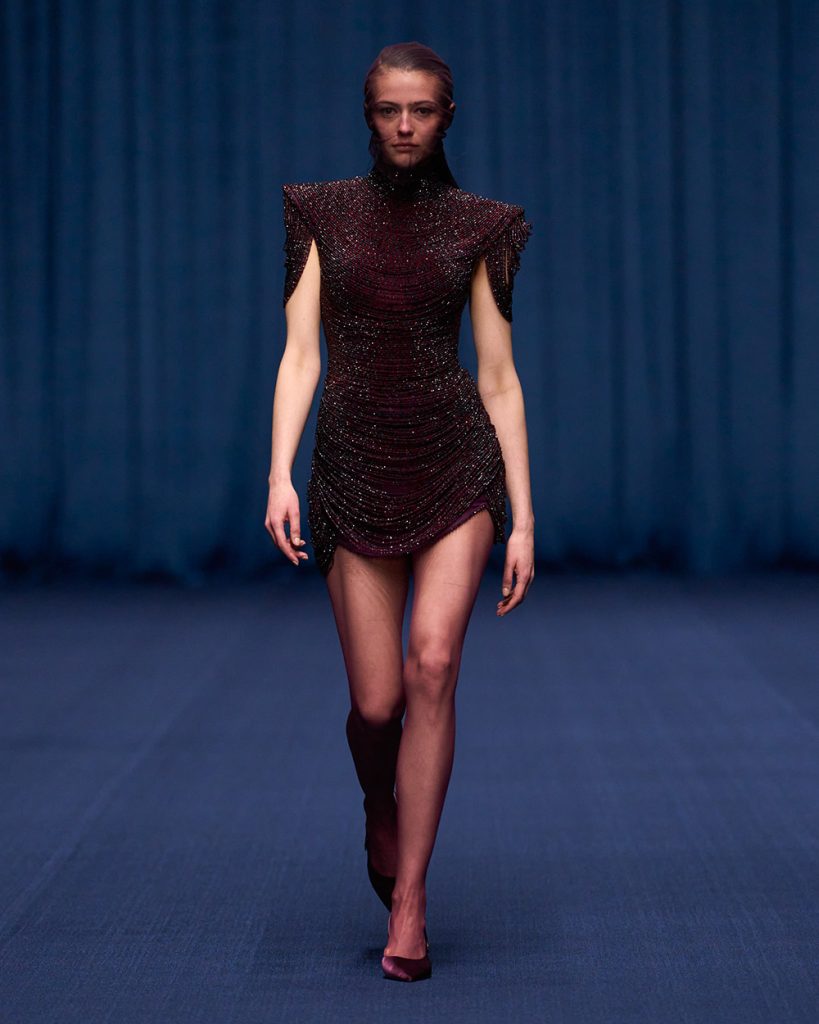
Krésha Bajaj presented her Autumn 2026 collection, Tempered, marking her second showcase in Dubai. The 30-look collection was inspired by the process of tempering, where material is refined through controlled extremes, portraying how pressure can clarify form and sharpen identity. “Tempering is about heating metal under pressure so it becomes stronger. That philosophy became the backbone of the collection. We paired delicate embroidery with harder materials. Lace with leather. Metal details with fluid silhouettes. The mirrors were cut thin and layered almost like fringe. The palette was darker than what I usually do with black, gunmetal, and oxblood. It felt strong but still feminine,” Bajaj tells Outlook Luxe post-show.
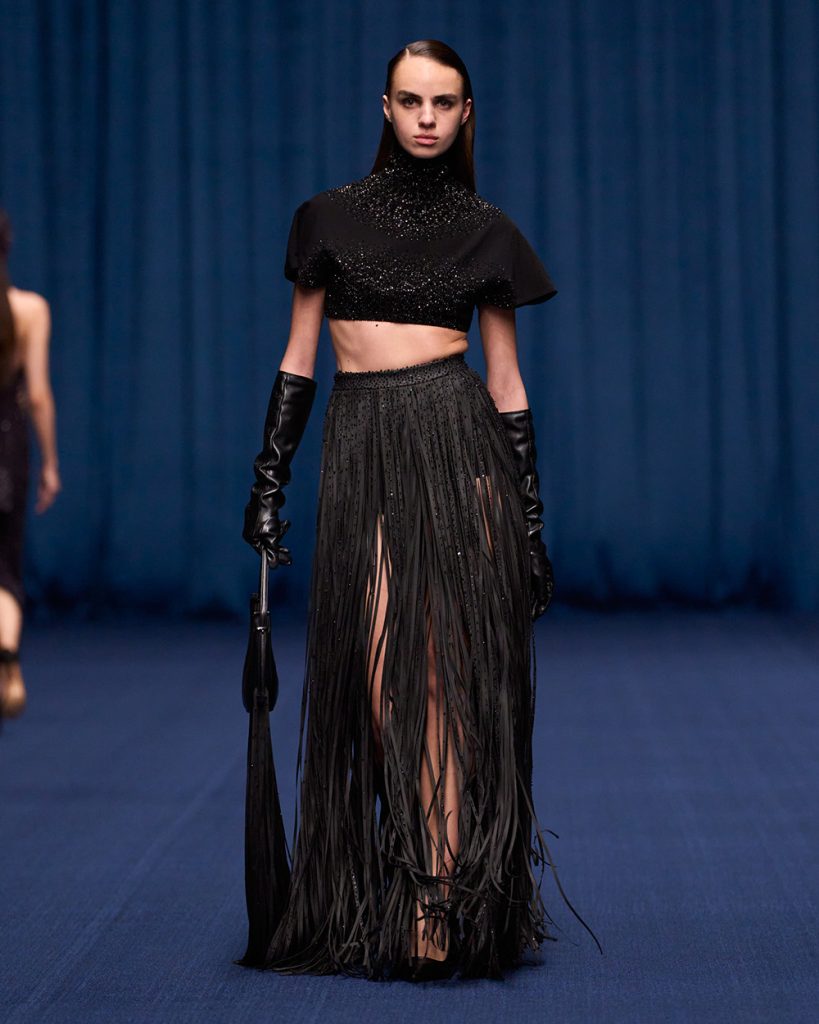
Models strutted the runway in pinstripe suits, sculpted coats, elongated jackets, corseted waists, and clean sets. Lace and mesh were reworked through embroidery, cutwork, and lattice construction, creating cage structures and engineered bodices. Surface replaced ornamentation with metallic threadwork, dense beading, and the use of hardware with restraint, bringing fluidity to otherwise structured silhouettes. The proportions were sharper, giving classic forms a more defined edge. Overall, the looks were edgy, sensuous and multi-layered, leading to a 60 garments edit. “These aren’t pieces you just steam and hang. They unpack like artefacts,” tells Bajaj.
With a bold collection, is Bajaj attempting to be non-traditional? For her, it’s less about being a non-conformist and more about daring experiments with Indian craft. “I don’t think of it as rejecting tradition. I think of it as evolving it. Indian craft is incredibly rich, but it doesn’t have to live in one predictable silhouette. I like tension in a garment. Strength with softness. Edge with emotion. That balance feels very natural to me,” she says, adding that we see wider Indian representation on global design platforms as Indian designers pursue craftsmanship with unapologetic confidence. “Indian craft has always been here. What’s changed is how we present it and how confidently we own it. We’re not trying to imitate anyone anymore. We’re showing work that is rooted in India but speaks globally. And I think the world is ready for that depth.”
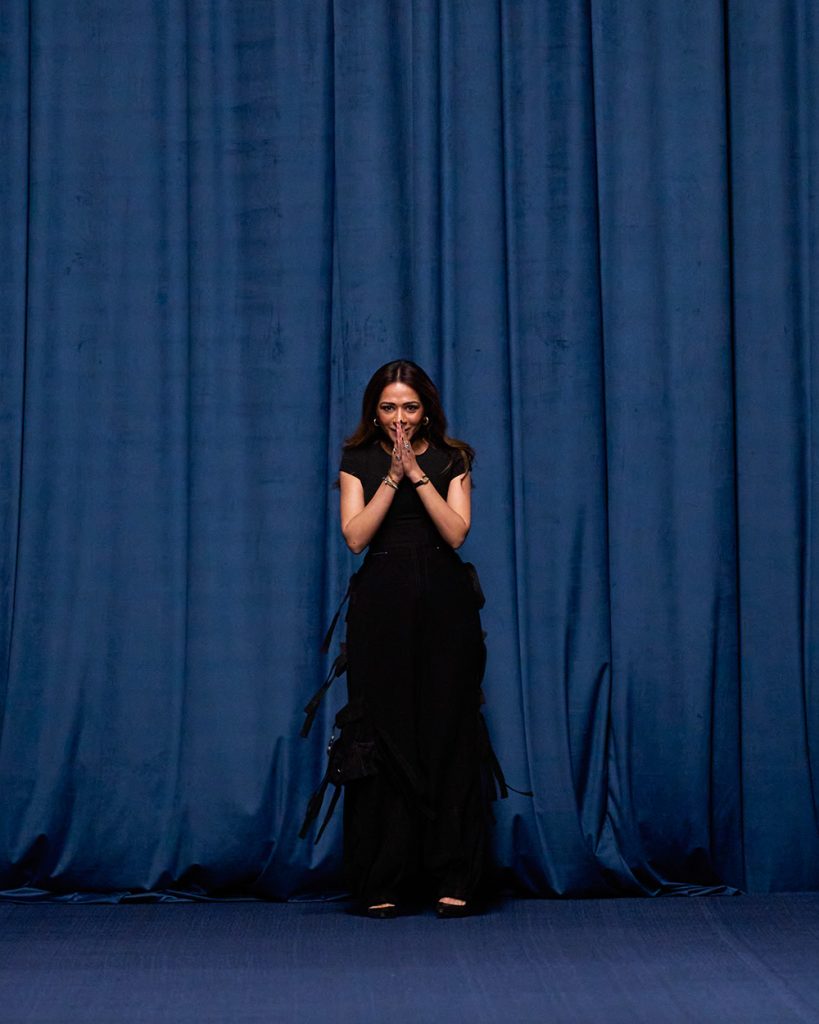
With her second show in Dubai, we ask her about Dubai’s fashion scene, and she agrees that Dubai understands luxury. “People really show up. There’s a strong retail culture, from major houses to curated stores. The audience is global and informed. They know what’s happening in Paris and Milan. And the front row pays attention. Fashion is taken seriously.”