Experiencing The Living Landscapes Of Jetwing Vil Uyana In Sri Lanka
Where mornings begin with birdsong and wildlife wanders freely past your villa, Jet Wing Vil Uyana in Sri Lanka offers a deeply personal escape
As dusk falls over Jetwing Vil Uyana, the sky changing from purple to dark indigo, I walk with Bandara, the resident naturalist, in the half -light, twigs and leaves crackling under our feet, along a path that feels narrower in the dark. Fireflies glow all around us like drifting embers and in the air is the soulful soundtrack of hooting owls and singing crickets. Bandara moves slightly to the side, looking at the canopy overhead, his body angled in a way that suggests listening. There is a red light in his hand, and red beam headlamps strapped on our foreheads, that slice through the black night, respectful rather than invasive.
“Hush,” he says softly and as we stop, as the forest sounds become pronounced. Then I see it- a flash of two orange-glowing points suspended in shadow, amidst the canopy. Slowly as our eyes get adjusted to the light, we see the elusive slender grey loris, a tail less nocturnal primate, the size of a chipmunk, whose name comes from the Dutch words for fool or joker. The shy creature feasts on mice, insects and fruits, clambering lithely up the branches of a tree, with its skinny arms limbs.
With bulbous, liquid eyes that look like spectacles, its movements are slow, deliberate, each limb placed with care. The loris pauses, turns its head slightly, and for a moment, those glowing eyes seem to look directly into me. As Bandara lowers the light, the loris disappears back into the dark, leaving behind a hush that feels sacred. We are lucky that night, as we see two more lorises on another tree. Bandara says that on a lucky night walk around the resort, you can not only spot lorises, but also anything from a jungle cat and a rusty spotted cat to a civet and porcupine.
“You never see these cuddly creatures in the day time. They love to curl up like a ball and sleep in our bamboo groves. They are threatened by predators like eagles and owls and this affects their population,” says Bandara. The walk ends with a visit to the slender loris centre where with the help of images, charts and maps he explains the life span and habits of the slender loris.
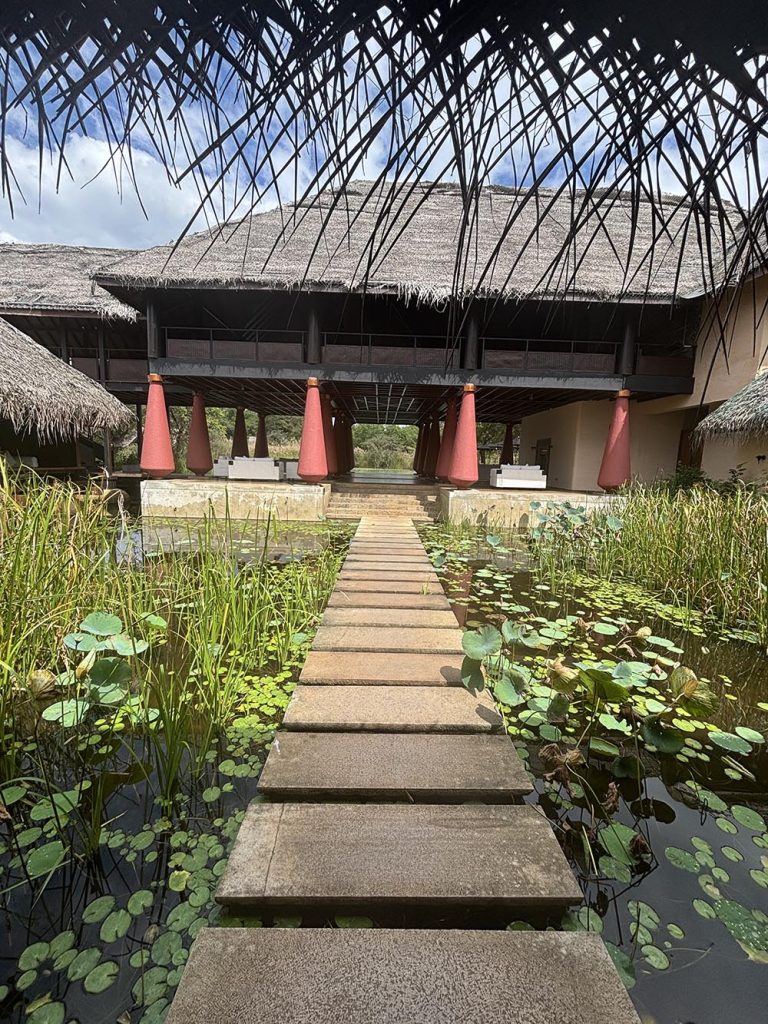
We are at Jetwing Vil Uyana, an eco-resort in Sri Lanka’s heartland near the UNESCO listed Sigiriya rock fortress, spawling over 28 acres, a rare place where the threatened primate and humans share space. We arrived earlier that afternoon, walking past lily ponds into an open reception area that leads to a vast swimming pool. We were enchanted by the tranquil panorama that unfolded in front of us- rustic villas rising from wetlands scattered with pink water lilies with birdsong floating freely in the air.
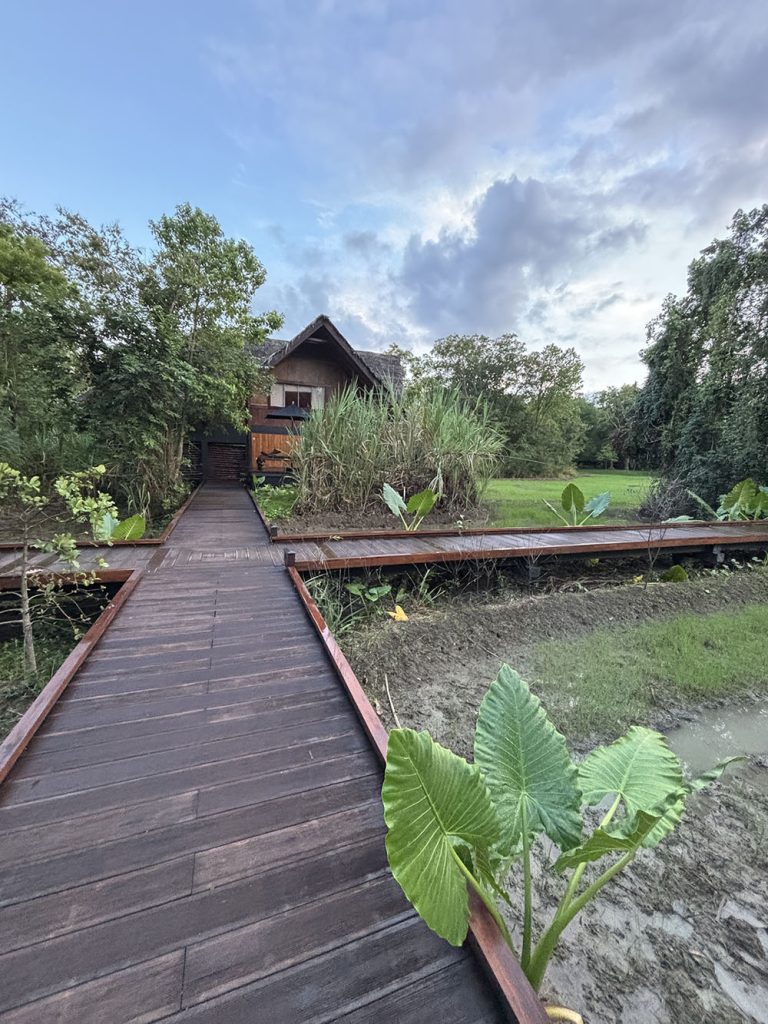
Tree fringed wooden walkways link the villas and the property’s spa, library, gym and bar. Far away in the distance was the famous Sigiriya rock fortress with its ancient water gardens. The resort is an extraordinary labour of love of human man-made wetlands and paddy fields, teeming with native vegetation and prolific biodiversity.
It was environmentalist Chaminda Jayasekara, who discovered the nocturnal slender loris on a walk, two decades ago, and then the resort took the step of converting three and a half acres into a loris conservation site with minimal lighting and protected forest corridors. Now even outsiders can go on the Loris trail, for a nominal fee and the proceeds go towards the conservation of the endangered primate. Both the BBC and National Geographic have spent weeks here filming the slender lorises. Bandara says that this is one of the best places to see the slender loris in the wild, as there is a 90 % success on their walks.
Also Read: Mandai Rainforest Resort Promises A Restful Stay In Stunning Biophilia
Built in 2006 on abandoned agricultural wasteland, inspired by the London Wetland Centre, the omnipresent motif is glistening water, with channels lacing the land like bulbous veins and villas made of earth, stone and reed and rattan standing on stilts, located in five distinct terrains-wetland, forest, paddy, garden and lake, each one with a completely different vibe and view. I walk along wooden pathways fringed by greenery, watching dragonflies skim the surface and frogs announce themselves with strident croaks.
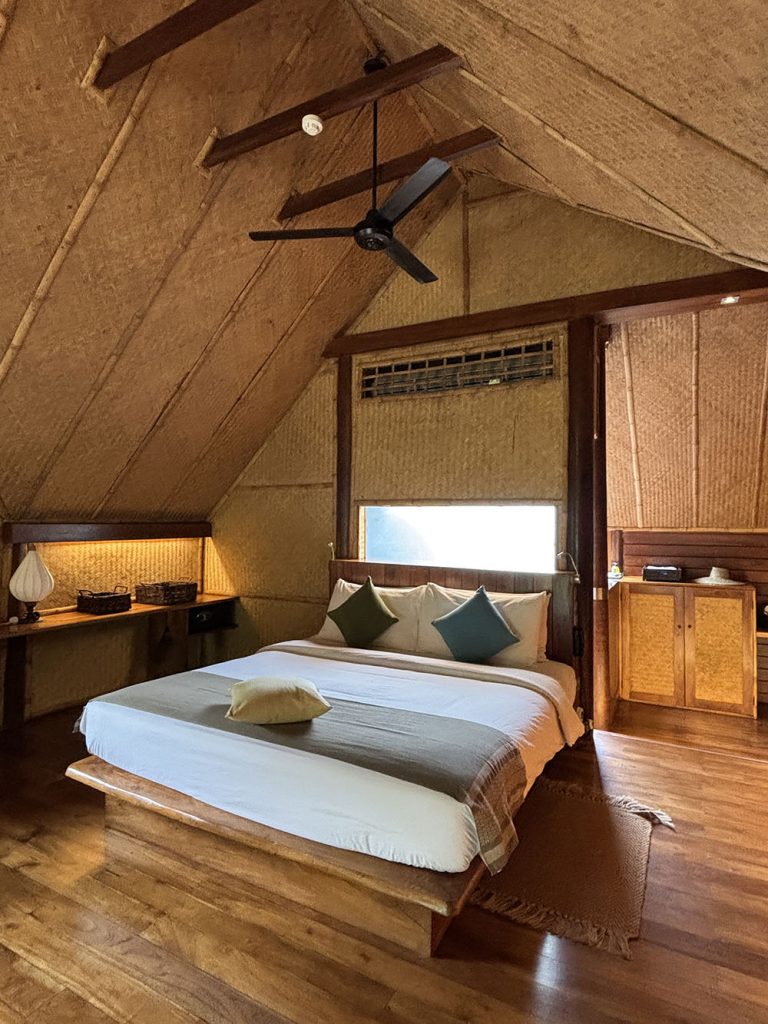
Designed by famous Sri Lankan architect Sunela Jayawardena, the design is inspired by local paddy farmer’s houses. The resort takes sustainability very seriously with one third of the guest revenue going towards the conservation fund, a bio gas plant and water recycling. Its lakes are connected to the local cascade system, so that the agricultural needs of the community are met.
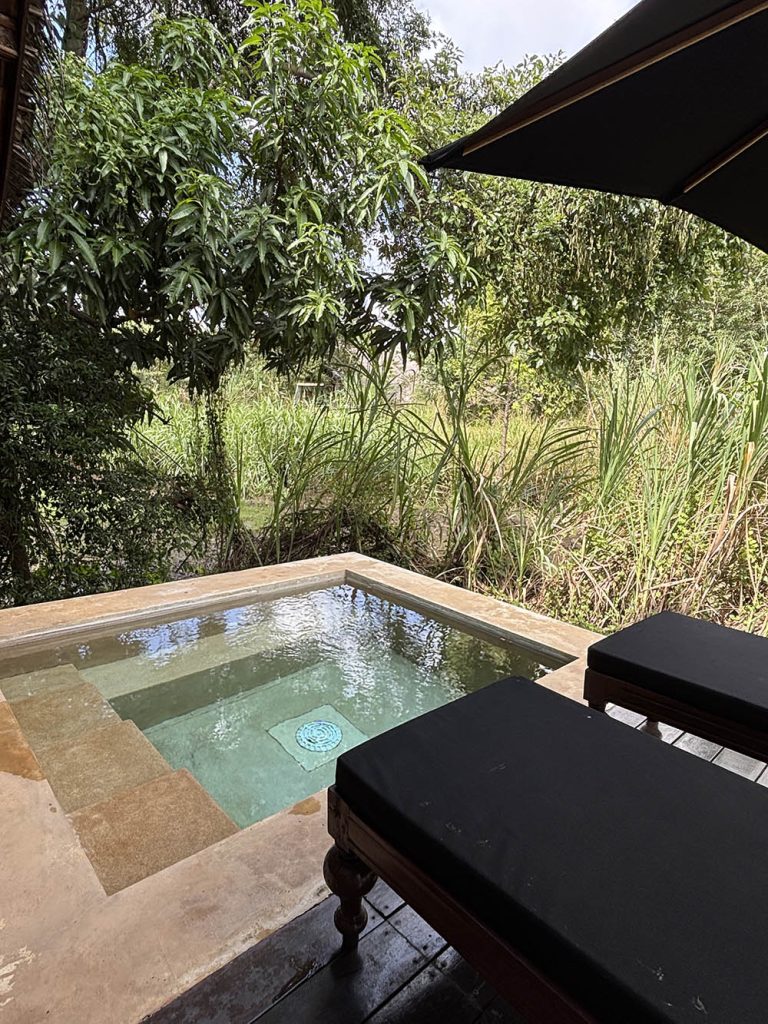
Our opulent villa on stilts in the paddy fields area with its own plunge pool, has teak floors, a raised wooden platform with a bed, a spacious bath tub and a large bathroom. The shower area has a glass roof where you can watch the trees and an occasional clambering monkey. I love the thoughtful little touches- from sun hats to sarongs placed in the room for our use.
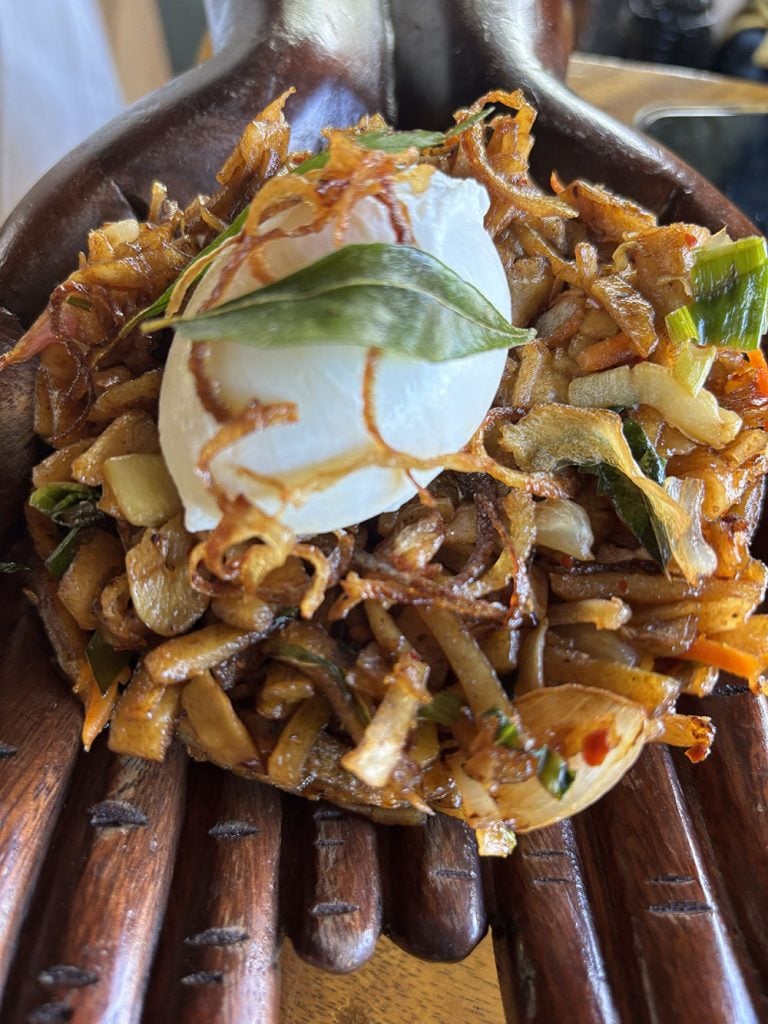
Themain restaurant Apsara, on the first floor of the reception area, opens itself to a lake fringed with trees and native grasses, and it offers a range of Asian and Sri Lankan fare with piquant curries and sea food, served with white or red rice.
As I have lunch, I watch cormorants perching and drying their wings on distant branches. Egrets and pond herons step delicately through the shallows, bee eaters flit overhead and I catch the flash of an iridescent kingfisher, amidst the canopy. More than 150 species of birds have been spotted here, both endemic and migratory and over 29 mammals.
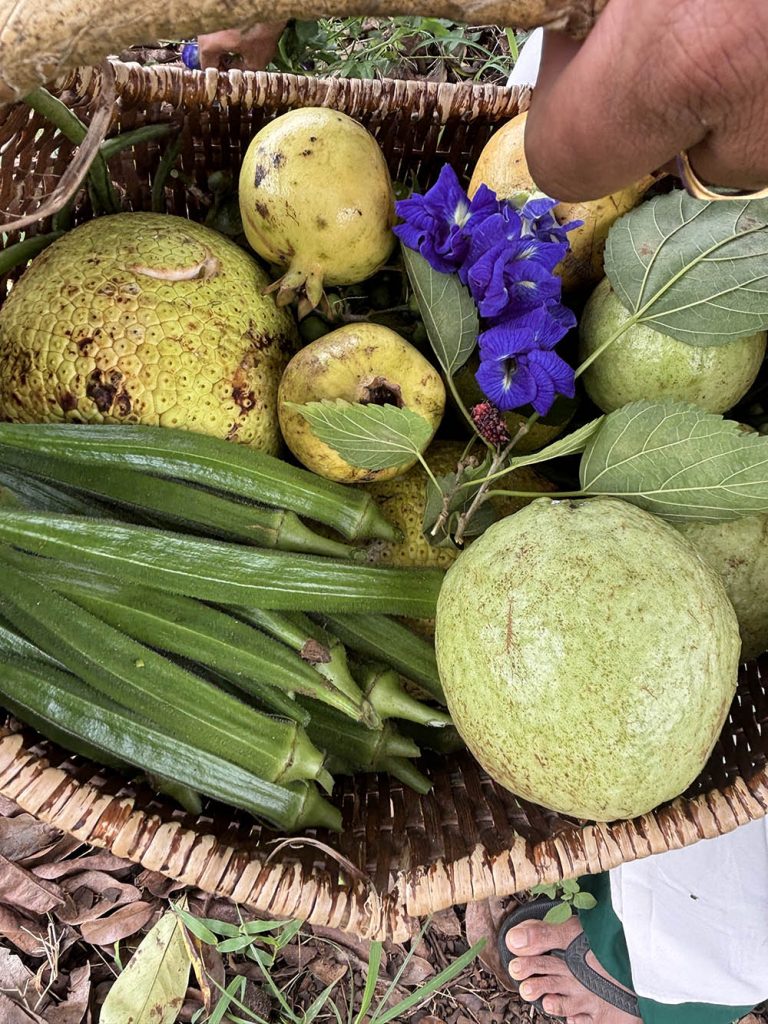
One of the most delightful experiences that the resort offers is the harvest to hearth experience. We explore the resort’s farm sprawling over 2. 5 acres where rows of vegetables grow lusciously, from waxy brinjals and long beans to large bread fruits and fragrant herbs like mint. Vines heavy with gourds trail lazily over trellises over our heads. We fill a basket with fresh produce, accompanied by Kanthi from a local village, who is going to teach us to cook local fare.
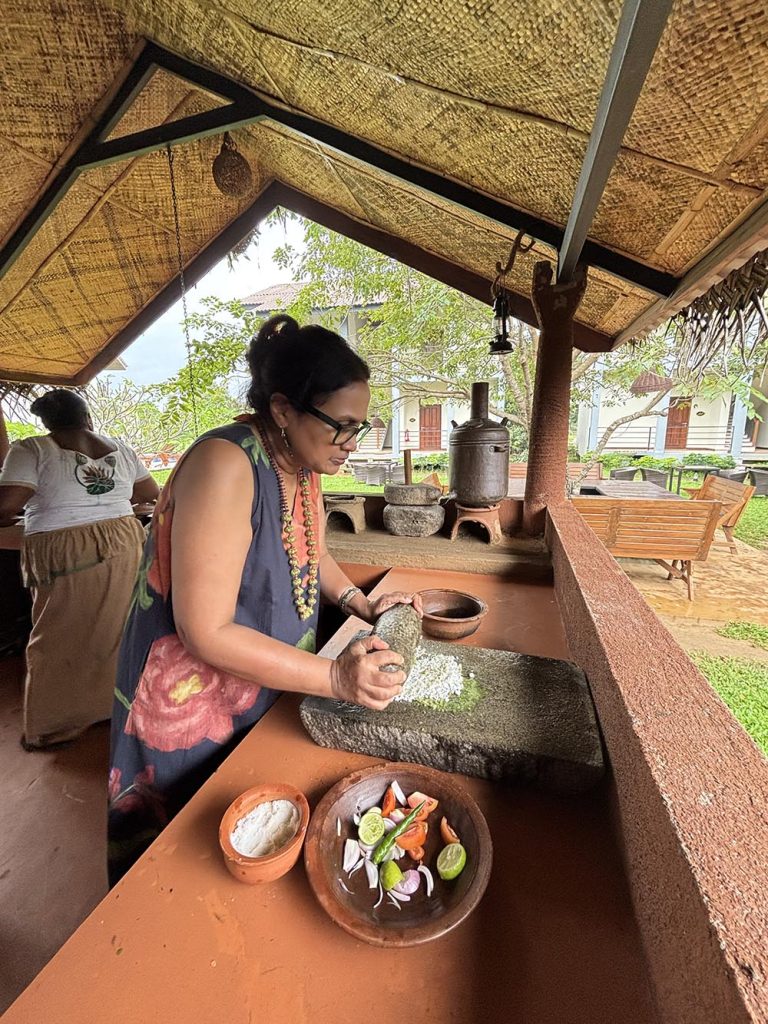
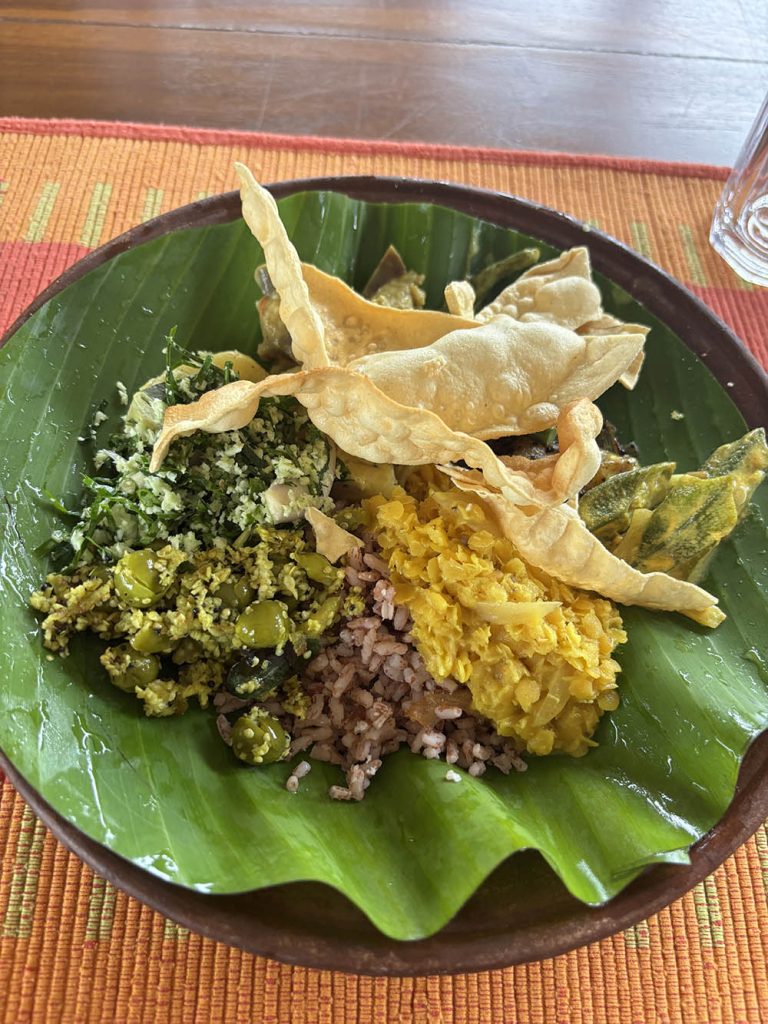
Later, I find myself in a rustic kitchen with wood fired stove and clay pots. We cut vegetables and grate coconut the old fashioned way. She shows me how to temper spices, with mustard seeds popping like tiny fireworks and the fragrance of curry leaves. The air thickens with the scent of coconut milk simmering and tempered spices. When we eat, the food tastes of earth and effort. I think about how close this meal is to its origin, and probably that’s why it’s one of the most memorable meals that we have had.
Also Read: Top Luxury Villas To Visit In Goa For Christmas And New Year
Over the next few days, Jetwing Vil Uyana reveals itself in quiet encounters with nature from the hum of insects to the sounds of peacocks, and the slither of monitor lizards. The wetlands thrive with life from fish eagles to even a resident marsh crocodile that arrived here through the irrigation canals. The paddy fields, once engineered, now grow wildly. What was built has been overtaken, by what grows and that’s why Jetwing Vil Uyana feels less like a destination, and more like a living forest.
Back in my villa, perched above the water, I lie awake listening. With organic materials used in the construction, like wood and thatch, I can hear the land and water breathing beneath me. I am fascinated by how this place began as a revolutionary idea, a vision to create an ecosystem, rather than just another resort and how that has made all the difference.
Also Read: Mandapa, a Ritz Carlton Reserve in Bali ‘Where Luxury Meets The Lungs Of Ancient Nature’
Breakfast brings crisp hoppers, curries, Bircher’s muesli and fresh fruits to our table. I sit again at the restaurant, overlooking the lake, and sketch what I see in front of me, feeling a quiet gratitude settle in me. Jetwing Vil Uyana teaches you how to listen to nature and slow down -to land reclaimed, to food prepared with care, to a loris moving through the night. It reminds you that luxury can be light, and that comfort can coexist with conscience. And as I leave, I realize that something in me has changed forever ever since I saw those glowing eyes in the dark.
Also Read: This Heritage Hotel In Saudi Arabia Is Lit By 1800 Candles And Lanterns At Night
Fact File
Best Time: January–April for dry weather
How to get there: Fly in to Colombo and drive from there. It is over 110 miles from Bandaranaike International Airport and takes roughly around three and a half hours.
What to do: Besides the loris trail, birdwatching and farm experience at the property, you can also visit the Sigiriya Rock, the Dambulla caves and Wilpattu National Park famous for its sloth bears, leopards and elephants. Be sure to have a massage at the resort’s excellent Balinese spa with Balinese, Ayurvedic and Sri Lankan therapies. Buy some organic rice and clay bead necklaces at the resort’s boutique.
Room rates start at around Rs 35,000 per night inclusive of breakfast and taxes.
Address: Jetwing Vil Uyana, Sigiriya, 21120, Sigiriya, Central Province, Sri Lanka, 21100
Phone: +94 66 228 6000-3