Going Beyond The Greek Island’s Glam Quotient
Don’t be fooled by the nightlife hype — Mykonos has a soulful side shaped by history, tradition, and the unhurried cadence of daily life
Set in the heart of the Cyclades and floating in the deep blue of the Aegean Sea, Mykonos lies just southeast of mainland Greece, a short distance from the capital city of Athens. Once a quiet fishing island, it has evolved into one of the Mediterranean’s most coveted destinations — an address synonymous with discreet villas perched above the sea, superyachts anchored in sheltered bays, and a global elite that returns year after year for its glamorous party scene.
Yet beneath its polished surface, Mykonos revealed a depth that defies its reputation. I spent over a week on the island, intentionally slowing down. Early mornings in Chora (Mykonos Town) found me wandering quiet streets, watching fishermen at work along the harbour as church bells echoed through empty lanes. One afternoon, I learned to cook local dishes in Ano Mera, an experience that offered a delicious glimpse into the island’s enduring heritage culinary traditions. A trip by yacht to Delos, by contrast, offered a sobering glimpse into ancient life through its remarkable archaeological sites.
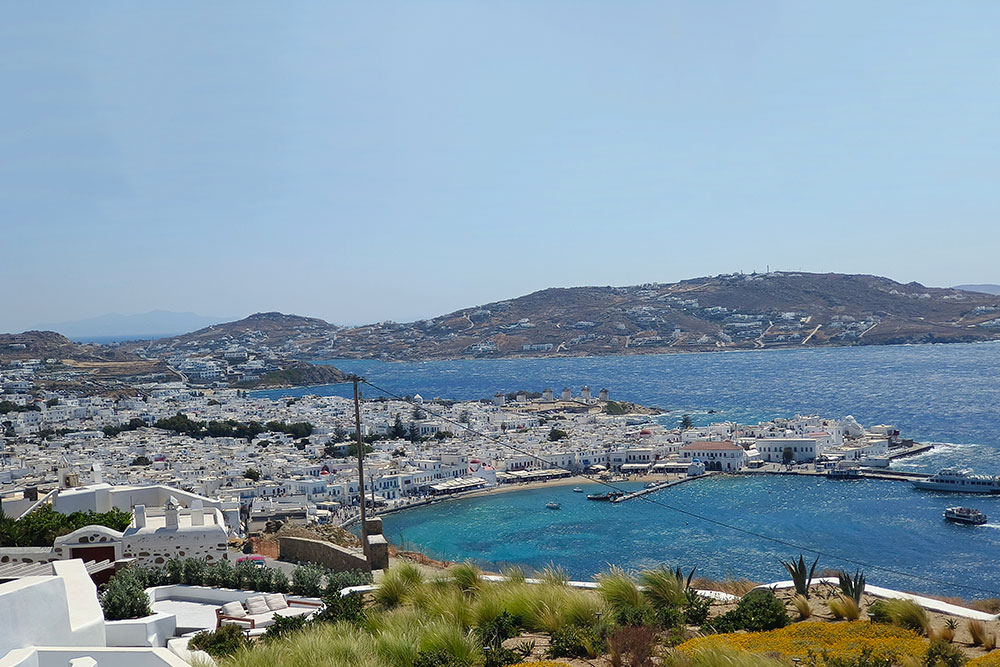
Shaped by centuries of Venetian and Ottoman rule and marked by pirates and seafarers, Mykonos bears layers of history in its streets and architecture. Despite its global fame, the island has preserved its essence — beyond the nightlife lies a place brimming with character and history, where luxury and authenticity co-exist harmoniously.
Above It All At Myconian Deos
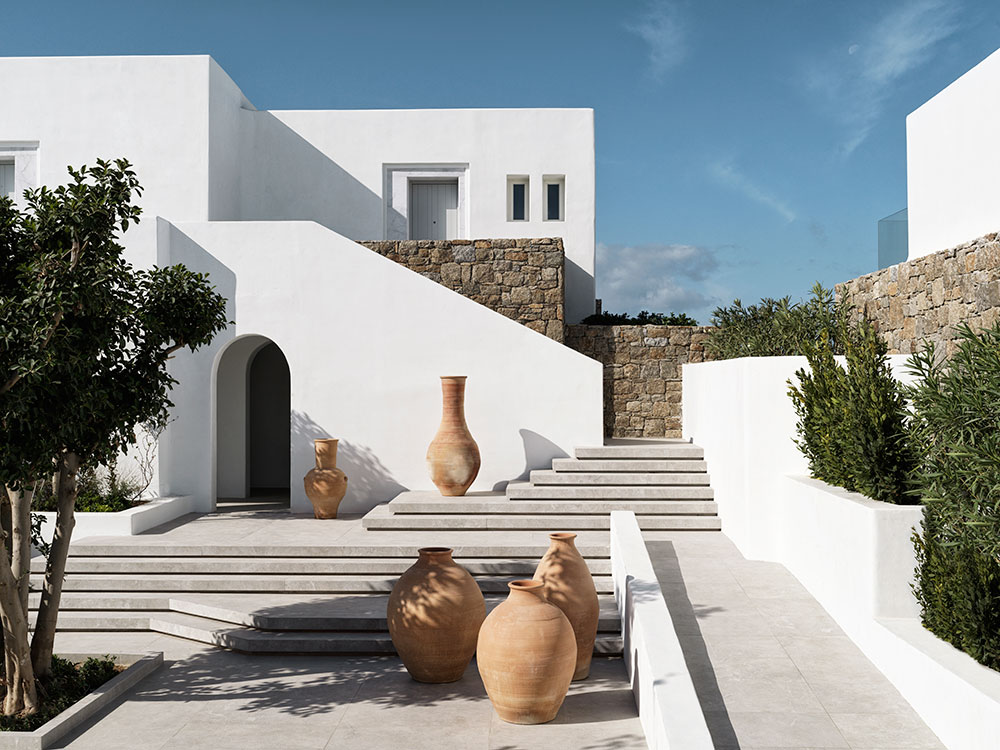
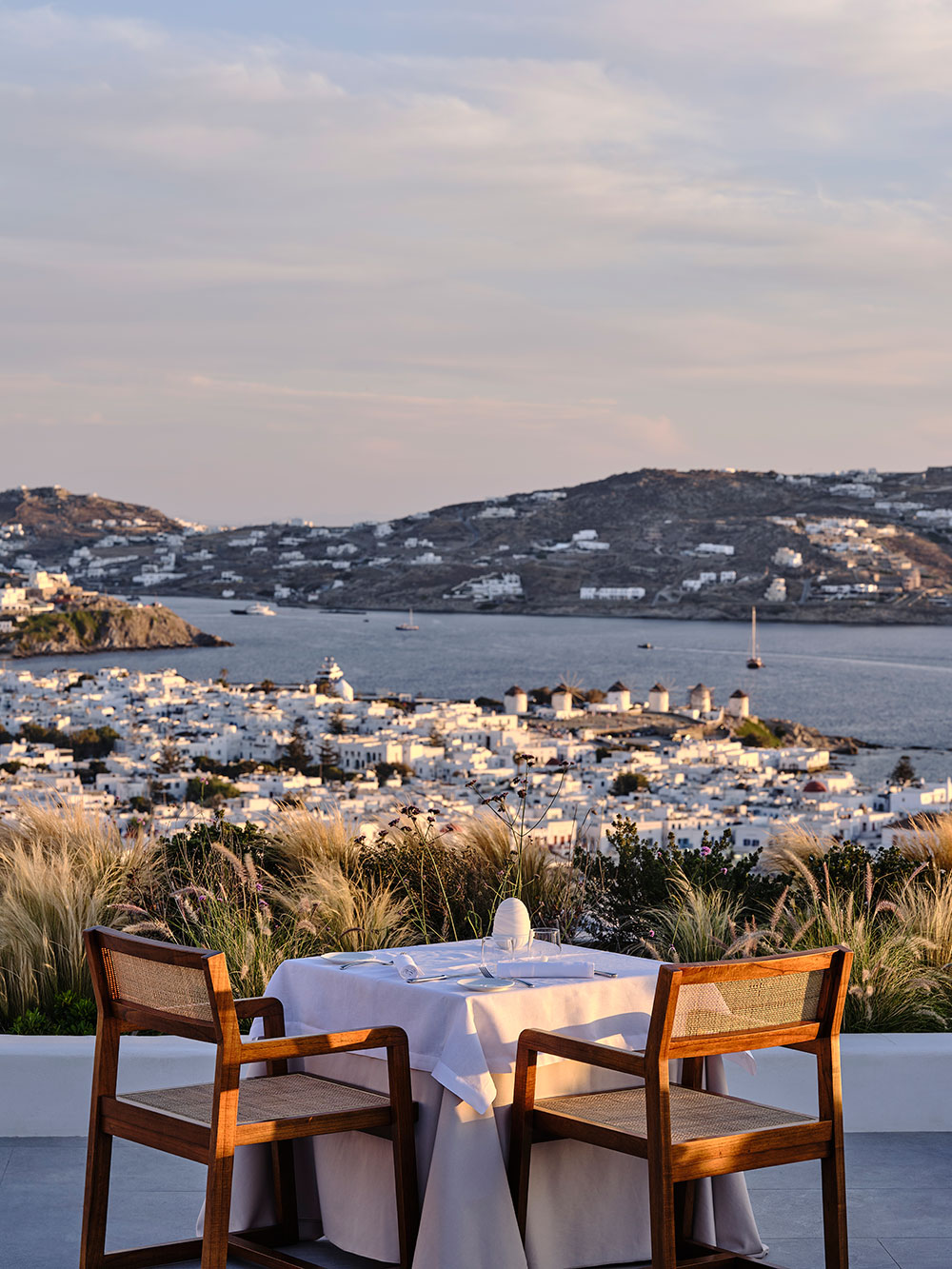
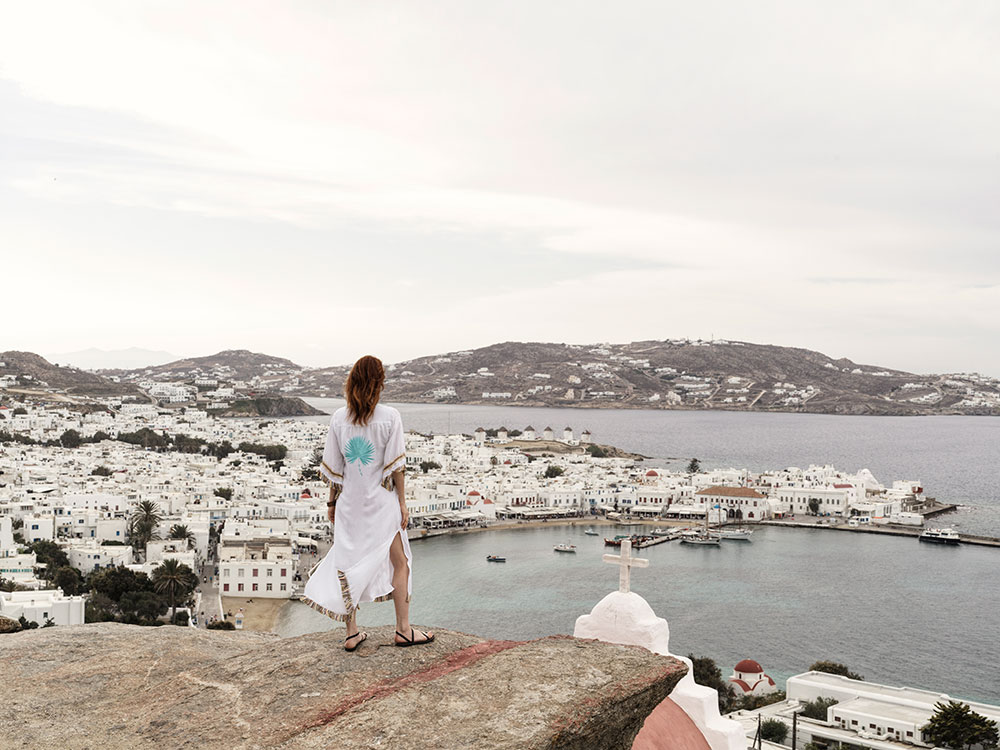
My introduction to Mykonos began with a short drive from the airport, bringing me to Myconian Deos, perched just above the Old Port. The hotel is close enough to feel the island’s energy, yet blissfully removed from it. I settled on the terrace with a refreshing lemonade, watching Mykonos Town unfold below—its white-washed geometry glowing against the deep Aegean blue.
My suite quickly became my sanctuary. Sunlight poured across the terrace, and the private pool shimmered in the afternoon light. Inside, earthy textures and artisanal accents created a sense of homely comfort while the elegant bathroom and dressing area blurred the line between daily routine and quiet relaxation.
Also Read: This Heritage Hotel In Saudi Arabia Is Lit By 1800 Candles And Lanterns At Night
Lunch at Epico, the hotel’s fine-dining restaurant, felt like a celebration of the island’s produce. Following the chef’s recommendations, I started with freshly baked pita, olives, and tzatziki, then moved on to a crisp, vibrant Choriatiki Salata (Traditional Greek Salad). The highlight, however, was the Astakos Giouvetsi—lobster orzo simmered in tomato, garlic, basil, and lobster broth. Executive Chef Ilias Maslaris and Executive Sous Chef Kristalia Vousmaki elevate local ingredients into dishes that honour Mykonos’ culinary traditions while giving them a fresh, modern Mediterranean twist.
Breakfasts were equally memorable, timed with the soft awakening of the island. The buffet offered warm pastries, seasonal fruits, nuts, cheeses, and classic Greek delicacies, complemented by a menu of made-to-order egg dishes.
Getting Lost In Chora
To reach the historic Chora, Mykonos’ Old Town, one can take the steps down from Deos or opt for a ride in the hotel’s electric buggy. I chose the latter—it was peak summer, and the heat was already relentless.
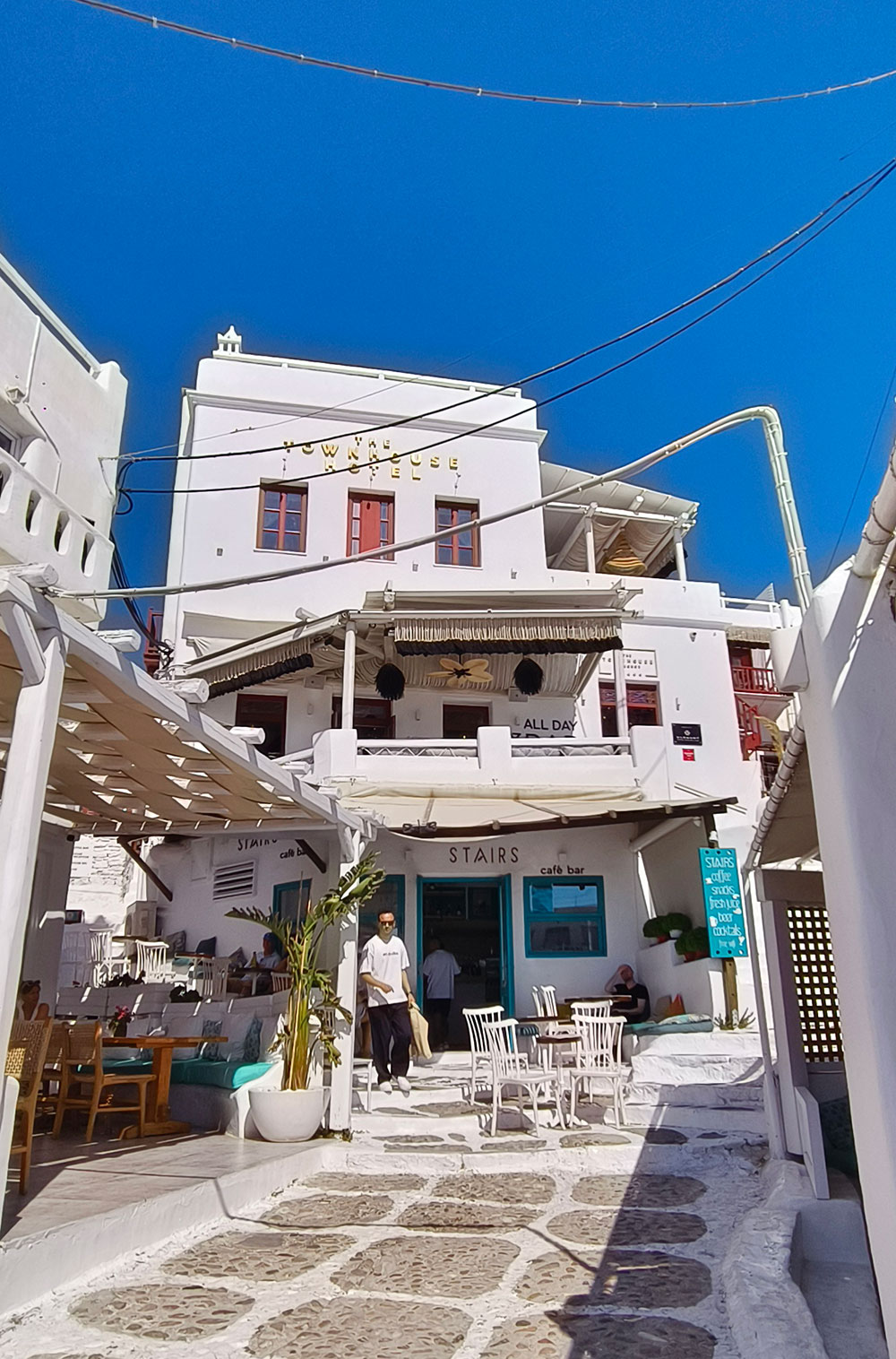
Chora reveals itself slowly, winding through narrow alleyways designed to make one wander. Whitewashed walls glow in the sun, stone paths show the marks of time, and rounded Cycladic houses lean close together, as if sharing secrets. Bougainvillaea spills over balconies in bursts of peach, fuchsia and violet, adding vibrance to the island’s otherwise white-and-blue palette.
Hidden within the lanes are boutiques selling everything from stylish linen dresses and nature-inspired jewellery to handcrafted leather sandals. Tiny souvenir shops appear in unexpected alcoves, brimming with ceramics, woven bags, magnets, and evil-eye charms.
Every few steps, a chapel or church punctuates the path; many built as acts of devotion or protection. Panagia Paraportiani, one of Greece’s most photographed churches, stands out as a unique architectural composition evolving since the 15th century.
There is no shortage of charming cafés, their small wooden tables and chalkboard menus tucked into quiet corners, the comforting aroma of coffee drifting through the alleys. One afternoon, I came upon a peaceful square anchored by a modest church crowned with a red dome, vivid against the whitewashed surroundings. Just across the square, the beloved bakery Artisti Prozymi beckoned. With a coffee and pastry in hand, I opened my sketchbook and let my pencil trace the church’s gentle curves. It wasn’t grand, but it felt deeply humble, rooted in centuries of devotion. With each unhurried sip, the rhythm of Chora slowly settled in.
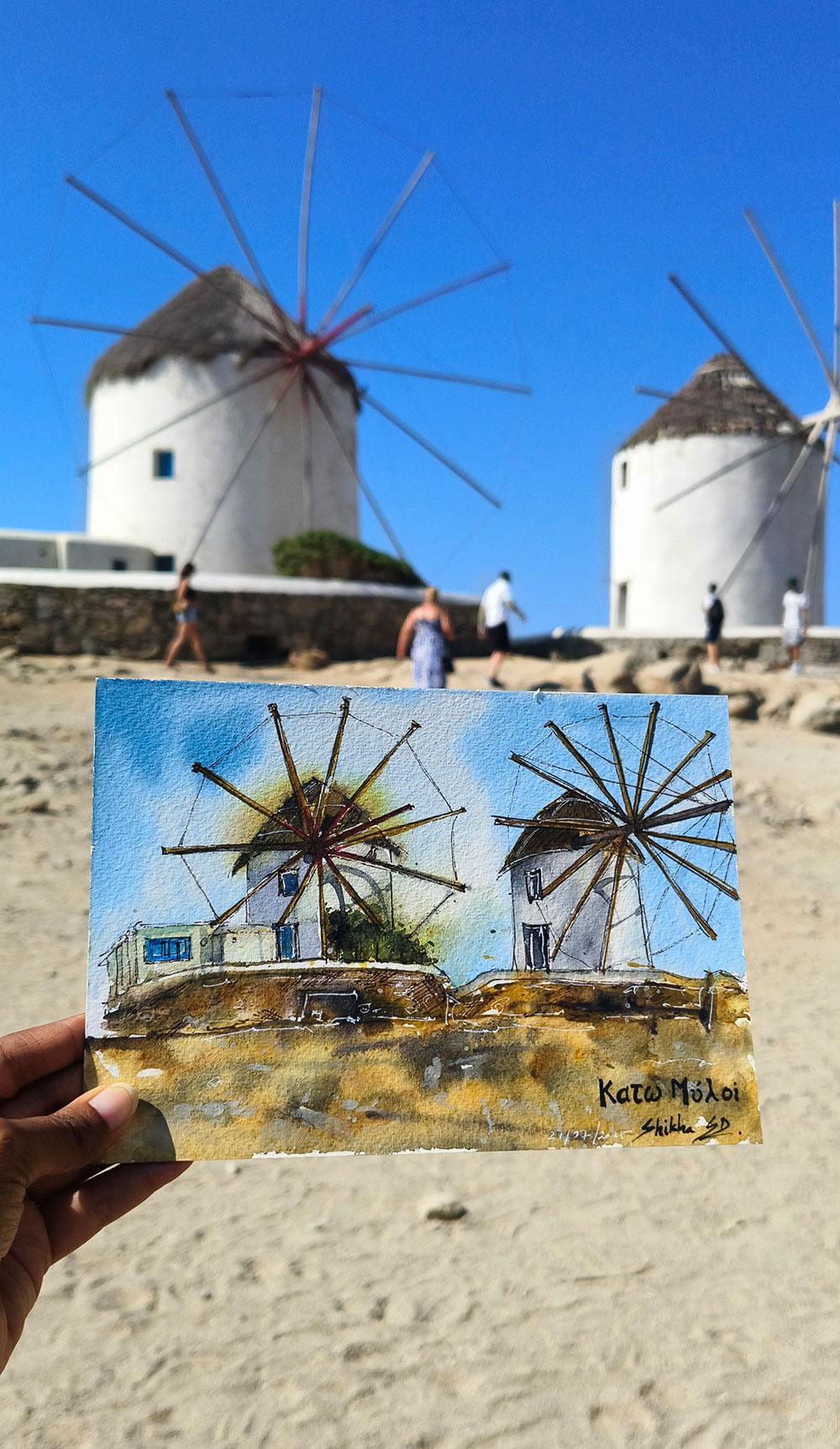
Further along, the iconic windmills come into view, standing as enduring symbols of Mykonos’ past. Once essential for grinding grain using the island’s strong winds, they now overlook Little Venice, offering wide views of colourful houses perched above the Aegean.
Also Read: Where To Go And What To Do In 2026: Most Iconic Events Worth Travelling For This Year
Mykonos shifts with the time of day, and this is most apparent in the early morning, when locals can be seen patiently fishing along the harbour and setting up their small shops for the day. In these quiet hours, Mykonos Old Town reveals itself as more than picturesque — it is layered, purposeful, and alive.
Swim, Sunbathe, Read, Repeat
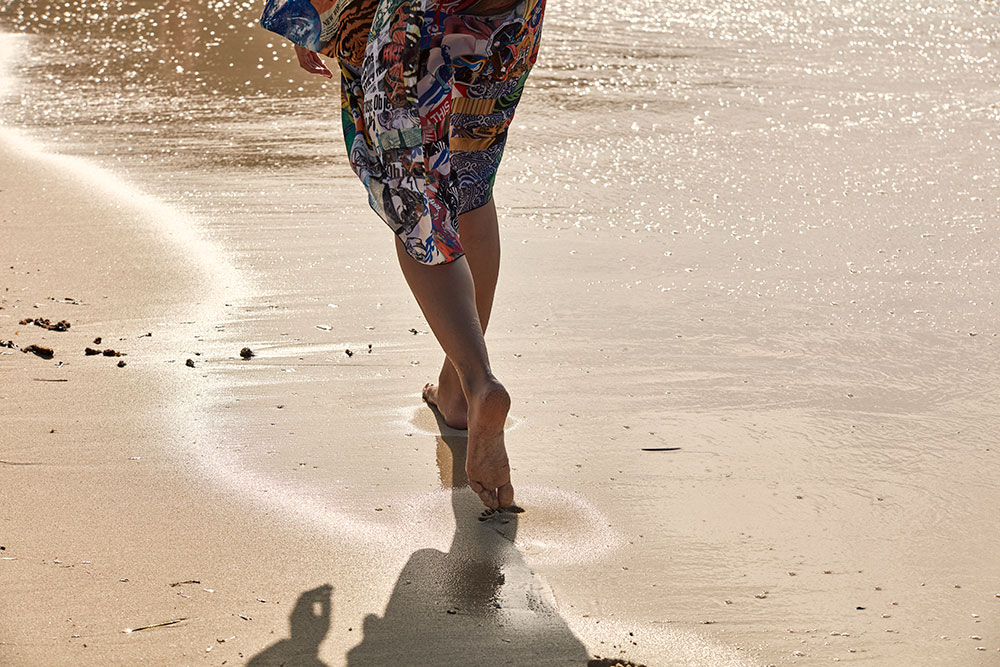
There’s a simple pleasure in doing nothing on a beach — swimming in the sea, basking in the sun, reading a few pages, and starting all over again. Mykonos is made for exactly that.
About 20 minutes from Chora lies Agrari Beach, a secluded bay framed by rocky hills that shield it from the north winds. Its long stretch of soft sand and crystalline waters feels almost paradisiacal.
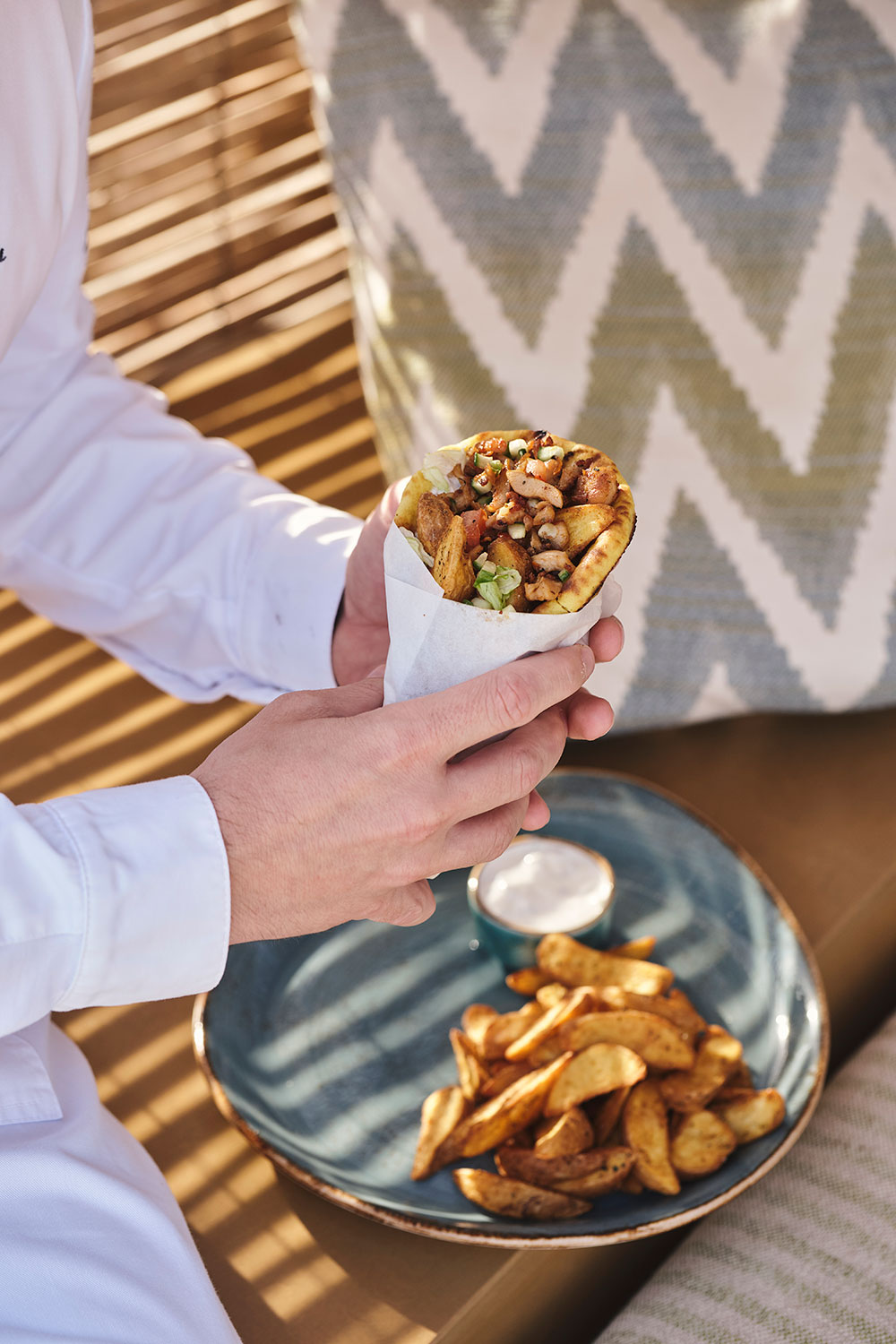
For me, the perfect way to spend time here is to put my feet up, feel the sea breeze, and then enjoy a light lunch at Almiriki, a feet-in-the-sand taverna serving Greek dishes, fresh mezzes, and fare made from local, organic ingredients. I picked Pita Gyros with chicken, freshest vegetables, tzatziki and country fries.
Other must-visit beaches include Elia, with its sweeping expanse of golden sand and turquoise waters, sunbeds and parasols, and a dedicated beach bar for added convenience. Its deeper waters and rugged surroundings make it perfect for snorkelling, diving, or water sports, yet the vibe remains calm and refined, free from blaring music and crowds.
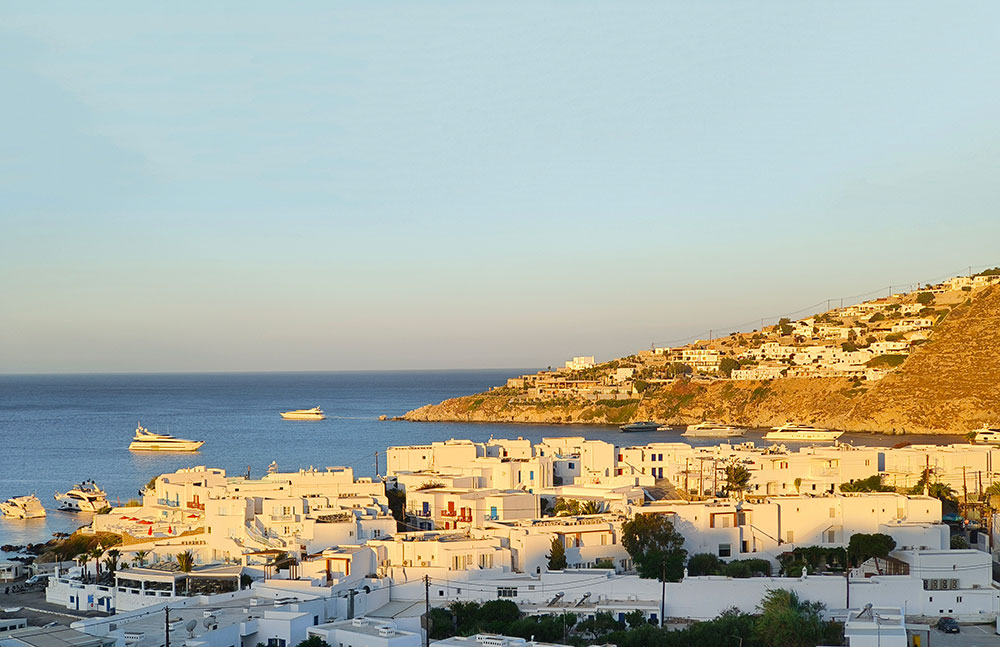
For a more energetic, cosmopolitan scene, there is Platis Gialos, a half-moon bay just 3.5 km from Mykonos Town. Its turquoise waters and soft sand draw both families and stylish travellers, offering a balanced mix of activity and relaxation.
A Yacht Trip To Sacred Delos
For a taste of Greek-style island hopping, I chose a half-day tour with YAL’OOU. A 30-minute yacht ride carried us across the Aegean to Delos, a remarkable archaeological treasure and a UNESCO World Heritage Site. Revered in Greek mythology as the birthplace of Apollo, the god of light, and his twin sister Artemis, goddess of the hunt, the island was once a major centre of worship and pilgrimage, drawing visitors from across the ancient world.
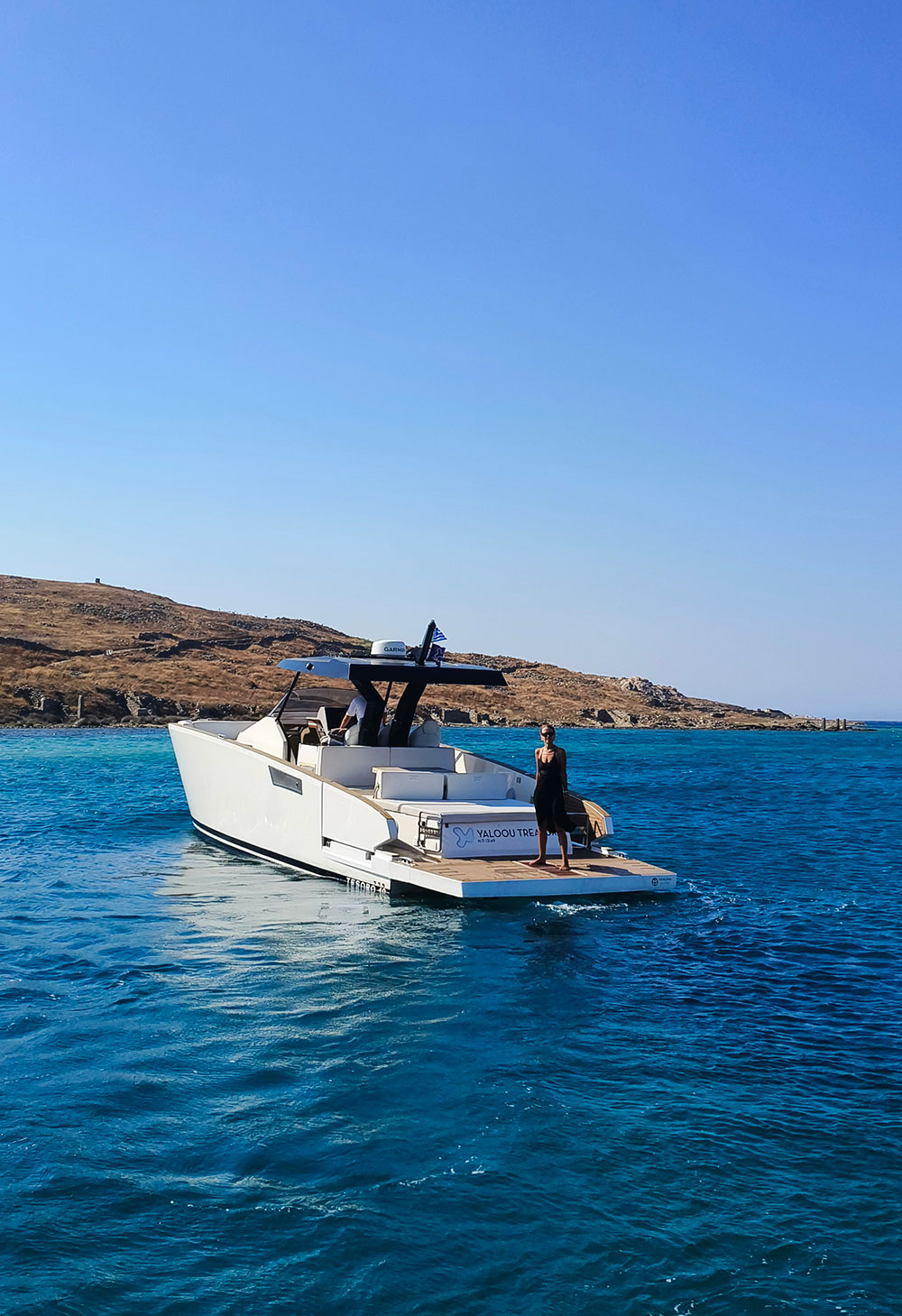
Beyond its religious significance, Delos was also a bustling trading hub, connecting the Cyclades to the wider Mediterranean. Excavations by the French School at Athens, ongoing for more than a century, have revealed a city that was as civic and commercial as it was sacred, with streets, markets, public buildings, and homes that speak to its complex past.
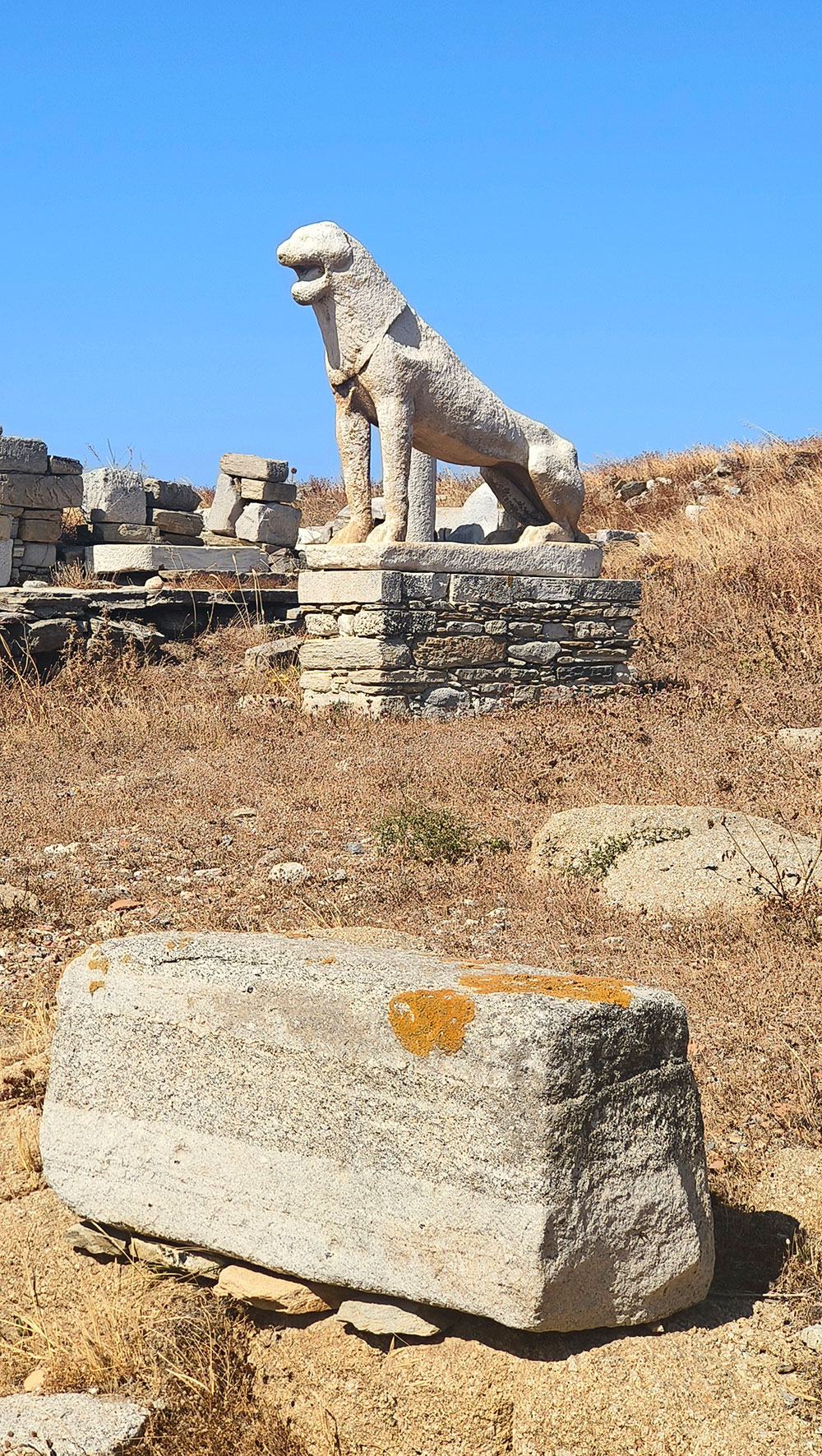
Wandering the island was a chance to appreciate its awe-inspiring archaeological gems: stone houses dating back thousands of years, mosaics that hint at former opulence, and the Terrace of the Lions, where marble statues once stood as guardians. In Delos, each ruin tells a story of devotion, trade, and daily life!
The day concluded with a plunge into the Aegean’s clear turquoise waters — a simple, invigorating pleasure that felt like a bridge between the island’s ancient past and the present moment.
Where To Stay
Owned by the Daktylides family and steeped in Mykonos’ heritage, Myconian Collection hotels are perfectly positioned at some of the island’s most breath-taking locations. Deos sits just steps from the iconic windmills of Chora, offering a pool with sweeping Aegean views, a tranquil spa, refined fine dining, and a private shuttle to Almiriki, a secluded beach often hailed as one of the island’s most idyllic escapes. The Ambassador perches above Platis Gialos Beach, combining a serene coastal setting with sophisticated Mediterranean cuisine. Elegant rooms in the signature blue-and-white palette radiate timeless charm, while the stylish bar serves expertly crafted cocktails against stunning sea views.
Myconian Deos: Tariff starts at Rs 51,453 per night for two
Myconian Ambassador: Tariff starts at Rs 20,518 per night for two
A freelance journalist and mindful traveller, Shikha Shah enjoys writing about travel, food, culture, and architecture.