Inside Gulab Haveli: The 150 year Old Edifice Of Mercantile Opulence In Shekhawati
Once left in the shadows of anonymity, the newly restored Gulab Haveli is now an edifice of ‘India modern’ aesthetic. Outlook Luxe visits this Shekhawati haveli — once a Chief trader’s house that tells about the rise, fall and revival of the region’s rich mercantile legacy
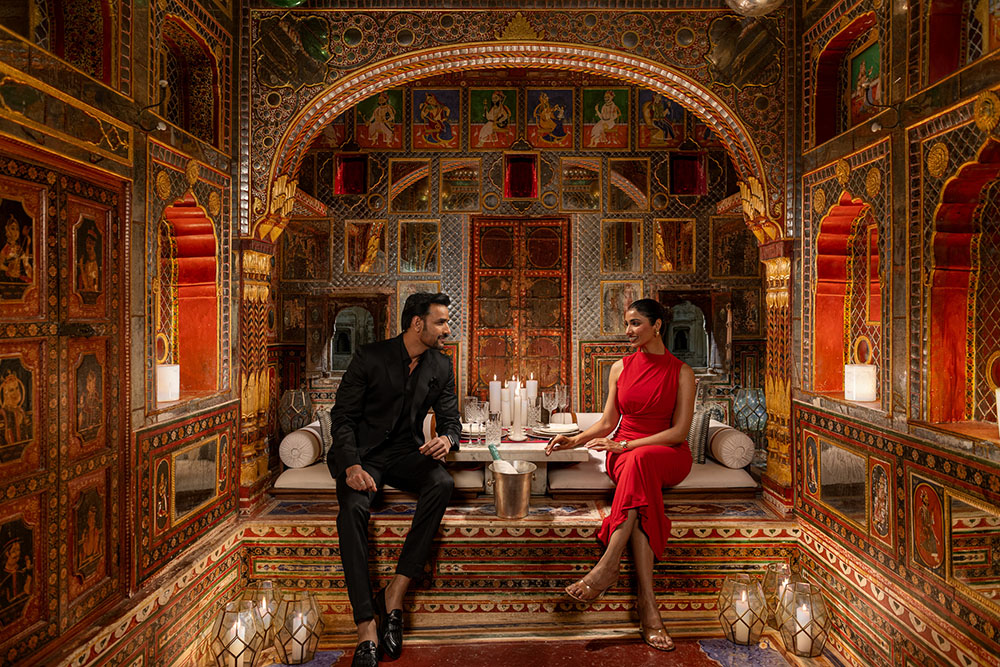
In times when gold prices are skyrocketing, imagine the cost of a gold-decorated wedding room! What we can’t fathom today was a living reality back in the 1830s, Shekhawati, Rajasthan, when a wealthy merchant, Gulab Rai Ladia, gifted an ornate gold-painted room to his grandson as a private room for the newlyweds. I entered the small room adorned with gold-inlay work on the walls and vaulted ceilings. It was adorned with thousands of tiny convex mirrors that would create a glittering effect at night for the newlyweds. The interiors were painted with miniature art portraying courtly scenes, mythological tales, and even erotic illustrations borrowed from the Kama Sutra (explicitly indicating it’s a nuptial chamber!). The floor appeared like I was walking over a cotton rug (dhurry), thanks to trompe l’oeil, a painting technique that adds a 3-D effect to surfaces.
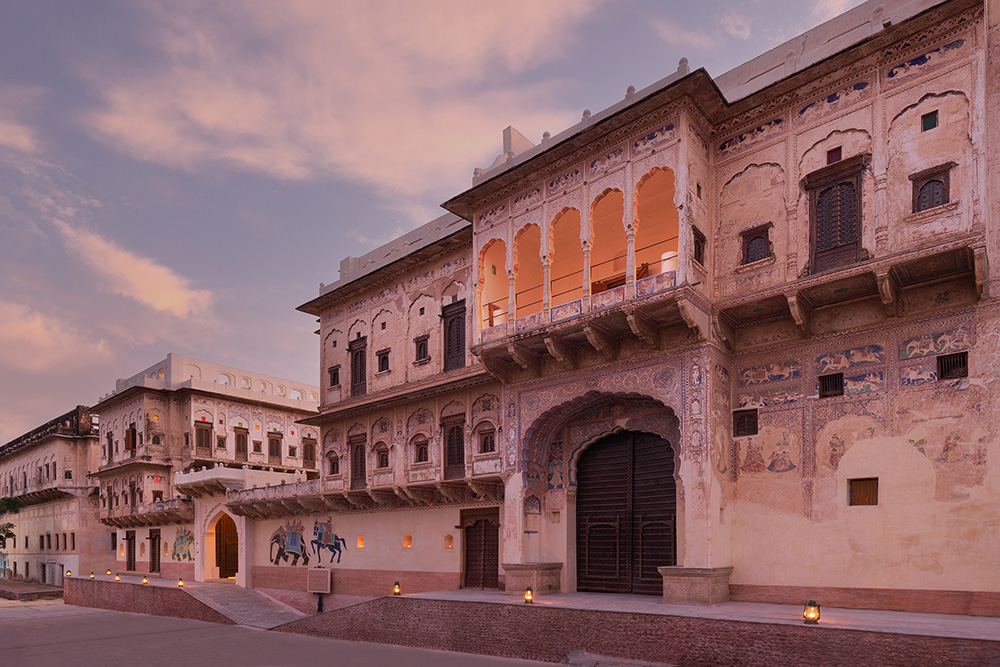
It was undoubtedly the most exquisite chamber I found over on my two-day stay at the newly-restored 150-year-old Gulab Haveli. Located in Mandawa, in Rajasthan’s Shekhawati region, it’s one amongst over 2000 decorated havelis hand-painted with frescoes. They have turned Shekhawati into the ‘world’s largest open-air art gallery’. As I drove 5 hours from Delhi to this semi-arid region, what awaited was living ‘India modern’ at its best.
Shekhawati’s mercantile legacy
As I reached, Shekhawati captivated me with its rustic charm. Narrow alleys were dusted with sand. It drifted in the spring March air as if whispering secrets of the rise and fall of its merchant community. The dusty bazaars spoke of somewhere around the 18th century, the zenith of Marwari prosperity, when the region’s merchant class traded in exquisite commodities like gold, silk, opium, spices, and cotton exchanged on the Silk Road. It made the merchant class prosperous and dominant. Eventually, they turned their modest homes into heritage havelis.
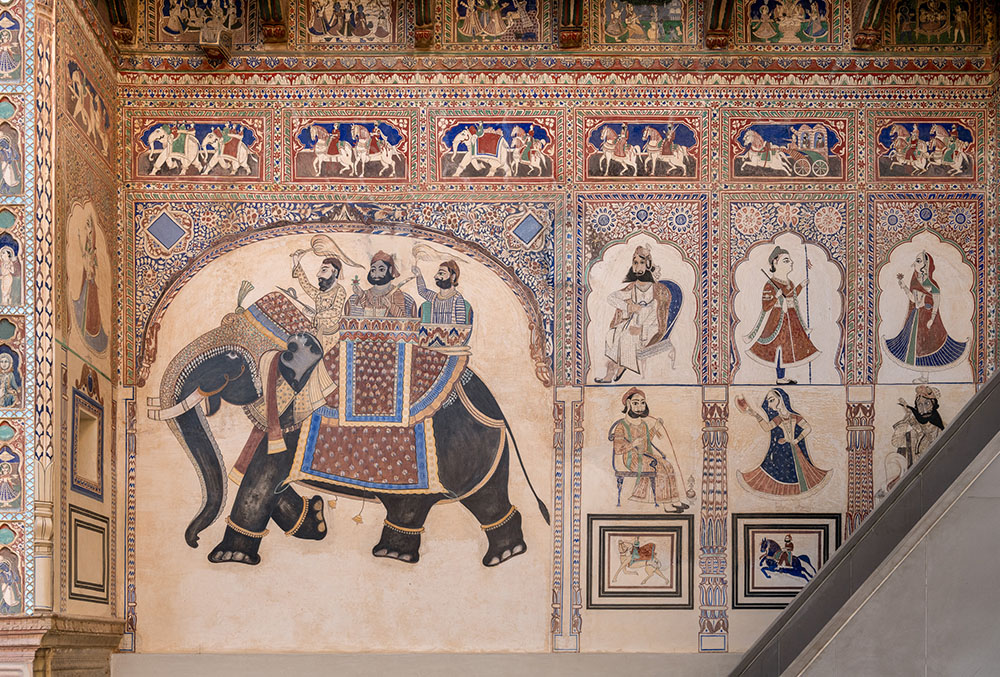
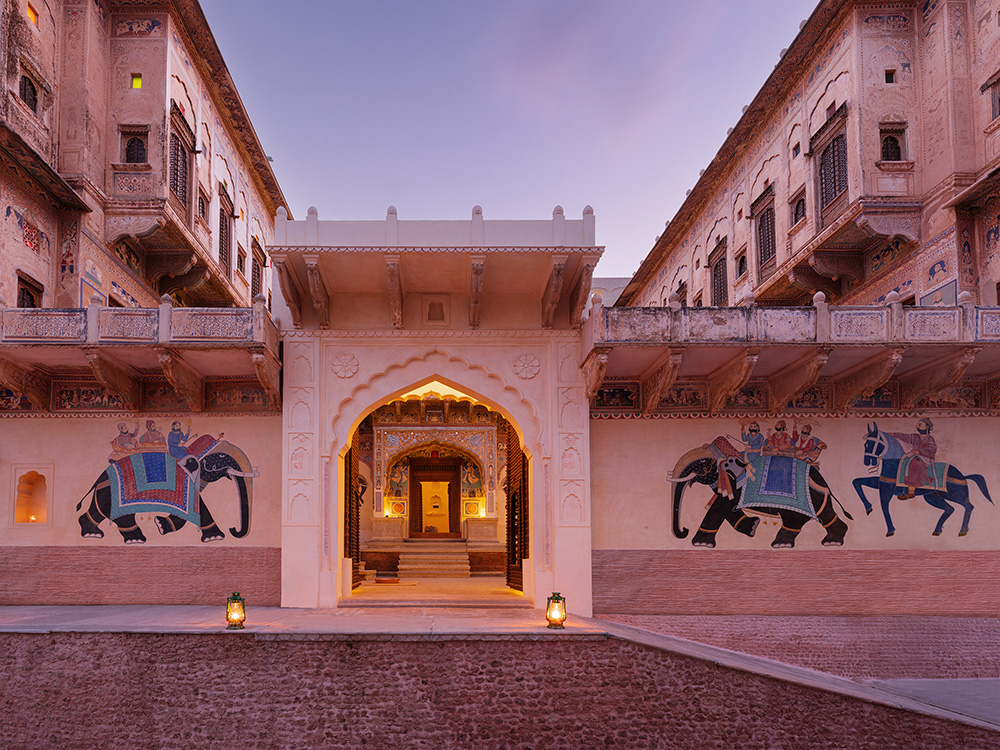
I crossed a cluster of such high-status residences of merchants in the meandering lanes; from Sneh Ram Ladia Haveli, and Chowkhani Double Haveli, to finally reach Gulab Haveli. Once the home of the chief trader, Gulab Rai Ladia, the haveli stood out for its fortress-like facade. It was adorned with a striking fresco showing a scene of aristocracy seated over elephants and horses.
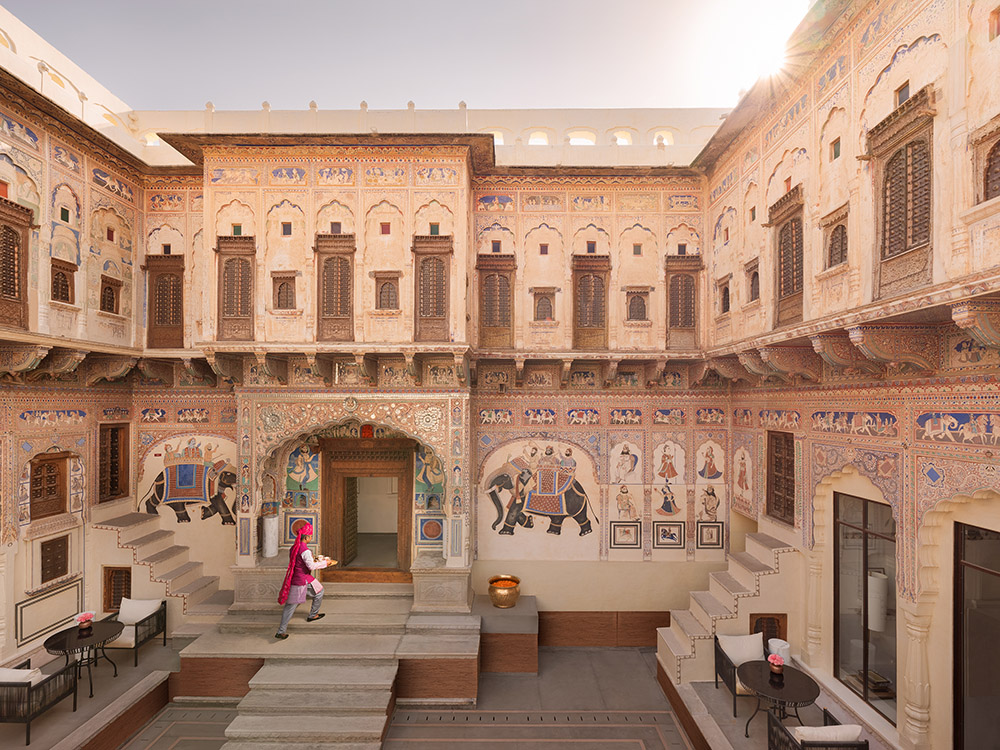
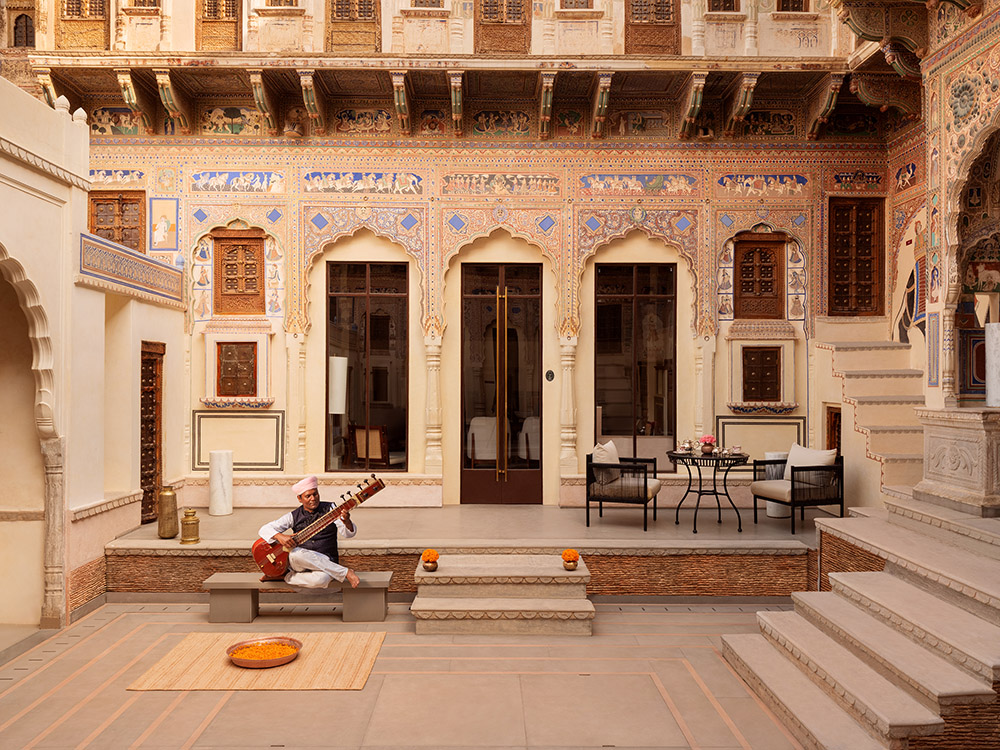
Inside Gulab Haveli, a warm welcome awaited with garlands, tikka, welcome drinks and a flower shower in true Rajputana hospitality. “You’re in the Outer Courtyard (Mardana). This space was the domain of men and business,” tells Raj Verma, General Manager, Gulab Haveli, Mandawa, IHCL Seleqtions, about the triple-storey haveli that has two courtyards and 17 rooms.
“Inside, you’d see the Inner Courtyard (Zenana), which was the domain of women. It was the centre of domestic life, where cooking, child-rearing, and daily rituals took place,” he adds, piquing our interest in the grand architecture of the haveli.
Behind Closed Doors
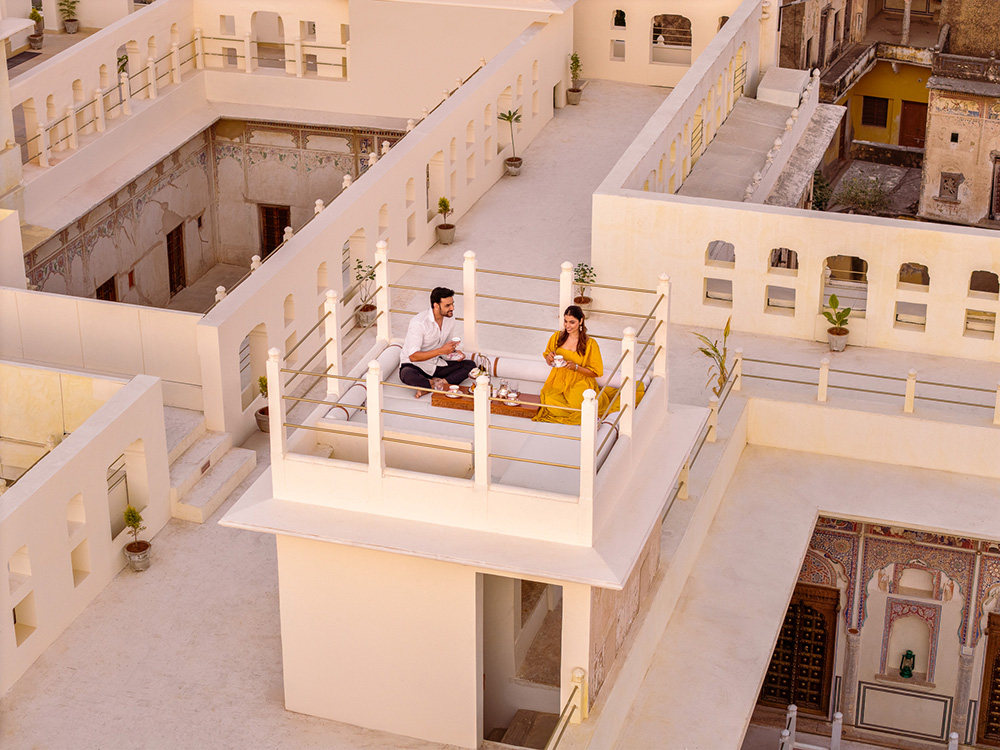
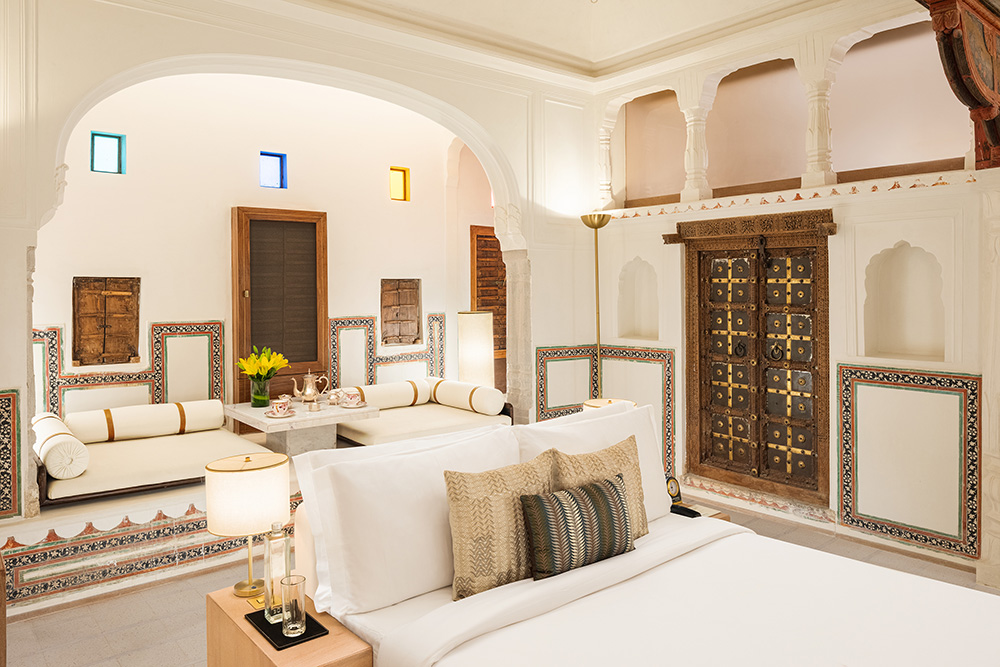
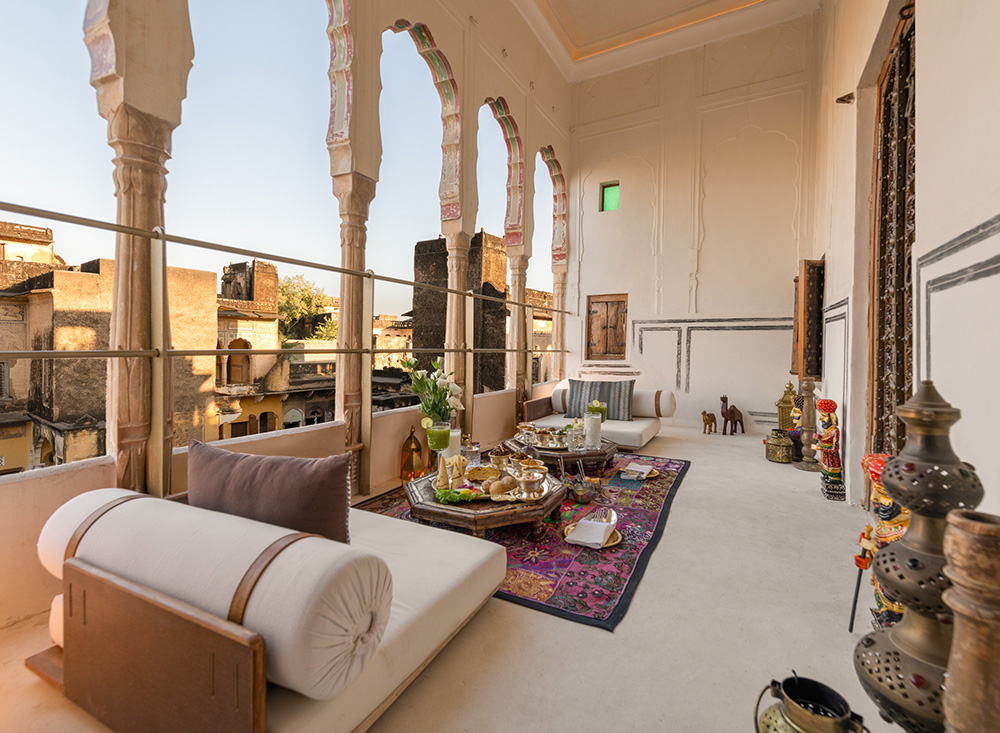
After sipping on a summer cooler, I straightaway checked into my room. It had a discreet entrance and a private balcony that overlooked a verandah. Inside, it exemplified heritage-meets-modern luxury — on one hand was ‘Shekhawati living’ with antique accents, jharokhas and limestone painted walls. On the other hand, there was a modernist take; minimalist interiors that added a sharp contrast to outwards vibrancy of frescoes, elegant bathrooms stuffed with luxury accessories and warm lighting that replaced lanterns and mashals (torches) of the bygone era. The highlight was the private balcony! My evenings would be spent there enjoying an intimate dinner and catching a glimpse of live folk music and puppetry staged every evening in the verandah. After a warm shower, I was refreshed to begin my mini tour of the haveli.
Passing by each doorway felt like entering a chamber of secrets. Beginning with Gulab Ladia’s private room, it revealed itself as a seat of power, business and privacy. “Ladia ji and his wife stayed here. His wife loved dressing up, so you see intricate mirror-work in the room. To ensure complete privacy in olden times, the haveli owners used to have deaf or mute people who used to do pankha (fan) when summers hit this arid region. It also used to provide livelihood to the needy,” points Verma towards the interiors of the newly revamped luxury suite decked with traditional Rajasthani decor, period furniture and baithaks.
Another interesting room was “girl’s gossip room”, now turned into a deluxe room. In olden days, when women and girls wished to talk in closed chambers, such rooms were built for the purpose of rest and leisure.
On the second floor, adjoining the wedding room, Sheesh Mahal caught my attention. Its rainbow-coloured mosaics, high arches, pillars, and baithak-style seating made it perfect for entertainment purposes and gatherings. “To make women feel ‘included’ in society despite the purdah system, the haveli, like most in the region, had ample of jharokhas which led women to observe the proceedings in the outer court or the street,” tells Verma, pointing to Jharokhas that can be found in every corner.
On the ground floor, the kothris once used for storage or sleeping were transformed into luxury suites. “Some of the room sizes appear smaller as we had to integrate washrooms within the room itself. They were earlier absent in the original structure, as in olden days, loos were kept outside of the havelis for hygiene purposes,” tells Verma, dropping in eye-opening facts about adaptive re-use architecture.
Studio Lotus was commissioned to reimagine Gulab Haveli, making it conducive to the modern traveller while retaining its original architecture and aesthetic character. “Materially, the interventions remain restrained with the usage of lime, stone, marble, metal, timber, and stained glass. Lime has been reintroduced into the interiors, allowing walls to breathe once again,” says Ankur Choksi, Co-founding Partner, Studio Lotus.
A New Identity
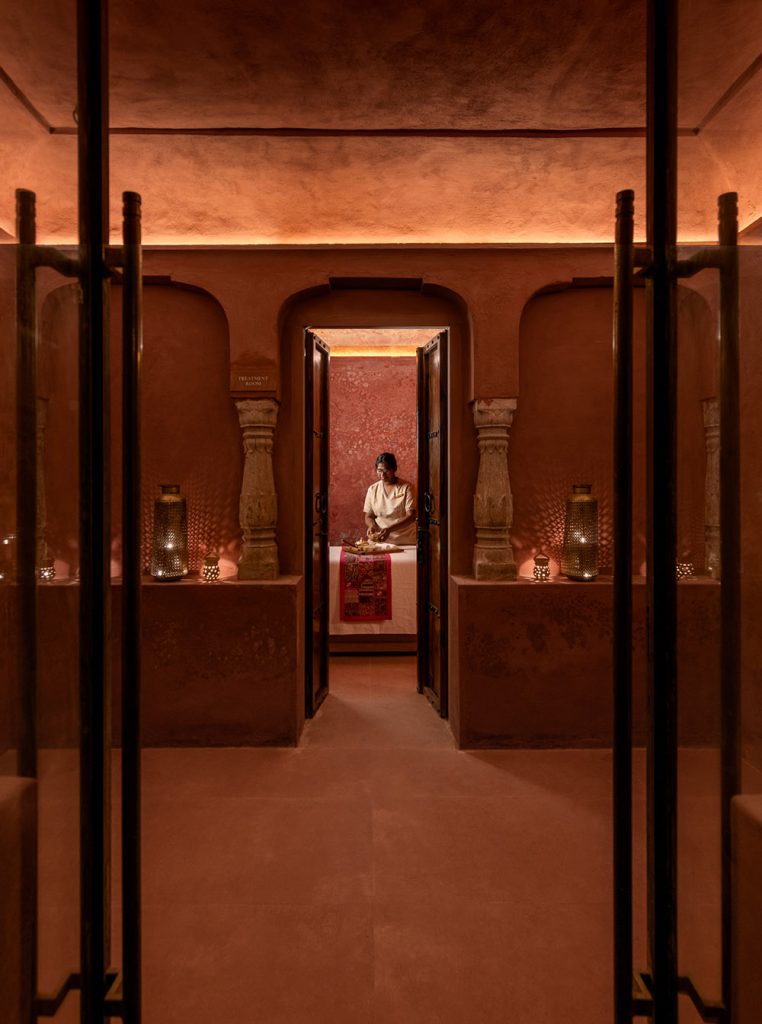
The next day revealed a new face of Shekhawati — where heritage is not just storied but lived as an experience at Gulab Haveli. A dip in the rooftop pool came with panoramic views of the 18th-century fort-turned-heritage hotel Castle Mandawa. The petrichor-scented spa calmed my frayed nerves with both traditional hammam sessions and therapies in a plunge pool.
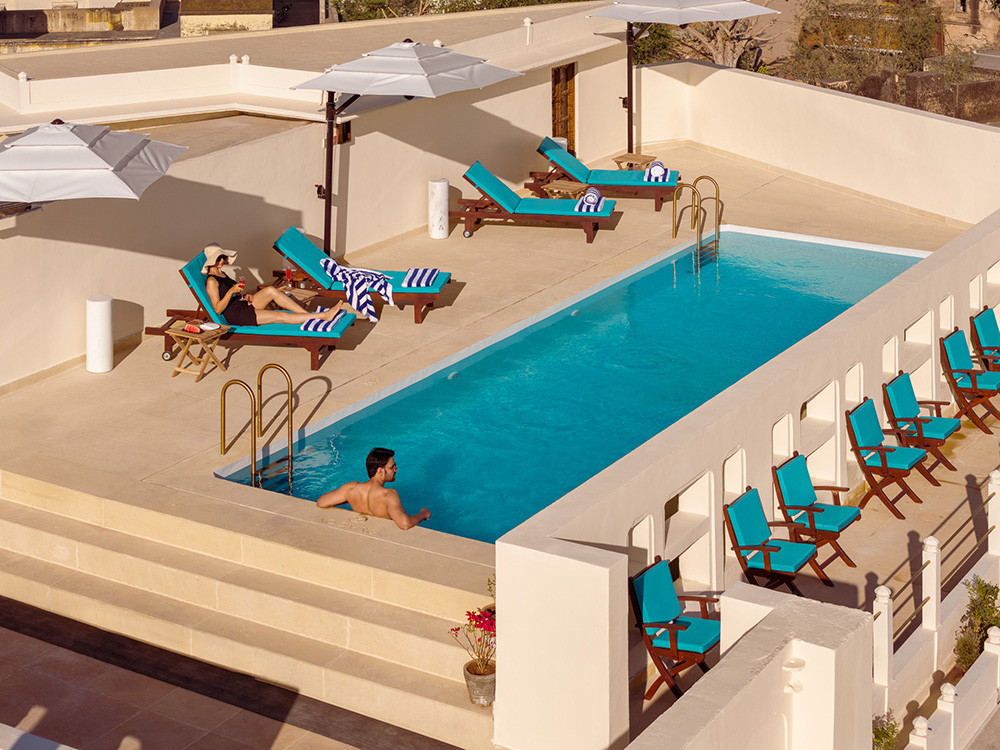
A leisurely walk through the outer courtyard, once the family’s daytime business hub, with charpoys laid out under summer skies at night, now cradles the new-age bar, Amal. Here, spiced wine hummed tales of Mandawa’s trading past, while the ker sangri bruschetta tasted like a slice of fusion cuisine.
Meals at the all-day dining Resham were curated for the globetrotting guest. It served everything from continental cuisine to the regional specialities like Laal Maans, Shekhwati Palak Paneer, Jungli Murgh, rose petal chutney, and Dals (lentils). Guests can either be hosted over a candlelight dinner on terrace under the blanket of stars or relish a traditional chaupad-style seating where the thali is placed over a bajot (low-lying table).
“Shekhawati is the ancestral home to some of India’s most prominent billionaire business families, including the Birlas, Mittals, Bajajs, Goenkas, Piramals and others. Many families still come to the region to worship their ancestral deities(kul devtas). Apart from them, it was a tourist attraction mainly for foreign travellers covering the Delhi-Agra-Jaipur triangle. But now, local tourism has also picked up,” points Verma, crediting the ongoing restoration work of several havelis in the region.
Also Read: Inside Pettagam, India’s First Private Museum On Chettinad Jewellery
Things To Do In Shekhawati
Gulab Haveli curated a slew of outdoor experiences to make my trip even more memorable. My afternoon heritage walk with tour guide Deepak Sharma was a study in fresco art seen on every haveli in the area. Many stand restored while others decay in neglect.
“The frescoes here were introduced by Shekhawat Rajputs in the 18th century. Their beauty and profusion were direct indicators of the financial standing and social clout of the family,” tells Sharma, pointing to Gulab Haveli’s detailed frescoes on the outer side showing scenes of Ramayana and Mahabharata, to Englishmen in hunting attire and railway stations. “The fresco themes have changed with the times. In the earlier days, mythology, local legends, animals, portraits, hunting and wrestling scenes, etc. dominated the scenes. The 19th century saw the themes being changed to reflect the British (Raj) influence on Indian culture. The scenes indicated merchants’ migration from Shekhawati to Calcutta and Bombay for trade during the colonial rule. Resultingly, the traditional subjects were exchanged for cars, trains, balloons, telephones, gramophones, English men etc..,” he shares as we roamed in the narrow streets replete with havelis.
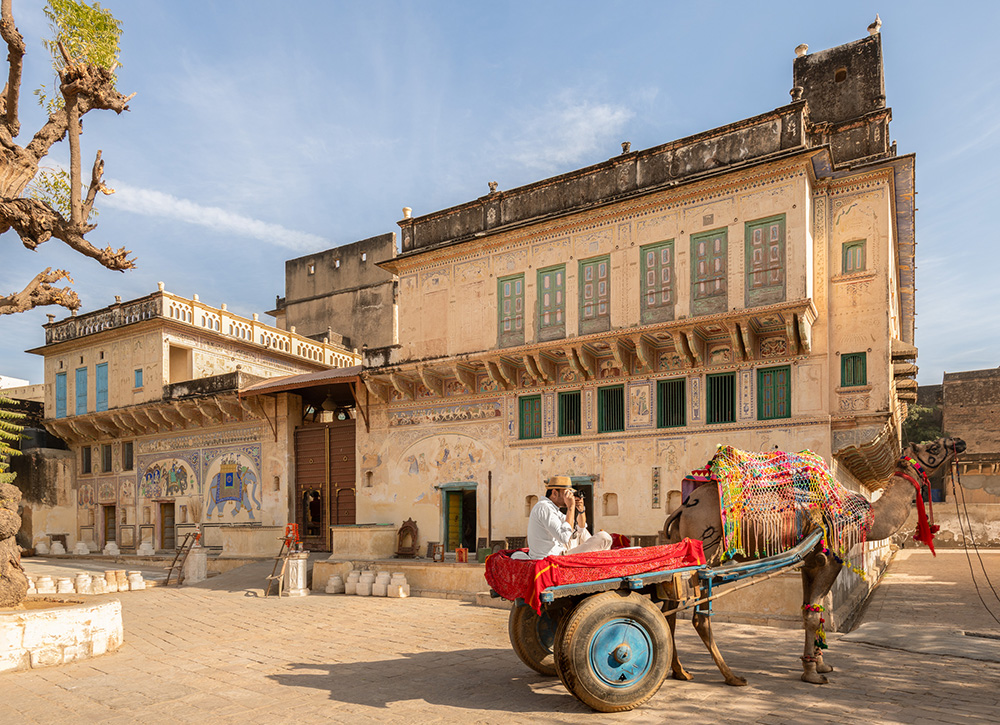
With another guide, Mudita Saxena, I heard trivia tales at the famous ‘Bollywood street’. The dusty sand-covered rugged road is where films like Bajrangi Bhaijaan, Mimi, PK, Jab We Met, and web series like Dahaad have been shot. On my way back to the hotel, riding over a tattooed camel made me believe that Shekhawati was as much about history as pop culture!
This trip flipped my view of Shekhawati on its head. Looking at it through Gulab Haveli’s rose-tinted lens, it felt less like just a dated heritage stopover and more like an emerging luxury travel destination in India.