Genelia Deshmukh’s Festive Look Is A Masterclass In Embroidery
Genelia Deshmukh's latest festive look layers zari, zardozi and marodi embroidery into one masterclass in heritage craftsmanship
Genelia Deshmukh’s latest festive appearance has given fashion watchers something richer than a passing style moment. Her outfit brought together three of India’s most storied embroidery traditions: zari, zardozi and marodi. Together they turned a red carpet look into a masterclass in heritage craftsmanship. For a season crowded with festive dressing, this was the rare look that rewarded a second glance.
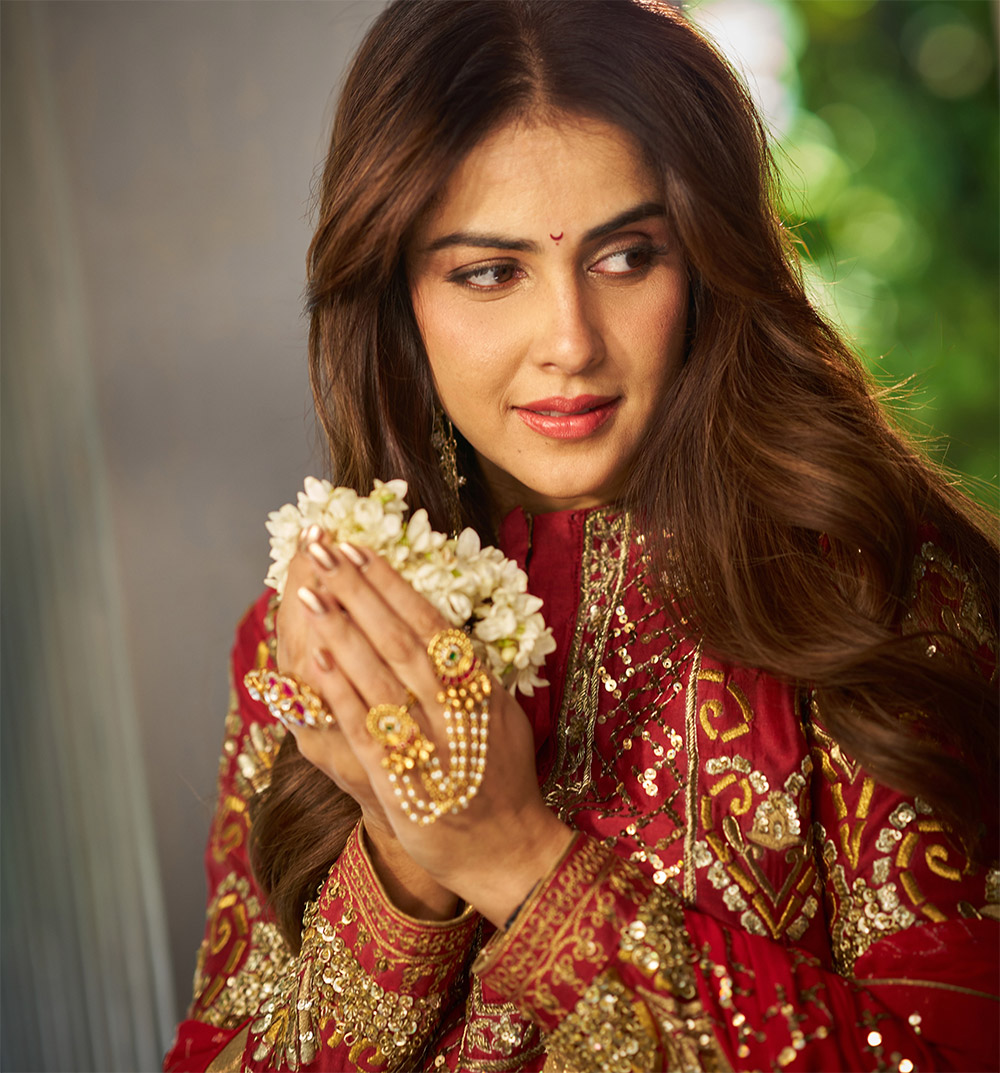
Zari is the metallic thread woven through silk and other fine fabrics. It has long been the backbone of Indian couture’s most opulent pieces. Historically, it was spun from real gold and silver. Today it appears more commonly as metal coated thread, but the effect remains unmistakable. It is a fabric that seems to catch and hold light rather than simply reflect it. On Deshmukh, the zari work lent the outfit its foundational shimmer, the kind that photographs beautifully under both daylight and festive lighting.
Zardozi’s Royal Legacy
Layered over this was zardozi, the raised, sculptural embroidery technique that has adorned royal wardrobes for centuries. It is traditionally worked with gold and silver wire, alongside pearls, beads and precious stones.
Also Read: South Indian Zari Silk: Where Craftsmanship Meets Timeless Luxury
Zardozi is prized precisely because it cannot be rushed. Each motif is built up by hand, often over days or weeks. That patience is what gives the finished textile its depth and weight. It is also what has kept zardozi firmly in the luxury lexicon, favoured by couturiers who want their pieces to read as heirlooms rather than trends.
Marodi’s Delicate Detail
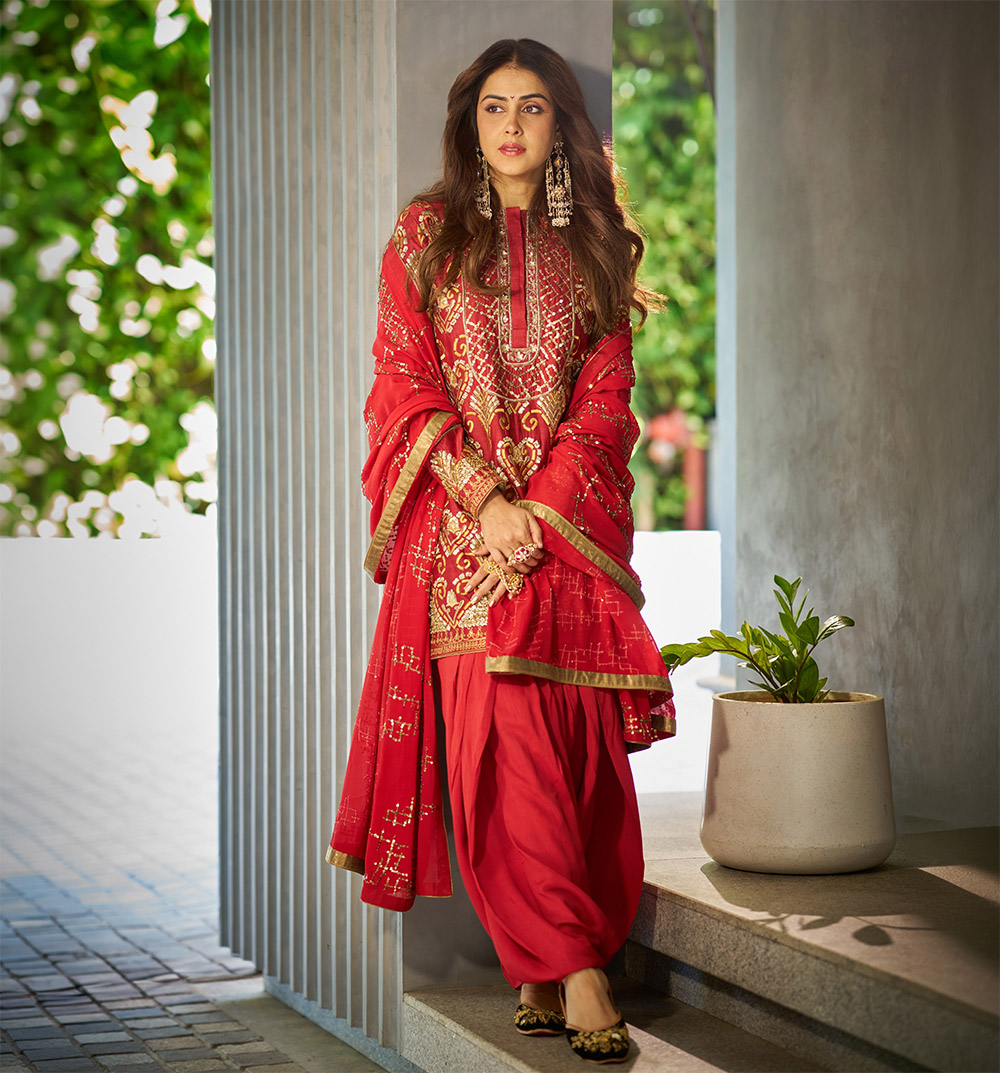
The third element, marodi, is a twisted thread technique used for fine, textured detailing. It complements the boldness of zardozi with something more delicate. Together, the three techniques created a layered visual language on the outfit. Structure, shine and subtlety worked in concert rather than competing for attention.
Also Read: How Tata Trusts’ Antaran Is Giving Indian Handlooms a Modern Makeover
What makes this look genuinely newsworthy, beyond the embroidery itself, is what it signals about where Indian festive fashion is heading. There is a growing appetite among the country’s leading style figures for outfits that champion traditional artisanal techniques over mass produced embellishment. Deshmukh’s choice fits squarely within that shift. It is a quiet but deliberate form of luxury, measured not in logos but in hours of handwork and generations of craft knowledge.
Styling With Restraint
For a woman known as much for her easy, approachable public persona as her red carpet appearances, the outfit struck a careful balance. It was festive without being overwrought, opulent without losing warmth. The styling around it was understated: soft jewellery, uncluttered hair and makeup. This let the embroidery remain the focal point, a choice that speaks to a growing editorial preference for letting craftsmanship lead rather than compete with accessories.
This moment also reflects a wider shift in how celebrity fashion is being read this season. Stylists and audiences alike are paying closer attention to provenance. They want to know not just who made a garment, but how, and how long it took. In an industry increasingly drawn to fast fashion’s speed, Deshmukh’s look was a reminder that true luxury still lies in the hands that make it, thread by careful thread.