Collector Alert: Two of America’s Greatest Cars Are Going Under the Hammer
Some automobiles become classics, a rare few become legends, but only the most extraordinary machines transcend generations to become priceless symbols of innovation, craftsmanship, and American automotive ambition
Every August, the world’s automotive elite descend upon Monterey, California, with the sort of excitement usually reserved for Formula One paddocks or the unveiling of a new Ferrari. Except this isn’t about tomorrow’s technology. It’s about yesterday’s brilliance. Monterey Car Week is where millionaires become schoolchildren again, wandering through lawns filled with machines that changed motoring forever. Here, the conversations aren’t about touchscreen displays or electric range. They’re about carburettors, coachbuilders, racing victories and the glorious age when engineers built cars with rulers, courage and an alarming disregard for accountants. This year’s festivities promise another extraordinary spectacle, but among the hundreds of collector cars crossing the auction block, two American legends stand apart. One represents the absolute pinnacle of pre-war luxury. The other was decades ahead of its time before bureaucracy crushed its dreams. Together, they remind us that America’s greatest cars were never simply modes of transport. They were declarations of ambition.
The Duesenberg That Defined American Luxury
The first is the magnificent 1933 Duesenberg Model J Disappearing Top Convertible Coupe, offered by Mecum. To understand why collectors lose sleep over a Duesenberg, one must first understand the company itself. Founded in 1920 by brothers Fred and August Duesenberg, the marque spent less than two decades producing automobiles, yet established itself as the gold standard of American luxury. Remarkably, the company built only three production models during its existence, culminating in the legendary Model J, while simultaneously earning an enviable motorsport pedigree that included victory at the 1921 French Grand Prix and four Indianapolis 500 triumphs. Every Duesenberg left the factory as a rolling chassis before renowned coachbuilders transformed it into a bespoke masterpiece, ensuring that virtually no two examples were identical.
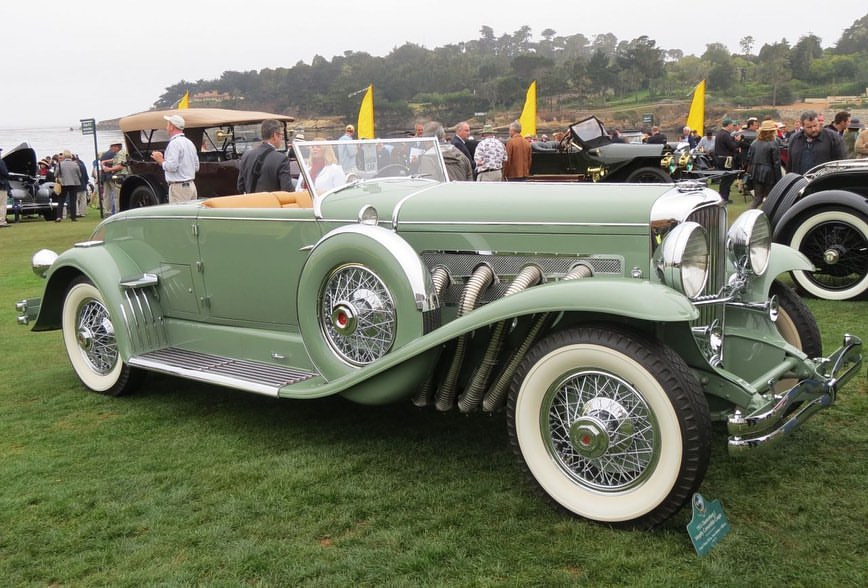
The example heading to auction is extraordinary even by Duesenberg standards. Chassis No. 2446 was completed in 1933 before Walter M. Murphy Co. clothed it in its spectacular Disappearing Top Convertible Coupe bodywork. Nearly a century later, it remarkably retains its original chassis, engine, transmission and body while boasting an almost uninterrupted ownership history that includes American racing pioneer Bob Estes, who cherished the car for four decades.
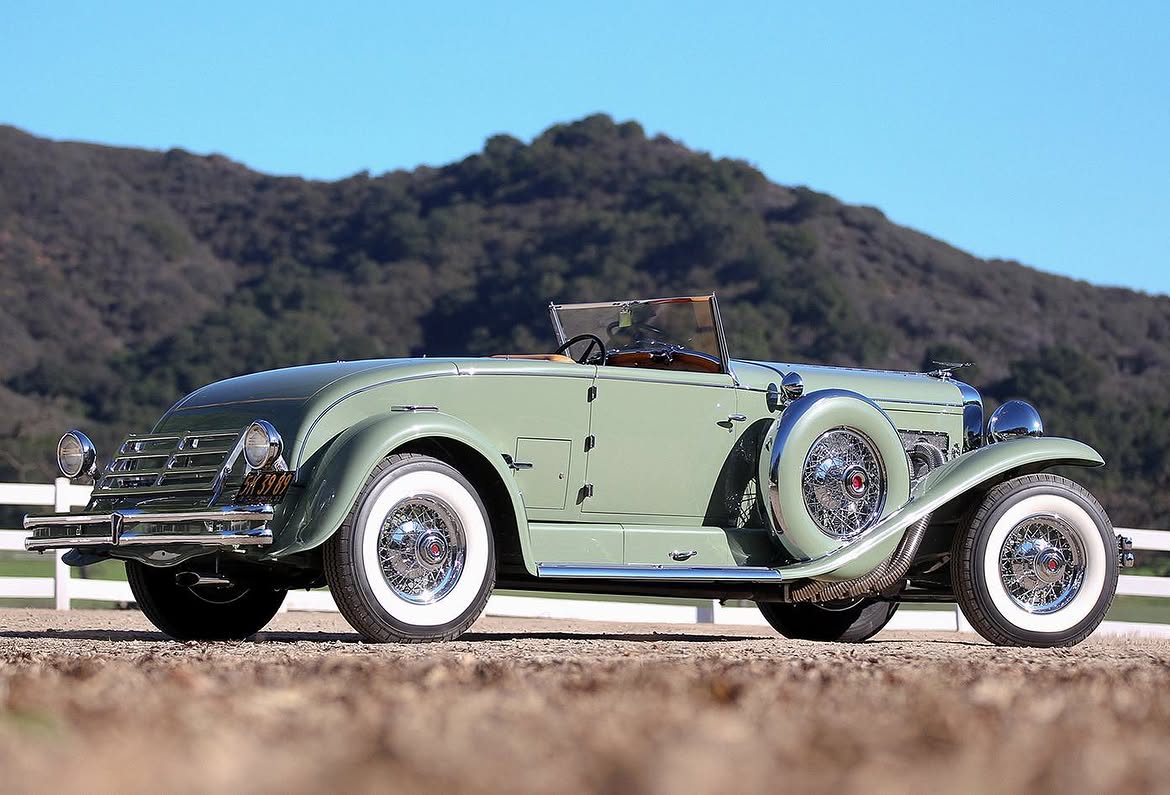
Beneath its impossibly elegant proportions sits Duesenberg’s celebrated 420 cubic inch, seven litre straight eight engine producing 265 horsepower, an astonishing figure for its era. The defining feature, however, is its ingenious retractable soft top, which disappears entirely within the bodywork, preserving the uninterrupted silhouette. Finished in elegant green over black leather following a meticulous restoration, the car has regularly graced the lawns of Pebble Beach and is widely expected to command more than USD 4 million when bidding begins.
Also Read: Mercedes-Maybach GLS 680 Raises The Bar With New V8 And Premium Features
The Tucker 48 That Was Decades Ahead of Its Time
If the Duesenberg represents America’s gilded age of luxury, the second headline lot symbolises one man’s refusal to accept mediocrity. The 1948 Tucker 48, offered by RM Sotheby’s, remains one of the most fascinating stories in automotive history. Preston Thomas Tucker believed post-war America deserved a completely new automobile rather than recycled pre-war designs. His dream gave birth to the Tucker Corporation and what he proudly called “the car of tomorrow.” Unfortunately, that dream collided with legal battles, public scrutiny and financial turmoil before it truly had the opportunity to flourish.
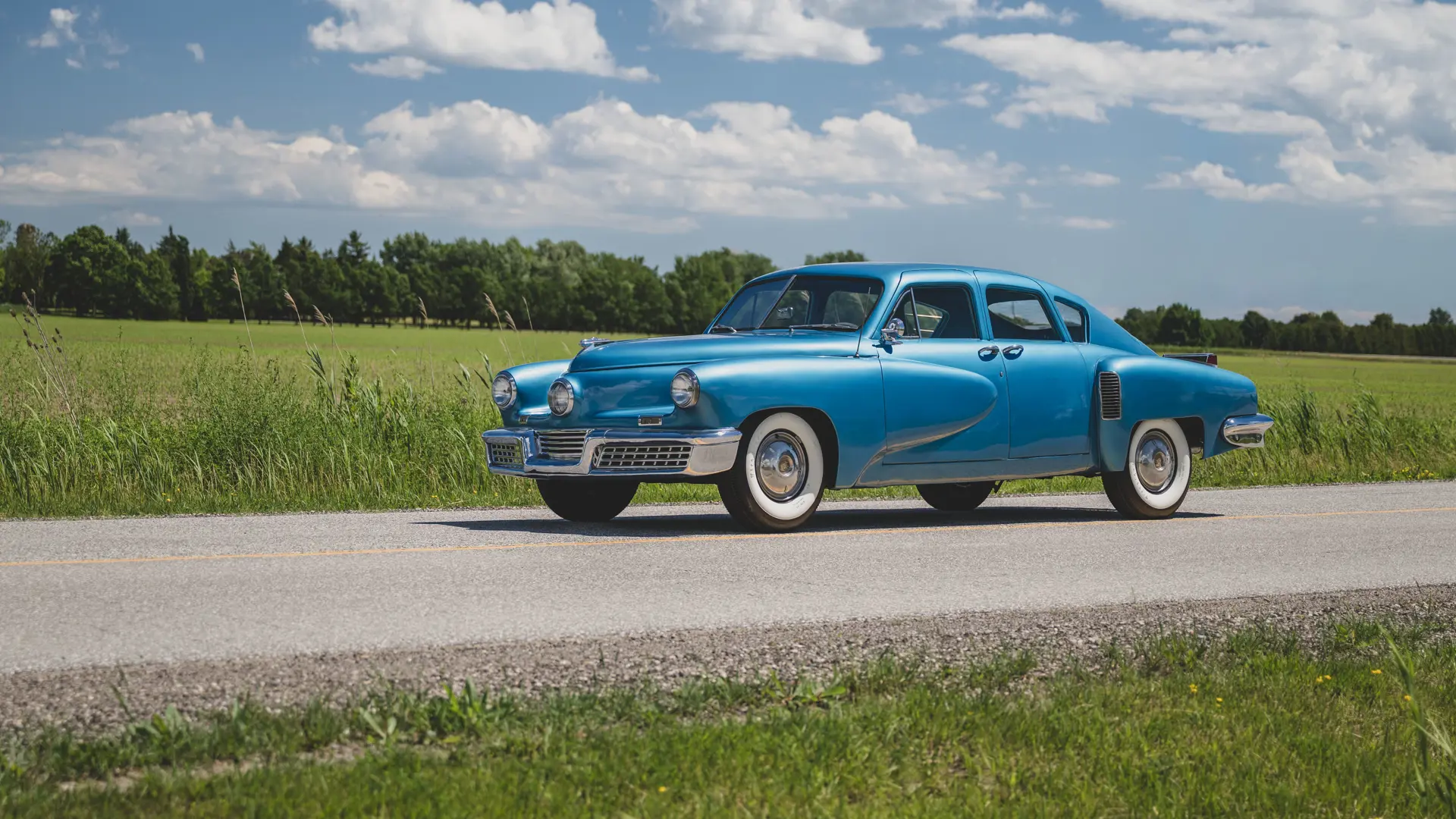
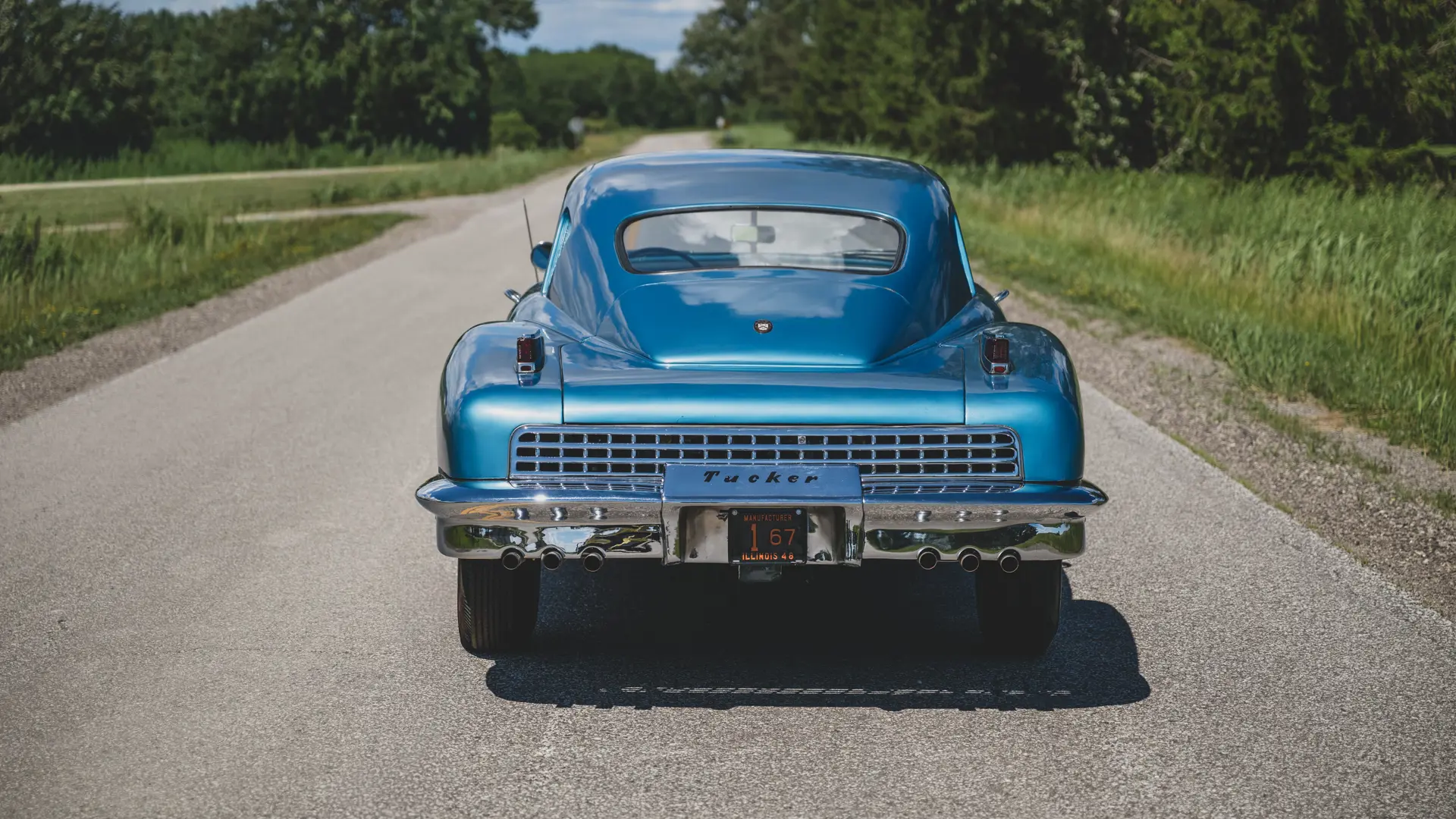
Yet the Tucker 48 was astonishingly forward-thinking. Designed by Alex Tremulis, it introduced ideas that many manufacturers would only adopt decades later. Safety lay at the heart of its engineering, with a reinforced framework, padded dashboard, collapsible steering column and innovative doors extending into the roof for easier access. Most famously, it featured a central third headlamp that turned with the steering wheel to illuminate corners long before adaptive lighting became fashionable. Power came from a rear mounted, air cooled Franklin flat six engine after Tucker abandoned an ambitious aircraft derived powerplant during development. The light blue example crossing the block is chassis No. 1019, the nineteenth production car built from a total production run of just 51 examples before regulatory investigations effectively ended the company’s existence. Although Preston Tucker was ultimately acquitted of fraud, the damage had already been done, bringing one of America’s boldest automotive experiments to a premature conclusion. Today, RM Sotheby’s estimates this remarkable survivor will realise between USD 1 million and USD 1.3 million.
Monterey Car Week has always been about more than eye watering auction results. It is where engineering legends find new custodians and where history continues its journey through passionate collectors. The Duesenberg celebrates a period when American luxury rivalled Europe’s finest, while the Tucker stands as a poignant reminder that true innovation often arrives before the world is ready for it. When the auctioneer’s hammer finally falls this August, it won’t simply conclude another sale. It will hand over two priceless chapters of America’s automotive story to the next generation of enthusiasts.