Interview: Gaurav Mehta Unveils Jaipur Watch Company’s Latest Timepiece Collection
India's greatest stories were never written only in forts and palaces but also in the gateways that welcomed empires, merchants and travellers, and now Jaipur Watch Company transforms those enduring symbols of heritage into extraordinary timepieces
Every civilisation is remembered by the doors it built. Egypt has its temples, Rome its arches, China its city walls, while India has gateways. Magnificent gateways. Walk through Jaipur’s Lotus Gate, stand beneath Mumbai’s Gateway of India, pause before Delhi’s India Gate or wander into Hyderabad’s Charminar, and you realise these structures were never simply entrances. They were declarations of power, culture and identity. They welcomed kings, traders, pilgrims, and dreamers, silently witnessing centuries of history without ever moving an inch. Jaipur Watch Company has now attempted something few Indian watchmakers have dared. It has looked inward, turning India’s architectural legacy into wearable art. The result is two striking collections that celebrate heritage in dramatically different ways. One honours the gateways that define the nation, while the other pays tribute to Rajasthan’s majestic tiger through intricate craftsmanship and mechanical watchmaking.
Fittingly, the unveiling took place amid the regal grandeur of the Chamber of Princess at Rambagh Palace, Jaipur, a venue that felt every bit as significant as the watches themselves. Once home to Jaipur’s royalty and now one of India’s most celebrated palace hotels, Rambagh provided the perfect backdrop for a collection rooted in Indian history and craftsmanship. Surrounded by intricate frescoes, royal portraits and timeless Rajasthani architecture, the launch felt less like a conventional product presentation and more like a celebration of India’s artistic legacy. As daylight gave way to the palace’s softly illuminated courtyards, guests gathered for an elegant celebratory dinner, where conversations on horology, heritage and craftsmanship continued well into the evening. It was an experience that reinforced Jaipur Watch Company’s philosophy that luxury is as much about storytelling and setting as it is about the watch itself.
Gates of India Collection
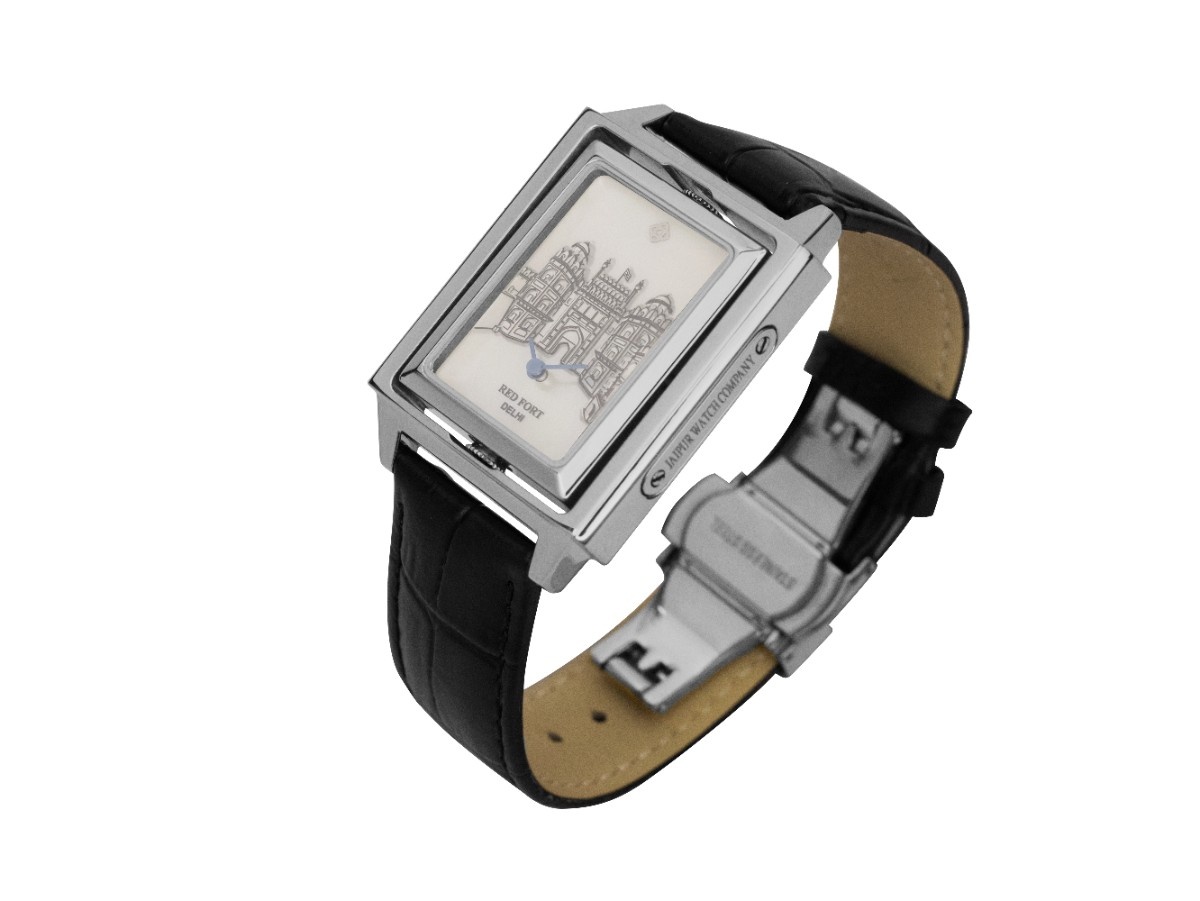
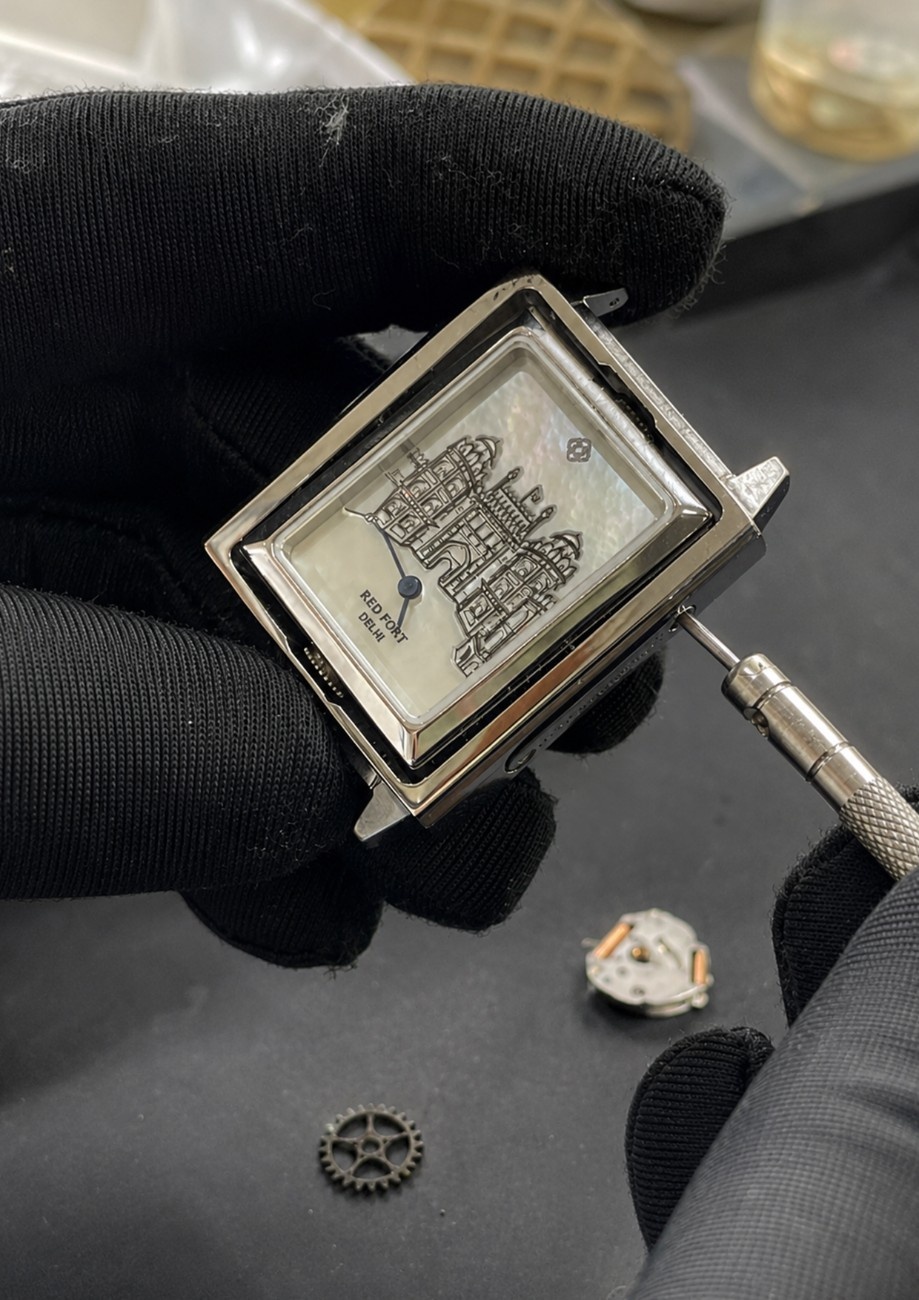
This new collection is perhaps Jaipur Watch Company’s most imaginative creation yet. Inspired by the celebrated Lotus Gate and Leheriya Gate inside Jaipur’s historic Pritam Niwas Chowk, the collection expands its narrative beyond Rajasthan to embrace India’s most recognisable monuments, including the Gateway of India, India Gate, the Red Fort and Charminar. At its centre lies an ingenious 360 degree flip case mechanism, transforming the watch into a dual display creation that reveals different heritage landmarks with a simple rotation.

Measuring 38.4 mm, the case is crafted from 316L stainless steel with glossy gold and silver finishes and topped with a sapphire crystal. One side features a colourful interpretation of the selected gateway, while the reverse showcases an elegant mother of pearl version. Dual independent quartz movements, powered by the TMI VX00A calibre, allow separate time displays through individual crowns, offering practical dual time functionality alongside storytelling. Finished on a semi gloss genuine crocodile leather strap, and individually crafted in Jaipur over approximately seven weeks, the Gates of India Collection transforms historic architecture into an interactive horological experience unlike anything else currently available from an Indian watchmaker.
Also Read: TAG Heuer’s Greatest Horological Innovations: Inventions That Shaped Timekeeping
Premium Baagh Collection
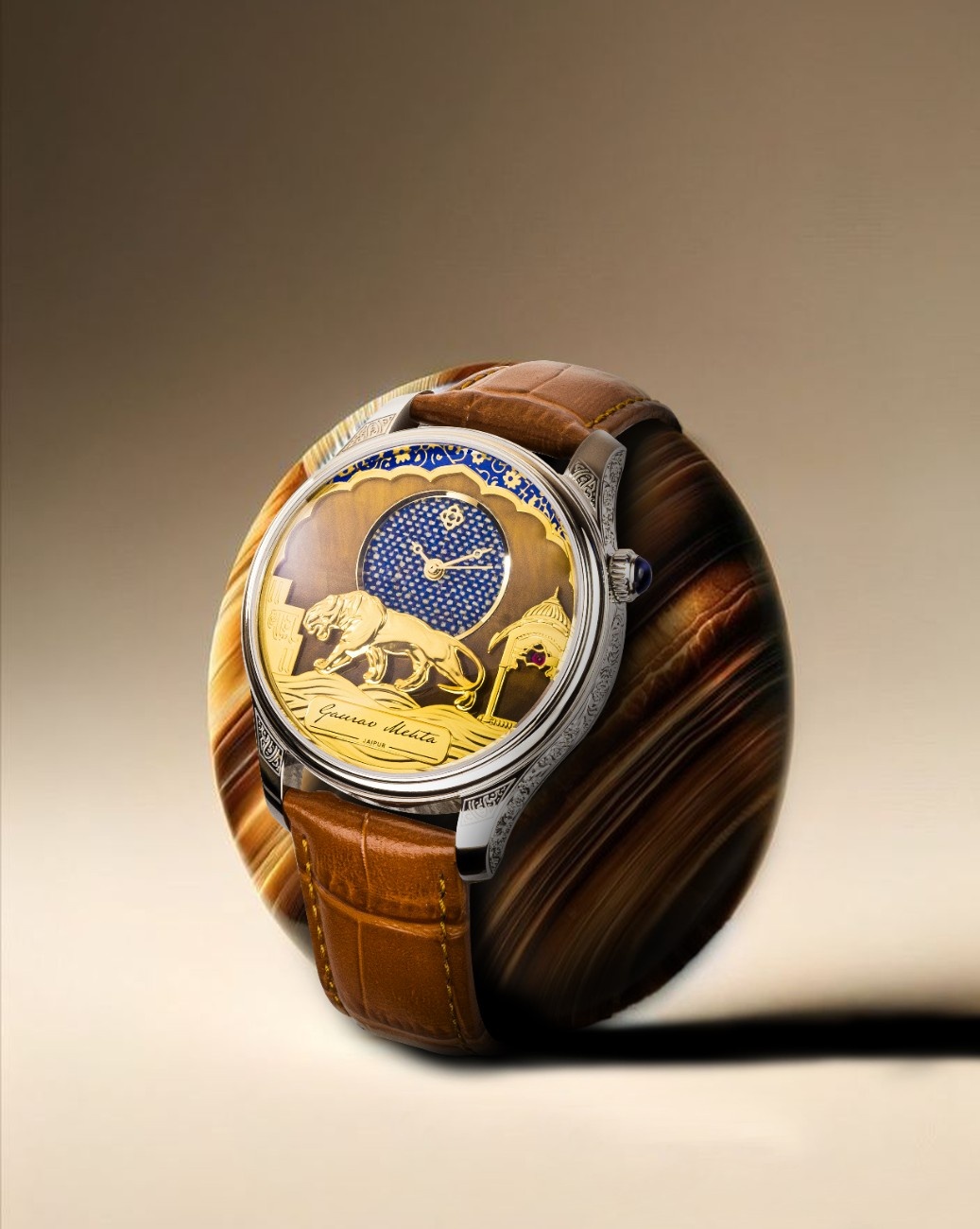
This collection celebrates mythology, strength and India’s artistic soul. Created under the newly introduced Gaurav Mehta Jaipur Signature Series, the Baagh places a sculpted tiger at the centre of an extraordinary multi layered stone dial inspired by Rajasthan’s royal heritage. The flagship model features a 40mm glossy gold finished 904L stainless steel case, sapphire crystal and a striking turquoise stone dial contrasted by an offset time display wrapped in authentic pink Muslin Khadi fabric. A miniature Rajput style Chhatri adorned with a ruby jewel, together with an intricate courtly filigree frame, creates remarkable visual depth rarely seen in contemporary watchmaking.
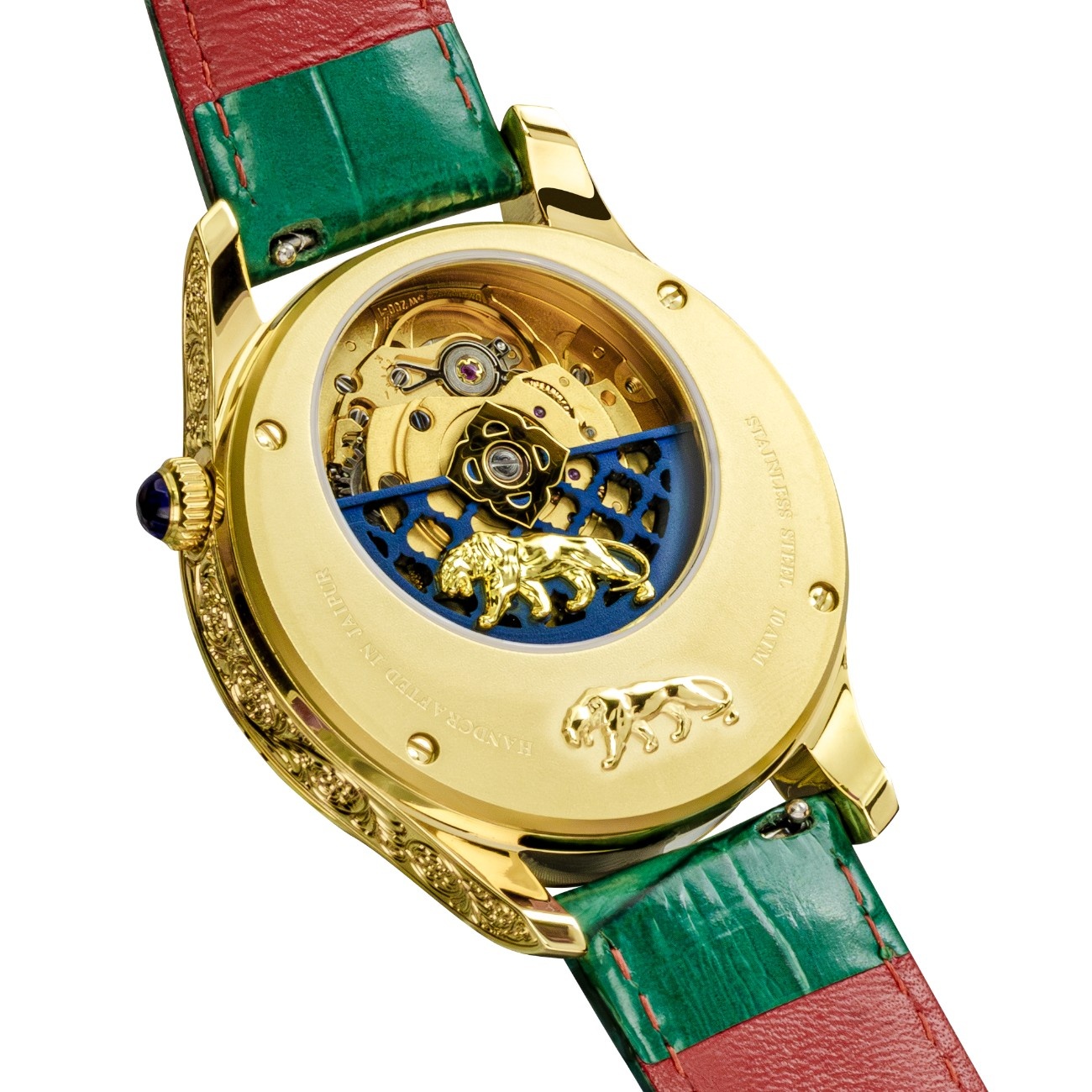
Powering the watch is the Swiss Sellita SW200 automatic movement, delivering 38-hours of power reserve through its 26 jewel construction, while an exhibition caseback reveals the mechanical heart beneath an engraved tiger motif. Complementing it is another interpretation featuring blue Muslin Khadi paired with turquoise, tiger eye, abalone and aventurine stones inside a 316L stainless steel case, driven by the Japanese Miyota 9015 automatic calibre offering 42-hours of power reserve. Both watches are completed with genuine crocodile leather straps, sapphire crystals and are individually handcrafted in Jaipur over nearly seven weeks, bringing together Indian artistry and international mechanical expertise in a way few independent brands attempt.
Outlook Luxe had a tête-à-tête with Gaurav Mehta, Founder of Jaipur Watch Company, to discuss the inspiration behind both the collections, and how the brand is shaping a distinctly Indian identity in contemporary luxury watchmaking.
What inspired Jaipur Watch Company to turn India’s iconic gateways into the centrepiece of an entire watch collection?
Gaurav Mehta: As a brand, Jaipur Watch Company has been working on making watches using icons of India, elements of history, and we have done coins, we have done stamps, we have done hand-painted watches. So gates is one of the ways to pay homage, and that’s why we utilised this concept of putting monochrome and coloured gates because Jaipur gates are very colourful. So we thought you know why not pay homage to the Jaipur gates in colour and put them in monochrome so that you know a person can carry both the styles.
The flip case is unlike anything we’ve seen from the brand before. How did the idea of a 360 degree rotating dual display come to life?
GM: We had done a Rajasthan Polo watch which used to have two sides but the other side was plain, it did not have a movement on that side. But, the other side was plain but it was a dual side for customisation. But now we wanted to do like two gates, so that is why we made a 360 degree rotating case and added two movements inside, two small movements.
Why did you choose landmarks like the Gateway of India, India Gate, Red Fort and Charminar to accompany Jaipur’s Lotus and Leheriya Gates?
GM: Jaipur Watch Company has stores in some of these cities. We have a store in Hyderabad, so that goes well with Char Minar, we have two stores in Delhi, we have three stores in Mumbai. So we have chosen gates from the cities where we have physical stores also.
Beyond its visual appeal, what story does the Gates of India collection aim to tell about India’s architectural and cultural heritage?
GM: The visual appeal is very important but at the same time I feel that gates are very underrated in India. You know when we were incorporating the gates, and miniaturising them into watch styles, we realised that there are lot of details which people don’t notice. Like you know lot of names are written on some of the gates, there are images of gods on the face of the gate. People don’t notice because gates are so large, you get overwhelmed by them. So we thought why not incorporate you know finer detailing and get them on the watch.
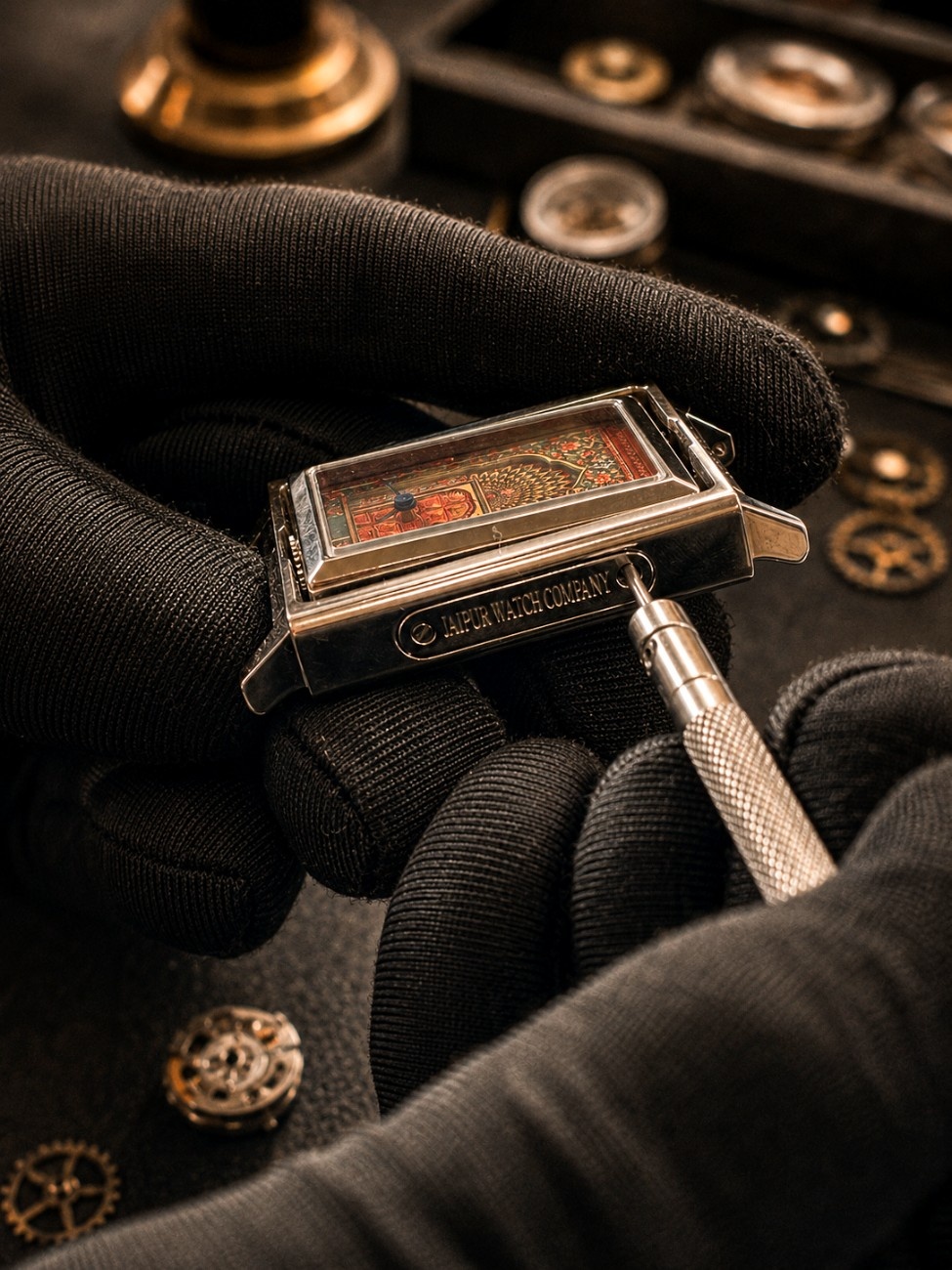
How did the dual TMI VX00A quartz movement architecture influence the design and engineering of the flip case?
GM: That was the only available option to us when we were trying to make a watch which shows two time zones and also at the same time is small in length. You know it’s a very wearable length if you have seen the watch in person. So that was the only option available because it is the smallest quartz movement available right now.
The watch features dual independent time zones. Was this designed with modern travellers in mind, or was there a deeper narrative behind the complication?
GM: It is for the modern travellers also and at the same time it is for people who want to show the colourful side and also want to show the serious side by showing the monochrome side. It is not necessary that you have two time zones on two sides. You can have the same time zone but you can have a different look as the face of the watch depending on the occasion you are wearing it.
Each watch takes nearly seven weeks to complete. Which stage of the production process demands the most craftsmanship and attention to detail?
GM: I think when you are designing and when you are sampling that is where you lose the maximum amount of time. So you know almost two months go in designing a watch, then almost three to four months go in making the first sample piece. So that is where I think you lose the maximum amount of time. It takes us almost eight to nine months to make one collection. So first five to six months go in only making sure the product comes out nice.
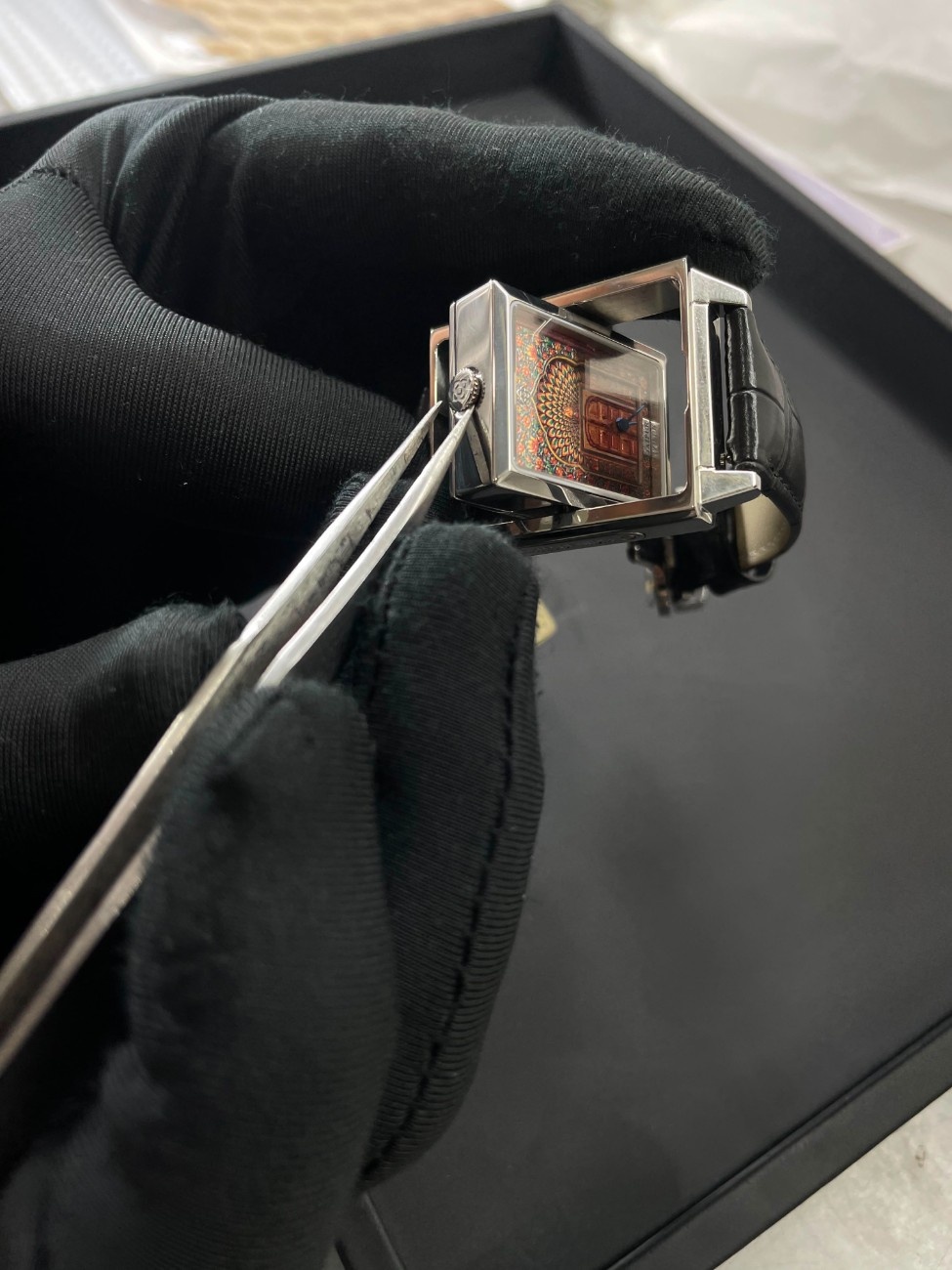
Jaipur Watch Company is known for blending Indian history with contemporary watchmaking. How does the Gates of India collection push that philosophy further?
GM: See Gates of India is an innovation in itself. No one has done watches using the iconic gates, and specially making the gates as the centrepiece of the watch where you can see the time at the gate. And we have not just incorporated the gates but we have given due respect to the gates because a lot of them are not so well noticed in detail. These gates are historical, and so that element also has to be shown to the world, and we have always believed that stories of India, history of India has to come on the wrist. So this time it is through the gates.
Do you see the Gates of India collection becoming the foundation for more architecture inspired timepieces in the future, perhaps celebrating other Indian landmarks or heritage sites?
GM: Definitely. So next on my list is Hampi. Because I had a very natural connect when I was reading about it. So I want to do a collection based on that. And there are so many gates we have missed out. So those gates will be added in the part 2 and part 3 of this collection.
The Baagh combines Indian artistic elements such as Muslin Khadi, Rajput architecture and natural stone dials into a contemporary timepiece. How did you balance cultural storytelling with modern watch design without letting one overshadow the other?
GM: Bagh collection has been an iconic collection for Jaipur Watch Company. We launched that collection in 2022, and till this date this collection remains our best seller. So we thought to incorporate the design school of maximalism which we firmly believe in into a watch. So that is why we have chosen so many elements. Like turquoise stone has a Khadi fabric, there is a watch jewel, a Rajputana Chhatri, a walking Bagh, a stone dial, the engraving, a sapphire stone on the side, then there is a tiger on the rotor. There are so many elements incorporated into one watch. That speaks for the maximalism we believe in.
The collection features two different automatic movements, a Swiss Sellita SW200 in the signature series and a Japanese Miyota 8315. How do these movements complement the positioning of each watch?
GM: See like I told you, the one with the SW200 is in 904L stainless steel grade. So that makes it a very premium watch in itself because I think no brand in India has used 904L till now. All the brands are doing 316L or titanium or whatever. So no brand in India has used 904L, so probably we are the first brand using 904L. So, in order to give it the right podium, we chose to go with the Sellita SW200.
But at the same time, Jaipur Watch Company is known to be a bridge to luxury brands, and we wanted to keep the collection accessible for everyone. That is why we came up with the Miyota 8315, which is a beautiful movement. It has a 60-hour power reserve. Again, that’s one of the firsts in India, where a 60-hour power reserve comes inside a watch. Normally, watches offer around a 40 to 42-hour power reserve, so this is a significant step up. At the same time, it retains the DNA of the premium version, while being priced at an accessible level.
From the ruby-set Chhatri and filigree detailing to the offset dial wrapped in authentic Muslin Khadi, every component carries symbolic meaning. Which design element do you believe best captures the spirit of the tiger and the story behind the Baagh collection?
GM: I think wearers will see the tiger is walking on a desert, walking against a wall, wearers will see the turquoise. The tiger is walking in a desert in daytime, the tiger eye, he is walking at night when wearers see the aventurine. And he is passing by the ocean when wearers see the abalone. So we have tried to capture all the possible movements of a tiger, what would happen in a natural setting. So that’s why I feel the base dial, where the turquoise, abalone and tiger eye and all these elements are there, is the DNA of the product.