When Every Beat Counts: The Evolution Of High-Frequency Watch Movements
From traditional mechanical calibres to modern 5 Hz movements beating at extraordinary speeds, high frequency watchmaking represents the pursuit of greater accuracy, stability and engineering perfection
A mechanical watch is often described as a living machine, and nowhere is that comparison more accurate than in the world of high frequency movements. Inside the case of a fine timepiece, hundreds of tiny components work together in a delicate rhythm, but the true heartbeat of the watch comes from one crucial element: the balance wheel. Every swing of this component controls how the watch measures time. The faster it oscillates, the more frequently the movement can divide each second into smaller intervals, creating a new level of precision.
In the world of haute horlogerie, where fractions of a second matter, frequency has become one of the greatest battlegrounds for innovation. From classic movements beating at slower rhythms to modern calibres operating at 5 Hz, watchmakers have spent decades chasing the perfect balance between speed, durability and accuracy.
Understanding The Heartbeat
To understand high frequency watchmaking, one must first understand the idea of oscillation. In a mechanical movement, the balance wheel moves back and forth in a repeated motion. Each complete movement from one side to the other and back again is considered an oscillation. This constant rhythm regulates the release of energy stored in the mainspring and controls the movement of the hands. Frequency refers to how many times this oscillation happens in a given period. In mechanical watches, frequency is usually measured in Hertz (Hz), meaning cycles per second.
A movement operating at 1 Hz completes one full oscillation every second, while a movement operating at 5 Hz completes five cycles every second. The higher the frequency, the faster the balance wheel moves, allowing the movement to measure smaller fractions of time more precisely. But there is a catch. A faster heartbeat requires more energy, stronger materials and exceptional engineering.
The Traditional Mechanical Rhythm
For much of watchmaking history, mechanical movements operated at frequencies between 2.5 Hz and 4 Hz. A 4 Hz movement, beating at 28,800 vibrations per hour, became one of the most common standards in modern mechanical watches. It offered a practical balance between accuracy, reliability and power reserve. Many iconic Swiss calibres were built around this frequency because it provided excellent performance without placing excessive stress on components. But as watchmakers pushed the boundaries of precision, the next challenge became clear. Could a mechanical watch beat even faster?
Also Read: Innovative Chronograph Watches: 6 Models Every Collector Should Own
The Arrival Of 5 Hz
A 5 Hz movement operates at 36,000 vibrations per hour. That means the balance wheel completes its motion five times every second, creating a faster and more precise regulation system. The advantage is simple: a higher frequency allows the movement to divide time into smaller measurements. This is especially valuable in chronographs, where measuring fractions of seconds becomes critical. However, achieving 5 Hz is not simply about increasing speed. A faster movement demands superior lubrication, advanced materials and precise engineering because every component experiences more movement over time. A 5 Hz calibre is not just faster. It is harder to build.
Also Read: Vacheron Constantin Traditionnelle Twin Beat Perpetual Calendar Now Has An Extended Power Reserve
Vacheron Constantin Calibre 3610 QP
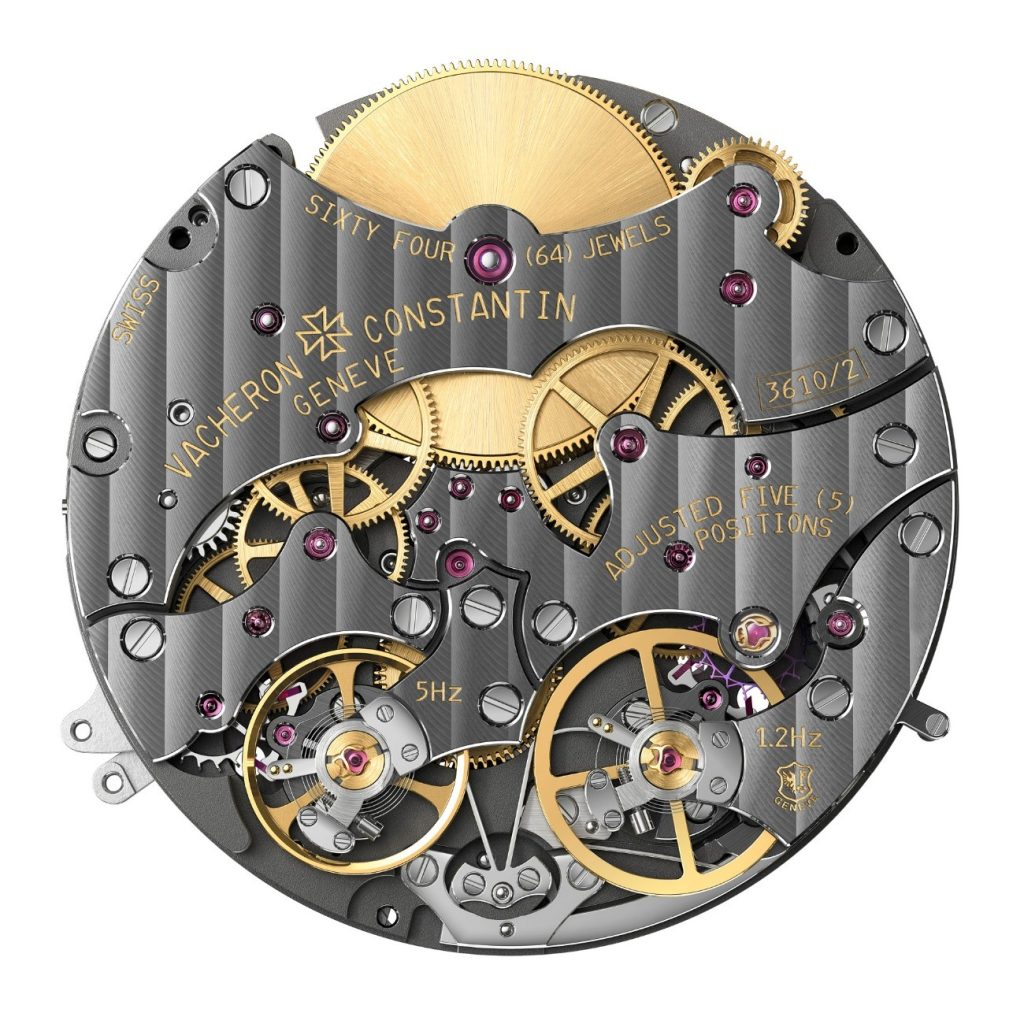
High frequency watchmaking is not only about running faster. Sometimes, true innovation comes from controlling when speed is needed. The Vacheron Constantin Traditionnelle Twin Beat Perpetual Calendar introduced one of the most fascinating approaches to mechanical efficiency with the Calibre 3610 QP. Unlike conventional high frequency movements that operate at one constant speed, this calibre allows the wearer to switch between two different frequencies. When worn on the wrist, the movement operates at a higher frequency of 5 Hz, allowing the watch to maintain precision during daily use.
When placed in a resting position, the movement can switch to a slower 1.2 Hz frequency, significantly extending the power reserve while continuing to display the perpetual calendar functions. This dual frequency system demonstrates that modern watchmaking is not simply a race for speed. It is about intelligent control of mechanical energy. The calibre combines a perpetual calendar complication with a unique approach to regulating time, proving that even centuries old watchmaking principles can still be reinvented.
TAG Heuer TH80-00
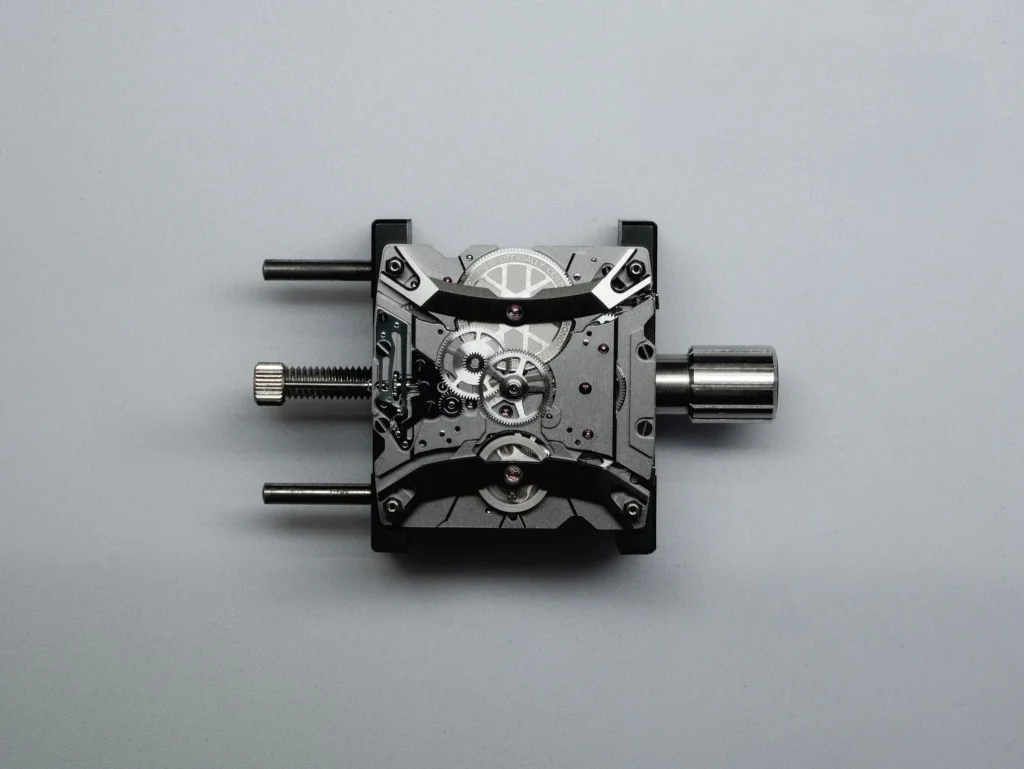
Chronographs have always been one of the biggest beneficiaries of high frequency movements because measuring short periods of time demands exceptional precision. The TAG Heuer TH80-00 movement, used in the TAG Heuer Monaco Chronograph, operates at a high frequency of 5 Hz. With 36,000 vibrations per hour, the calibre allows the chronograph hand to measure fractions of a second with greater accuracy. The movement represents the modern evolution of TAG Heuer’s long relationship with motorsport and precision timing.
The Monaco itself has always been associated with speed, racing heritage and bold design, making a high frequency movement a natural match for its identity. The TH80-00 demonstrates how modern chronograph engineering combines performance with reliability, creating a movement designed not just to tell time, but to capture moments.
Zenith El Primero 3600
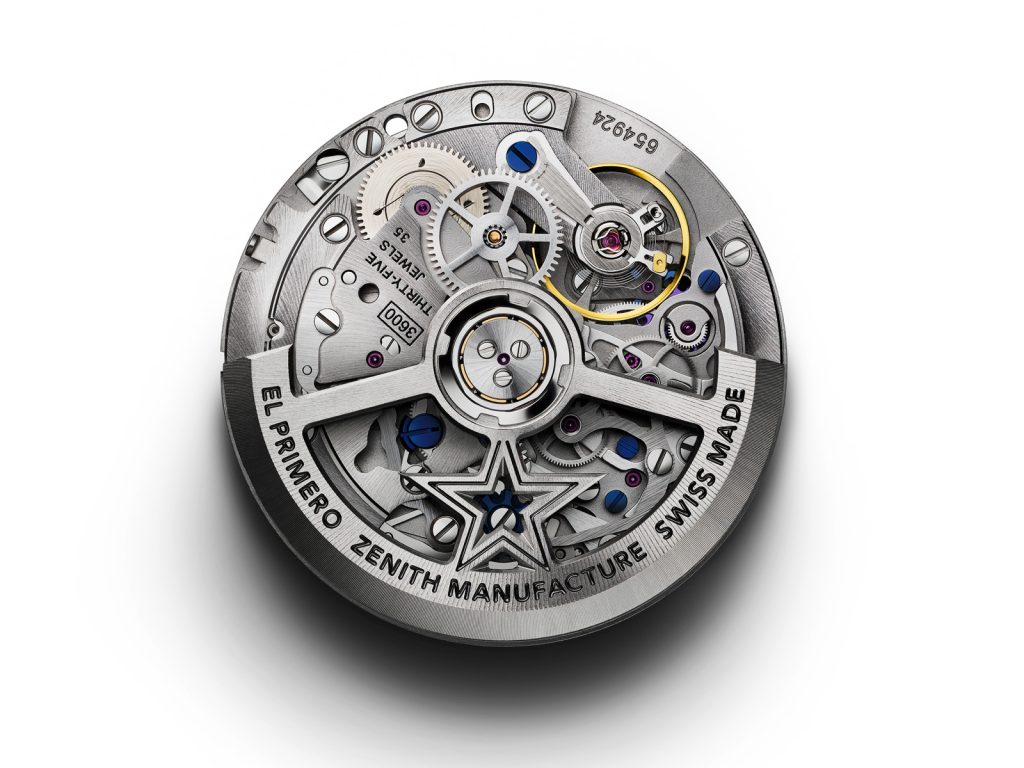
Few movements have influenced high frequency watchmaking as much as the El Primero. Introduced in 1969, the original El Primero became one of the first automatic chronograph movements capable of operating at 5 Hz. Decades later, the El Primero 3600 continued that legacy inside the Zenith Chronomaster Sport. Operating at 36,000 vibrations per hour, the movement allows the chronograph function to measure time intervals down to one tenth of a second.
The architecture of the El Primero 3600 represents a perfect balance between heritage and modern refinement. It maintains the high frequency philosophy of the original while introducing contemporary improvements in efficiency and performance. The movement is a reminder that some engineering ideas are not replaced by time. They become timeless.
Rolex Calibre 7135
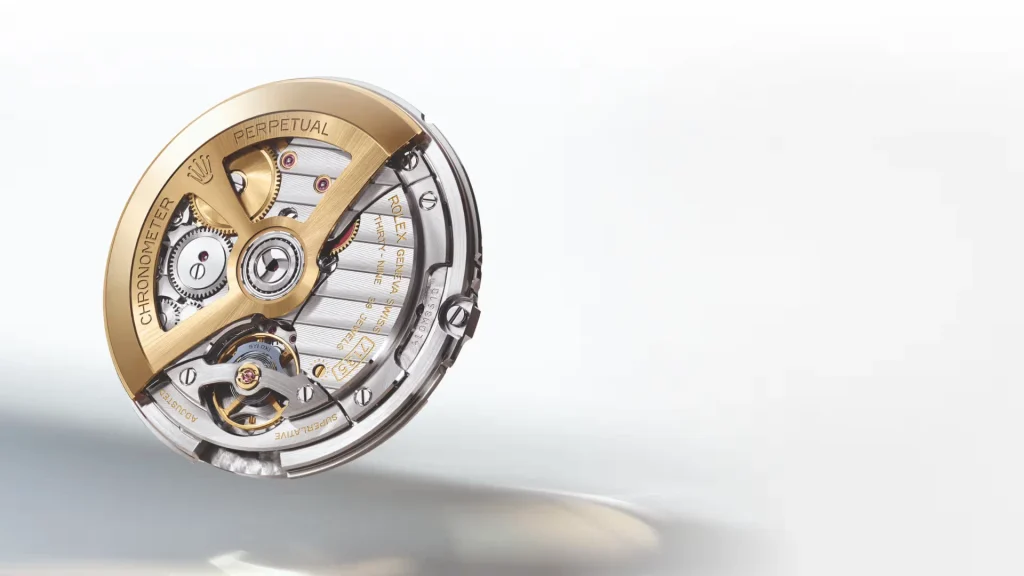
The arrival of the Rolex Land-Dweller introduced a new generation of high frequency engineering from Rolex. The Calibre 7135 operates at 5 Hz, making it one of the brand’s most advanced mechanical movements. The calibre features Rolex’s new Dynapulse escapement, an innovative system designed to improve energy transmission and efficiency.
High frequency movements traditionally face the challenge of increased friction and energy consumption, but the Calibre 7135 approaches the problem through redesigned architecture and advanced materials. The movement represents Rolex’s philosophy of evolution rather than revolution. The goal is not simply to create a faster beating calibre. It is to create a movement where every component works with greater efficiency.