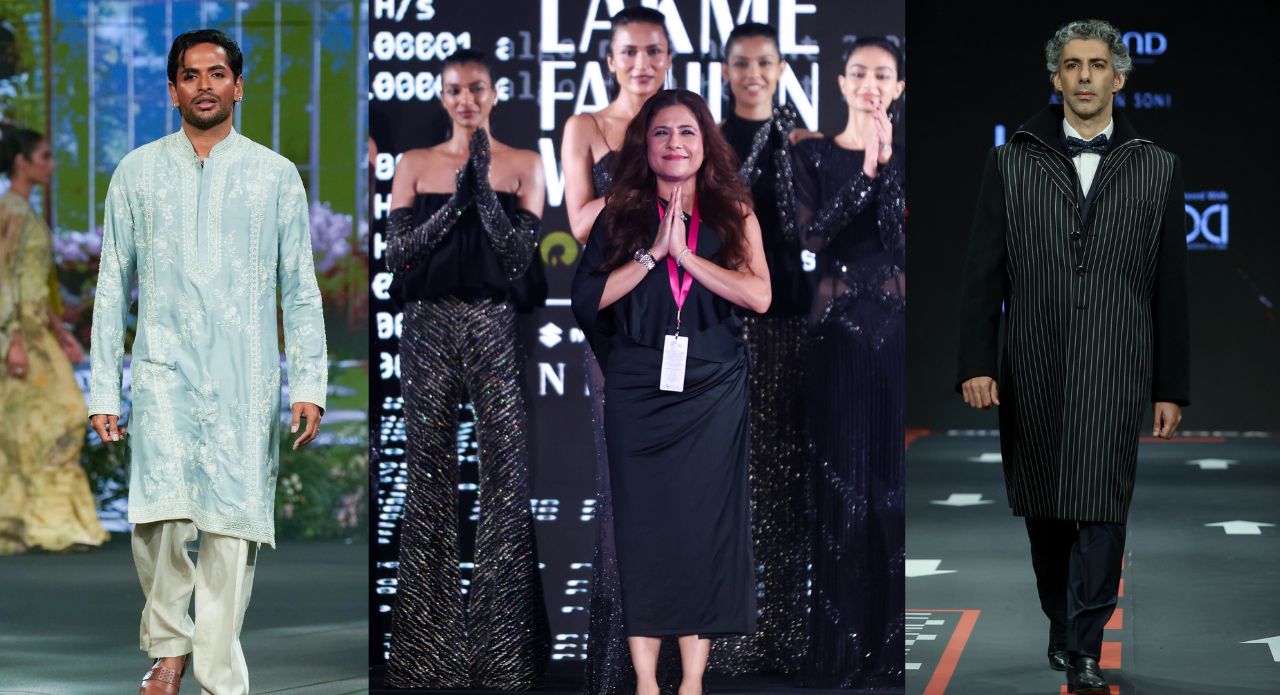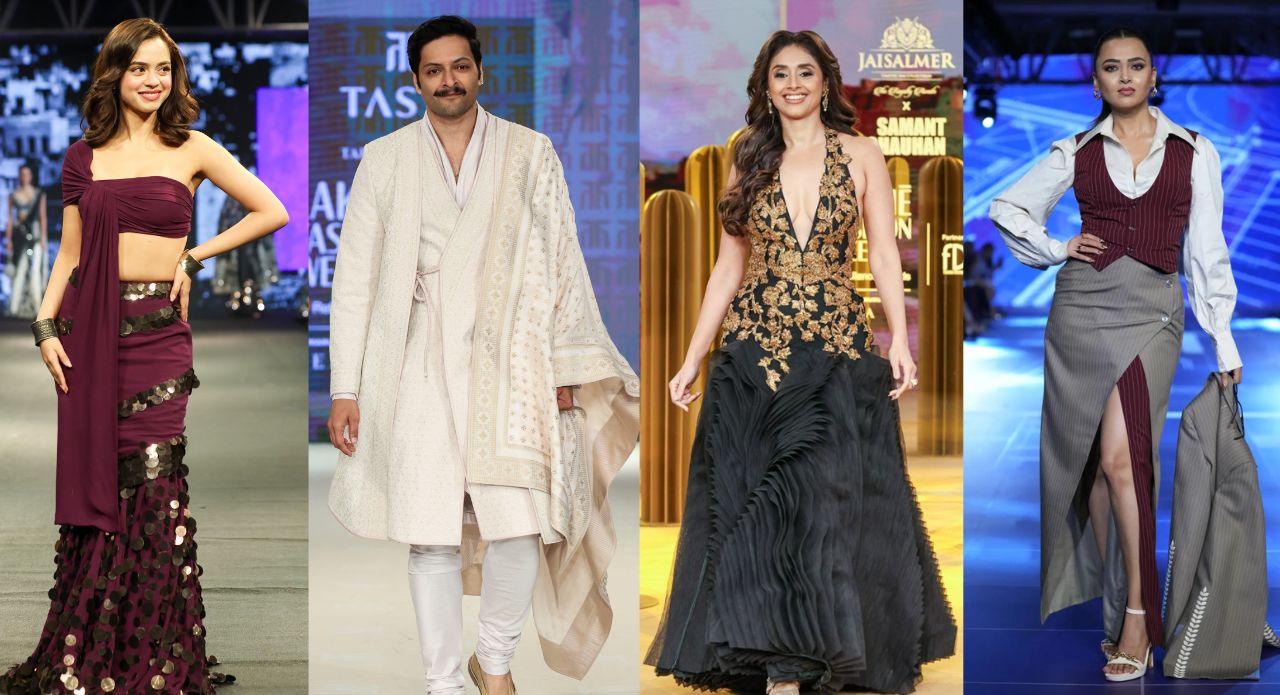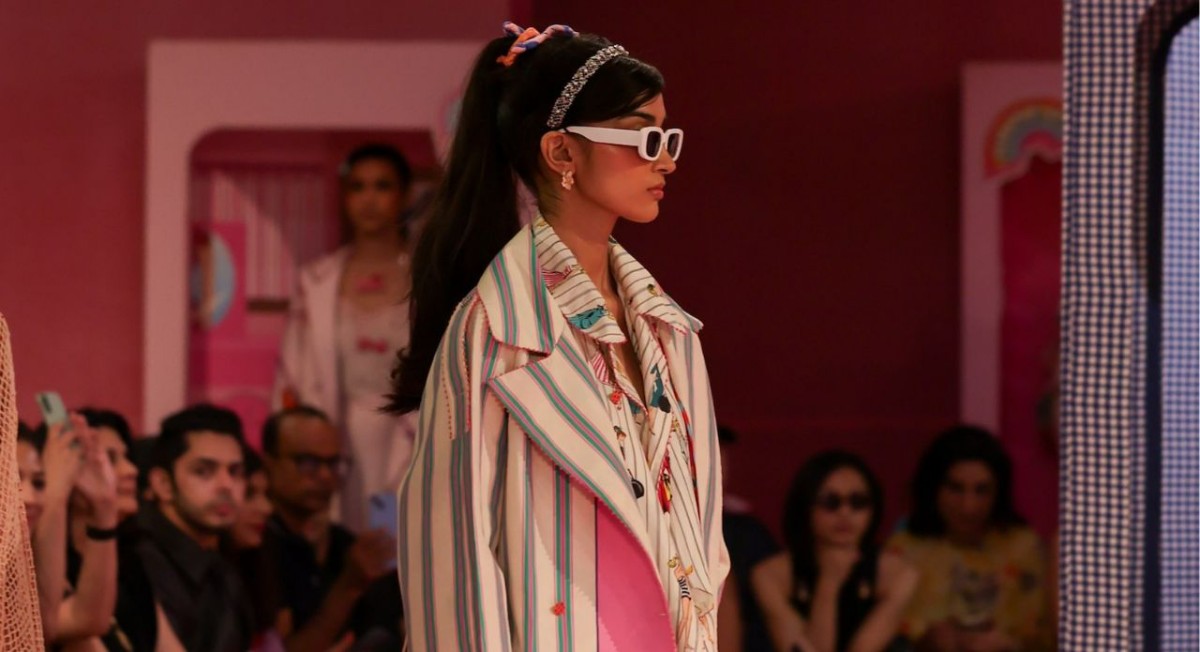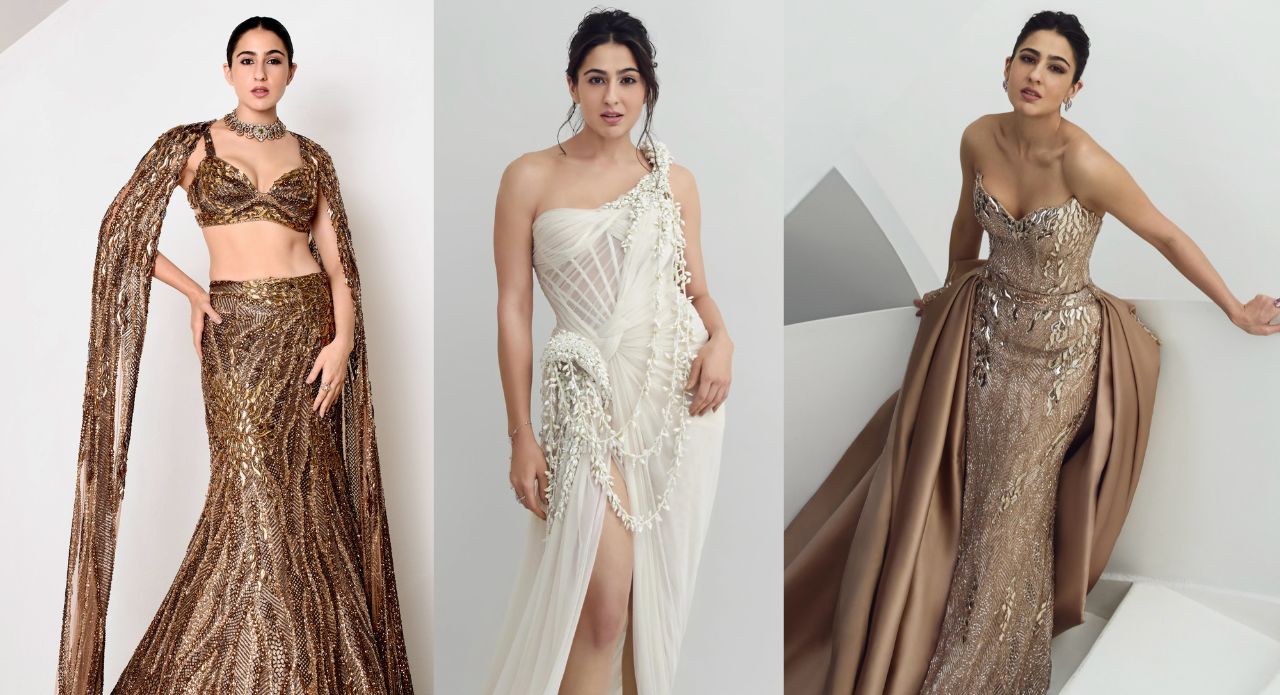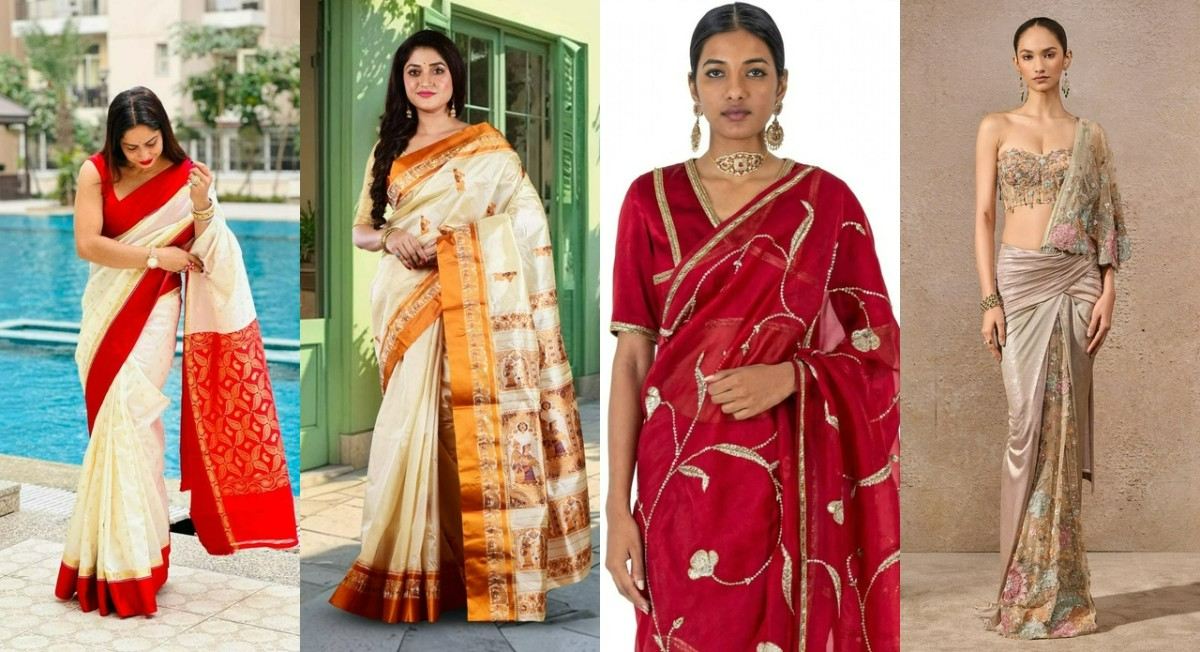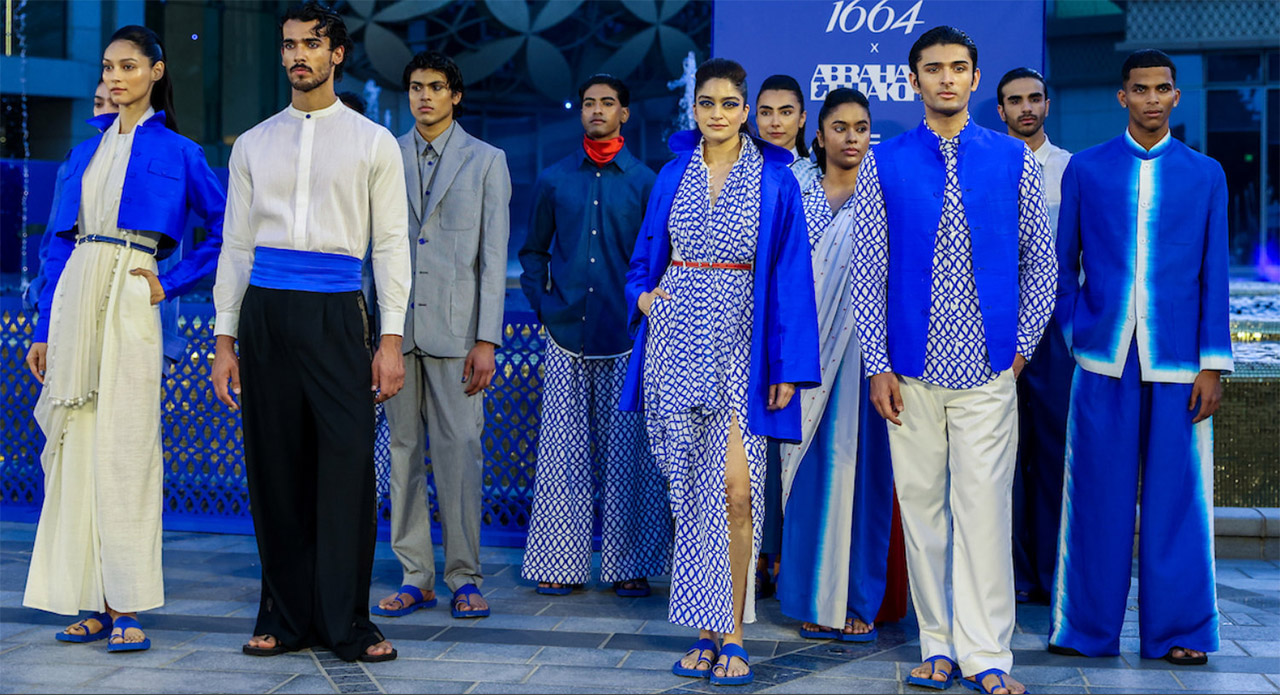


The recently-concluded Lakmé Fashion Week x FDCI opened with a confluence of cultures as French lifestyle label L’Atelier 1664 teamed up with design house Abraham & Thakore to bring Sari’torial. The collaborative showcase blended a distinctly French sensibilities with modern Indian fashion.
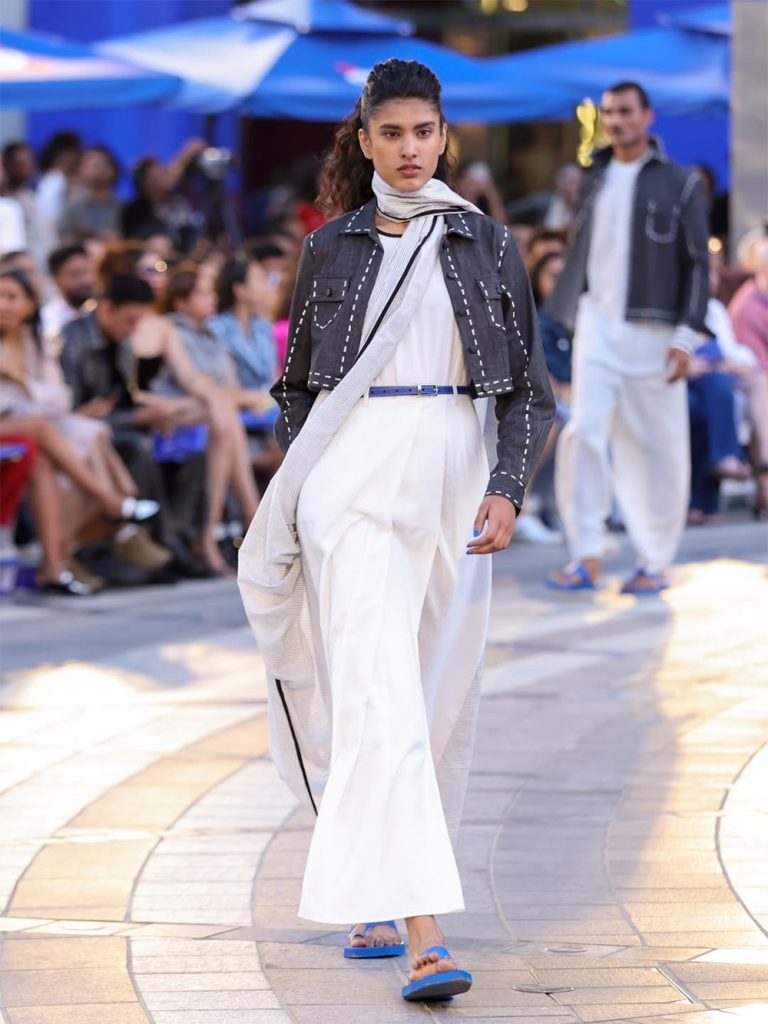
For the audience, it was not merely a wordplay on sari. It explored the drape’s versatility for the modern Indian wardrobe that values comfort, adaptability, and everyday relevance over over occasion-specific wearability.
“The sari, for us, is not just a garment it is an evolving language of drape, structure, and fluidity. What makes it particularly compelling in the context of French elegance is its inherent versatility. Much like French fashion, which balances effortlessness with precision, the sari allows for both ease and intention in how it is worn,” says Abraham as Thakore adds, “We were drawn to its ability to move between the poetic and the tailored. The drape can be soft and instinctive, yet it also lends itself beautifully to layering jackets, structured blouses, and outerwear which are integral to European dressing.”
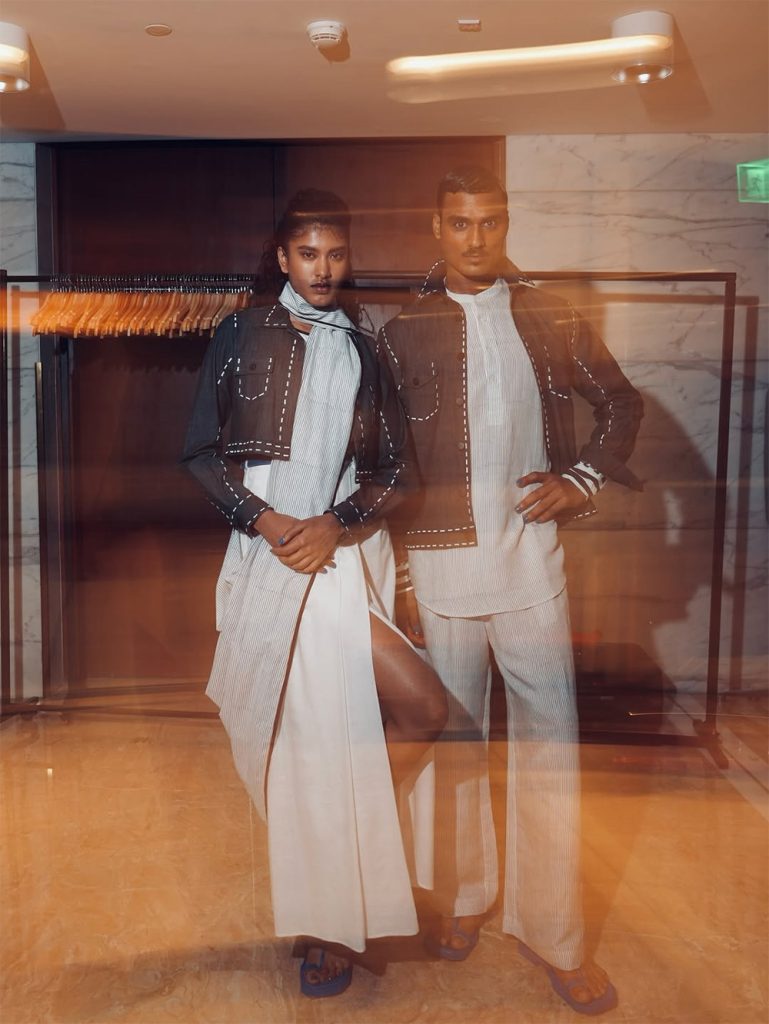
On the runway in Mumbai, models glided in saris styled with boleros, puff-sleeve blouses, crop jackets, slit skirts, collared shirts and trench coats while men dished out pant coats, relaxed sets, and bandhgala jackets. The layering was perhaps the most “explicit expression” of French meets Indian design sensibilities. “Sari drapes were paired with sharply cut jackets, waistcoats, and shirts elements borrowed from classic European tailoring. This juxtaposition of fluid drape and precise construction is where the Indian and French sensibilities truly meet, creating a vocabulary that feels both rooted and globally relevant,” Abraham tells Outlook Luxe.
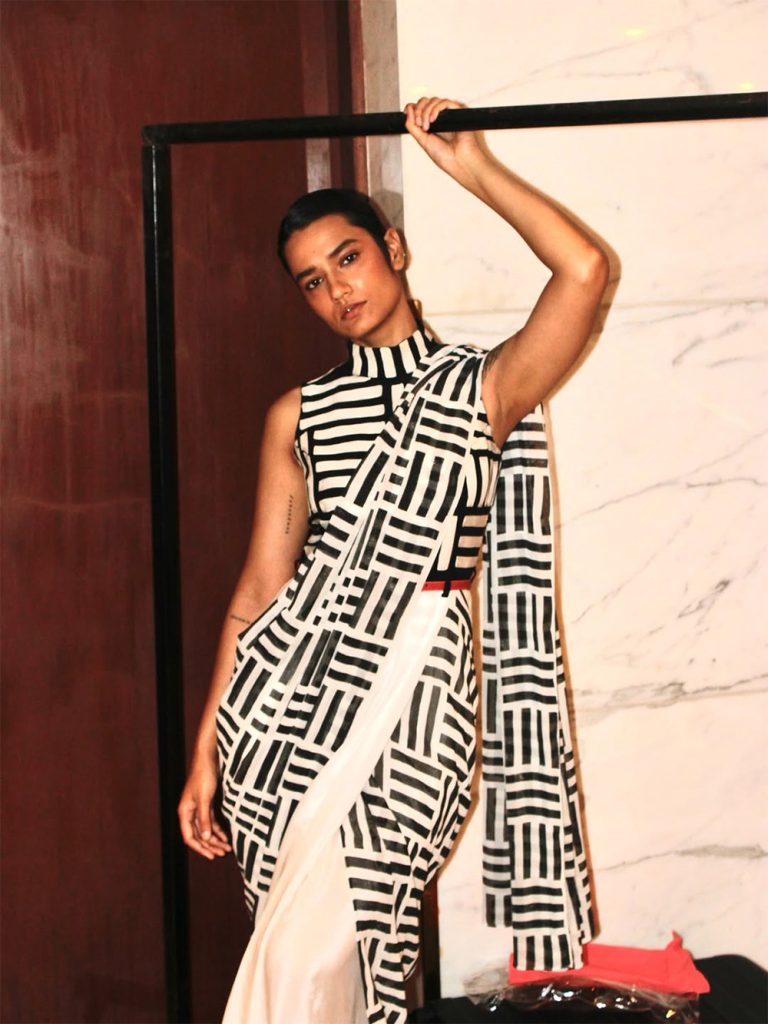
Further, motifs also portrayed a blend of both cultures as scribble-like interpretations of traditional Indian techniques reminiscent of bandhani and ikat were presented in abstract way to align with French modernism. The ensembles looked breathable yet structured as cottons, silks, and blends were treated with a certain crispness. “This gives the garments a tailored quality, almost akin to suiting, while retaining the soul of handcrafted textiles,” says Thakore.
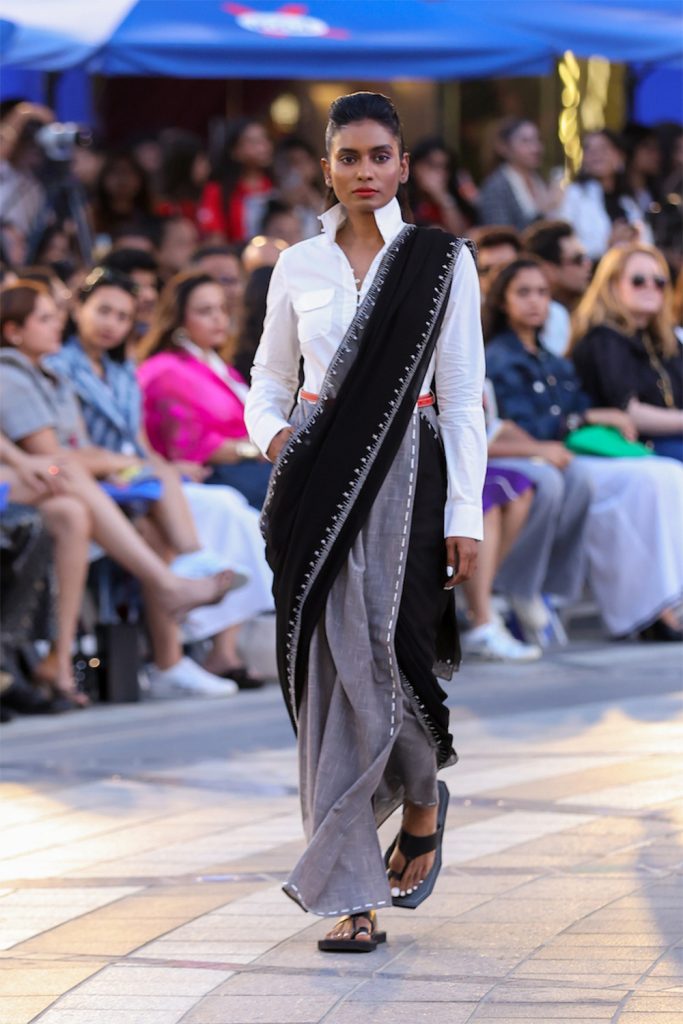
The colour palette was “deliberately muted” as nuanced ivories, indigos, charcoals, and soft madder reds echoed both natural Indian dyes and the quiet sophistication associated with French wardrobes. There was a conscious avoidance of excess, allowing the pieces to feel timeless rather than seasonal.
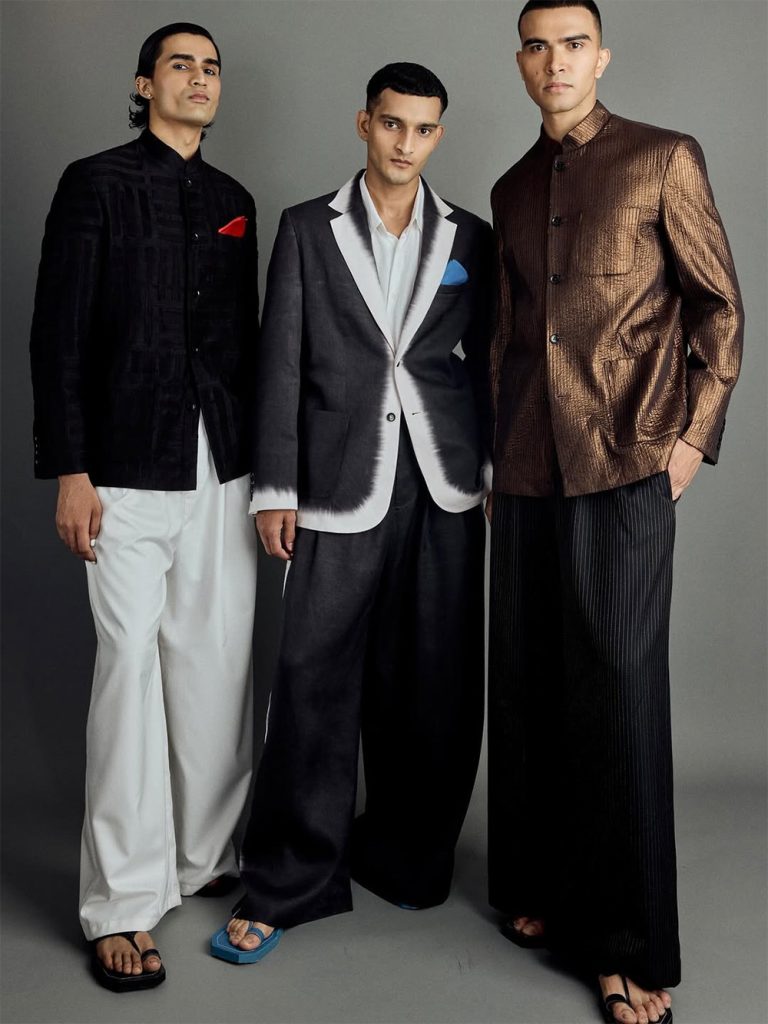
As the fashion world took notes, the collection unveiled an evolved take on the sari where masculine tailoring meets feminine fluidity.