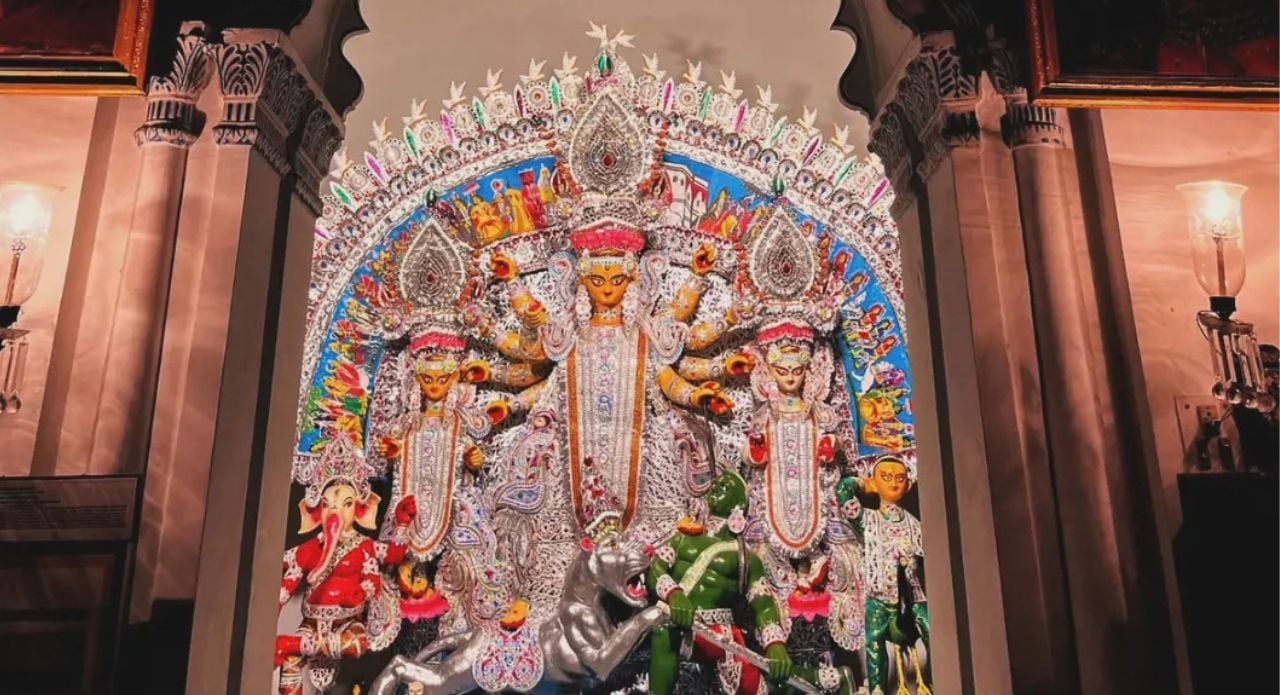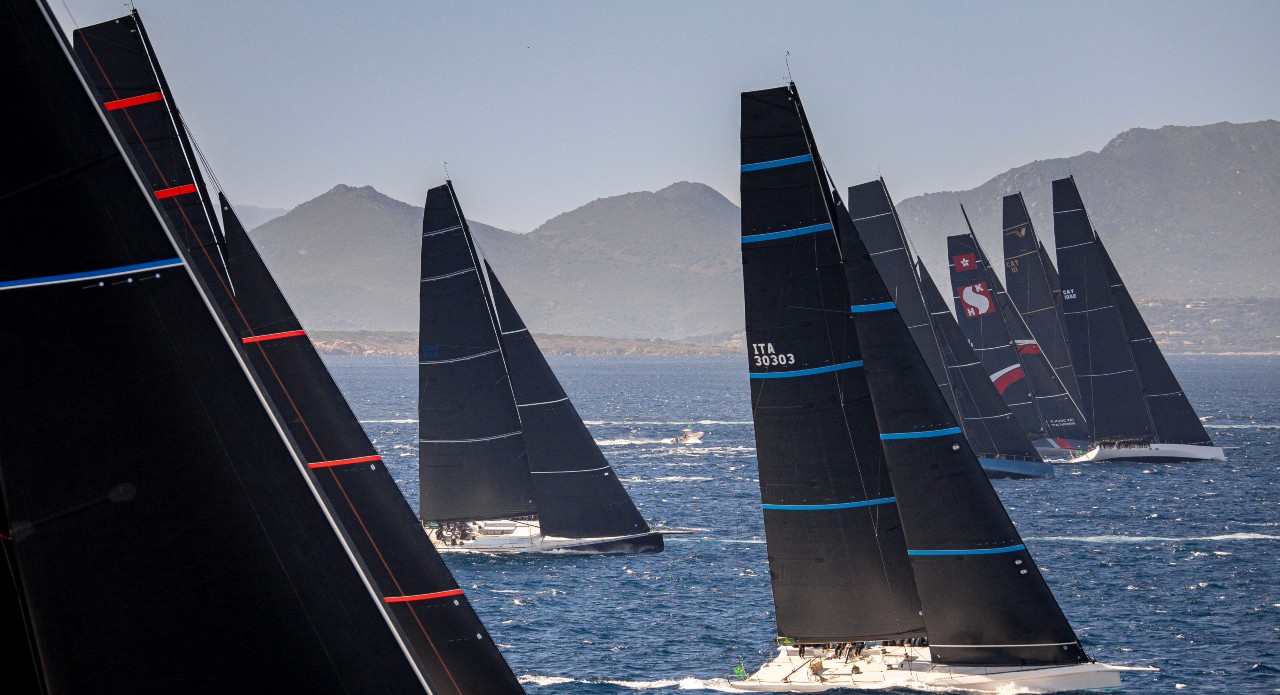


India has never been short of revolutions. The Green Revolution changed the way the country fed itself. The White Revolution turned India into the world’s largest milk producer. And the Space Revolution showed that Indian science could compete on the world stage without needing anyone’s permission. Now, there is another revolution worth raising a glass to: the rise of Indian single malt whisky. Two decades ago, that idea would have sounded slightly absurd. Single malt whisky belonged, almost by default, to Scotland. Then Amrut Distilleries arrived with a rather different proposition: perhaps great whisky did not have to come from a particular latitude. It could come from India.
From Bengaluru To The World
Guided by the vision of the Jagdale family and backed by more than two decades of work in quality, authenticity and innovation, Amrut helped change the conversation around Indian whisky. What began with the first case sold has grown into an Indian single malt category estimated at nearly seven lakh cases and around ₹1,000 crore in value. That is more than impressive business growth. It represents a change in perception. Indian whisky went from being viewed largely as a domestic product to becoming a serious luxury category with an international audience. Much of that journey carries the legacy of the late Neelkanth Rao Jagdale, whose vision helped establish the foundations for India’s single malt movement.
Also Read: The Ultimate September Calendar: Top Events HNIs Should Know About
Enter Amrut Kranthi
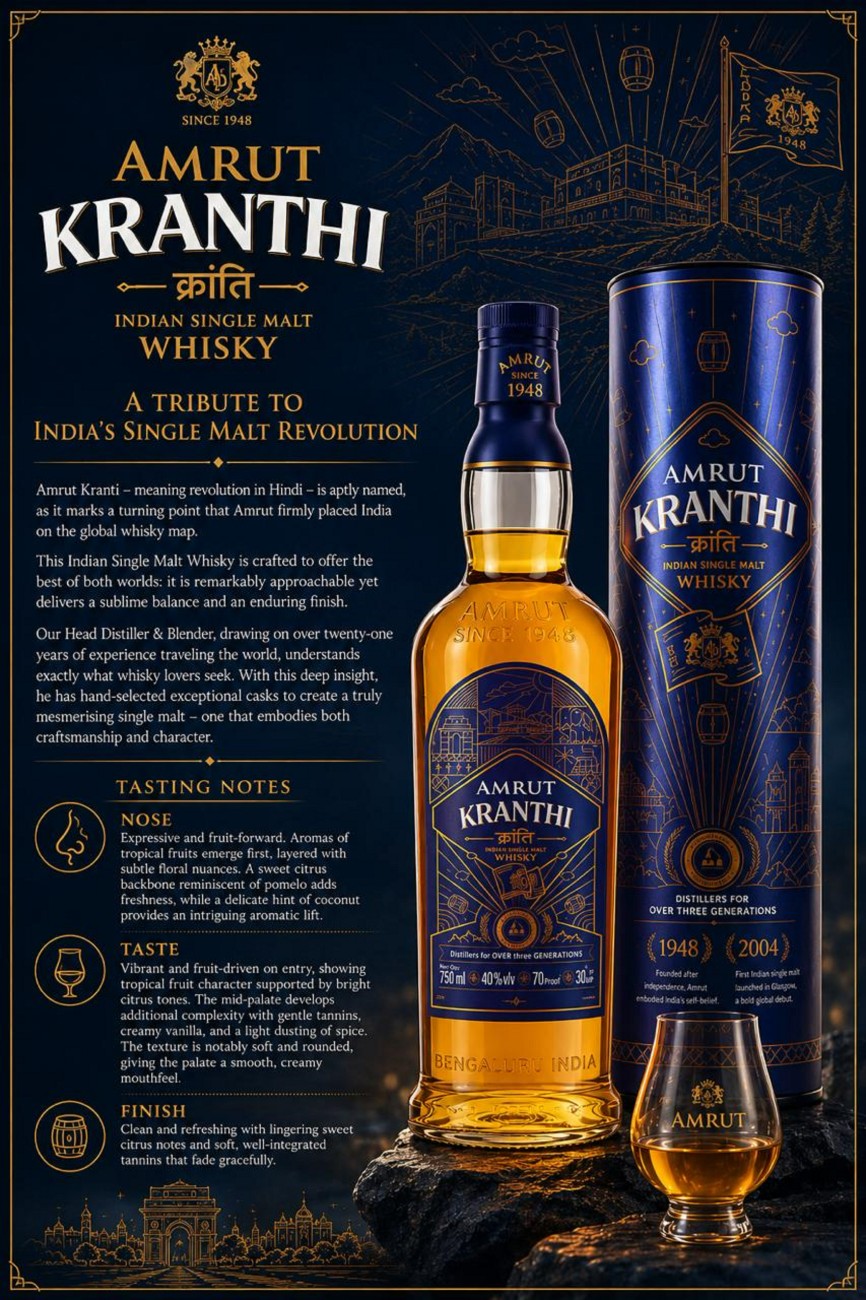
Kranthi means revolution, awakening and transformation, making the name rather difficult to argue with. Amrut’s latest single malt is positioned as a celebration of a more confident India, one increasingly comfortable creating its own benchmarks rather than simply chasing those established elsewhere. That sentiment feels particularly relevant today. Indians and the Indian diaspora are making their mark across technology, business, science and culture, and Kranthi taps into the same idea: the next generation of global luxury does not necessarily need a European address. It can proudly say India.
Years In The Making
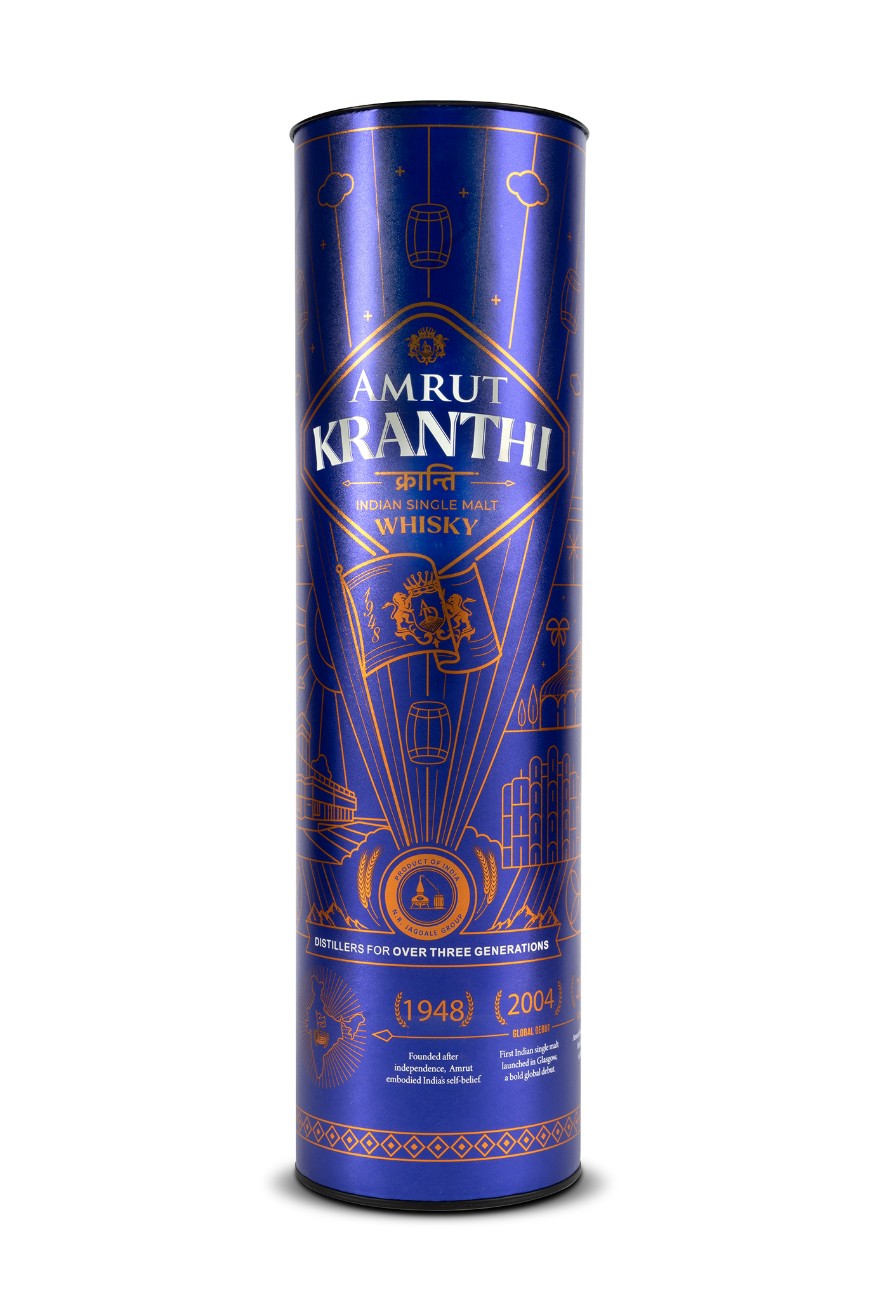
Kranthi is not being presented as a whisky created simply to capitalise on the current enthusiasm around Indian single malts. Amrut describes it as the result of years of research, global benchmarking and patient craftsmanship. Bottled at 40 per cent ABV, it reflects the distillery’s decades of experience in understanding whisky traditions, maturation science and flavour architecture from around the world, while attempting to create something distinctly Indian in character. And that is arguably where the larger story lies. Amrut is not trying to pretend that India is Scotland. It is making the case that Indian whisky can have an identity of its own.
A Revolution Worth Celebrating
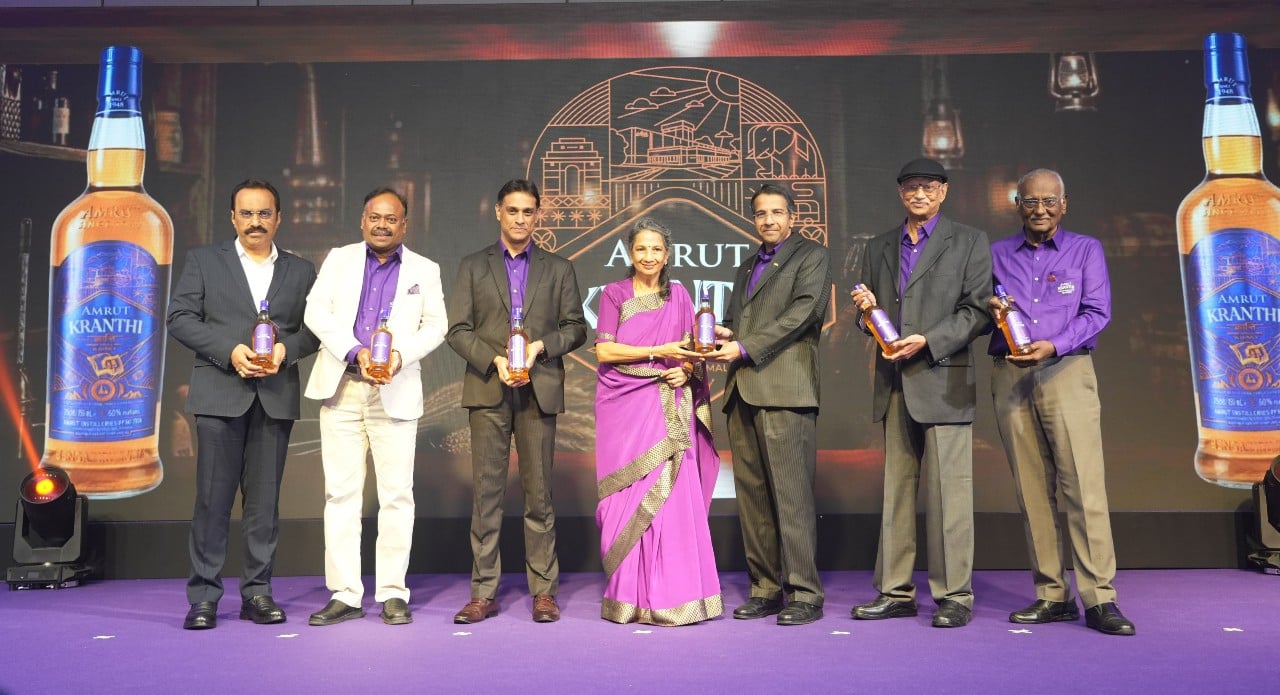
The launch itself brought together guests from multiple nationalities and several states of India, reflecting just how far the category has travelled. There was a time when Indian whisky looked outward for inspiration. Today, the world is increasingly looking towards India to see what comes next. Kranthi is therefore more than another bottle in Amrut’s portfolio. It is a tribute to the milestones that helped put Indian single malt on the global map, while also being designed around the moments consumers actually care about: personal milestones, achievements, relationships and new beginnings. In other words, it is whisky with a job to do. Not merely to sit on a shelf looking expensive, but to turn up when something worth remembering has happened.
The Jagdale Legacy
Rakshit N. Jagdale, Managing Director of Amrut Distilleries, describes Kranthi as a statement of confidence in Indian luxury and a tribute to his father, Neelkanth Rao Jagdale. His message is straightforward: a confident nation does not have to depend indefinitely on borrowed symbols of prestige. Indian brands, Indian craftsmanship and Indian self belief can create their own symbols of excellence. That is the real idea behind Kranthi. The whisky may be the product, but the revolution is the mindset behind it. India is no longer simply trying to prove that it can make something the world already considers great. It is increasingly asking a more interesting question: what if the next definition of great comes from India?