

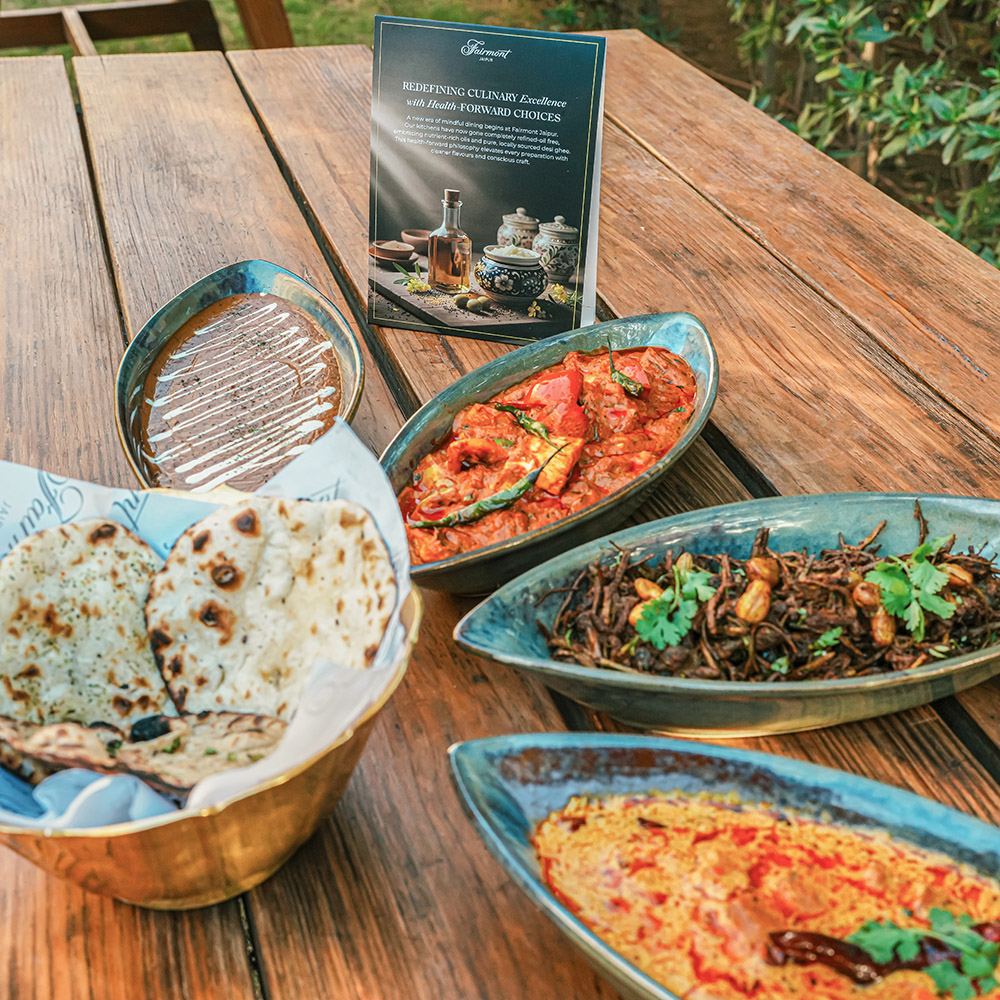
Growing up in a strictly vegetarian household, eating out was tricky. Looking for “pure vegetarian” options was one choice but the food options got increasingly limited. On a recent visit to Fairmont Jaipur’s Green Kitchen, a lot of old childhood memories came rushing back. The feast set up for the patrons had every vegetarian dish one could think of and then some. The arbi, lauki and karela that I had only reluctantly consumed over the years, were prepared and presented in a such a way that taking a second serving (or maybe a third) was more like a mandate and not just a choice, but with a (conscious) luxury twist.
Luxury dining has long been associated with indulgence, but at Fairmont Jaipur, indulgence is taking on a more thoughtful meaning. With the launch of Green Kitchen, the hotel introduces a dedicated vegetarian culinary initiative that places authenticity, wellness and cultural sensitivity at the heart of the dining experience.
A Kitchen Built On Purity
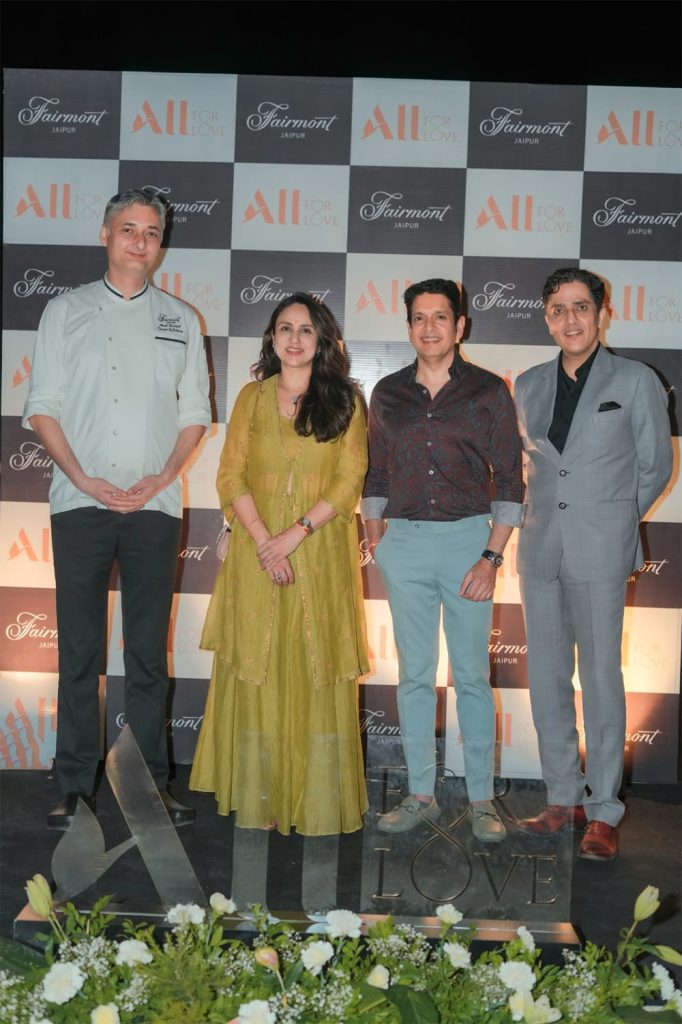
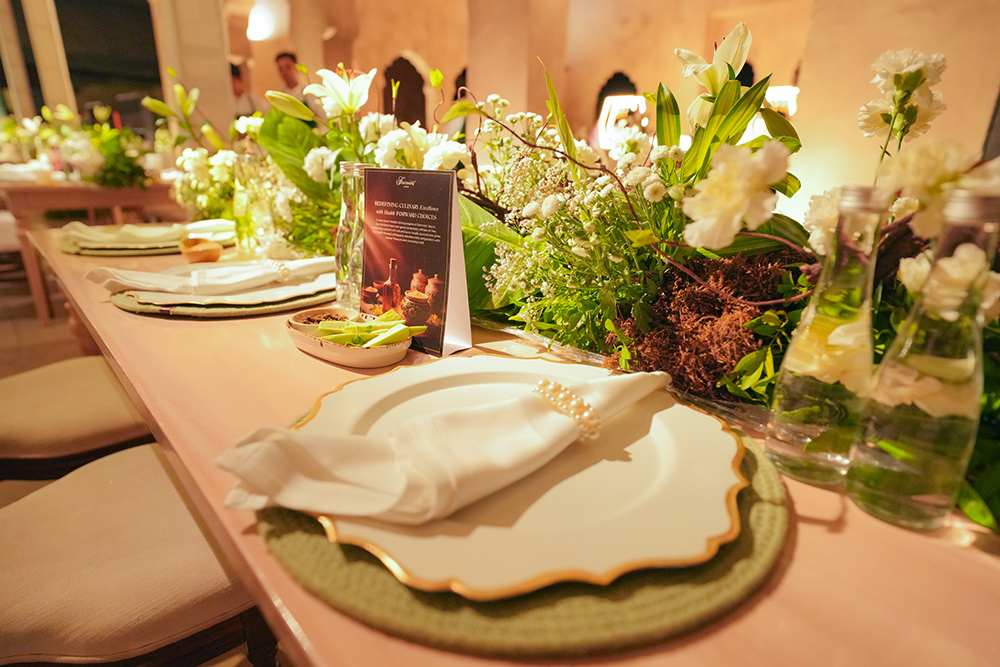
Unveiled through an intimate rooftop dinner overlooking the Aravalli hills, Green Kitchen is far more than a new menu. It is a purpose-built culinary space designed exclusively for vegetarian cooking, complete with separate ingredients, utensils, vessels and cooking equipment to ensure there is no cross-utilisation. The initiative caters particularly to Jain, Marwari and other vegetarian celebrations, where purity in food preparation is deeply valued.
“The inspiration behind Green Kitchen is to celebrate India’s rich vegetarian culinary heritage while bringing guests closer to traditional ingredients, regional recipes and time-honoured cooking practices. Through this initiative, we aim to showcase the depth and diversity of Indian vegetarian cuisine in a way that is both authentic and contemporary,” says Rajat Sethi, Cluster General Manager, Fairmont Jaipur and Raffles Jaipur.
The philosophy extends beyond exclusivity to a broader commitment to conscious luxury. Fairmont Jaipur has also eliminated refined oils from its kitchens, replacing them with desi ghee and mustard oil for Indian cuisine, while olive oil and cold-pressed canola oil are used for Western and global preparations. The move reflects a broader shift towards mindful hospitality, where wellness and flavour go hand in hand.
Rediscovering Vegetarian Dining
For Chef Anal Uniyal, Director of Culinary, the menu is an exploration of India’s forgotten ingredients and regional culinary traditions. Rather than relying on familiar luxury staples, the kitchen celebrates vegetables, grains, legumes and herbs that have long been part of India’s culinary identity.
“The menu was curated through extensive research into India’s diverse vegetarian culinary traditions, regional produce and time-honoured cooking techniques. We travelled through different food cultures, studying ingredients that have been part of local communities for generations but are often overlooked in modern restaurant dining. We also sourced select foraged vegetables and indigenous ingredients to bring authenticity and a sense of discovery to the experience. Our objective was not to create a conventional vegetarian menu centred around familiar ingredients, but rather to celebrate the incredible diversity of vegetables, grains, legumes and herbs that India offers. Every dish was designed to tell a story, whether it was inspired by a royal recipe, a forgotten regional preparation or a traditional cooking technique. The result is a menu that respects India’s culinary heritage while presenting it through a contemporary luxury dining lens,” says Uniyal.
The resulting menu spotlights ingredients rarely seen in luxury hospitality. Haridwar Ki Moong Dal Chaat sits alongside bamboo shoots and chayote leaves sourced from Nagaland, while vegetables such as karela and lauki are reimagined with refined techniques that elevate familiar flavours into memorable fine-dining experiences.
Luxury With A Conscience
Beyond the plate, Green Kitchen also reflects Fairmont Jaipur’s larger sustainability ambitions. Local sourcing, seasonal produce and traditional cooking methods reduce food miles while preserving regional culinary knowledge.
“Sustainability is not a trend for us; it is an integral part of how we operate and create guest experiences. At Fairmont Jaipur, sustainability influences everything from sourcing ingredients locally and supporting regional farmers to reducing food miles and celebrating seasonal produce. Green Kitchen is a reflection of this commitment. By championing plant-forward dining, local ingredients, traditional recipes and mindful cooking techniques, we are able to create experiences that are both environmentally responsible and culturally relevant. Sustainability, for us, is about preserving culinary traditions, supporting local communities and ensuring that luxury hospitality can coexist with responsible practices,” says Sethi.
The initiative, however, is only the beginning. Fairmont Jaipur is already envisioning a dedicated traditional Indian kitchen where heritage techniques, earthenware vessels and slow cooking over traditional chulhas come together to preserve India’s rich culinary legacy.
As luxury travellers increasingly seek experiences rooted in authenticity, wellness and culture, Green Kitchen offers a compelling blueprint for the future—one where conscious indulgence is defined not by excess, but by craftsmanship, heritage and thoughtful hospitality.
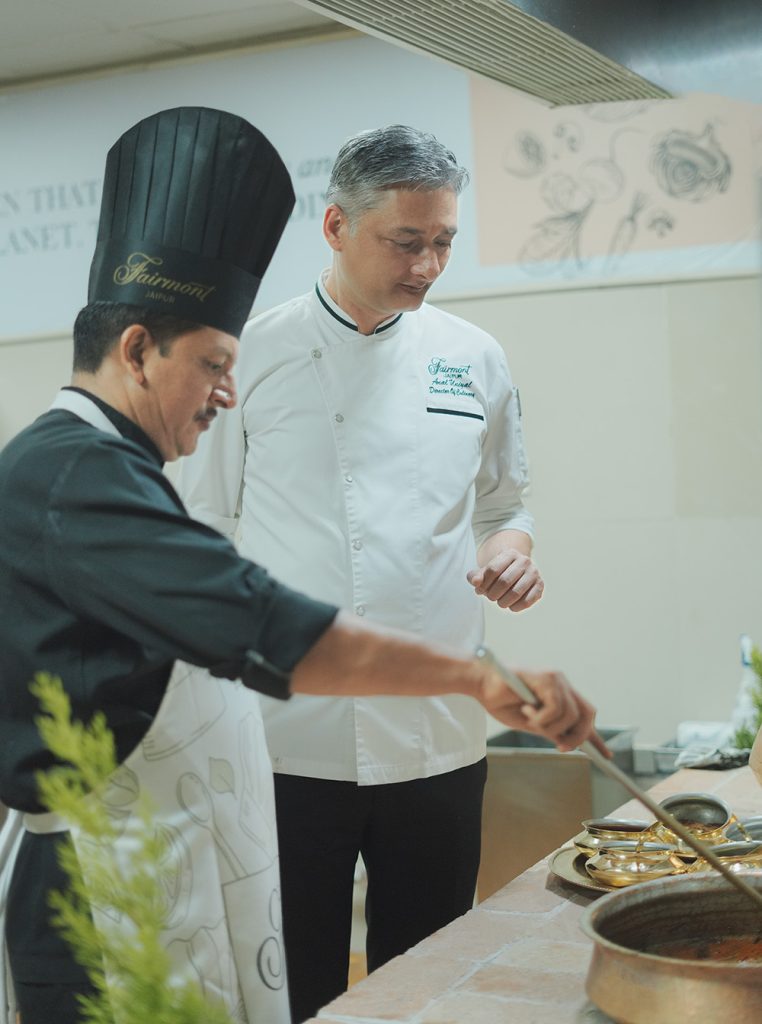
When asked about Fairmont’s plans of expanding the initiative, Sethi answers, “Absolutely. Green Kitchen is just the beginning of a much larger vision. Our long-term plan is to develop a dedicated, full-fledged traditional Indian kitchen that celebrates the country’s ancient cooking techniques in their purest form. We envision a space where food is prepared using traditional vessels such as mitti ke bartan and iron kadhais, allowing ingredients to cook slowly and naturally while enhancing flavour and nutritional value. The cooking process will draw inspiration from India’s centuries-old culinary traditions, utilizing traditional chulhas powered by yard waste, and cow dung cakes, reflecting the sustainable practices that have been followed across Indian households for generations. The objective is not only to preserve these traditional methods but also to offer guests an immersive culinary journey that showcases the authenticity, sustainability and craftsmanship that define India’s diverse food culture. Through this initiative, we hope to create a living tribute to India’s culinary heritage while continuing to innovate within the framework of responsible luxury.
A Meal That Satisfied The Stomach And The Soul
In the midst of eating, I started recalling memories of my grandmother. She believed the most memorable meals were made from simple ingredients, if one exercised care and respect. This meal would have made her smile. Instead of reinventing vegetarian cuisine, it focused on the thoughtful application of excellent ingredients and respect for the culinary techniques and traditions.
This is why we have the Green Kitchen at Fairmont Jaipur. The Green Kitchen is more than just a vegetarian kitchen. It is an experience that celebrates the vast culinary history of India, and provides a combination of authenticity, wellness, and modern luxury.