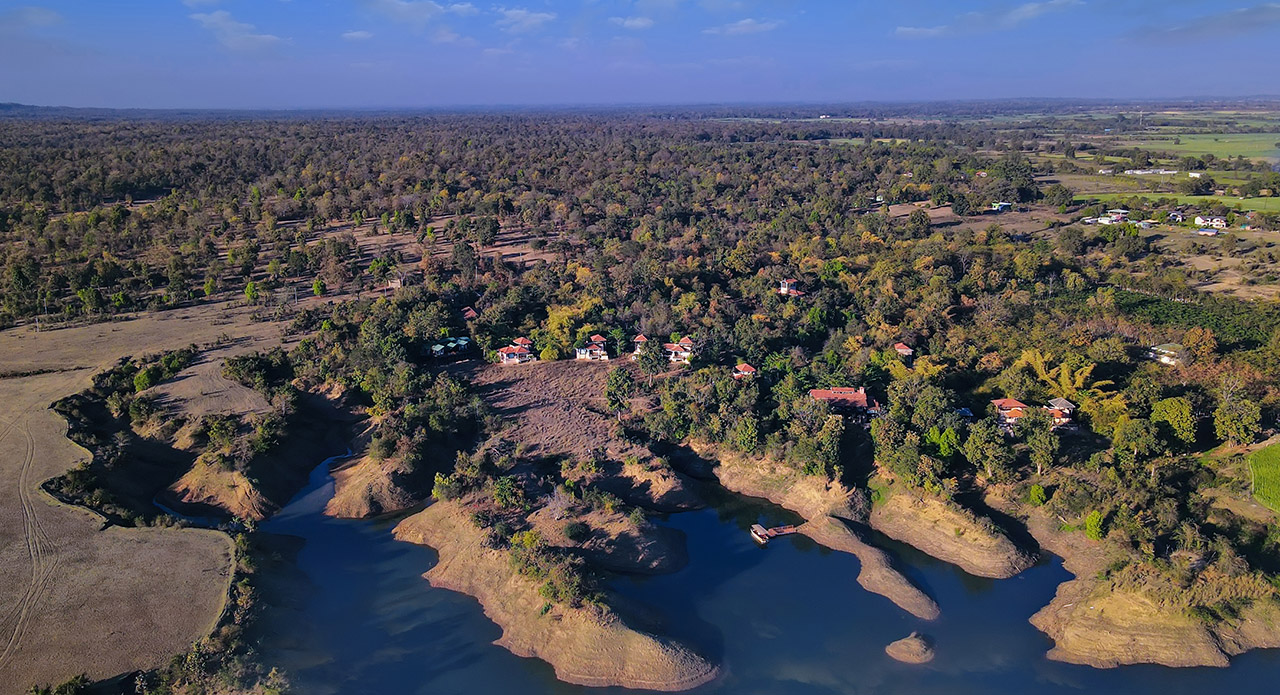


Set on the quiet edge of Satpura Tiger Reserve, where the Denwa River traces a fluid boundary between wilderness and civilisation, Denwa Backwater Escape by Pugdundee Safaris feels less like a safari lodge and more like a part of the forest. We arrive by boat from the Tawa dam, gliding on the Denwa river, past small islands, fishermen balancing in narrow boats, and storks and egrets standing still along the banks. The scenery shifts constantly with the distant hills, wheat fields in relocated villages, and stretches of teak and bamboo forests folding into one another.
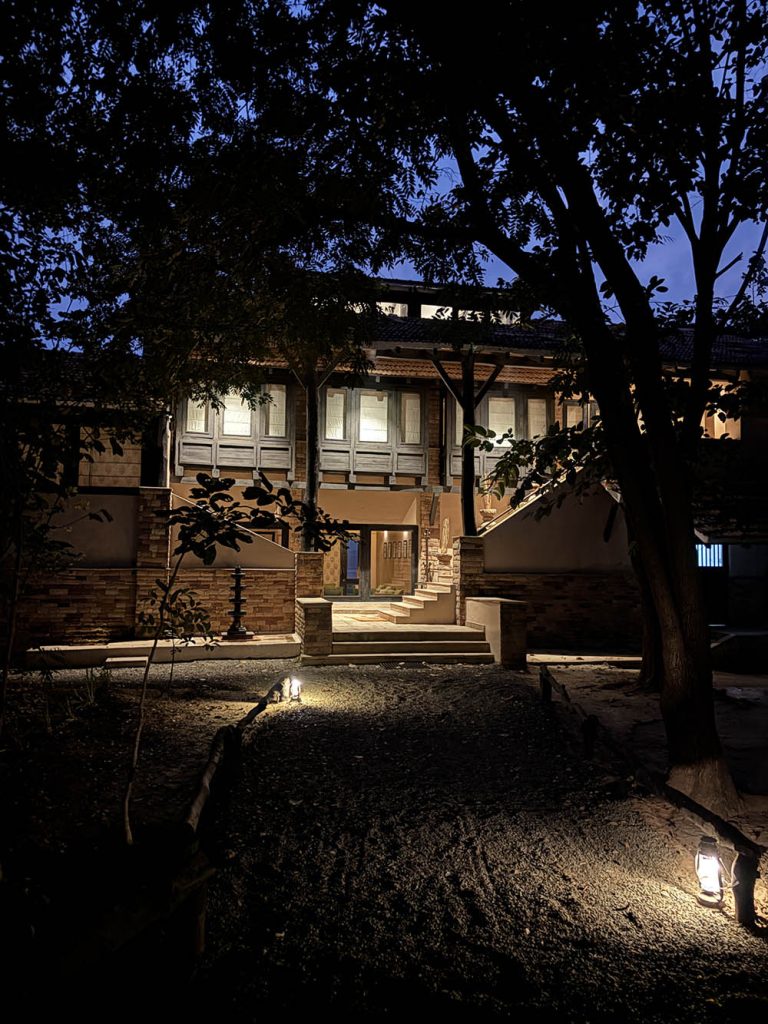
From the beginning, it’s evident that sustainability here isn’t a talking point, but a lived practice. The organic architecture belongs to the land. Stone walls, handmade tiles, and reclaimed wood from old railway sleepers give the cottages warmth and texture. Inside my cottage, a delicate wrought-iron divider from Bastar, the tribal heartland of neighbouring Chhattisgarh, stands quietly, part artwork, part tribute. There is leather safari furniture, soft linens and large picture windows that offer a look into the grasslands and the glistening water. A balcony with two loungers is the perfect place to read a book or snooze.
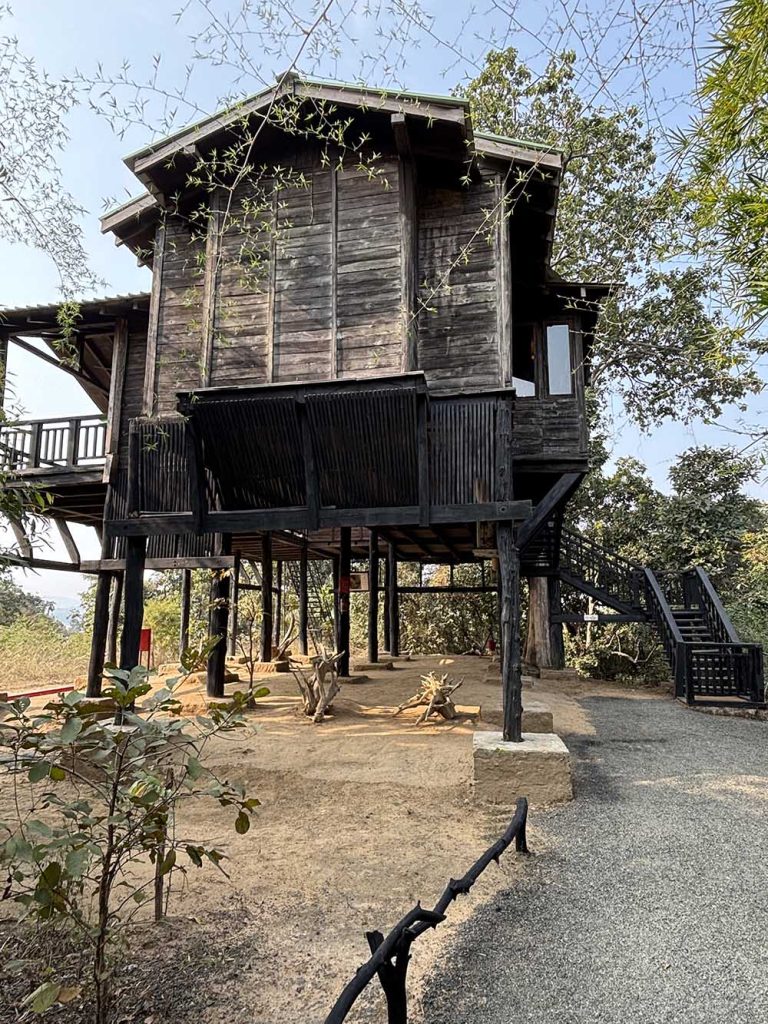
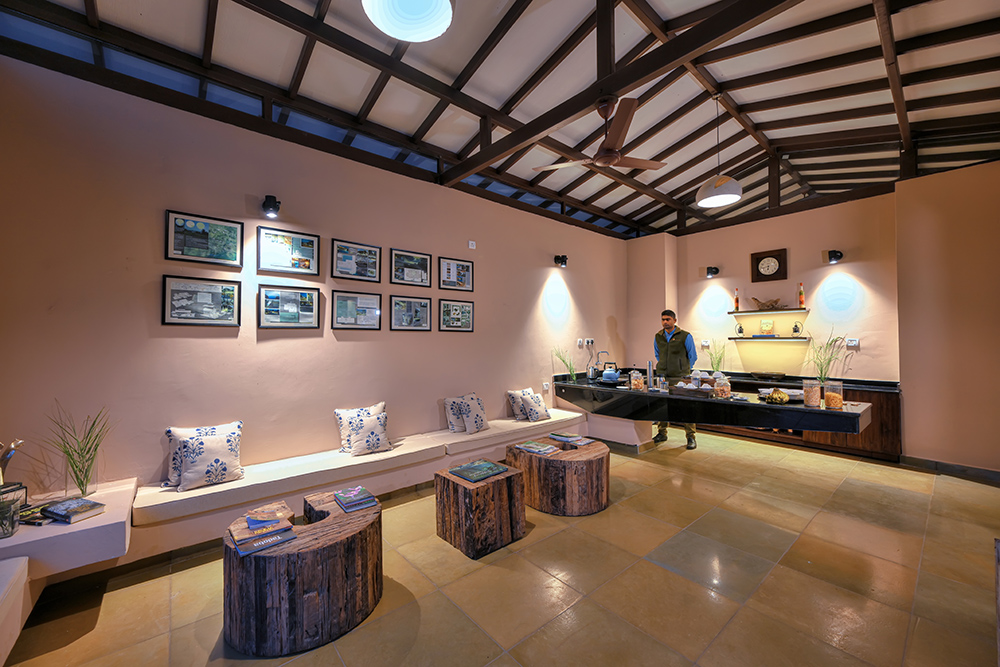
A 3D map at the entrance offers a detailed guide to navigating the 10-acre property. With just eight cottages and two treehouses, and a swimming pool, Denwa Backwater Escape feels intimate and personal. The central lodge houses a cosy library, a boutique, a dining room and bar, all opening out toward the Denwa and the forest beyond, mirroring the slow rhythm of life here. The treehouses perched high above the river are the quiet showstoppers, with sweeping views of the Denwa’s winding bends and the forest stretching beyond.
Civet cats, wild boars, and even leopards are known to be regular visitors to the property. Pebbled paths have been laid so the animals are alerted to the sound of approaching humans. On my first day, head naturalist Kshitij tells me that animals and birds consume nearly 60 per cent of what grows in the vegetable garden. “After all, we live on their land,” he says, simply. That sustainable philosophy shows up in small, almost invisible ways.
Guests are gifted a stainless-steel water bottle at check-in, with water stations placed across the property. Bathrooms come with bamboo toothbrushes and reusable cloth laundry bags made by local women’s collectives, which guests are asked to leave behind. Toiletries sit in glass dispensers instead of plastic bottles. Nearly 70 per cent of the lodge’s energy needs are met through solar power. There is no room service. More than 70 per cent of the staff come from nearby villages, a conscious link between conservation and livelihood
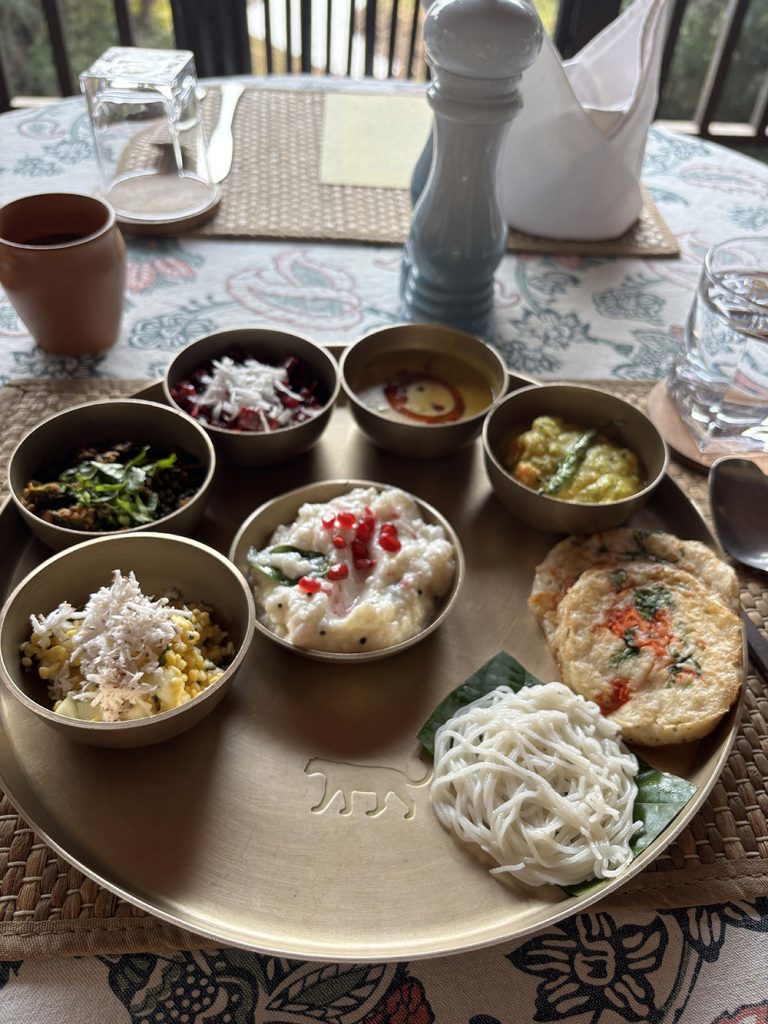
The same care extends into the kitchen. Meals arrive in earthy local pottery, while lunches are served on traditional kansa thalis that lend a quiet sense of ceremony. Picnic breakfasts come packed in steel tiffin boxes and served on steel plates, always with nourishing options like baked eggs with spinach or overnight oats. This is a kitchen committed to doing things the slow way. Tomato purée, jams, and ice creams are made in-house. Juices are freshly pressed. Freshly baked multigrain cookies from the preservative-free kitchen appear in rooms.
Much of the produce comes from organic farms run by nearby villagers. The lodge’s own kitchen garden, cared for by two women gardeners and helpers, grows everything from lettuce and carrots to strawberries, along with herbs and greens that travel straight from soil to plate. The menu shifts with the seasons, using local ingredients like Mahua not just in cocktails, but even in ice cream.
Meals are often set up on an outdoor deck overlooking the river. One evening, there’s a barbecue by the swimming pool. On request, bush dinners are arranged in a designated forest clearing overlooking the river. Even the small shrine beneath a Mahua tree is thoughtful and reflects local tribal traditions. With modest idols, a trishul, and a platform painted in white rice flour, it becomes the heart of celebrations like Diwali. Come night, the lantern-lit paths lead to the cosy library, which hosts conversations with naturalists and screenings of a documentary on Satpura, accompanied by poet Bhavani Prasad Mishra’s ode to the forest in the voiceover.
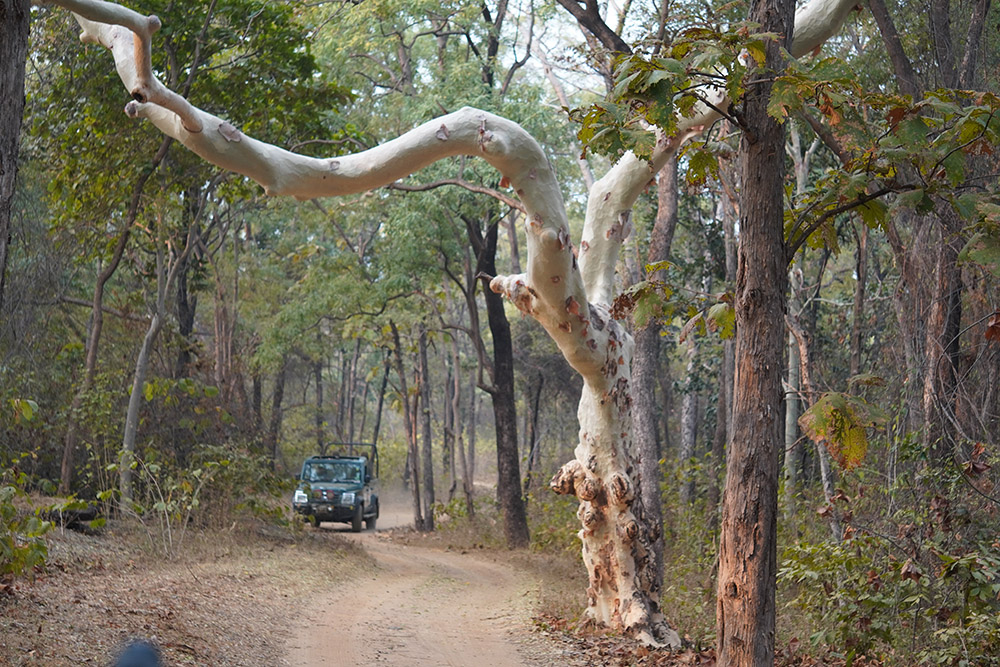
Mornings unfold to birds calling, langurs leaping between branches, and deer grazing in soft shafts of light. Spread across mountains, grasslands, rivers, and dense sal and teak forests, Satpura, declared India’s first biosphere reserve in 1999, remains one of the country’s most understated and compelling wild spaces. Entry is tightly regulated, with only fifteen vehicles allowed per safari slot, a rarity in today’s wildlife tourism. In the 1800s, Captain James Forsyth documented these landscapes in ‘The Highlands of Central India’, and in spirit, little has changed.
Our safaris take many forms. In the winter chill, we travel by jeep to the river, cross it by boat, and then enter the park in a forest department gypsy. Boat safaris glide quietly along the Denwa and Tawa rivers, offering intimate views of waterbirds and animals that come down to drink. Our all-women team of guides, naturalists, and drivers is a distinctive feature of Satpura National Park, reflecting a conscious effort to employ more women guides and drivers and uplift the local community.
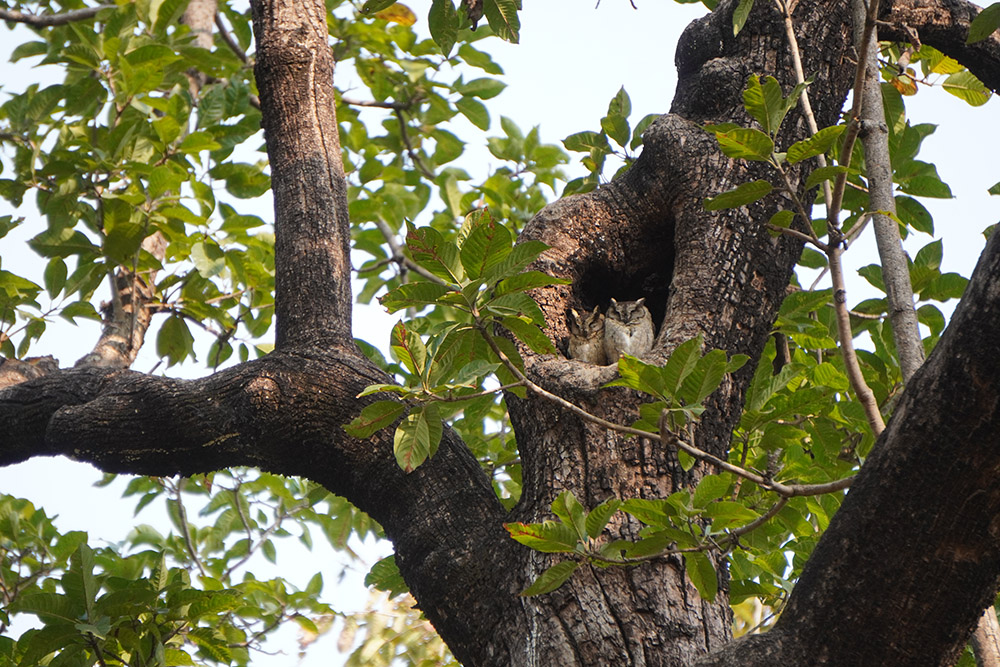
Jeep safaris into the Madhai zone reveal Satpura’s quiet drama, with teak and Mahua forests punctuated by moments of awe and surprise. A lumbering sloth bear digs diligently into termite nests, massive gaur that look like they are wearing white stockings, emerge from shadow with their calves, prehistoric-looking marsh crocodiles bask at the water’s edge, and birds, both resident and migratory, fill the skies and trees. The bird life is prolific, and I enjoy spotting birds like the silvery white Paradise flycatcher with its long streamers in its tail, a pair of Scops owl with dark feathers around their facial discs in a tree hole, and the pied kingfisher above a pond.
Walking through the Sehra buffer zone with a local guide and the young, passionate in-house naturalist Neha More is a revelation. Our attention is drawn to the smallest details: the white, barren ghost tree; tendu leaves used to roll beedis; palash flowers once crushed to make Holi colours; ant and termite colonies that often shelter snakes and porcupines; and a silky funnel web that looks like a piece of fine embroidery. At every moment, we are aware that we are inside a forest that lives and breathes, marked by a leopard’s scratch marks on a tree and a civet cat’s pugmarks pressed into the mud.
As the sun sinks, deer step cautiously toward the river, birds arc quietly back to their nests, while buffaloes are steered home to their villages, and the smell of wood fires drifts through the air. From my terrace, I look out across the grasslands and glistening water. Denwa Backwater Escape doesn’t dazzle with excess; it offers something rarer, a feeling of balance, poised between comfort and conscience. It isa kind of luxury that knows when to be still.
Fact file:
The property offers 8 cottages and 2 treehouses. Room rates for a double, inclusive of meals and excluding taxes, start at around Rs 24000 per night. Safaris are charged on actuals- usually a jeep that can take eight people costs around Rs 13000 with packed refreshment,s depending on the season. A walk in the buffer zone costs Rs 3000 plus taxes with a guide. Children below 14 years cannot take this walk. The lodge offers experiences like a specially curated bush dinner, canoeing, boat safaris, stargazing, one-night joy camping, etc., on request. The lodge conducts an annual naturalist course, both for amateurs and seasoned professionals, led by wildlife specialists and senior naturalists. It also has a young naturalist program for guests with kids.
For those wanting deeper immersion, the lodge offers a five-day Walking and mobile safari experience in batches. Guests walk through forest trails, riverbanks, and tribal hamlets, spending nights in a mobile camp within the buffer zone.