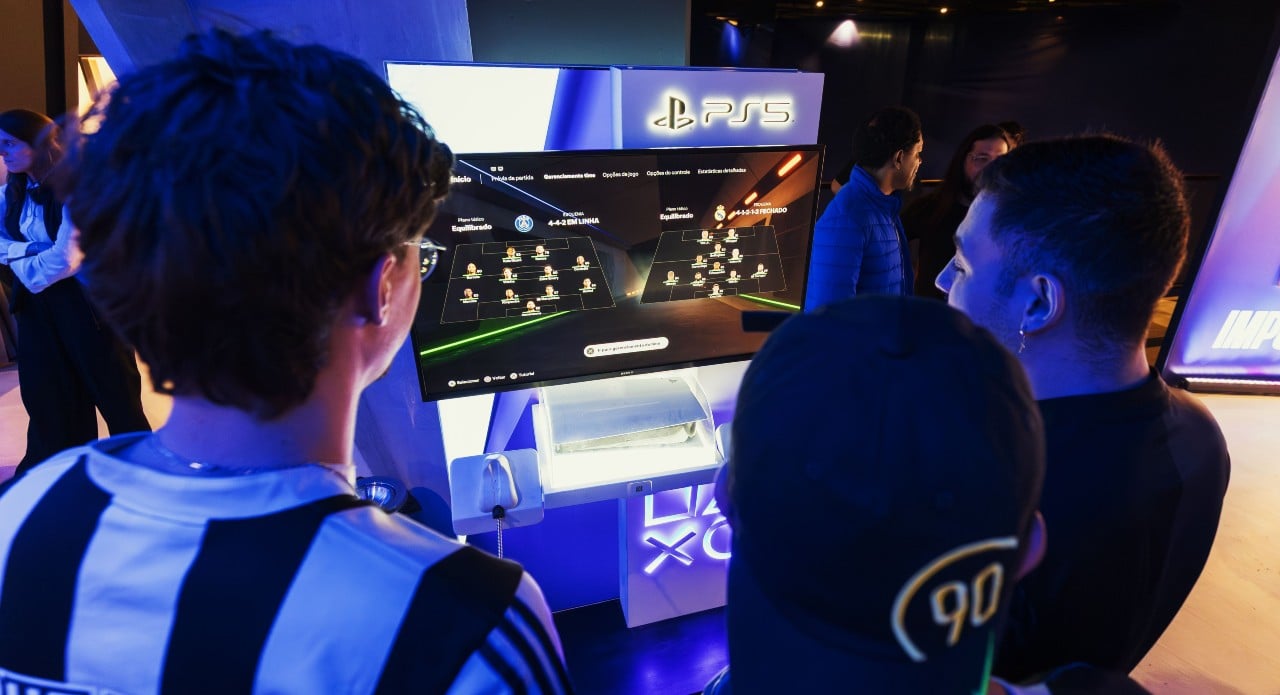


There was a time when football was wonderfully uncomplicated. Twenty two players, one referee, one ball and millions of fans arguing over whether it crossed the line. Today, however, football has become something rather different. The world’s biggest sporting spectacle now relies on satellites, artificial intelligence, motion sensors, computer vision, digital replicas and enough processing power to make a Formula One team slightly jealous. The FIFA World Cup 2026 is not simply expanding to 48 nations and 104 matches; it is becoming the most technologically advanced tournament ever staged. Every pass, sprint, offside call and even the football itself will be monitored by machines working quietly in the background, ensuring the beautiful game has never been smarter.
The Ball Is Smarter Than Most Smartphones
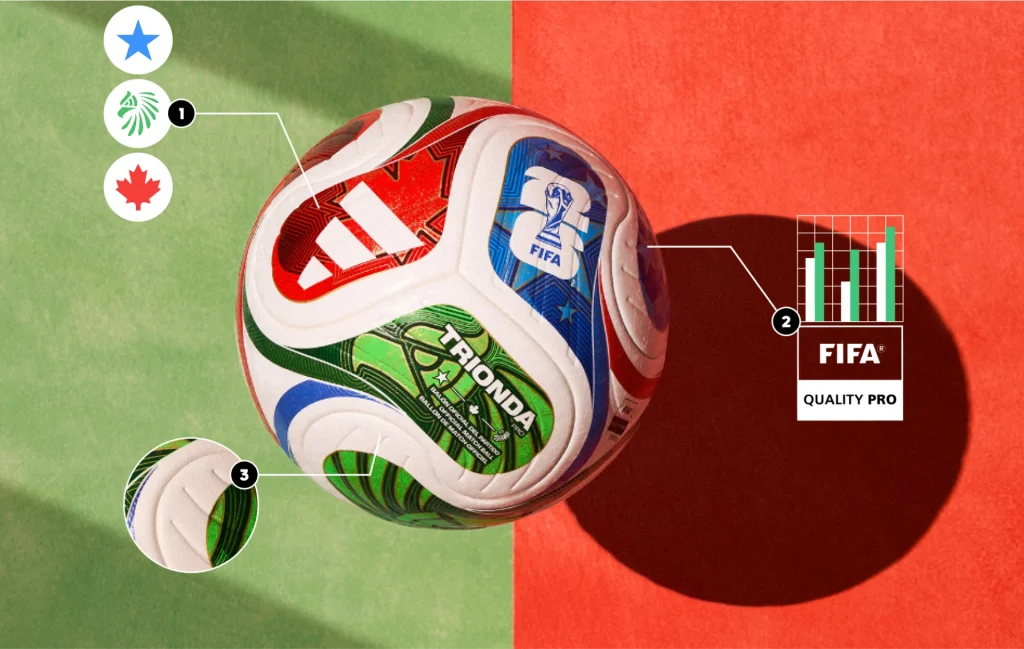
Forget the days when a football was simply leather stitched around air. The official adidas Trionda match ball is effectively a computer disguised as sports equipment. Hidden inside one of its four primary panels sits a highly sophisticated motion sensor, while the remaining three panels contain carefully balanced counterweights to maintain perfect flight characteristics. The sensor continuously tracks the ball’s movement, speed and exact point of contact in real time, transmitting data directly to match officials and FIFA’s technology systems. Perhaps the strangest part is this: the ball needs charging before every match. Yes, football has officially entered the era where someone has to remember to plug in the match ball before kick-off.
Every Player Has Been Digitally Recreated

Preparation for the tournament now extends far beyond tactical meetings and fitness tests. FIFA has 3D scanned all 1,248 players representing the 48 participating nations, capturing their complete body geometry in roughly one second per player. These highly accurate digital models allow broadcasters, analysts, game developers and performance systems to recreate players with extraordinary realism while also supporting enhanced tracking technologies throughout the competition. It sounds like science fiction. It’s actually pre-tournament preparation.
Also Read: Lamborghini’s New Urus SE Blends Hybrid Power With Italian Craftsmanship
Artificial Intelligence Has Become The New Assistant Referee
Offside has always been football’s greatest source of arguments. Not anymore. Using AI assisted offside technology, computer vision cameras and precise player tracking, FIFA can now determine offside positions to an accuracy of approximately 10 centimetres. Multiple cameras monitor every player simultaneously, while the sensor inside the match ball identifies the precise instant it is kicked. Artificial intelligence combines these data streams almost instantly, dramatically reducing decision times while increasing accuracy. Supporters may still disagree with the laws of football. They will simply find it much harder to argue with the technology.
Every Stadium Exists Twice
One version hosts the football. The other exists entirely inside a computer. Working alongside Lenovo, FIFA has created digital twins of every World Cup stadium. These highly detailed virtual replicas mirror the real venues in real time, allowing organisers to simulate crowd movement, monitor infrastructure, optimise logistics, predict maintenance requirements and respond faster to operational challenges. Long before supporters arrive at the stadium, engineers already know how it behaves digitally.
Robot Dogs Have Joined Stadium Security
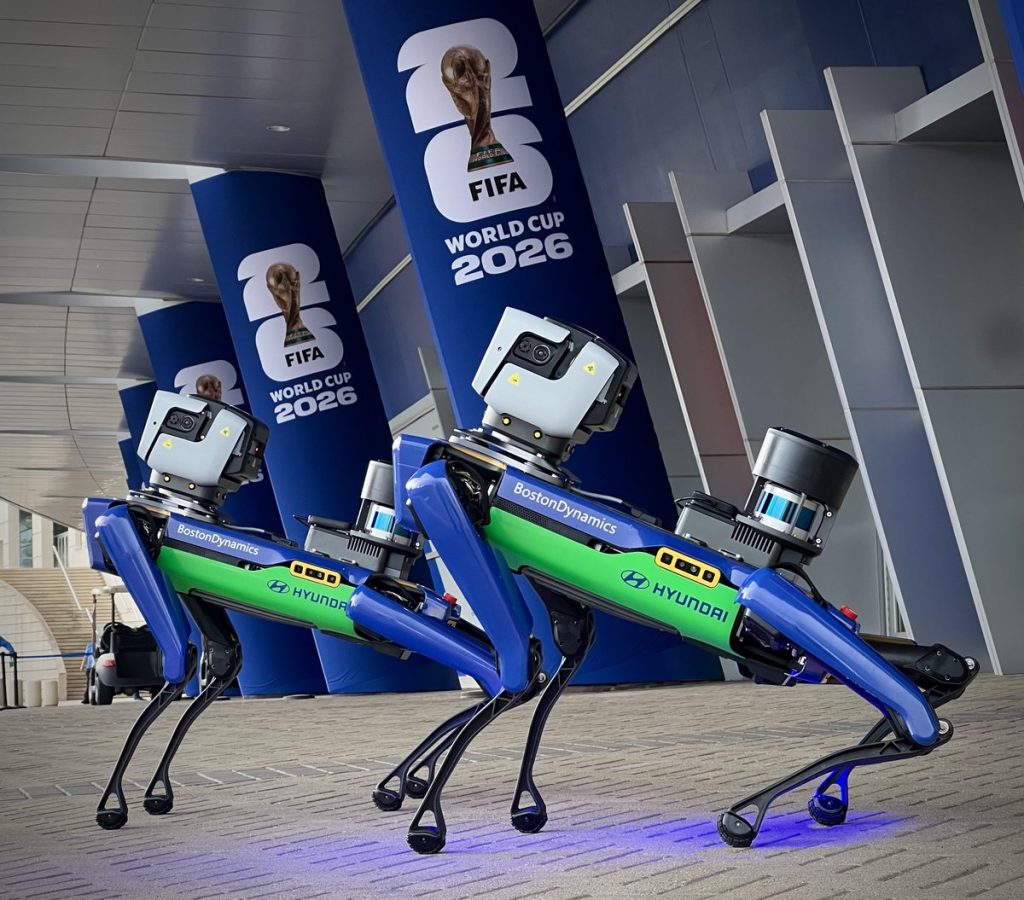
If you happen to spot a robotic dog patrolling the stadium perimeter, don’t be alarmed. It is supposed to be there. Autonomous robotic security units are being deployed to patrol selected areas around tournament venues, assisting human security teams with surveillance, inspections and monitoring tasks. Equipped with cameras, sensors and autonomous navigation systems, these robotic assistants improve situational awareness while allowing security personnel to focus on larger operational responsibilities. It’s rather surreal. Football has finally reached the point where robot dogs help keep supporters safe.
Every National Team Gets Its Own AI Coach… Sort Of
All 48 participating nations will have access to dedicated AI powered assistant platforms capable of analysing opposition tactics, player workloads, match statistics and performance trends. These systems can rapidly process enormous amounts of data, helping coaching staffs prepare game plans, identify tactical weaknesses and optimise recovery between matches. No, artificial intelligence will not be selecting the starting eleven. But it may well provide the information that influences who does.
Football’s Future Has Already Arrived
The FIFA World Cup has always reflected the era in which it is played. Once it introduced coloured television audiences to the world’s greatest players. Later came goal line technology and VAR. Now, in 2026, artificial intelligence, robotics, digital twins, real time data analytics and sensor equipped footballs are becoming as important behind the scenes as tactics are on the pitch. The stars may still decide matches with moments of brilliance, but increasingly, it is technology ensuring every decision, every statistic and every experience is faster, smarter and more precise than ever before. The beautiful game remains beautifully human. It simply has an extraordinary amount of computing power helping it along.