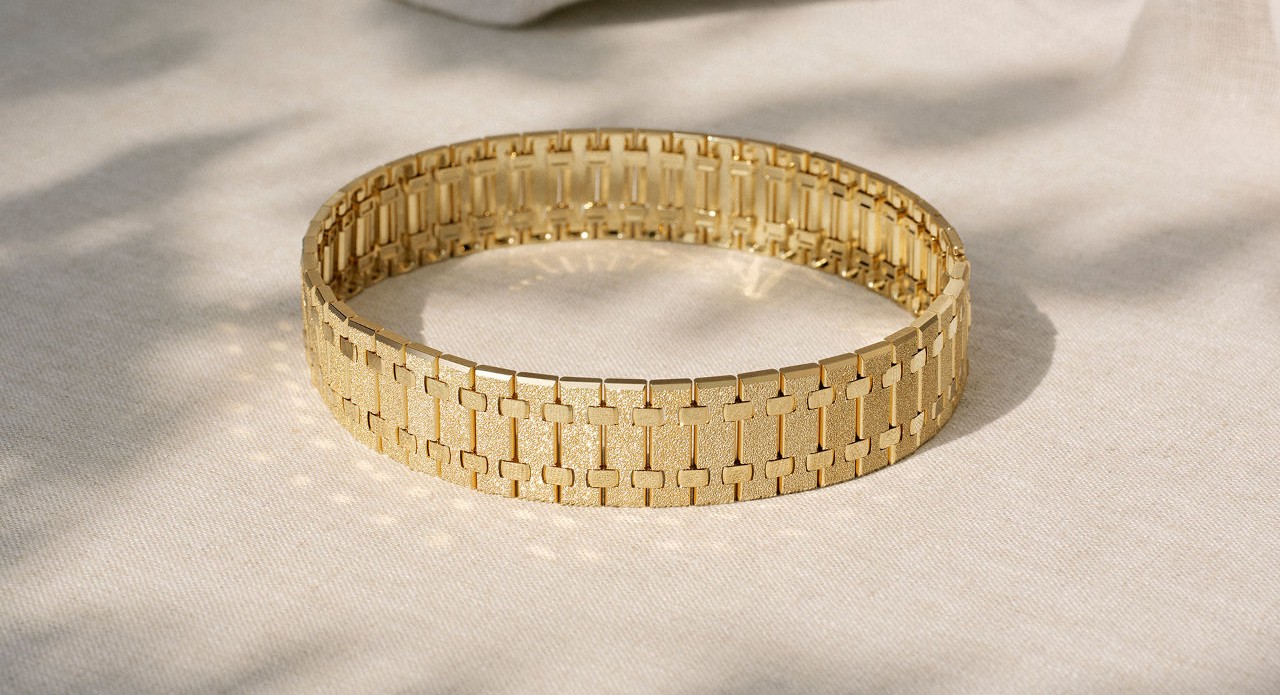


In 1969, Italian designer Aldo Cipullo created what would become one of Cartier’s most iconic and enduring pieces, the Love bracelet. Emerging during a time of cultural transformation, the design challenged conventional jewellery norms by blending simplicity with deep emotional symbolism. Cipullo crafted a sleek oval bracelet that embraced the wrist closely and was secured with tiny screws using a special screwdriver. It was conceived as a lasting declaration of love, almost like a modern handcuff, where the act of fastening it became a shared ritual between two people. Cartier has launched three new bracelets sized at 7mm in 18k rose gold (Ref. B6088117), white gold (Ref. B6089717), and yellow gold (Ref. B6088917) with size ranging from 14cm to 23cm.
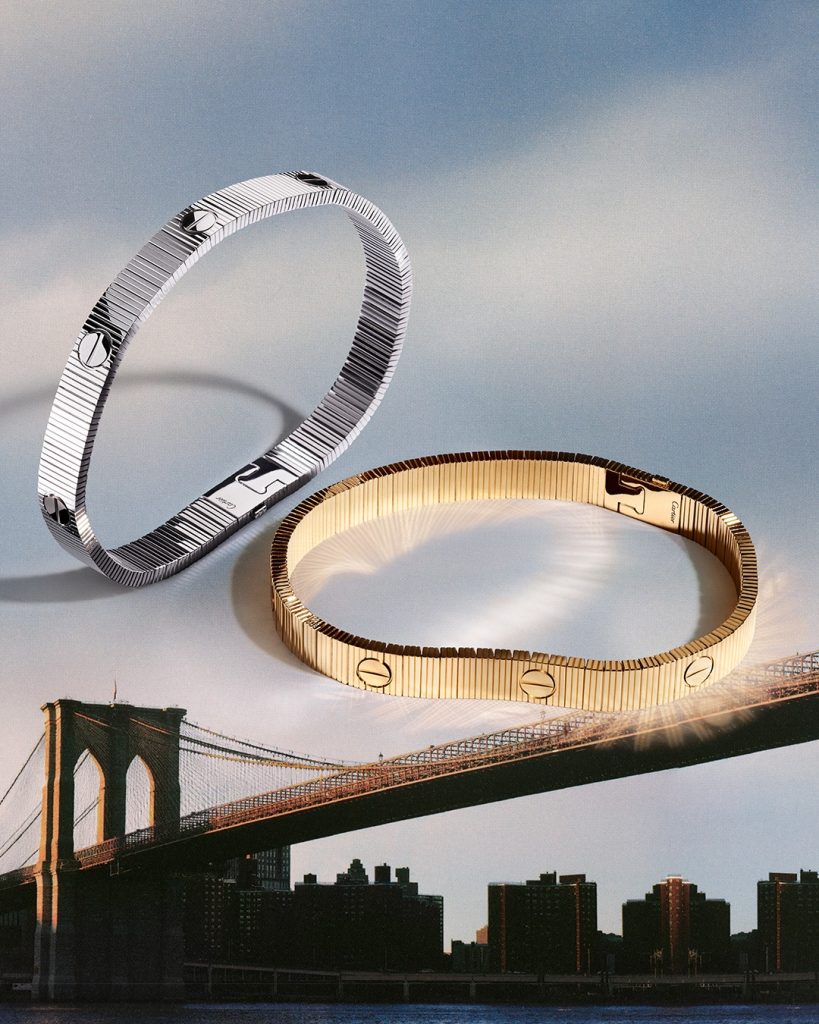
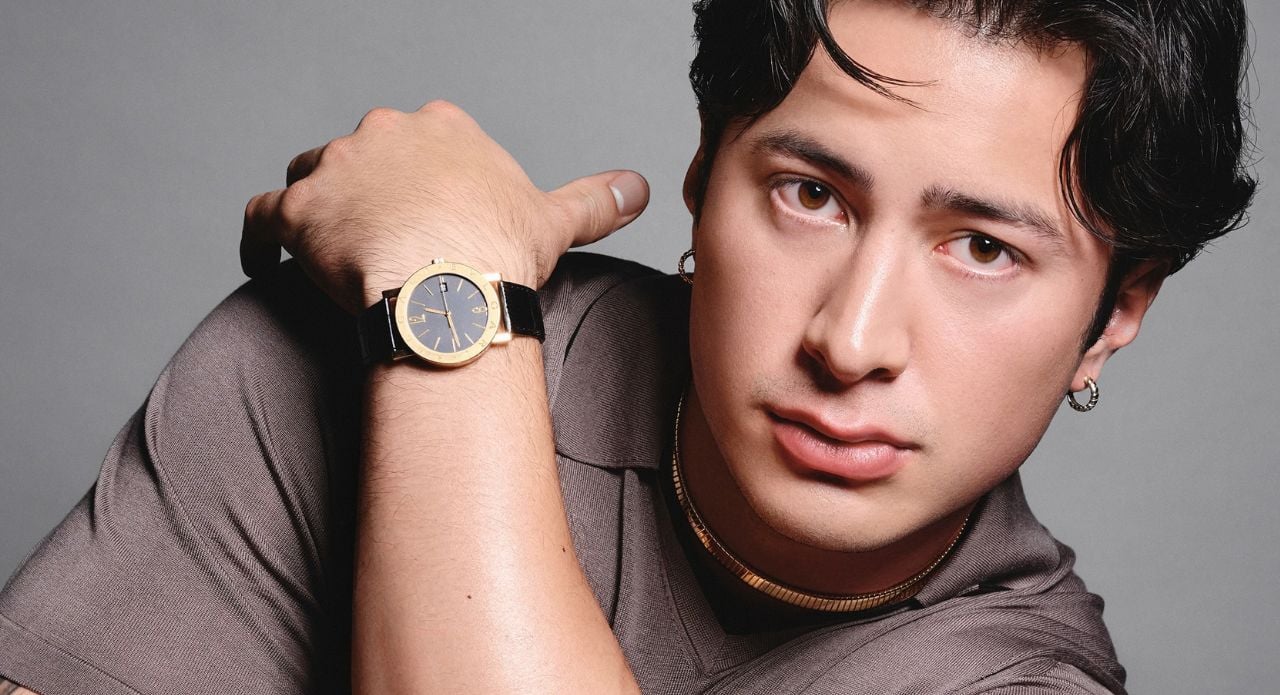
All three Cartier bracelets have visible screws, and can bend, shift with the wearer, giving the trademark screw detail a new fluidity. Each Love Unlimited bracelet is made up of 200 small components and features a novel clasp that allows it to be worn or removed with one hand. Individual pieces can also be connected together to create necklaces, belts, and bag charms. Sofia Coppola and Jacob Elordi reunited in New York, the birthplace of the LOVE bracelet in 1969, to bring their unique chemistry to a celebration of the legendary design. Featuring the Australian actor in his debut as a Cartier ambassador, it explores the various dimensions of a collection that reinvented jewellery as a symbol of love.
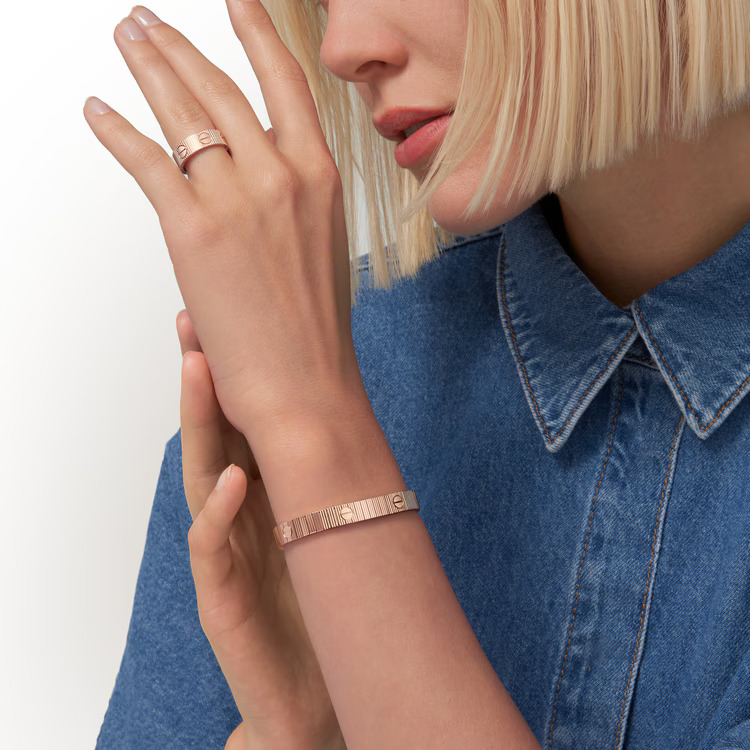
Unlike other more typical bracelets, which are either wide enough to fit over the hand and onto the wrist or can easily be opened to put them on, the Love bracelet is designed to be opened only with a special screwdriver that is included with each bracelet. The screwdriver is also available as a necklace, which allows the bracelet to be “locked” onto one person while the “key” is kept around the neck of the other as a symbol of their dedication to their partnership. Some bracelets have diamonds in place of or in rotation with the screw motif. Ceramic details and specially tinted precious gems have also been supplied. Pave diamond variants became available in 2009. There are also non-locking cuff versions available. The skinny version’s locking mechanism uses a hinge and a single screw. As a result of the success of the thinner version, the medium version was created, which falls somewhere between the classic and small Love bracelets.