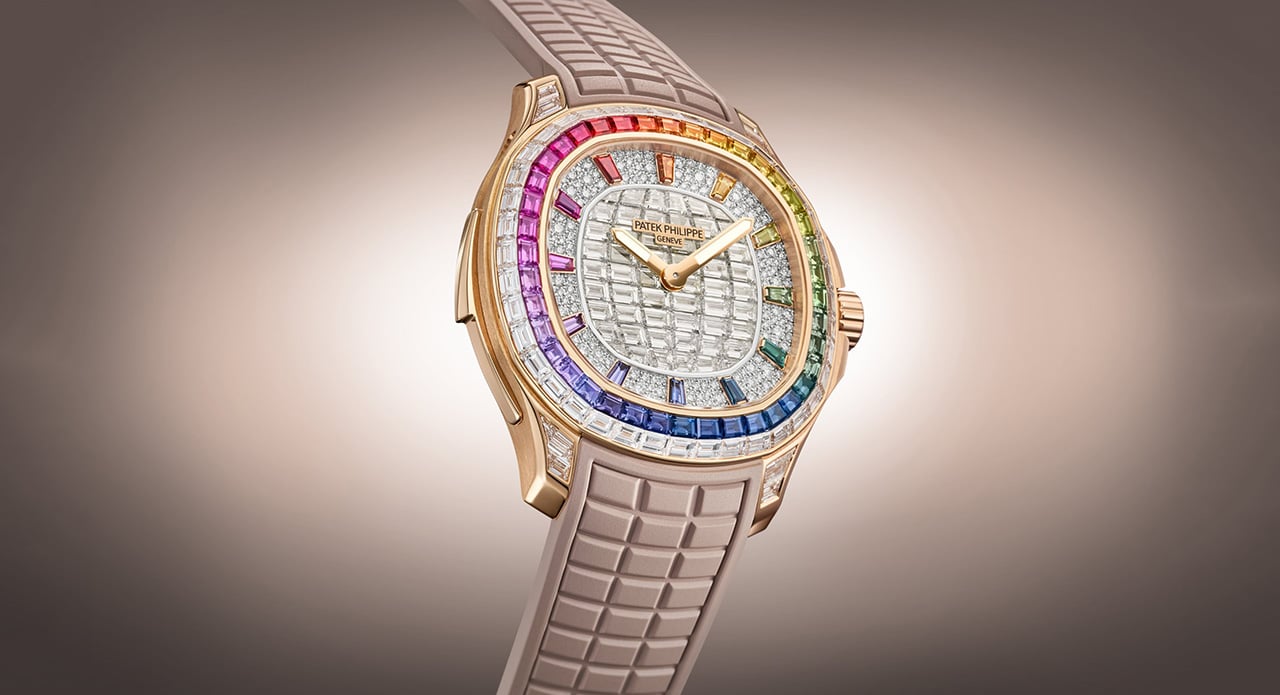


In a world where most diamonds stick to a dress code of polite whites and safe neutrals, rainbow diamonds show up like the guest who raids the closet, breaks the rules, and still manages to outshine everyone at the party. These stones don’t shimmer—they strut. A bezel drenched in rainbow diamonds looks less like jewellery and more like a technicolour light show engineered by a particularly mischievous unicorn. But beneath the flamboyance lie remarkable geological science, meticulous sorting, and the kind of gem-setting that would give even seasoned artisans a tension headache. In horology, where symmetry, precision and restraint usually reign supreme, rainbow diamonds burst through the door with a riot of colour and unapologetic drama. Understanding them isn’t just learning about gemstones; it’s appreciating the rare, kaleidoscopic alchemy that transforms a watch into wearable fireworks.
What Are Rainbow Diamonds?
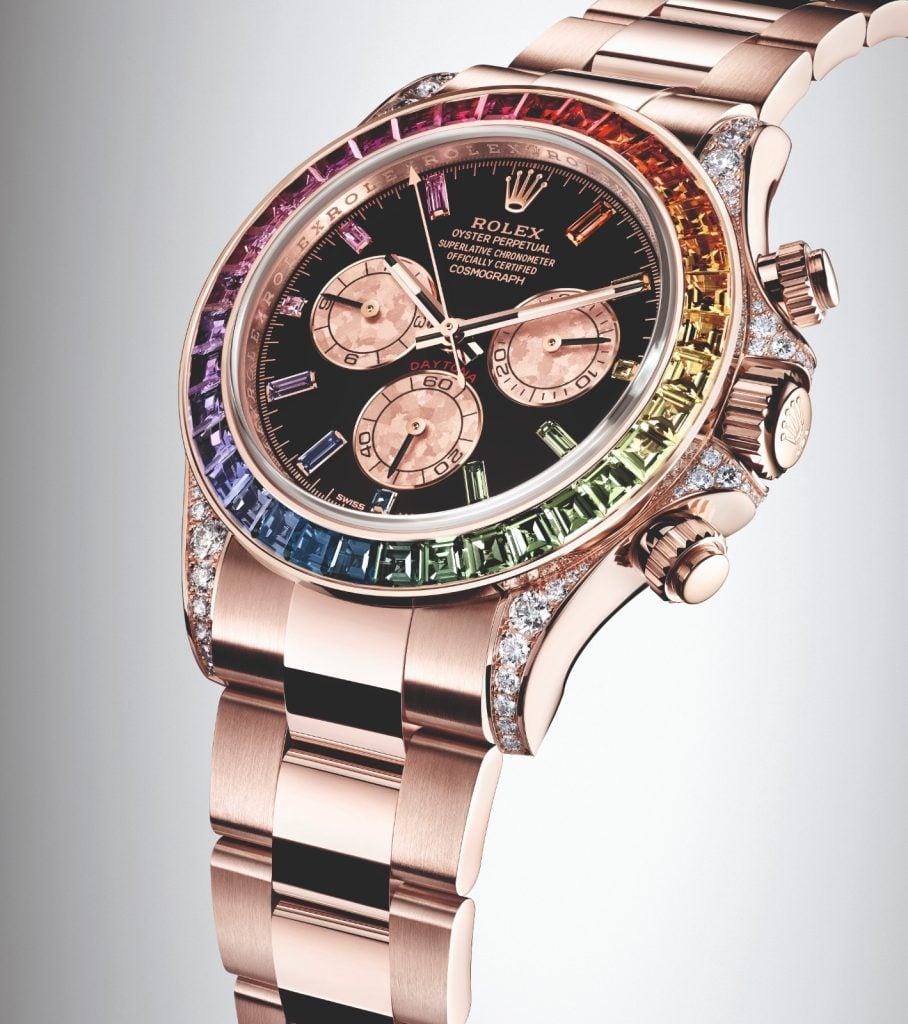
Rainbow diamonds refer to a curated array of natural or treated coloured diamonds arranged in a gradient spectrum—reds, oranges, yellows, greens, blues, purples, and the elusive pinks. They aren’t a separate gem species but a composition of multiple fancy-coloured stones selected, matched, and set to create a seamless chromatic arc. The rarity lies not only in obtaining each colour but in matching tone, saturation, and size. A true rainbow bezel demands near-obsessive precision, turning the gem-setting process into an exercise in colourful madness.
How Coloured Diamonds Are Formed?
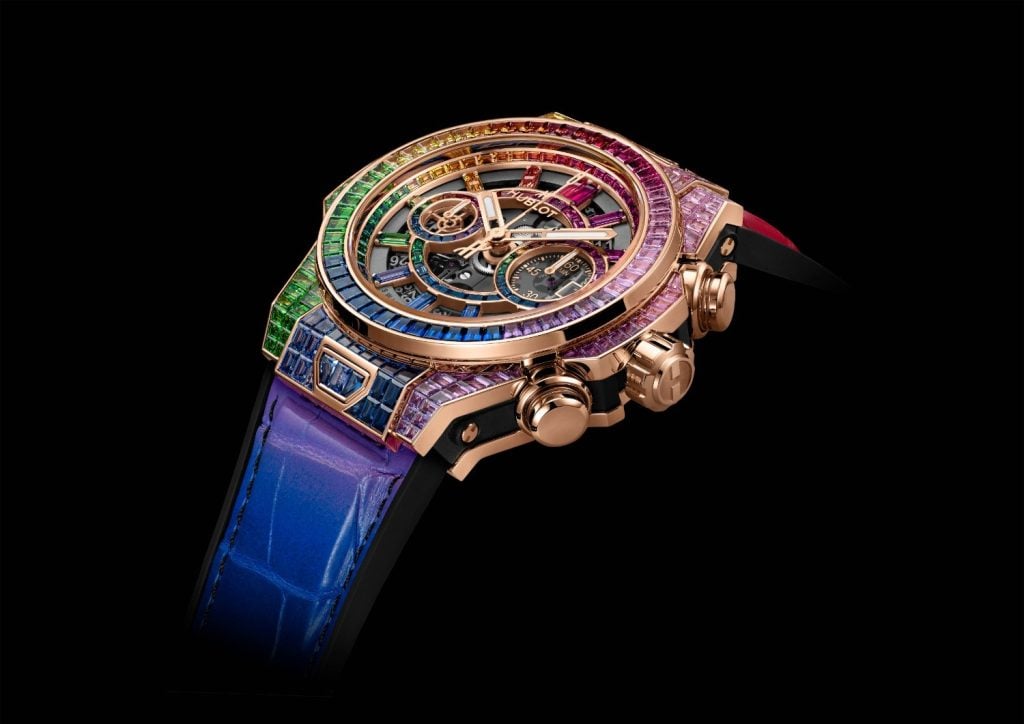
Coloured diamonds emerge thanks to some of Earth’s most dramatic geological accidents, where trace elements or lattice distortions influence the way the crystal absorbs and reflects light. Nitrogen atoms produce the warm glow of yellows and oranges, while boron creates the cool serenity of blues. Pink and red diamonds—among the rarest of all—come from intense structural distortions in the crystal lattice, whereas green diamonds result from natural radiation exposure deep underground. Purples and browns arise from even more subtle combinations of trace elements and pressure irregularities.
Each hue is a unique geological fingerprint formed over millions of years, making the assembly of a complete chromatic set a feat of both nature and human perseverance.
The Composition And Grading Of Rainbow Diamonds
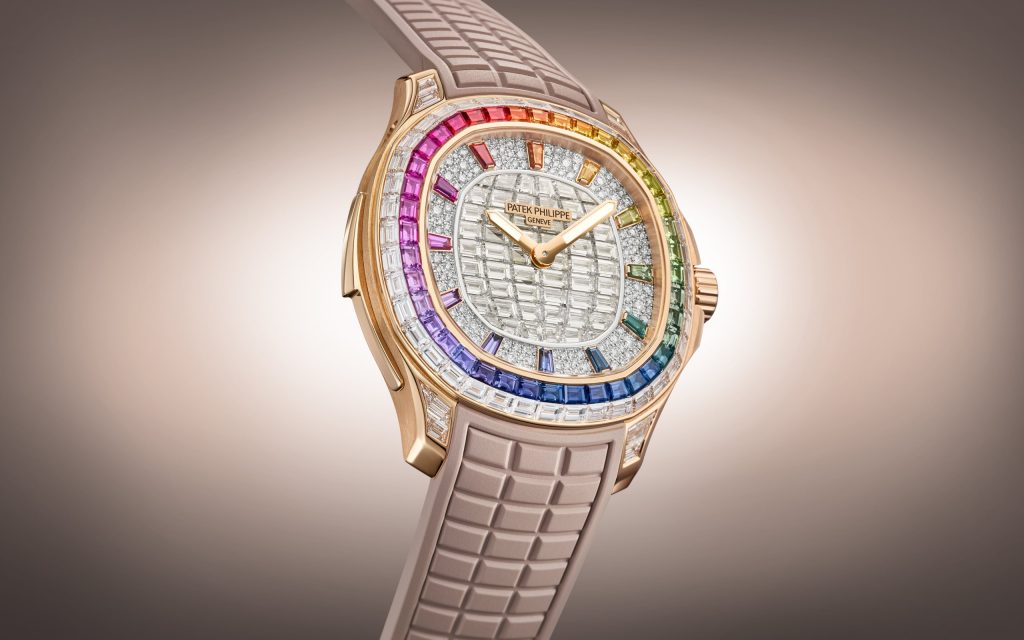
Crafting a true rainbow arrangement requires selecting stones that work together like a perfectly tuned symphony. Gemologists assess each diamond for colour saturation, hue accuracy, clarity, and cut uniformity, ensuring the gradient flows smoothly without awkward leaps or breaks. Since certain colours—especially greens, deep blues, and purples—are exceedingly rare, watchmakers sometimes blend natural fancy diamonds with treated stones to maintain consistency while keeping the spectrum visually balanced. Crucially, each diamond must match in physical dimensions, allowing the bezel or dial to maintain perfect symmetry. The final result is a meticulous tapestry of colour that speaks as much to human artistry as it does to geological wonder.
The Rise Of The Rainbow Watch Trend
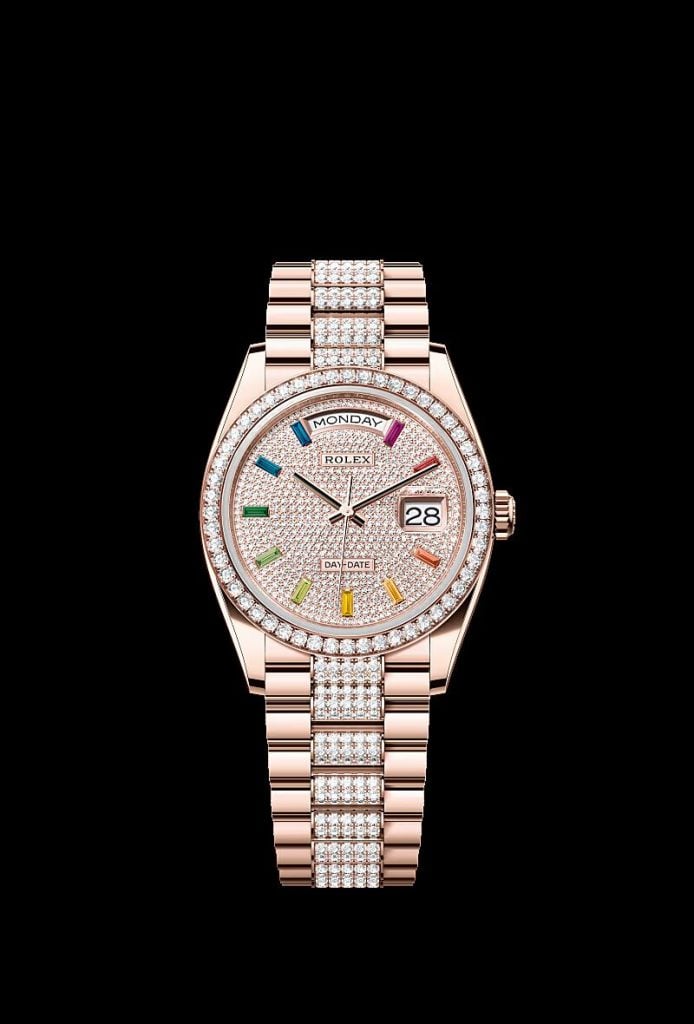
The rainbow watch phenomenon surged in the last decade, fuelled by collectors, celebrities, and brands eager to push the boundaries of traditional aesthetics. What began as a quirky experiment quickly became a cultural marker of modern luxury—fun, bold, extroverted, and highly exclusive. Limited productions, skyrocketing resale values, and waiting lists have cemented rainbow watches as icons of contemporary horology. Their appeal lies in the perfect collision of rarity, artistry, and attitude, transforming each piece into not just a time-telling instrument, but a celebration of colour, craftsmanship, and the unapologetic joy of standing out.