Designing Luxury, The Indian Way
Essentia Environments founders Hardesh and Monica Chawla discuss quiet luxury, Indian craftsmanship, bespoke interiors, and how their firm is redefining luxury homes in India through contemporary design and end-to-end execution
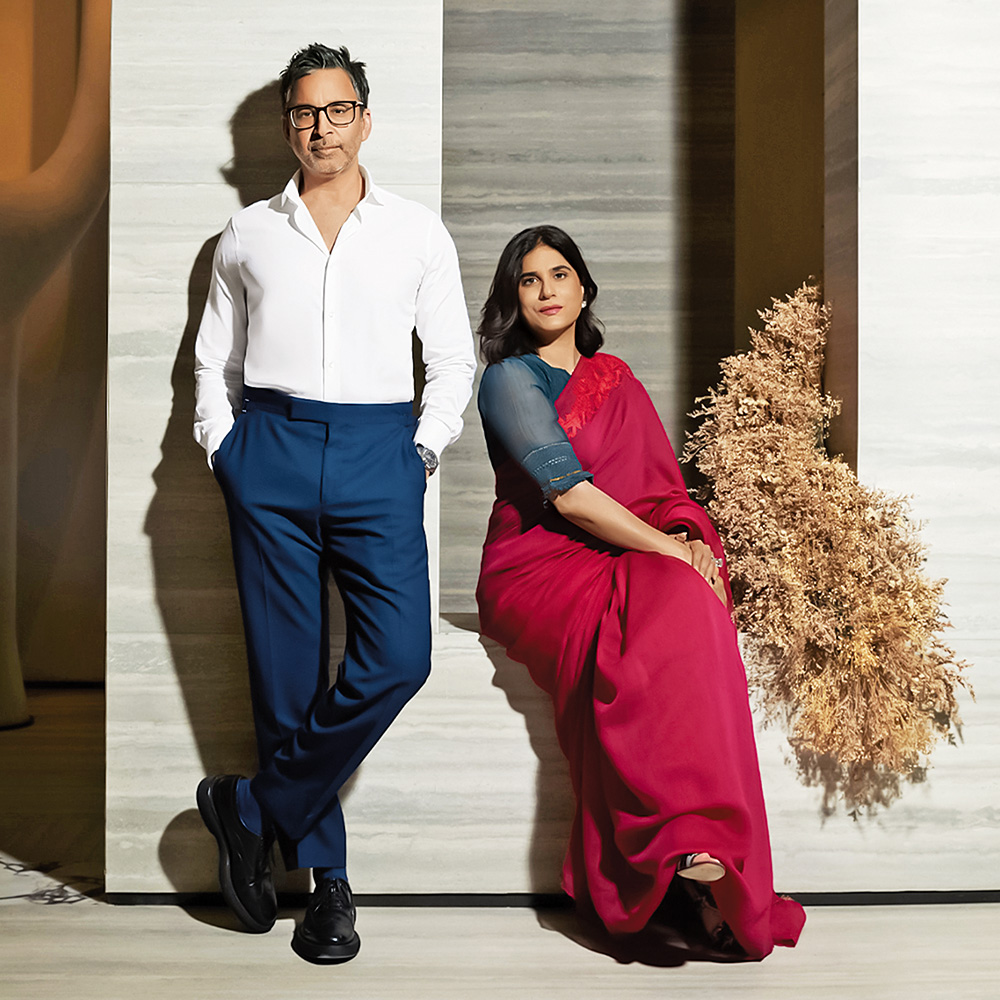
At a time when luxury interiors in India are reduced to a familiar checklist of global brands, Italian marble and European fittings — designer couple Hardesh Chawla and Monica Chawla have chosen to buck the trend. Their firm, Essentia Environments, is built on a belief that sounds simple, but isn’t always understood: luxury doesn’t need to be imported. It needs to be interpreted.
Their portfolio reflects that thinking. From residences at the Camellias, Aralias and Magnolias to branded developments such as Trump Towers, Westin Residences and Jacob & Co, Essentia Environments has quietly and consistently shaped some of the most expensive homes in North India. Their design aesthetic combines the best of east and west and sits at a nuanced intersection: Indian in its warmth, craft and texture and global in its restraint, spatial clarity and flow. It is neither overtly traditional nor impersonally international, but a hybrid vocabulary.
What sets Essentia apart, however, is not just its design language but its control over the entire process. Unlike most firms that conceptualise and then hand over execution, Essentia operates end-to-end, spanning design, architecture, construction and interiors. In luxury, this is critical because control ensures consistency. And consistency is what ultimately defines quality. For high-net-worth clients, this translates into something invaluable: a single point of accountability, where vision is not diluted between drawing board and delivery.
The Language Of Restraint
What is often labelled as quiet luxury is not a trend to follow. It is a natural progression. Says Hardesh- “It is a natural evolution rather than a reaction. As clients become more exposed and discerning, there is a clear shift away from overt display towards restraint and depth. We focus on materials that reveal themselves over time, balanced palettes, and detailing that rewards closer attention. It is about creating spaces that feel calm, grounded and enduring—rather than immediately overwhelming.”
In these spaces, luxury does not announce itself. It settles in the grain of wood that deepens with time, in the softness of light across a surface, in the quiet confidence of design that does not need to prove itself. The most enduring luxury is not what captures attention instantly but what stays.
Furniture, Crafted In-House
For the Chawlas, the move into in-house manufacturing was not expansion, it was necessity. “It came from the need for control. As our projects became more layered and precise, relying on multiple external vendors often meant compromises—on timelines, on detailing, on finish. Building our own manufacturing ecosystem allowed us to align design intent with execution seamlessly. It gives us the ability to experiment, customise at scale, and maintain consistency across every element within a space.”
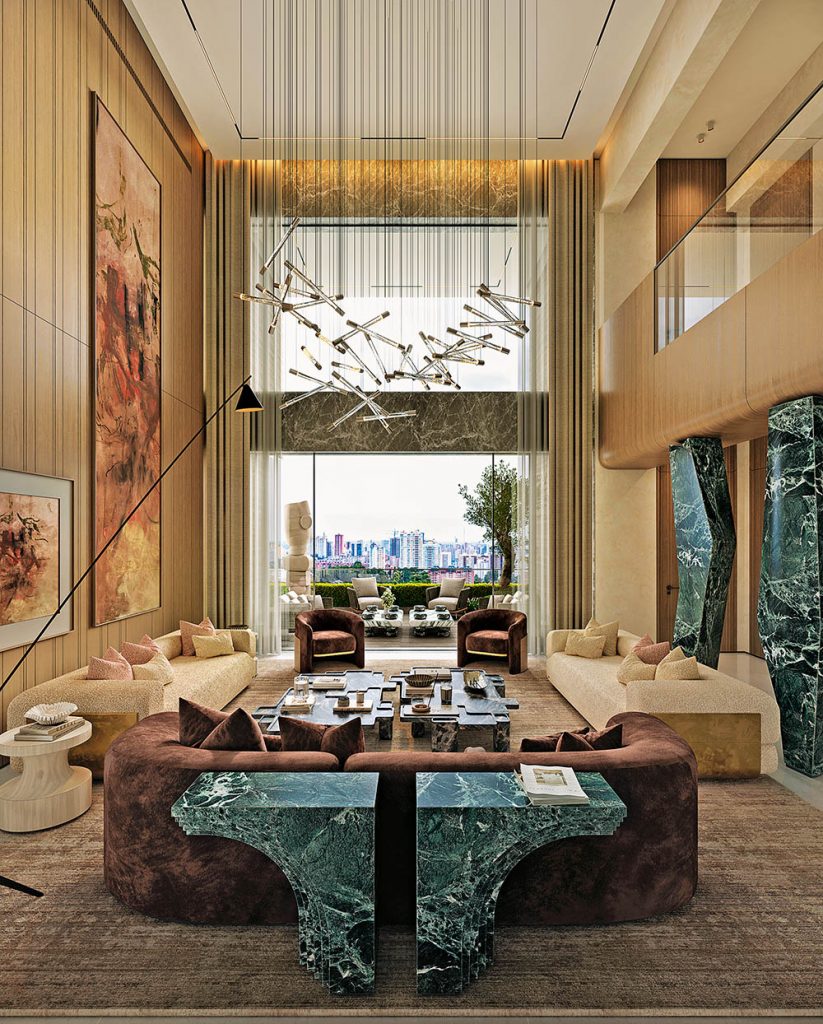
At Essentia, furniture is not an add-on but integral to the architecture of the home. A line drawn on paper must translate exactly into material. A finish imagined must hold its integrity in execution. And in luxury, where the difference lies in the millimetre, that control becomes critical. In bringing manufacturing in-house, Essentia Environments has effectively closed the gap between idea and outcome. Says Monica- “True luxury does not leave room for approximation. It is designed and delivered as one.”
Also Read: Why Linen Is the Ultimate Summer Fabric To Style Indian Homes
Design: The Core of Luxury
For Hardesh Chawla, interior design is no longer an afterthought—it is the foundation of how luxury is understood. “Interior design today is no longer a finishing layer—it is central to how value is perceived and experienced. At this level, clients are not just investing in scale, but in identity, comfort and longevity.
Our role becomes that of a co-creator shaping how homes feel, function and endure over time. Through projects like Camellias and branded developments, we are contributing to a more nuanced definition of Indian luxury—one that is rooted in detail, materiality and lived experience.”
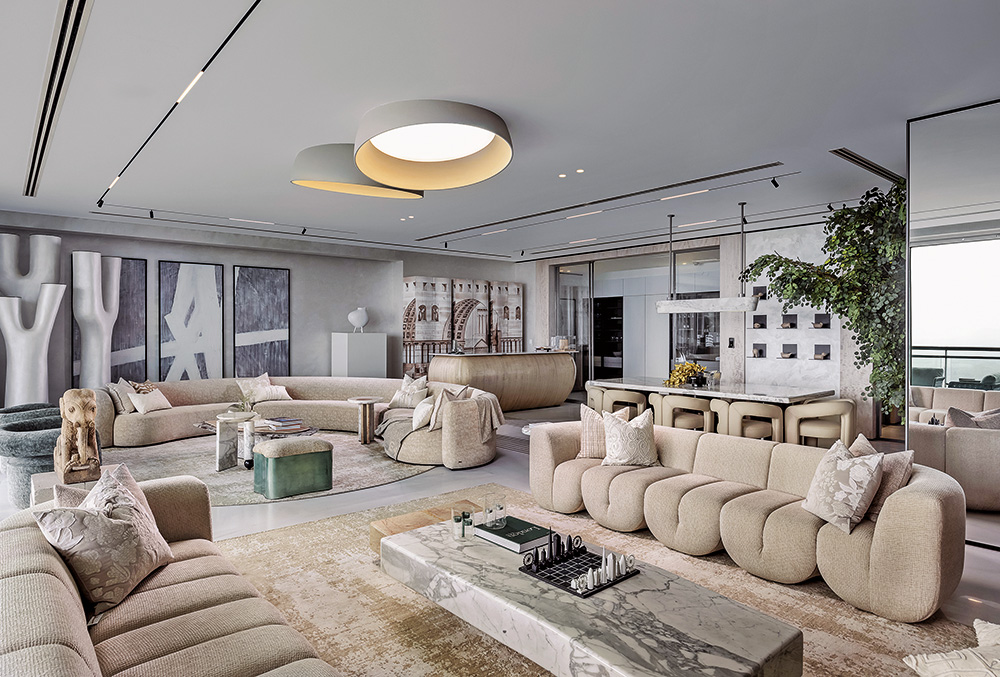
That idea of lived experience finds a natural extension in how Monica Chawla frames luxury itself. “Luxury today is deeply personal. It is less about acquisition and more about authorship. Every space we design is built around the client’s life—their routines, their sensibilities. Custom furniture, tailored layouts and carefully chosen materials allow us to create homes that cannot be replicated. And that individuality is what defines true luxury today.” Together, their perspectives shift the conversation. Luxury is no longer something you buy. It is something you become part of.
Indian Design & Its Quiet Wisdom
Indian design is not just aesthetic, it is intuitive. Says Monica- “Indian design brings a richness of layering and a sensitivity to living. There is an inherent understanding of climate, material behaviour, and the way spaces are used across generations. It allows for a certain warmth and adaptability that often feels missing in more rigid design systems. This sensibility, when refined, adds depth and authenticity to contemporary interiors.”
It is this quiet intelligence that defines Indian design. An instinct for how spaces breathe, how materials age, how homes evolve with the people who live in them.
The New Luxury Code
Homes today are no longer designed to impress others. They are designed to feel right. For this designer couple, luxury has quietly moved away from statement to sensibility. “Luxury is defined by time, comfort and clarity. It’s about spaces that support a certain quality of life, rather than simply make an impression,” says Monica.
The new Indian is more drawn to craftsmanship, authenticity and how a space actually feels to live in. There is also a noticeable return to Indian materials and craft. Says Monica- “There’s a growing pride in what we have locally. Clients are far more open to exploring Indian materials today—especially when they’re presented in a contemporary way.” But this isn’t nostalgia. Expectations are sharper now. Craft has to meet precision. Tradition has to hold up against global standards of finish and detailing. And it is in that space between heritage and refinement that a new language of Indian luxury is emerging.
Indian, Without the Obvious
Indian-ness is not something you add on. It’s something that sits quietly within the space. Says Hardesh- “For us, Indian-ness is not literal or decorative. It comes through in proportion, in materials, and in how a space is experienced. It’s subtle—you feel it more than you see it. At the same time, every space has to meet a global standard of design, detailing and finish.”
That balance is what defines their work. It doesn’t rely on obvious cues or clichés. Just a certain ease in how the space comes together- familiar but not predictable, rooted, without being heavy and global, without losing context.