Priyanka Chopra Jonas’s Gown Took Six Weeks And A Two-Decade-Old Saree To Make
A 20-year-old saree, the hands of women artisans across generations, and one designer's vision came together to dress Priyanka Chopra Jonas for her biggest milestone yet
Twenty-five years after walking away with the Miss World crown in 2000, Priyanka Chopra Jonas is still making history. On May 9, she received the inaugural Global Vanguard Honor at Gold House’s fifth annual Gold Gala in Los Angeles, a night that celebrated a quarter century of the desi girl rewriting what global stardom looks like.
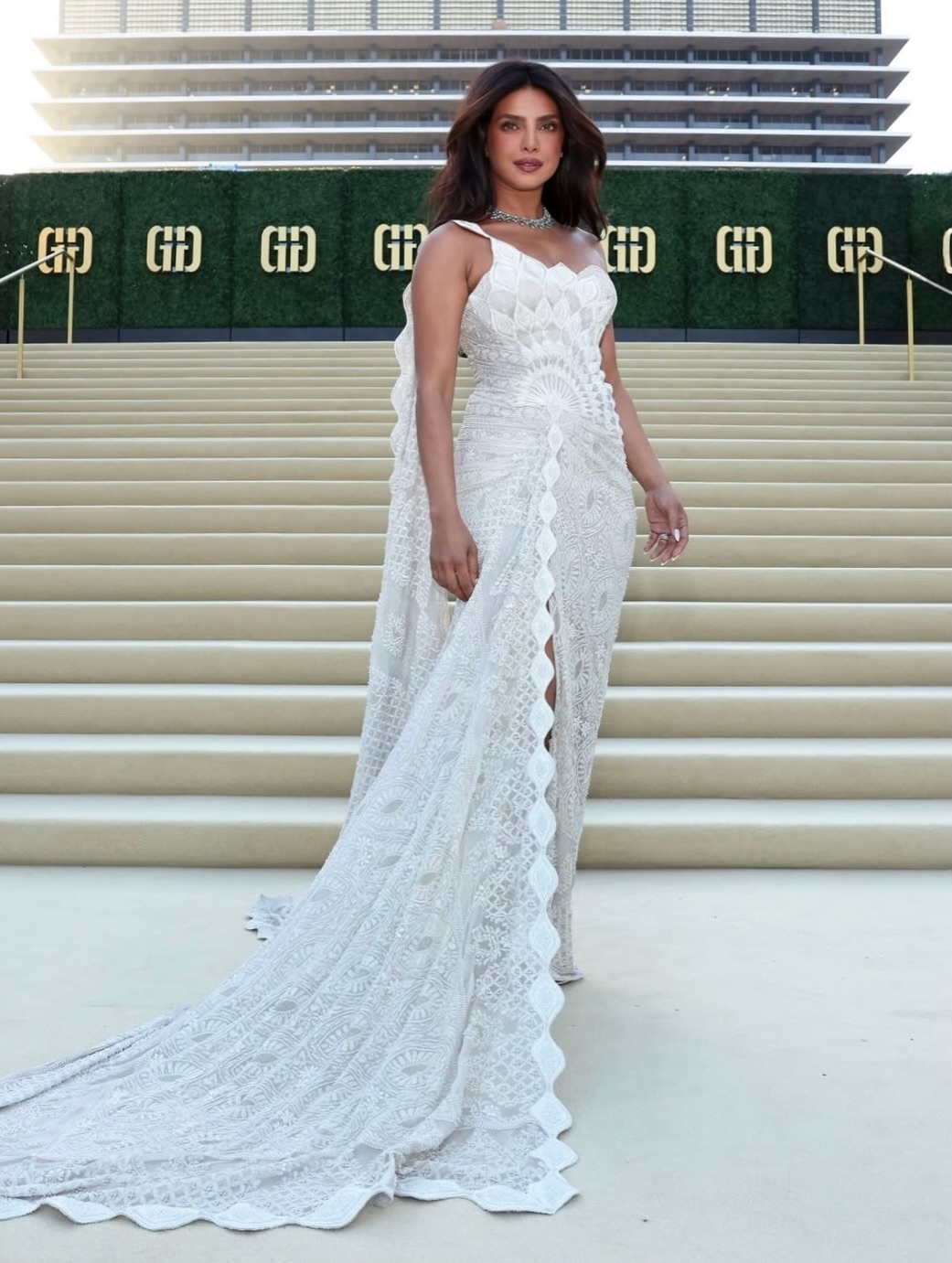
The dress she wore that evening was not pulled from a rack or borrowed from luxury brands for a photo op. It was built, thread by thread, with her story woven into every inch.
A Saree With A Past
Designer Amit Aggarwal and stylist Ami Patel had one shared intention when they began working on the look – it had to feel deeply personal to Priyanka’s roots while reflecting the evolution of Indian craftsmanship on an international platform.
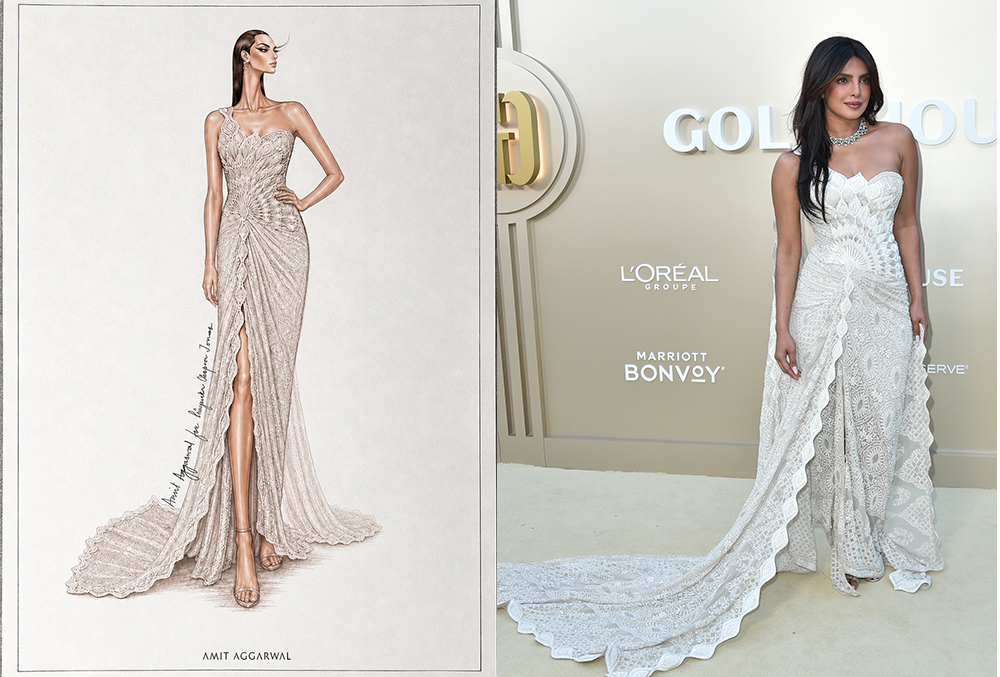
The answer came in the form of a saree that was already two decades old, a textile that carried memory before a single new stitch was added. Aggarwal chose to transform it into a full couture gown, letting the garment’s existing history become part of its new identity. What had already lived a life was now being given another one.
Chikankari: The Craft That Chose Her
Priyanka’s roots in Uttar Pradesh made the choice of Chikankari feel almost inevitable. The hand-embroidery tradition native to Lucknow is known for its delicacy, its fine detailing, and the extraordinary patience it demands. It is a craft historically kept alive by women, passed between hands and generations without much fanfare. For a gown that would eventually go on to mark 25 years of a woman who has carried Indian identity into every room she has walked into, it was exactly the right language.

The embroidery work alone took over six weeks. Women artisans spanning multiple generations worked entirely by hand across every surface of the garment. The finished piece is as much theirs as it is anyone else’s.
Where Mughal Architecture Meets DNA
Aggarwal drew inspiration from two very different worlds and found what they had in common. Mughal jali patterns, known for their geometric precision, were brought into conversation with the spiral structure of human DNA helix. The idea was simple – ancient ornamentation and modern design are not as far apart as they seem. Both follow patterns that exist in nature.
Also Read: Discover India’s Textile Legacy: 6 Books You Shouldn’t Miss
View this post on Instagram
At the centre of each embroidered motif, the design fans outward like rays of sunlight, creating a sense of movement across the fabric. Over the softness of the Chikankari base, Aggarwal added sculptural corsetry, rubber cord detailing, glass beadwork, and industrial materials. The contrast was entirely intentional. The delicate held up by the structural, the fragile given a spine.
The Honour That Called For Something Extraordinary
The ivory palette was not a safe or neutral choice. It was chosen for what it quietly communicates – rarity, resilience, light. Chikankari does not block light, it lets it through, diffuses it.
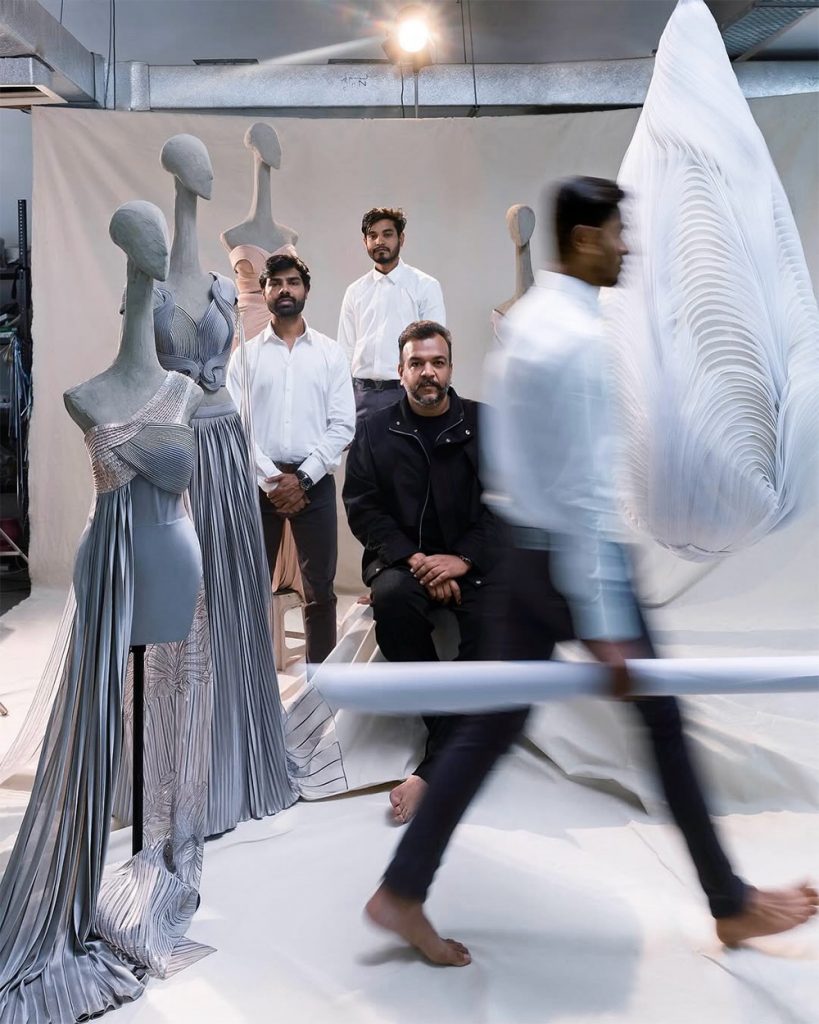
Aggarwal saw that quality as a reflection of Priyanka herself, someone who has spent 25 years evolving without ever dimming. In his own words: “For Priyanka, the translucency of the textile juxtaposed with the strength of structure embodies a dichotomy that exists within all of us. Softness and resilience coexisting simultaneously, and ultimately creating an ensemble that reflects both her journey and her spirit.”
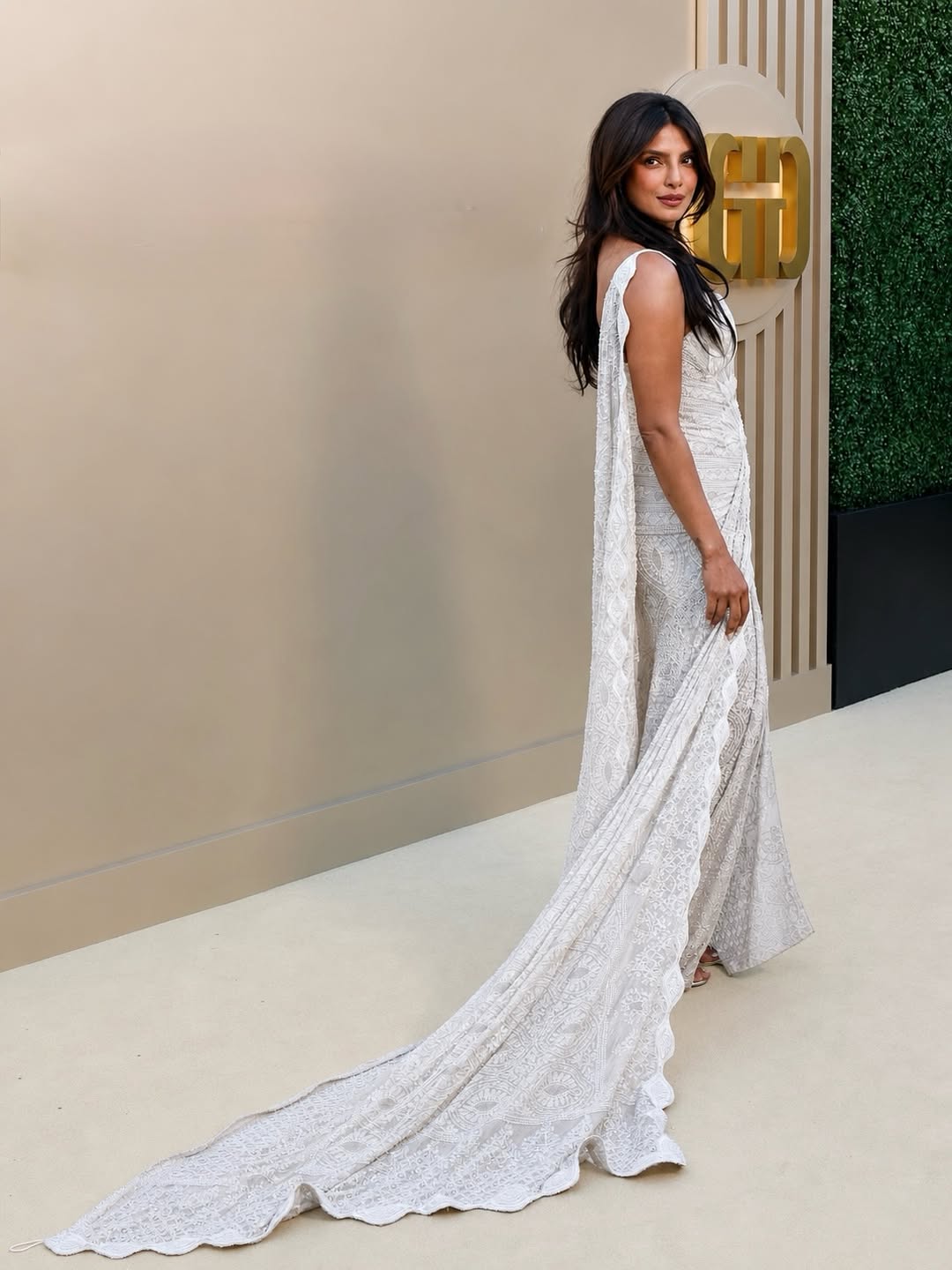
What was delivered on that red carpet was not simply a couture moment. It was a 20-year-old saree given new life, a craft rooted in Lucknow travelling to a gala in Los Angeles, and a 25-year journey compressed into a single garment. The gown did what the best fashion occasionally manages to do. It said something that words would have taken much longer to get to.