Sonali Bendre’s Throwback in Abu Jani Sandeep Khosla Still Redefines Restraint
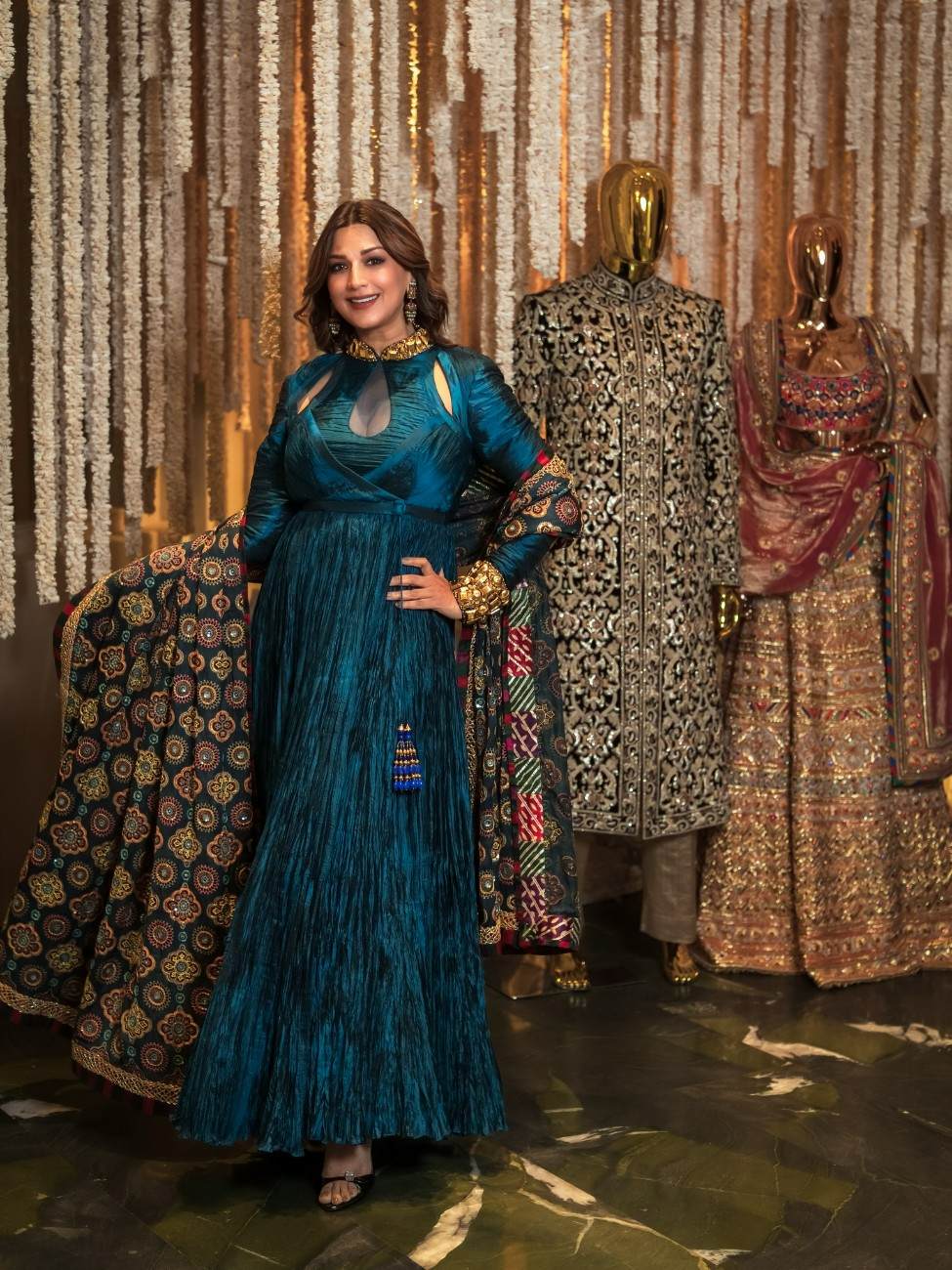
Sonali Bendre revisited a throwback photo in a teal Abu Jani Sandeep Khosla gown to mark the label’s 40th anniversary. Its restrained embroidery, sculpted silhouette and minimal jewellery offer a fresh take on Indian luxury dressing, where considered craft and subtlety can make a stronger statement than excess.
Walk into most Indian red carpet archives from the last decade and a pattern emerges quickly: shine answering shine, embroidery competing with embroidery. Sonali Bendre’s recent teal gown breaks that pattern, and the reason is worth noticing. That restraint isn’t an absence of effort. It reflects a different set of instructions, one that lines up with how India’s wealthy are increasingly choosing to signal taste: through less, better placed, rather than more.
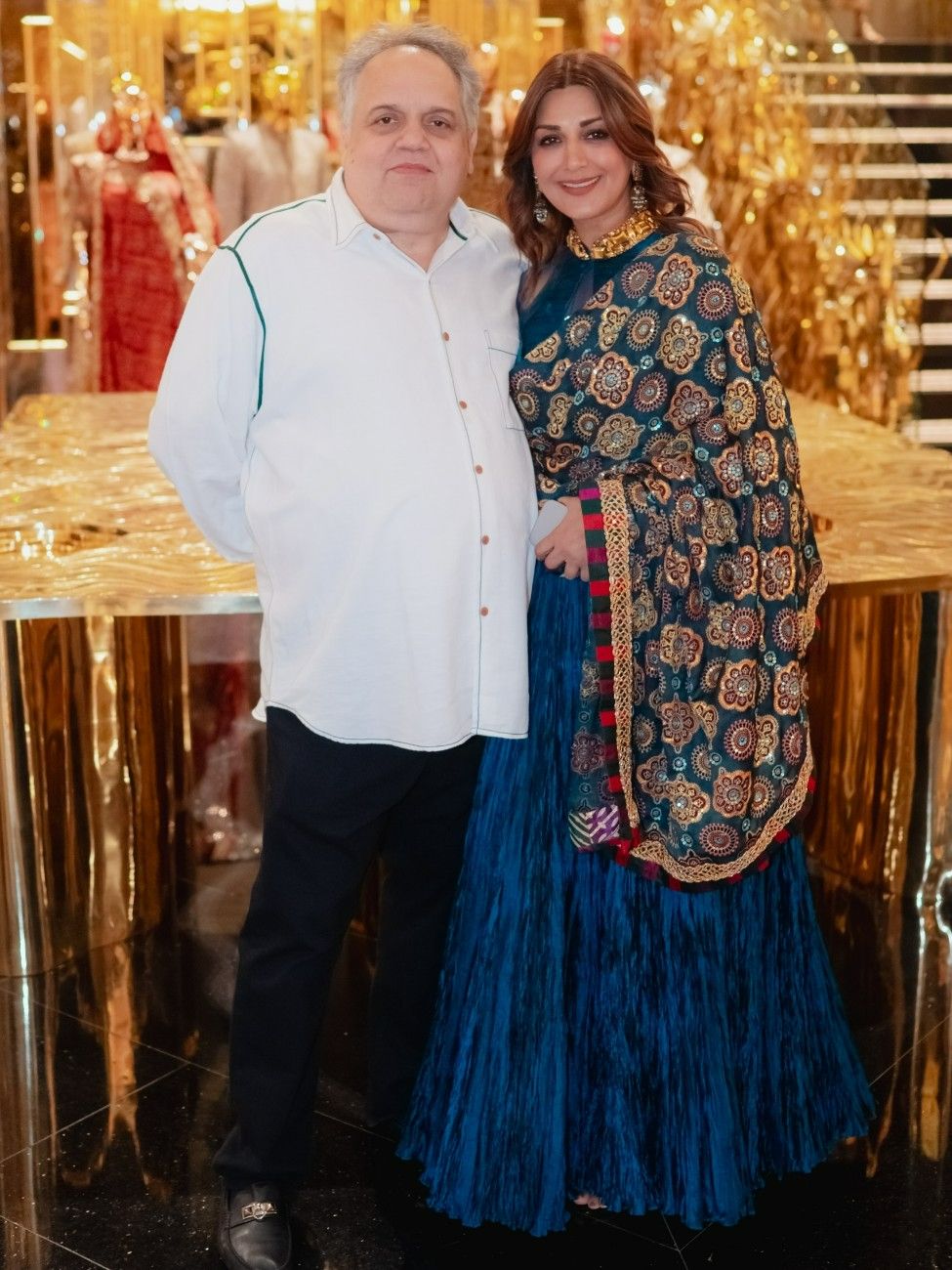
Bendre shared a striking teal design by Abu Jani Sandeep Khosla through a post on Instagram. She wished she could have attended Abu Jani Sandeep Khosla’s fortieth anniversary celebration, calling it a coming together of “beauty, artistry and timeless elegance”. The choice is telling. Abu Jani Sandeep Khosla’s signature runs maximalist, the very grammar her gown quietly departs from. Her restraint looks less like a rejection and more like a considered alternative.
The Old Wealth Grammar
For decades, “dressed up” in Indian luxury circles has often meant dressed loud: all over embellishment, maximum embroidery coverage, jewellery stacked to match. The outfit’s job was to communicate, unambiguously and from across the room, exactly how much had gone into it.
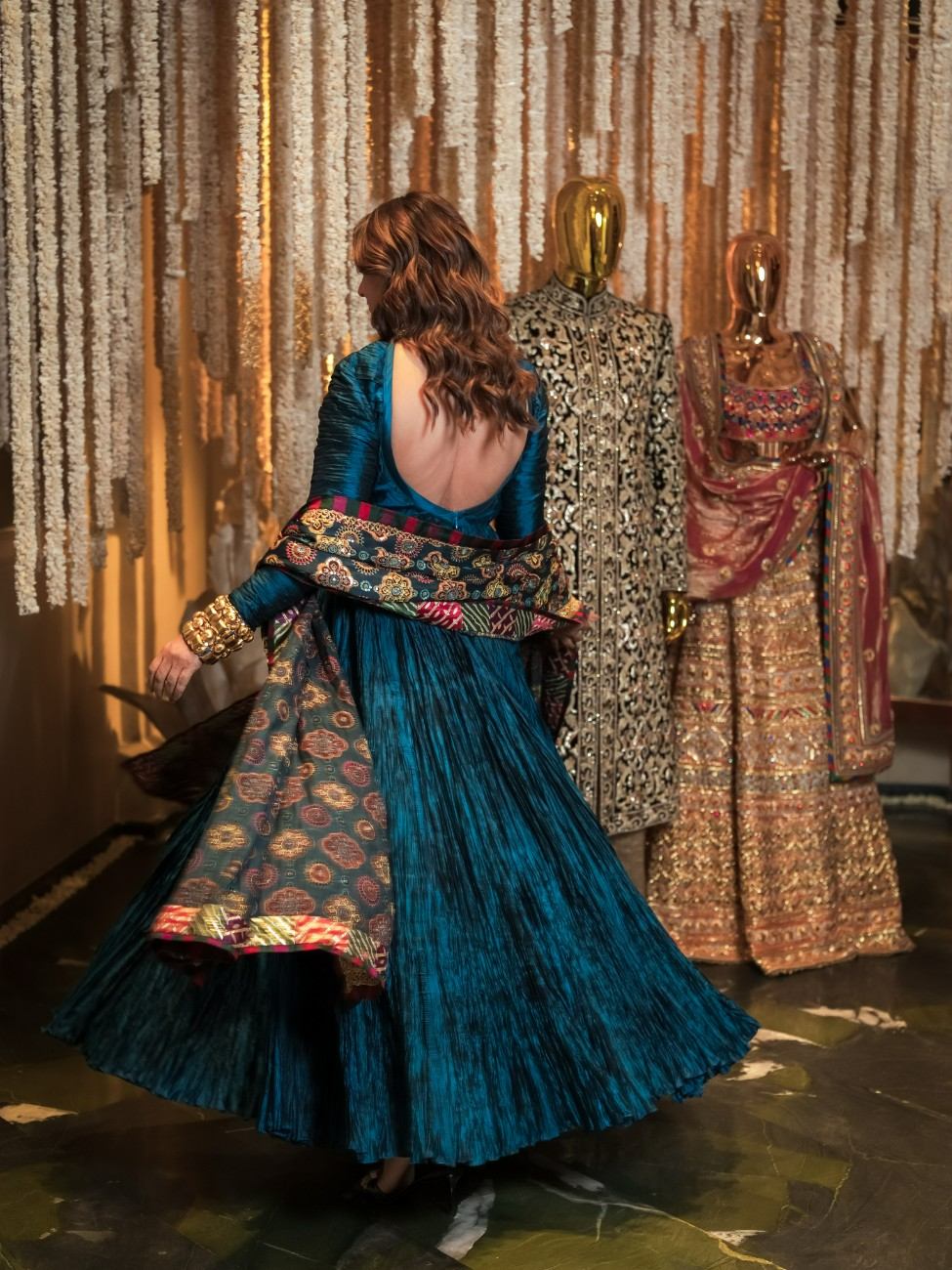
Bendre’s gown speaks a different dialect. The embroidery sits in restrained, deliberate panels rather than covering the dress, and the jewellery is a single close set piece, not a full suite. The drama comes from the cut, the cutout, the pleats, the proportion, not from surface decoration.
Also Read: How Abu Jani and Sandeep Khosla Are Bringing 40 Years of Craft to Life
Global “quiet luxury” conversations have mostly centred on Western minimalism: logo less bags, unbranded cashmere, the aesthetics of old money that doesn’t need to announce itself. That framing has never quite translated to Indian eveningwear, where craft visibility has historically been the luxury marker rather than something to downplay.
This look suggests a local variant taking shape: not the absence of embellishment, but its rationing. The craft is still present, arguably deployed more thoughtfully than in a fully embroidered gown, but edited down to a few high impact placements. It’s restraint applied to a vocabulary built on excess.
A Telling Contrast
For India’s luxury consumer, increasingly well travelled and exposed to global minimalist codes, this middle path may prove more durable than either extreme.
Also Read: Abu Jani and Sandeep Khosla Make Their Jewellery Debut With Dimple Kapadia as Muse
Full maximalism reads as effortful in rooms that also value restraint; imported Western minimalism reads as borrowed on occasions that still call for visible craft.
The next marker of taste in Indian luxury dressing may not be how much craftsmanship a garment can hold, but how much a wearer is willing to leave out.