Audi RS 5 Unveiled at Miami Grand Prix 2026: Engine, Features, And Global Buzz
The new Audi RS 5 is not just a fast car, it is Audi’s declaration that performance and electrification can happily share the same pit lane
With Formula 1 as its stage and Miami as its launchpad, this plug-in hybrid monster arrives with speed, theatre, and very little interest in subtlety. There are sensible ways to introduce a new car. A quiet showroom reveal, a polished press release, perhaps a few carefully lit photographs in the Alps. Then there is the Audi RS 5 approach—unveil it at the 2026 Miami Grand Prix, strap journalists and VIPs into it, and send it around an F1 circuit at speeds that rearrange internal organs. Honestly, if you are launching the future of performance, that is exactly how it should be done. The new RS 5 is not merely another fast Audi with angry styling and a badge that frightens accountants. This is Audi Sport’s first high-performance plug-in hybrid, and it signals the beginning of a rather serious new chapter. Think of it as the point where German engineering stopped asking permission and simply arrived with 639 horsepower.
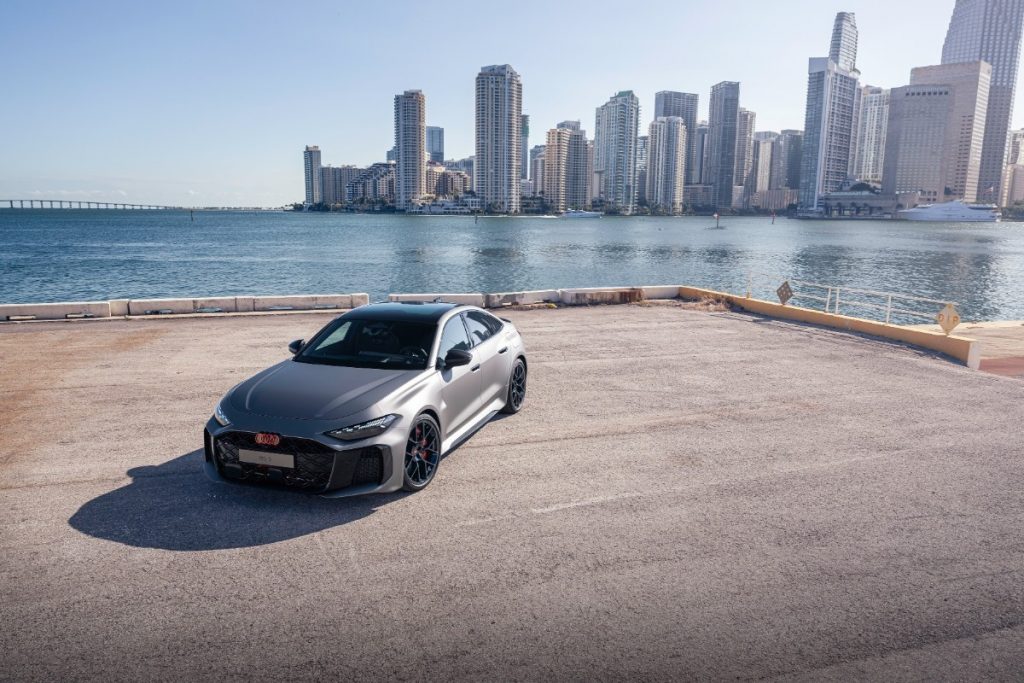
At the heart of it sits a 2.9-litre V6 biturbo engine producing 510 horsepower, joined by a 130 kW electric motor that adds instant shove and moral superiority. Together, the system produces a maximum output of 470 kW, or 639 horsepower in proper language, and pushes the car to a top speed of 285 km/h. That is not quick. That is “call your life insurance provider before launch control” quick.
Also Read: The Hidden Costs Of Hypercar Ownership: Why Maintenance Is As Expensive As The Purchase
Marco Schubert, Member of the Board of Management, Sales and Marketing, AUDI AG said, “Formula 1 is captivating more and more people around the world. We’re leveraging this momentum to infuse the Audi brand with emotional appeal. At the same time, we aim to achieve sustainable growth in the US, and to that end, we’re already bringing our transformation to life on the road. The Audi Q9, tailored for the US market, will be the flagship of our portfolio. I’m already looking forward to its launch, which will take place later this year.”

But numbers alone do not make a great performance car. Plenty of machines can go fast in a straight line. What matters is what happens in corners, where dignity usually goes to die. This is where Audi introduces its headline act: quattro with Dynamic Torque Control. It sounds like something invented by a villain in a Bond film, but it is actually a world-first technical innovation involving electromechanical torque vectoring. In plain English, it sends power precisely to the wheel with the most grip, which means the car turns in harder, exits faster, and feels far more agile than something with this much power has any right to. Audi says it creates a razor-sharp and always controllable driving experience. Clarkson translation: it lets you feel like a hero without immediately becoming a cautionary tale.
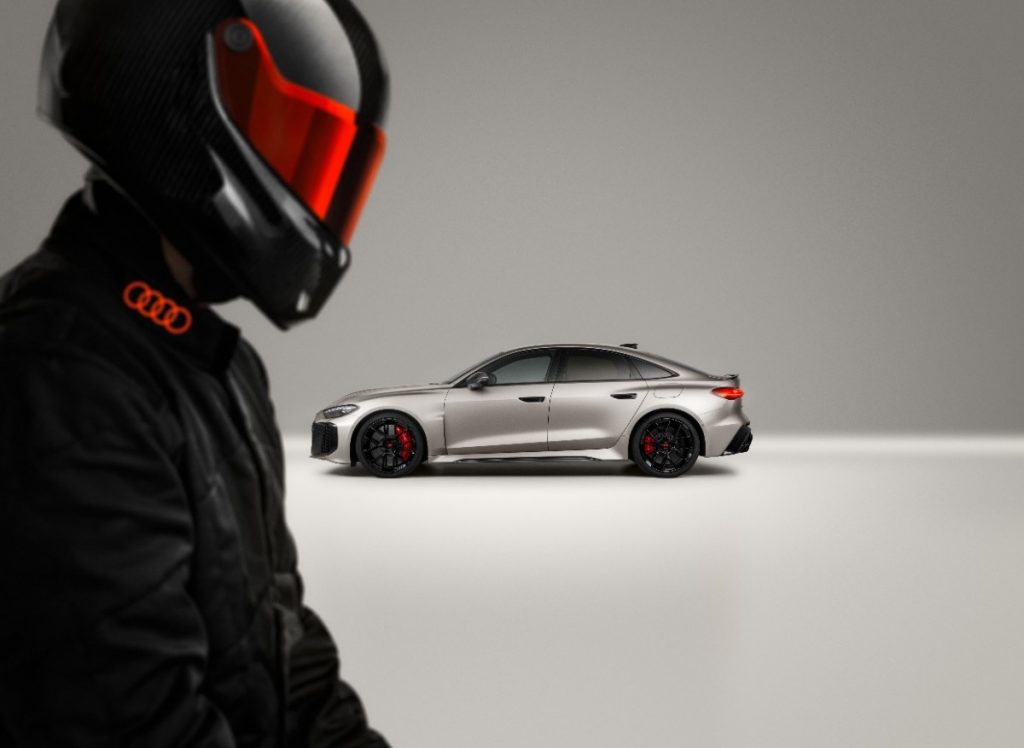
Its Formula 1 connection is not decorative either. The RS 5 now serves as the official car for the F1 Pirelli Hot Laps programme, where guests get to experience Grand Prix circuits alongside professional racing drivers. Importantly, these are production cars with no additional technical modifications. No secret race suspension, no sneaky lightweight prototype nonsense. Just the real thing, prepared and maintained by Audi Sport engineers who probably judge your driving silently. Two men trusted with demonstrating this are Dindo Capello and Markus Winkelhock, which is reassuring because both have spent years doing terrifying things very quickly. Capello won the Sebring 12 Hours five times and dominated the American Le Mans Series, while Winkelhock is a three-time Nürburgring 24-hour winner and once briefly led a Formula 1 race in 2007, which is the sort of pub story nobody else is allowed to tell.
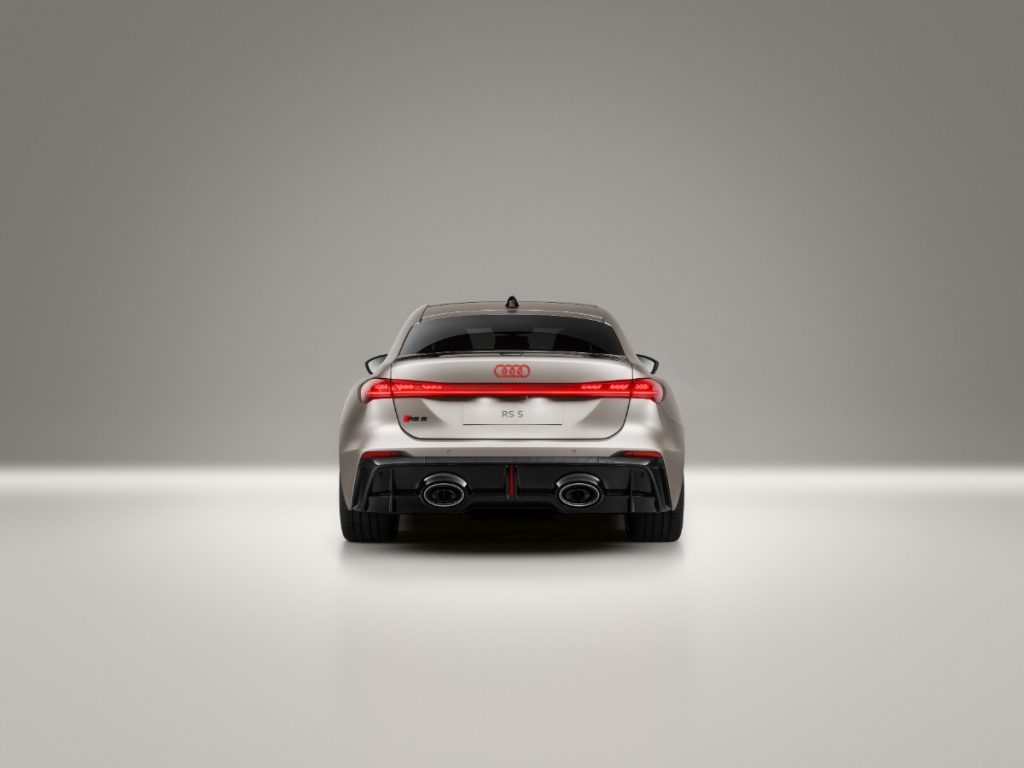
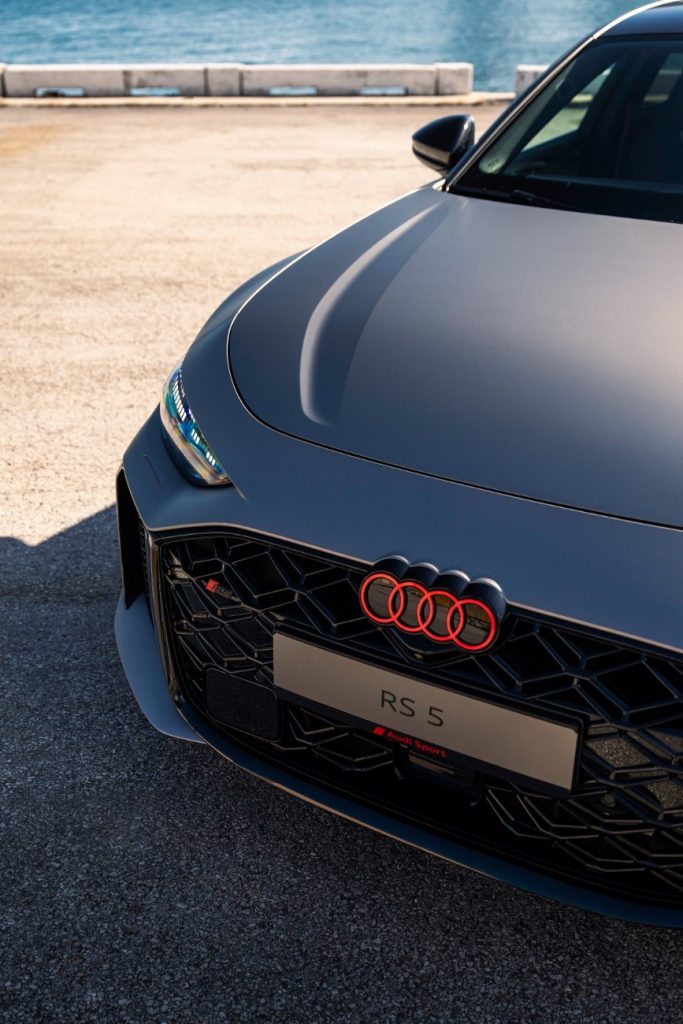
Visually, the RS 5 also leans into its motorsport theatre. Finished in a special Titanium colour with subtle Lava Red rings on the front, rear, and wheel hub caps of the black wheels, it borrows cues from the Audi R26 race car. It looks fast while parked, which is a very important and scientifically proven category. The Miami debut is also strategic. Formula 1 is booming in the United States like never before. Miami, Austin, and Las Vegas were all sold out in 2025, while television ratings hit record highs. Audi knows this, and with its upcoming full F1 works entry, the brand is using that momentum brilliantly. Alongside the Grand Prix, it activated experiences in Miami’s Wynwood Art District and even launched the first drop of the adidas x Audi Revolut F1 Team collection, because apparently now your sneakers need a paddock pass too.
More importantly, Audi wants America. With the new Q9, refreshed Q7, and updated Q3 lineup, it is expanding its SUV dominance while using halo cars like the RS 5 to remind people that performance still matters. And that is the point of this car. The RS 5 is not just a plug-in hybrid performance sedan. It is Audi standing in the paddock, adjusting its gloves, and saying electrification does not have to be boring. It can still be loud. It can still be dramatic. And, if done properly, it can still leave tyre marks outside the future.