

There are a few on the Cannes red carpet who have quite literally nailed Indian representation. Fashion designer turned content creator Ishita Mangal is one of them. From dishing out a Bandhani with a metallic bralette, Kanjeevaram saree paired with a Victorian corset top, to an Ajrakh gown, she has gracefully blended the beauty of Indian handwork with Western aesthetics.
View this post on Instagram
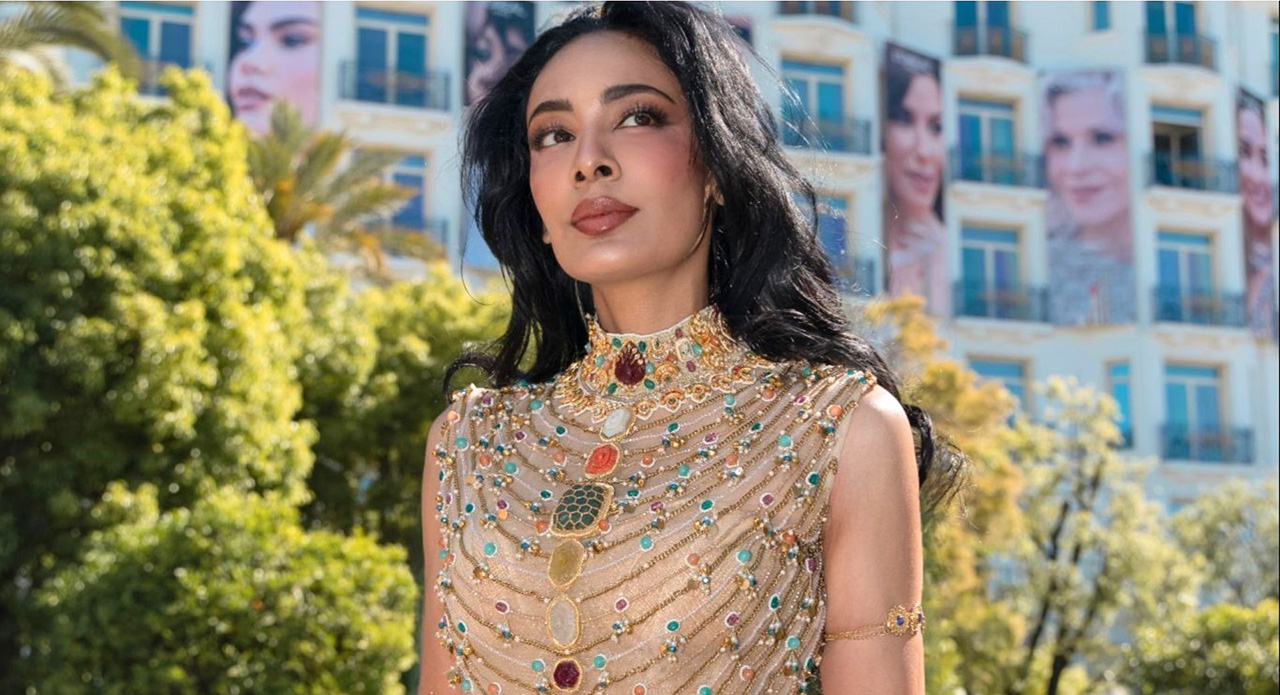
Beyond fashion, she also spotlights Indian jewellery with a modern twist. For her second look from her debut at the Cannes Film Festival 2026, Ishita borrowed inspiration from the opulence of Navratan jewellery. She wore a word Navratan necklace featuring nine gems: ruby, pearl, red coral, emerald, yellow sapphire, diamond, blue sapphire, hessonite and cat’s eye. The look features a fitted dark beige gown with Navratan jewels placed at the centre of both the front and back, while a ruched skirt adds softness and movement to the silhouette.
Story Behind the Navratna Outfit at Cannes
Ishita’s Navratna jewellery look is rooted in a painting that immediately captured her imagination while she was scrolling through Pinterest.
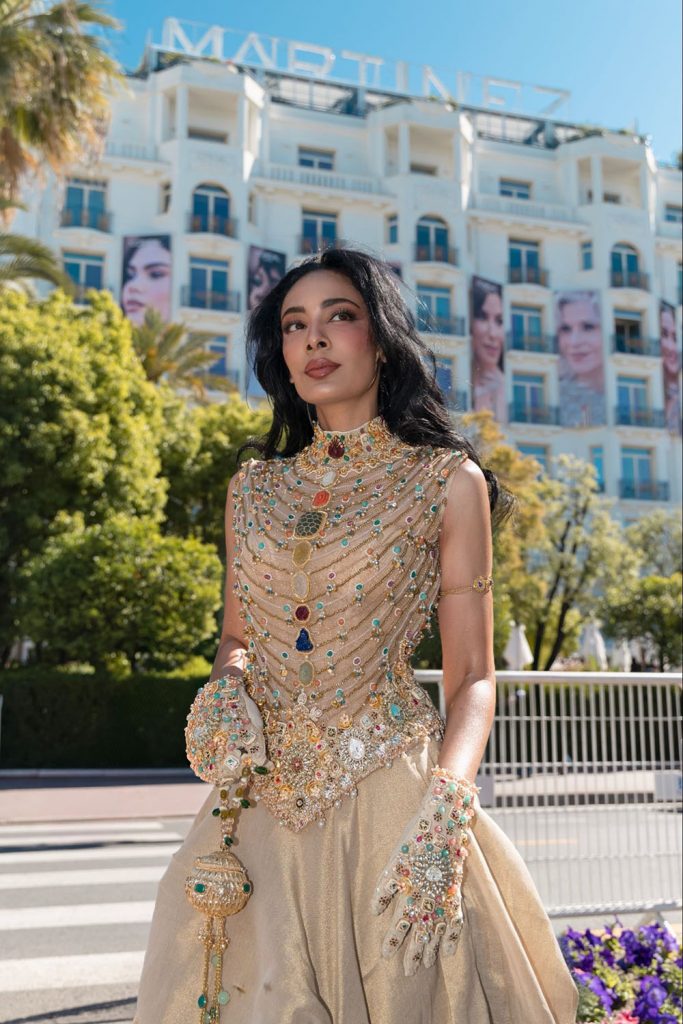
“The artwork tells the story of Princess Chanda, celebrated for her beauty and charm, who would sit at her balcony each night confiding in her parrot about the man she loved. Over time, the parrot falls in love with Chanda and, consumed by jealousy, begins biting and tearing her dupattas night after night until she has none left,” say the show notes on her ensemble,” say the notes on her look. Further, jewelled gloves completed her look, adding a dramatic and regal charm.
“When I told Palak Savani of label Vastra about Princess Chanda and what I wanted to create, I could feel how invested they were. They got it immediately. What they put together genuinely left me speechless. Every detail of this three-piece, the corset, the flouncy skirt and the over top, felt intentional and considered. They captured the essence of Navratna in a way I couldn’t have imagined alone, “ she writes on Instagram.
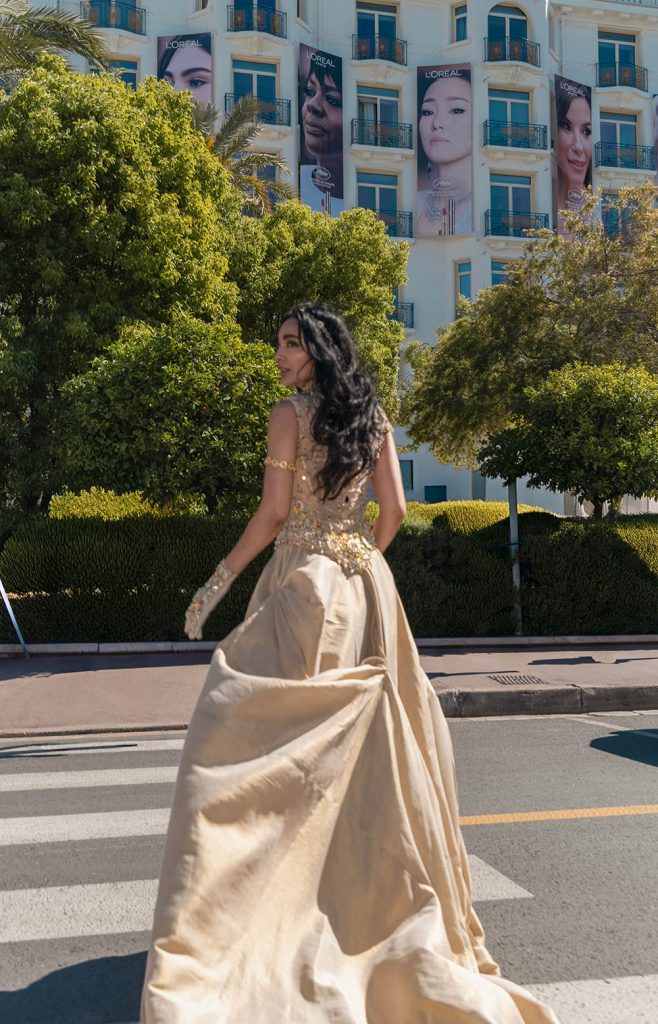
Ishita is “too involved” in each of her looks. “Borderline irritatingly involved. I’m involved in everything: references, textiles, storytelling, jewellery, silhouettes, drapes, hair, the emotional mood, the historical context, and even the jokes I’ll crack while wearing it,” she says, adding, “For me, fashion is storytelling. Especially at Cannes. I don’t want to just ‘wear a pretty outfit.’ I want every look to say something about India, craftsmanship, culture, modernity, or even our contradictions as a country. I also think that because I come from content and comedy, I naturally look at clothes cinematically. I’m always asking what people will feel when they see this. Will they pause? Will they remember it?”
History of Navratan jewellery
Navaratna is a Sanskrit term derived from ‘nava’, meaning nine, and ‘ratna’, meaning gems. The concept refers to a cosmic combination of nine gemstones, each associated with one of the celestial bodies in astrology, collectively known as the Navagrahas. These gemstones are believed to symbolise cosmic balance and planetary energies. Ruby, also known as Manik, represents the Sun (Surya), while Pearl or Moti symbolises the Moon (Chandra).
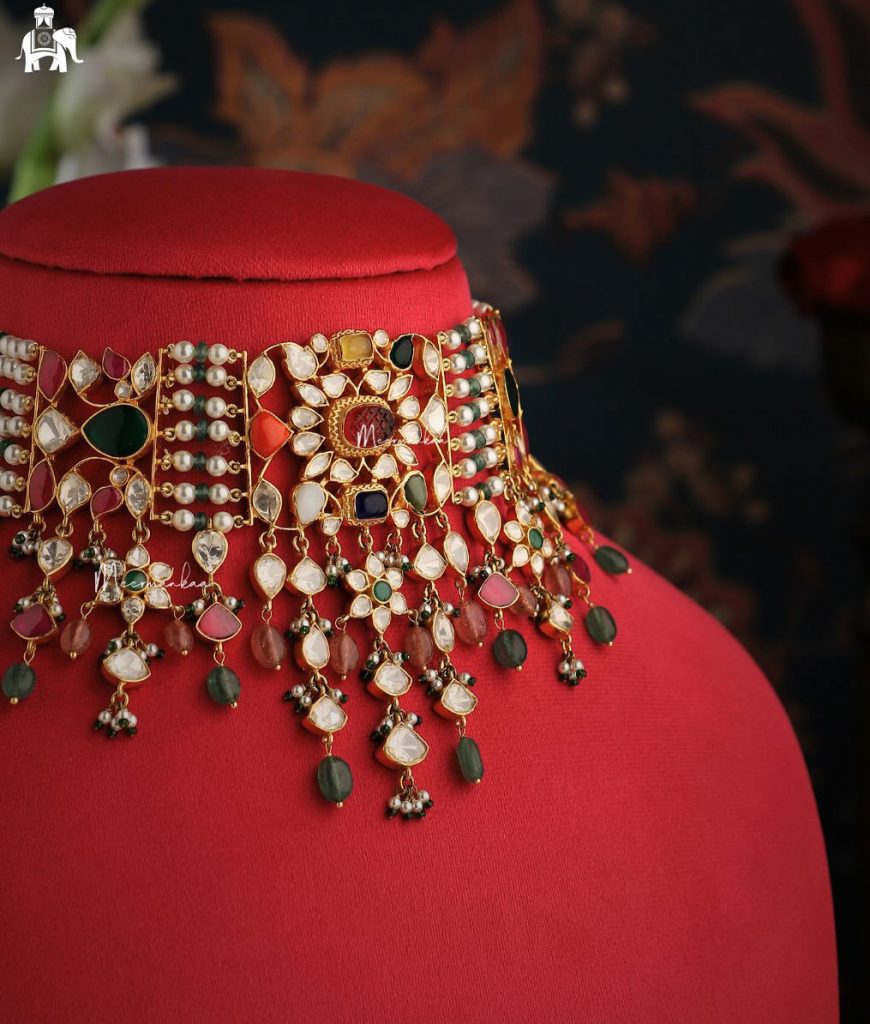
Emerald, called Panna, is associated with Mercury (Budha), and Red Coral or Moonga represents Mars (Mangala). Yellow Sapphire, known as Pukhraj, is linked to Jupiter (Brihaspati), whereas Diamond or Heera symbolises Venus (Shukra). Blue Sapphire stands for Saturn (Shani), Hessonite is linked with Rahu, and Cat’s Eye, also known as Lehsuniya, symbolises Ketu.
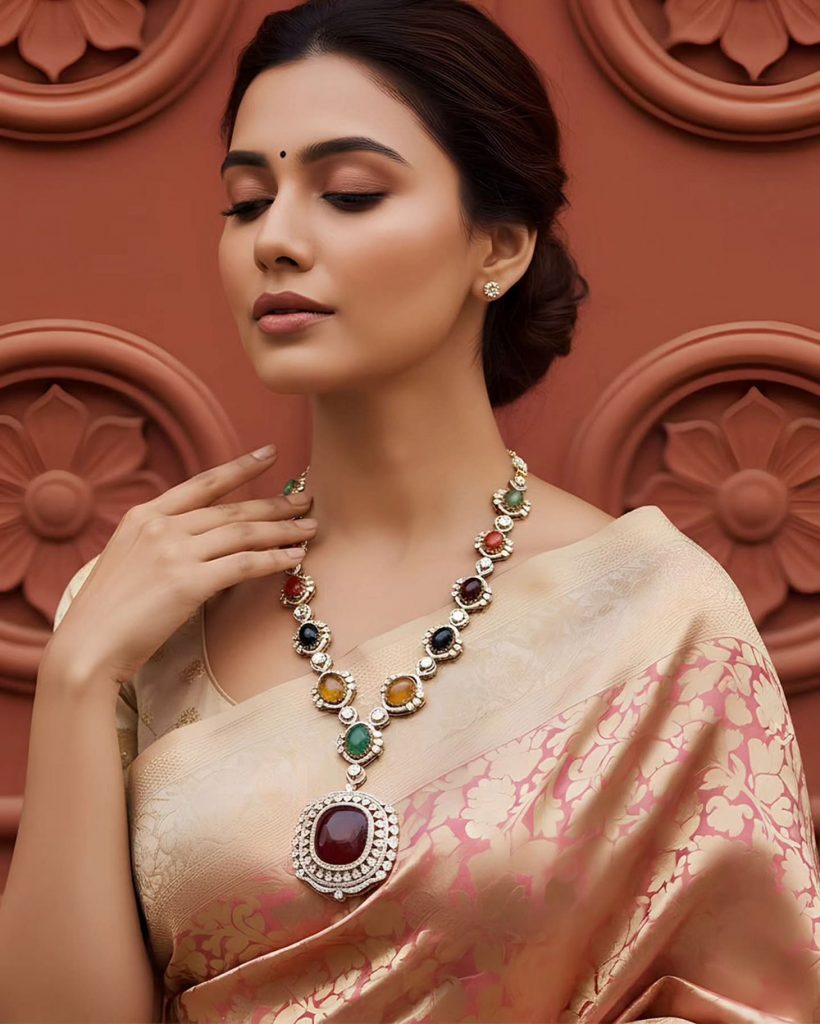
Jewellery crafted using these nine gemstones is known as Navaratna jewellery. It is commonly designed as rings, necklaces, pendants, earrings, bracelets, chokers, armlets and prayer beads. In ancient India, Navaratna jewellery was primarily worn by kings and royal families, often as protective amulets. The nine gemstones were believed to collectively invoke the powers of the cosmos and symbolise the totality of the universe.
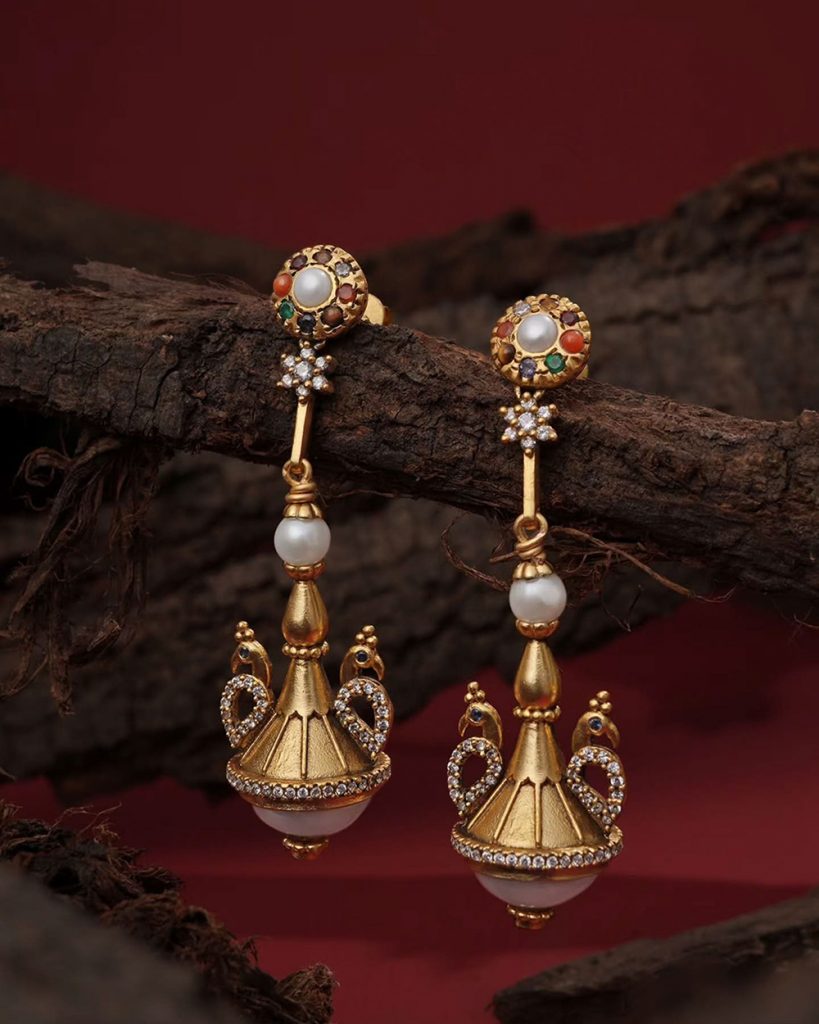
While the exact origin of Navaratna jewellery remains uncertain, the tradition spread across several Asian countries, including Thailand, Myanmar, Cambodia, Indonesia, Malaysia, Singapore and Vietnam. However, it continues to hold its strongest cultural and spiritual significance in India.
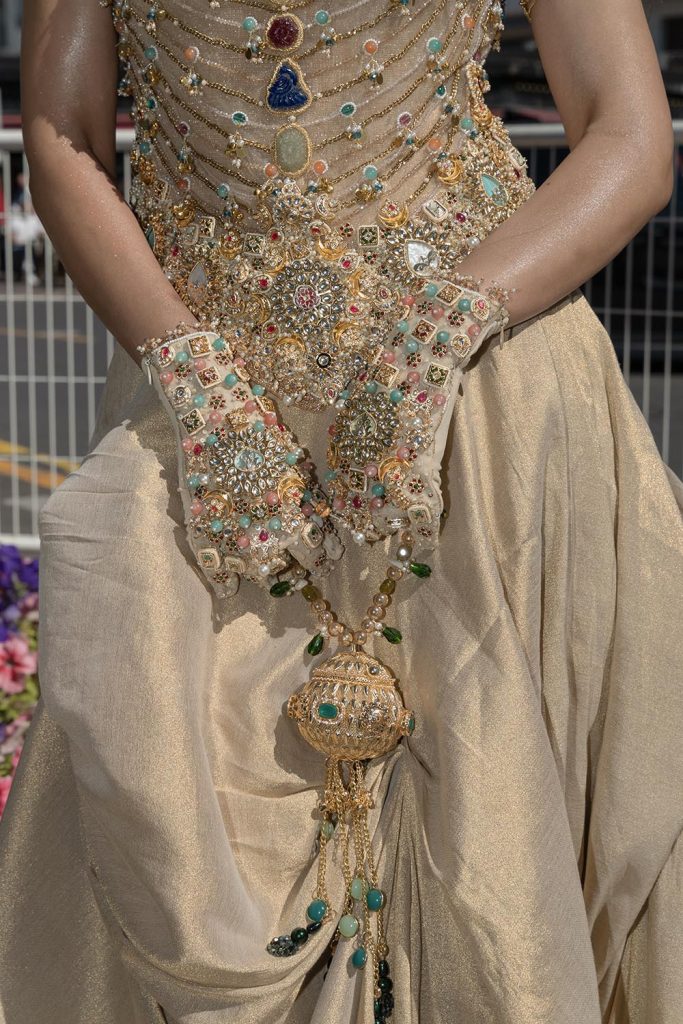
Bringing Navratna jewellery back in focus, Ishita revived India’s most enduring traditions of adornment.