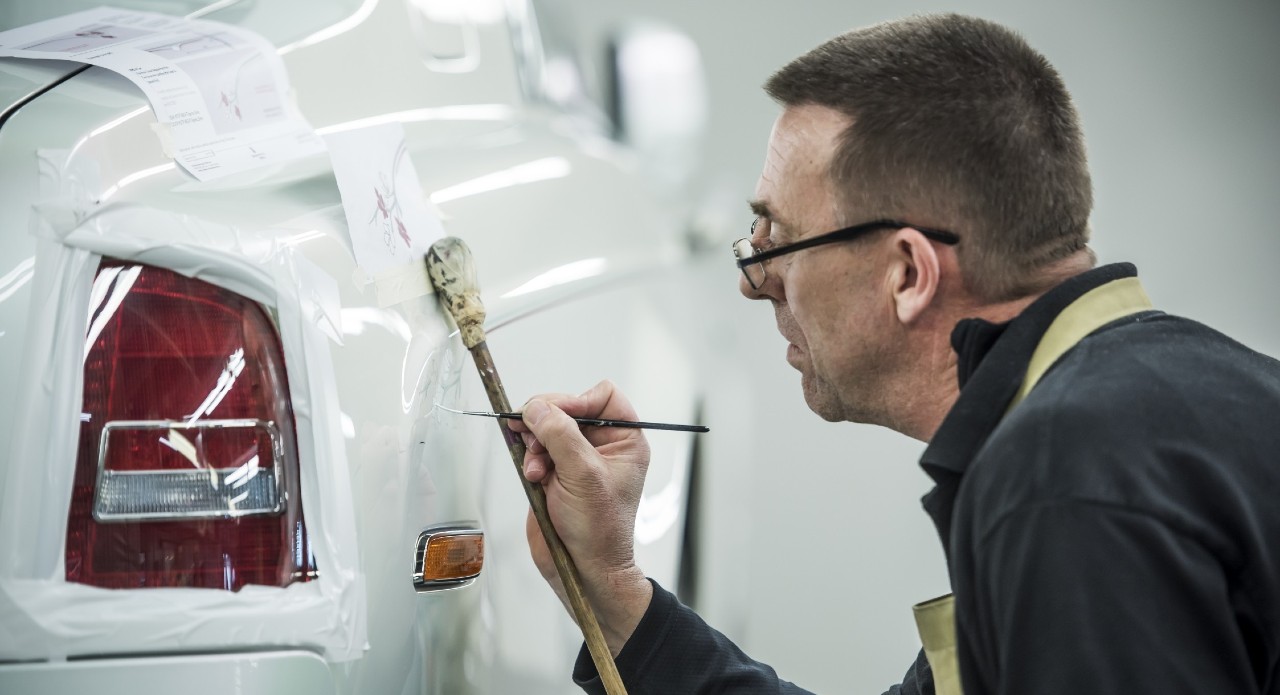


There are certain jobs in the world that sound so absurdly specialised they feel as though they were invented during an especially eccentric lunch at a gentlemen’s club. Falconer to a royal household. Keeper of ceremonial keys. Official tea taster. And then there is Mark Court, whose professional responsibility is to paint a perfectly straight line on the side of a Rolls-Royce. One line, By hand. On a car worth more than most houses.
And if that sounds simple, try drawing a perfectly straight line across a sheet of paper without a ruler. Now imagine doing it on the flawless bodywork of a Rolls-Royce Phantom while knowing that the client has probably specified the exact shade of blue inspired by a Mediterranean sunset witnessed during a holiday on a private yacht. Suddenly, that line becomes rather important.
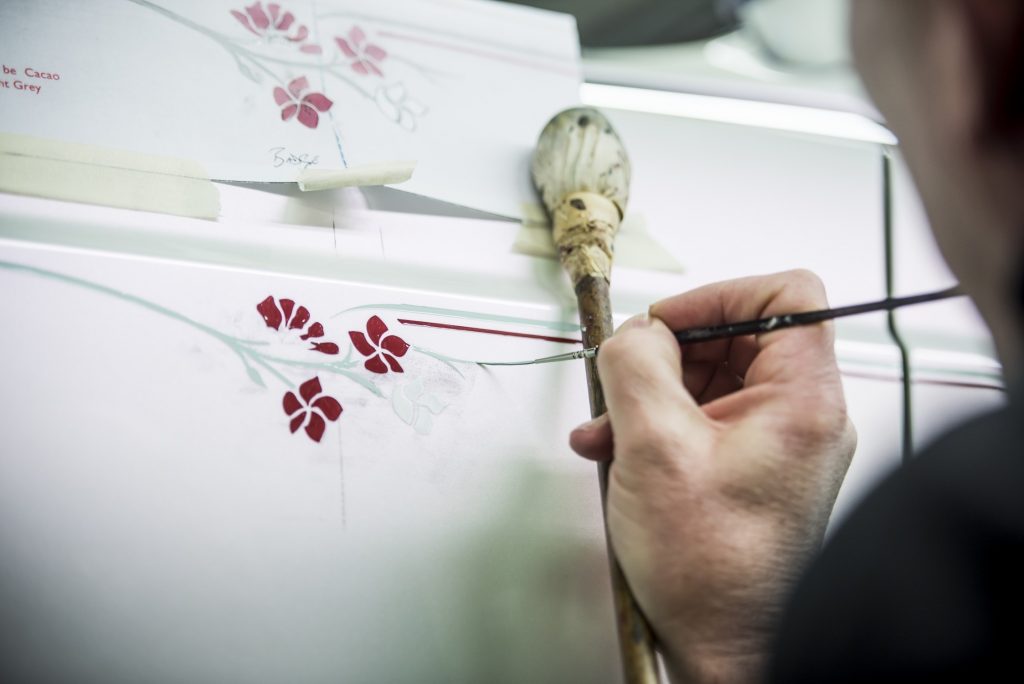
In an age where robots can weld with microscopic precision, artificial intelligence can generate artwork in seconds, and production lines operate with astonishing efficiency, Rolls-Royce continues to entrust one of its most recognisable design signatures to a single human hand. The coachline, that elegant pinstripe running along the length of the car’s body, remains one of the last truly handcrafted details in modern automotive manufacturing. And for more than two decades, Mark Court has been the man responsible for ensuring every one of those lines meets the impossibly exacting standards expected of the world’s most famous luxury car brand.
Also Read: Rolls-Royce Unveils Black Badge Cullinan By Cyril Kongo With Exclusive Hand-Painted Artwork
The irony, of course, is that most people barely notice it. They see the imposing grille. The Spirit of Ecstasy. The endless bonnet stretching toward the horizon. The acres of polished wood and leather inside. Yet the coachline quietly performs an essential role. It visually lengthens the car, accentuates its proportions, and introduces a sense of elegance that designers have relied upon since the earliest days of coachbuilt motoring. It is a detail so subtle that its absence feels more noticeable than its presence.
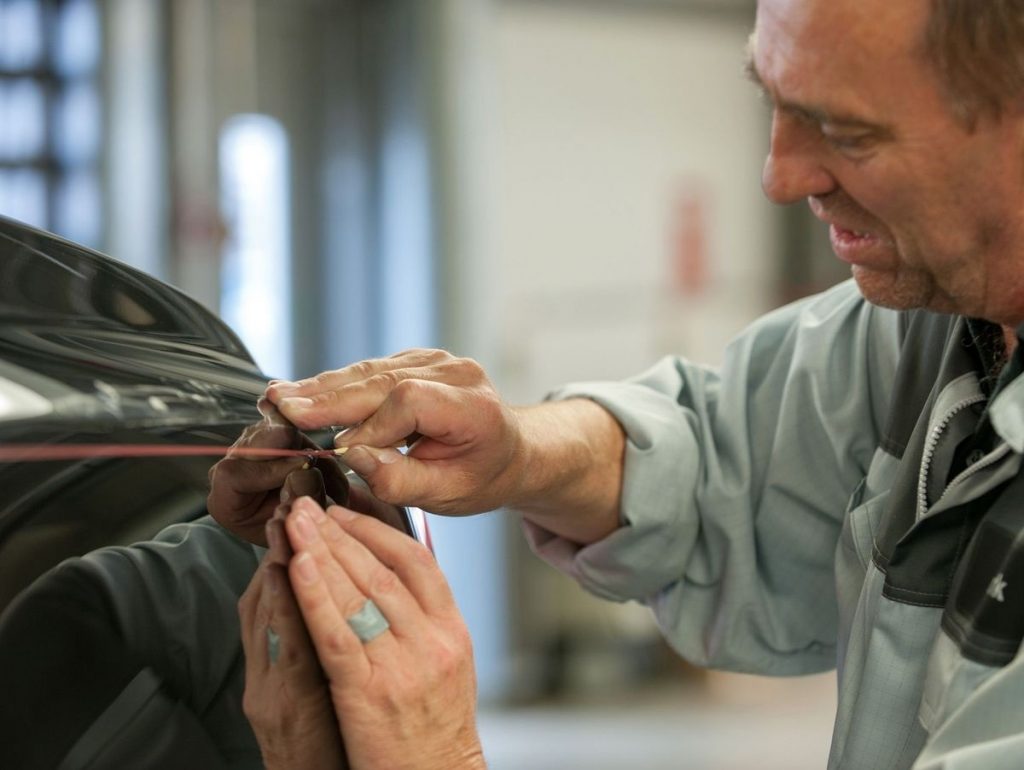
Court’s process is remarkably analogue. There are no automated guides, laser systems, or hidden technological shortcuts. Armed with a specially crafted brush made from squirrel hair, he paints each coachline freehand in a single continuous movement. No masking tape. No stencils. No second attempt. The brush glides across the bodywork with extraordinary precision, creating a line that appears machine perfect yet possesses the tiny nuances that only genuine craftsmanship can deliver.
The astonishing part is not merely the accuracy. It is the consistency. Every Rolls-Royce model presents different dimensions, contours, and challenges. A Phantom requires a different visual treatment than a Cullinan or a Spectre. Yet the line must always feel perfectly integrated into the design. It is less like painting and more like choreography, where movement, rhythm, and muscle memory combine to create something deceptively effortless.
Then there is the matter of personalisation. Modern Rolls-Royce buyers do not simply choose colours. They commission visions. Some request coachlines matched precisely to family crests, rare gemstones, favourite flowers, or even beloved pets. Others incorporate bespoke motifs painted directly into the line itself, transforming a decorative flourish into a personal signature. Court’s role therefore extends beyond technical execution. He becomes part artisan, part interpreter, translating individual stories into paint and metal.
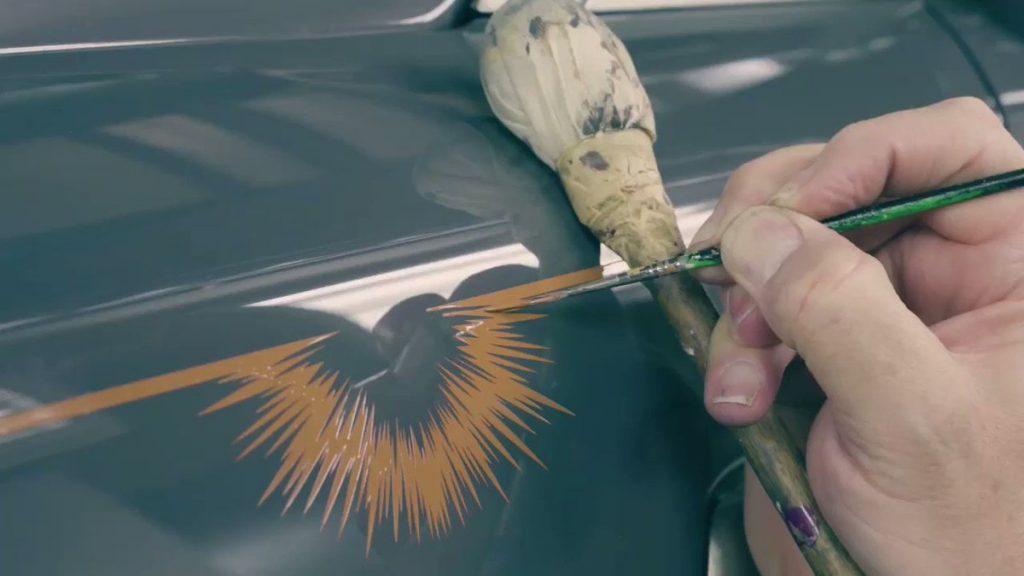
What makes his craft particularly remarkable is that it exists in direct opposition to the modern obsession with speed. Everything about luxury manufacturing today revolves around efficiency, scalability, and optimisation. Yet here is a process that cannot be rushed, automated, or outsourced to software. It demands concentration, patience, and years of accumulated experience. Most importantly, it demands trust in human skill.
That perhaps explains why Rolls-Royce continues to preserve the tradition. The coachline is not merely a decorative stripe. It is tangible proof that some aspects of luxury remain stubbornly resistant to industrialisation. It represents the idea that perfection is not always achieved through technology, but through mastery. And in a world increasingly dominated by algorithms and automation, there is something wonderfully reassuring about the fact that one of the most recognisable details in luxury motoring still begins with a brush, a steady hand, and a man named Mark Court.