From Supercars To Watches: The Legacy Of Bugatti Veyron And Royal Oak
Two engineering marvels that defied all logic at the moment of their creation, both laughed in the face of convention and physics, and proved that obsession, when done properly, becomes legacy
Legacy is rarely obvious at the moment it is created. When Audemars Piguet introduced the Royal Oak, a steel watch with exposed screws priced like precious metal, the industry hesitated. Years later, when Bugatti launched the Veyron with a thousand horsepower and the promise of civility, the automotive world did the same. Both arrived at moments when their respective industries were comfortable, and both quietly disrupted that comfort without apology or theatrics.
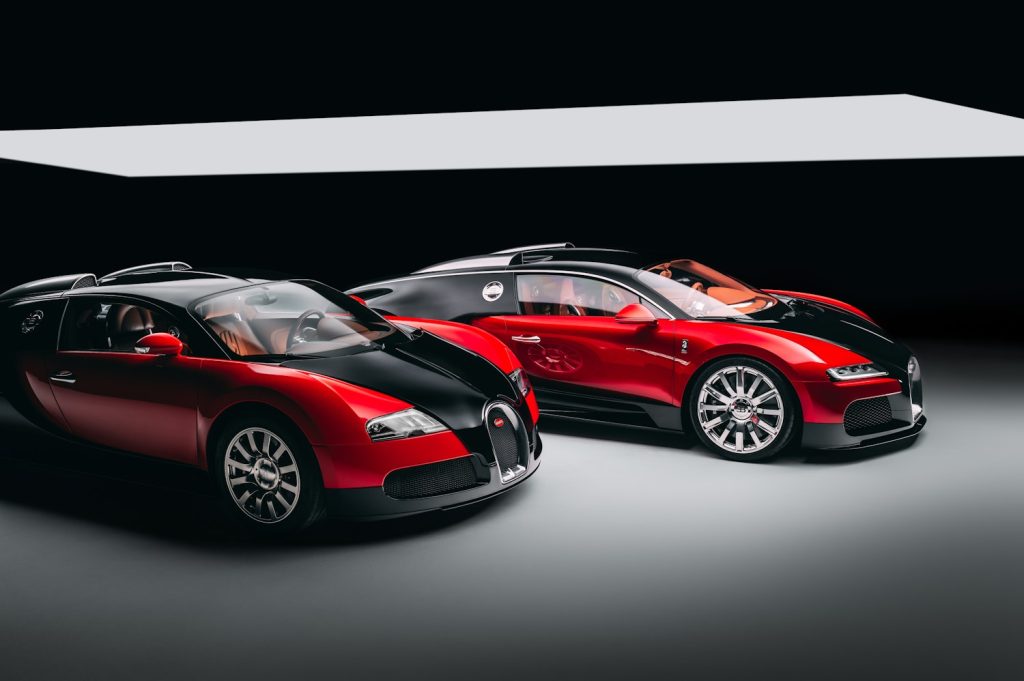
Neither the Royal Oak nor the Veyron was designed to follow precedent. They were conceived to reset expectations, to prove that engineering and design, when pursued without compromise, could redefine what was considered possible. Over time, their influence became undeniable. The Royal Oak reshaped the language of modern watchmaking, just as the Veyron redrew the boundaries of performance and endurance. The Bugatti F.K.P. Hommage brings these two narratives together, not as spectacle, but as a considered tribute to Ferdinand Karl Piëch and to a legacy built on conviction, foresight, and ideas executed so thoroughly that they continue to shape the present.
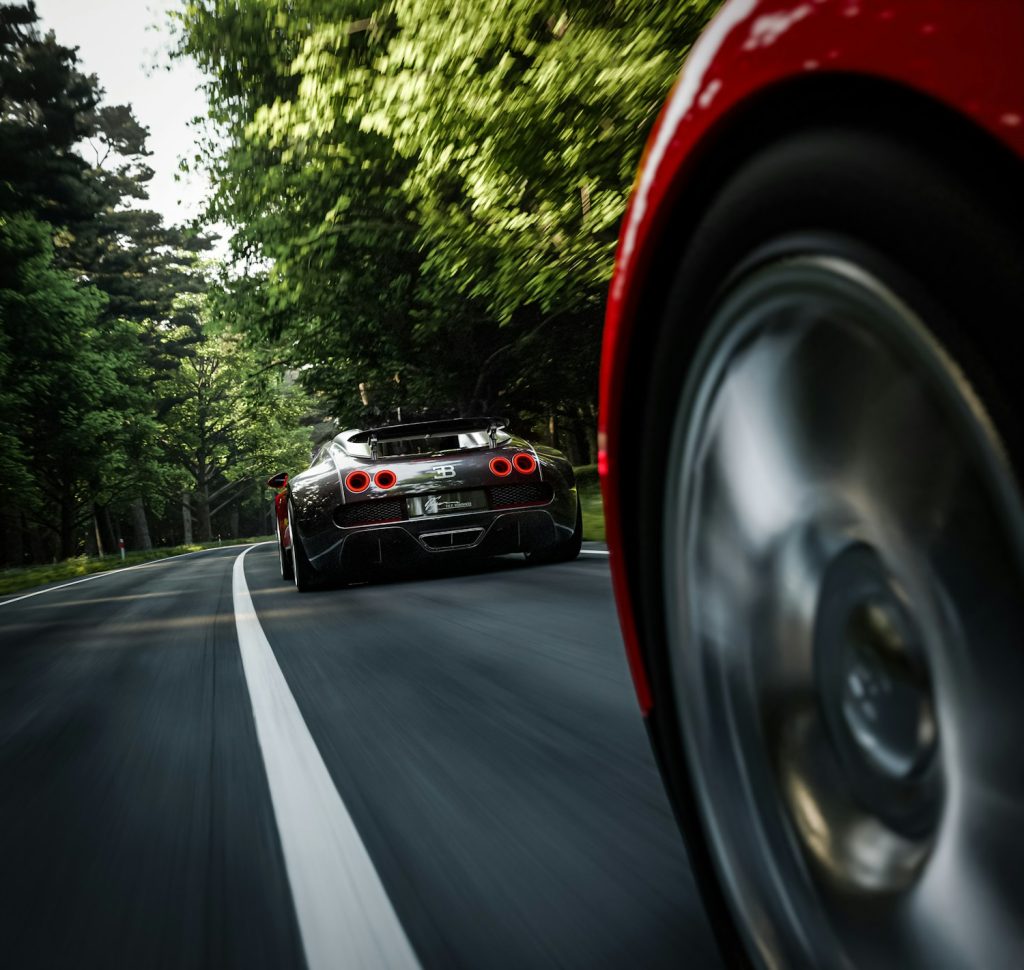
Twenty years ago, Bugatti did something that did not just move the goalposts, it quietly picked them up and carried them somewhere else entirely. The Veyron arrived with 1,001 horsepower, a top speed north of 400 km/h, and the frankly improbable promise that you could cross a continent in comfort after doing so. It did not simply become the fastest production car in the world. It invented a new idea altogether: the hyper-GT. And now, as the second creation under Bugatti’s Programme Solitaire, the F.K.P. Hommage looks back at that moment not with nostalgia, but with intent, honoring both the Veyron’s revolutionary spirit and the man who made it inevitable, Prof. Dr. Ferdinand Karl Piëch.
The origin story of the Veyron has already entered engineering folklore. It did not begin in Molsheim or a design studio, but on a Japanese bullet train, where Piëch sketched what would become the W engine concept. By then, he had already bent conventional engine logic to his will with Volkswagen’s VR architecture, spawning everything from the compact VR6 to the W8, W12, and eventually Bentley’s modern renaissance. The Veyron was simply the final, most uncompromising expression of that thinking: a quad-turbocharged W16 that existed because Piëch believed it should.
What followed was an extraordinary feat of packaging. By staggering cylinders into a short, wide configuration, Bugatti’s engineers compressed what should have been an impossibly long powerplant into just 645 millimeters. The result was not only the Veyron’s compact 2,700 mm wheelbase, but a car that balanced its mass with uncanny composure. All-wheel drive, near-perfect weight distribution, and obsessive cooling solutions produced something rare even today: a machine that was devastatingly fast, yet calm, refined, and usable. When the Veyron first appeared at the 1999 Tokyo Motor Show, its design told a different story to most supercars of the era. Penned by a young Jozef Kabaň under Hartmut Warkuß’s direction, it rejected the aggressive wedge shapes still echoing Gandini’s influence. Instead, the Veyron leaned back. It looked composed, confident, almost relaxed. A thousand-horsepower car that did not need to shout. Two decades on, that Bauhaus-influenced restraint has aged with remarkable grace.
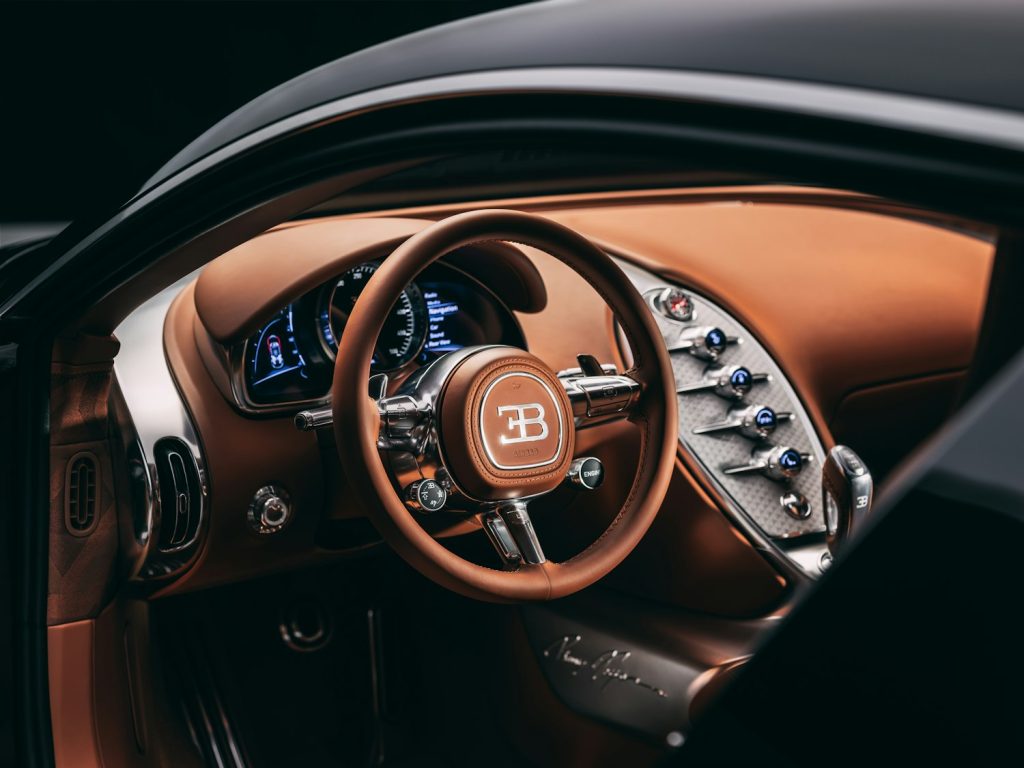
The F.K.P. Hommage builds on this lineage using the most advanced evolution of the W16 ever produced. Its 1,600 hp quad-turbo engine, first seen in the Chiron Super Sport, represents the absolute summit of Bugatti’s sixteen-cylinder journey. Larger turbochargers, upgraded cooling, enhanced intercoolers, and a reinforced gearbox capable of handling monumental torque all serve a single purpose: effortlessness at extraordinary speed. It is the engine that finally delivered on Piëch’s long-standing ambition to exceed 482kmph.
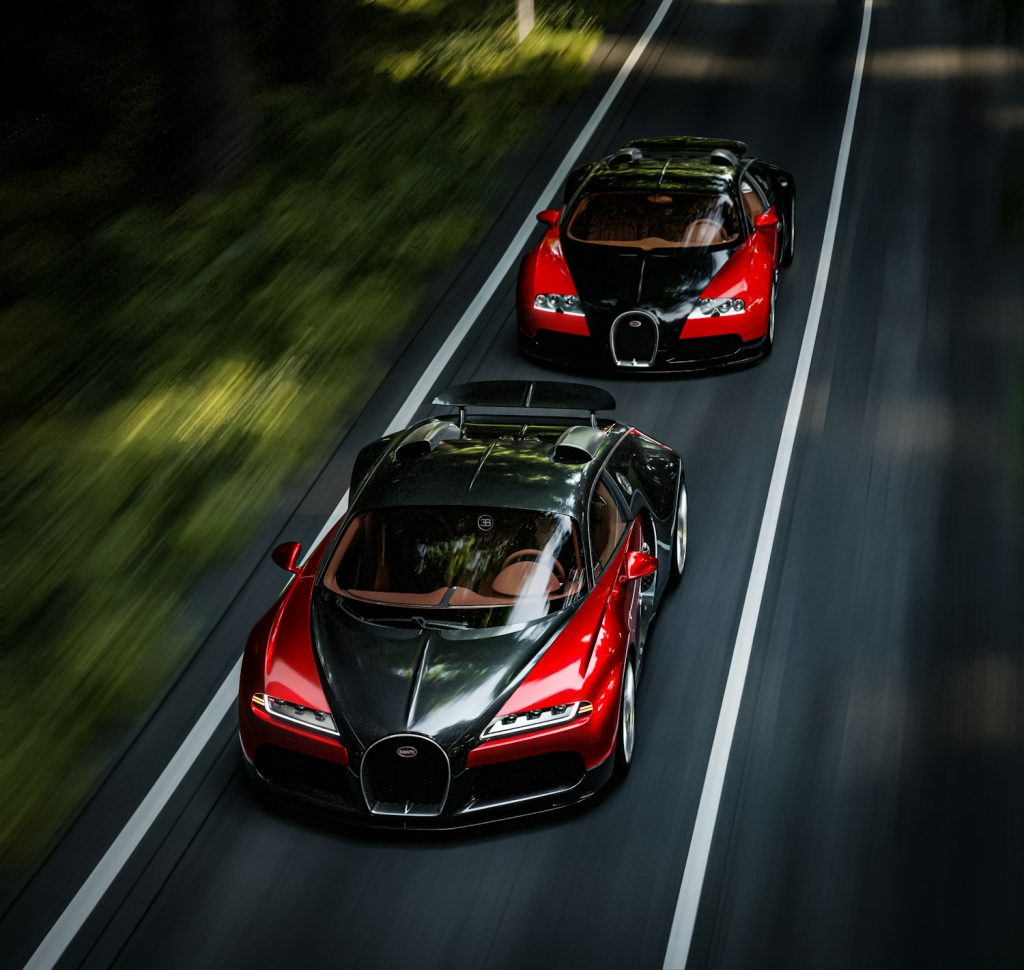
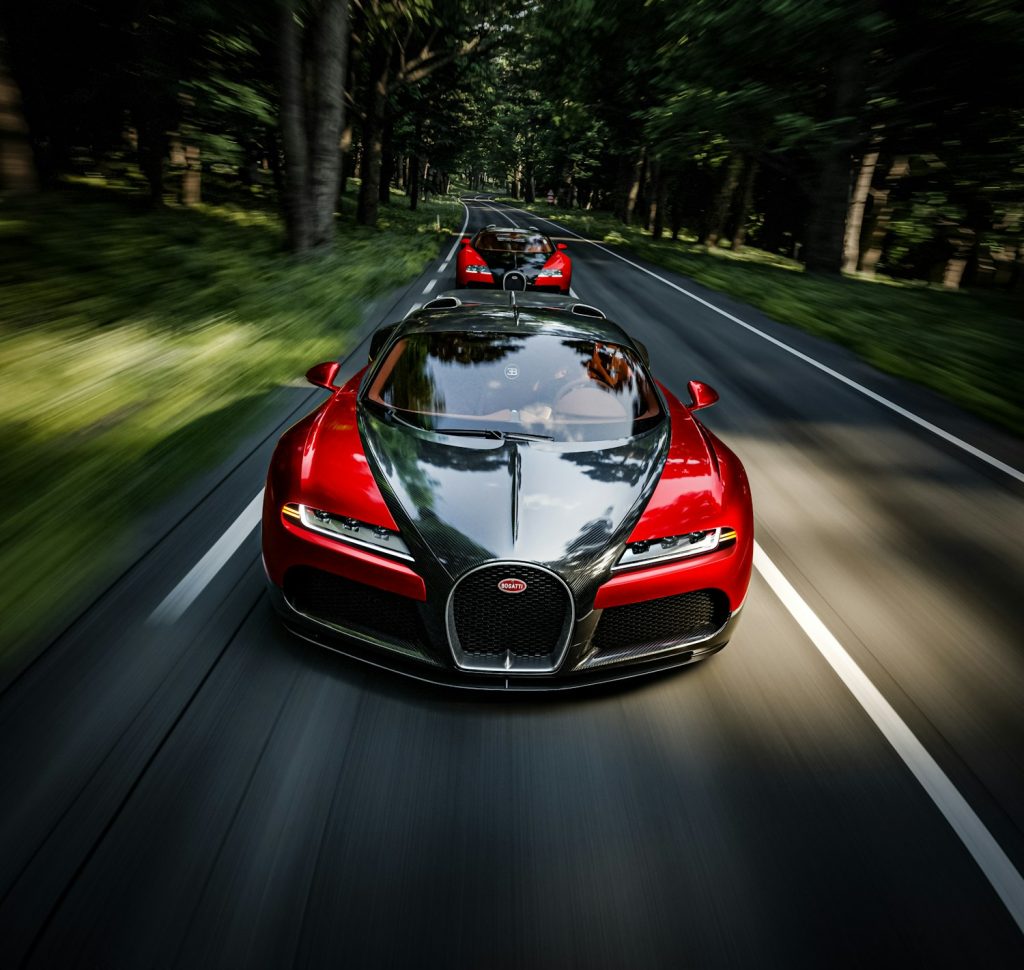
Visually, the F.K.P. Hommage evolves rather than reinvents. The Veyron’s signature posture and dropping belt line remain, but every surface has been sharpened and clarified. The horseshoe grille is now a three-dimensional form, machined from a solid block of aluminum and seamlessly integrated into the bodywork. Color separations follow the panel architecture with surgical precision, while larger air intakes feed the more powerful engine. Updated wheel sizes, 20 inches at the front and 21 at the rear, house the latest Michelin tire technology, subtly improving both stance and performance. Advances in paint technology over the past two decades are showcased with equal restraint. A deep red finish uses layered coatings, with silver aluminum beneath a red-tinted clear coat to create depth that shifts with light and movement. Exposed carbon fiber elements are not painted black but tinted, with pigment integrated directly into the clear coat, adding richness that reveals itself only up close.
Also Read: Icons in White Gold: Vacheron Constantin vs Audemars Piguet Which Brand Dominates The Burgundy Dial
Inside, the transformation is even more striking. The F.K.P. Hommage departs entirely from recent W16 interiors, including Chiron and Mistral. A circular, Bauhaus-inspired steering wheel recalls the original Veyron, while the center console and tunnel cover are machined from solid aluminum. Custom Car Couture fabrics, woven exclusively in Paris, introduce a new chapter in Bugatti interiors, evolving beyond the leather-only philosophy of the past.
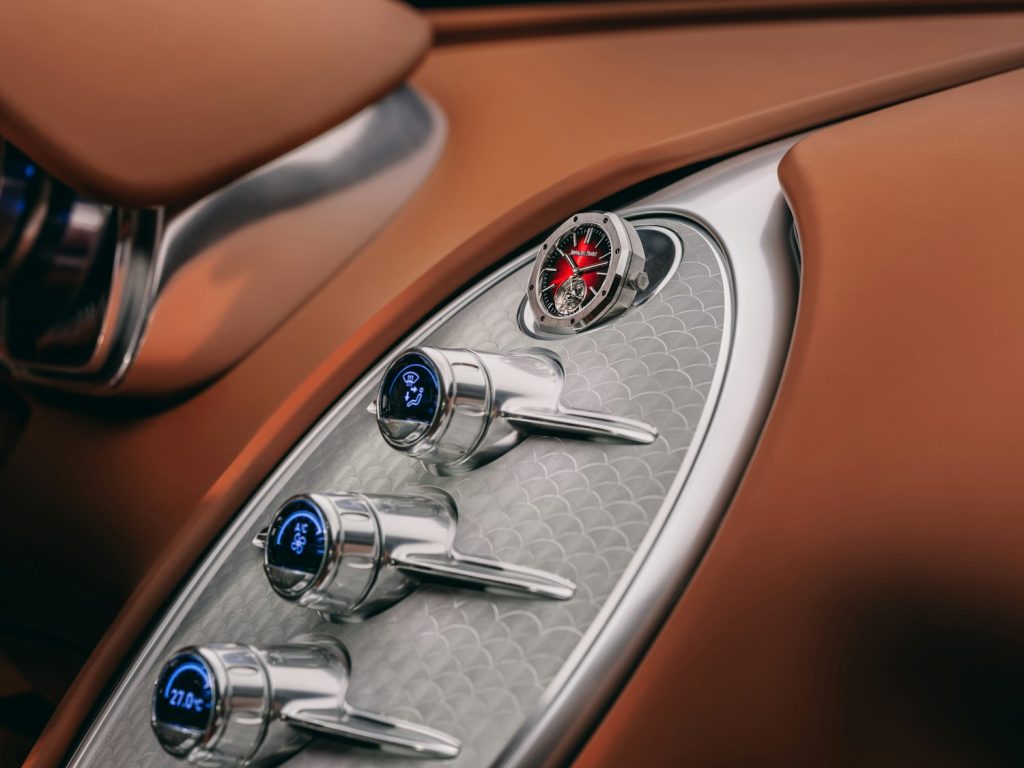
At the center of the dashboard sits perhaps the most poetic gesture of all: an Audemars Piguet Royal Oak Tourbillon, integrated at the owner’s request. This stainless steel watch gets an octagonal bezel with eight visible screws, a smoked burgundy dial that becomes darker on the periphery, white gold applied hour-markers, Royal Oak hands with luminescent coating, and a tourbillon at 6 o’clock. Powering the watch is Calibre 2950 delivering a 65-hour power reserve. The sapphire caseback showcases the movement with a central stainless oscillating weight. Set within an engine-turned island inspired by Ettore Bugatti’s straight-eight cylinder heads, the 41 mm watch features a self-winding mechanism powered by the car itself. A rotating gondola turns on a diagonal axis, without any electrical connection, blurring the boundary between automotive and horological engineering.
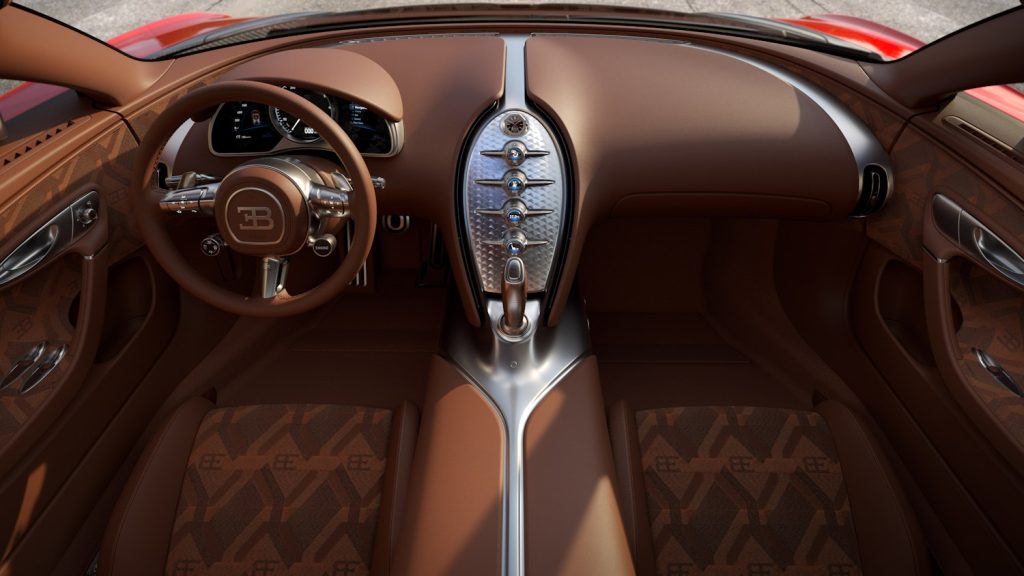
As the second creation of Programme Solitaire, following Brouillard, the F.K.P. Hommage represents Bugatti at its most personal and expressive. Only two such commissions are created each year, each one a complete reimagining that connects past, present, and future. In this case, it is less about celebrating speed than honoring a legacy built on belief. The belief that engineering, when pursued without compromise, can change everything.