Sennheiser Showcases Spectera Wireless System At PLASA Focus Leeds 2026
With Spectera, Sennheiser is attempting something rather bold: replacing complexity with control, and turning wireless audio into something that behaves like it actually respects your time
Live production is a world where chaos is measured in milliseconds, and if your wireless system fails, everyone notices immediately. At PLASA Focus Leeds 2026, that ambition arrives centre stage. There are two kinds of silence in live production. One is dramatic and intentional, the kind that makes an audience lean forward in anticipation. The other is the dreadful silence that happens when your wireless system decides it would rather not participate in the show. That second kind usually involves panic, swearing, and a lighting technician pretending not to laugh. Sennheiser, wisely, would like to eliminate that entirely. Which is why its return to PLASA Focus Leeds 2026 feels less like a trade show appearance and more like a declaration of war against unnecessary complexity.
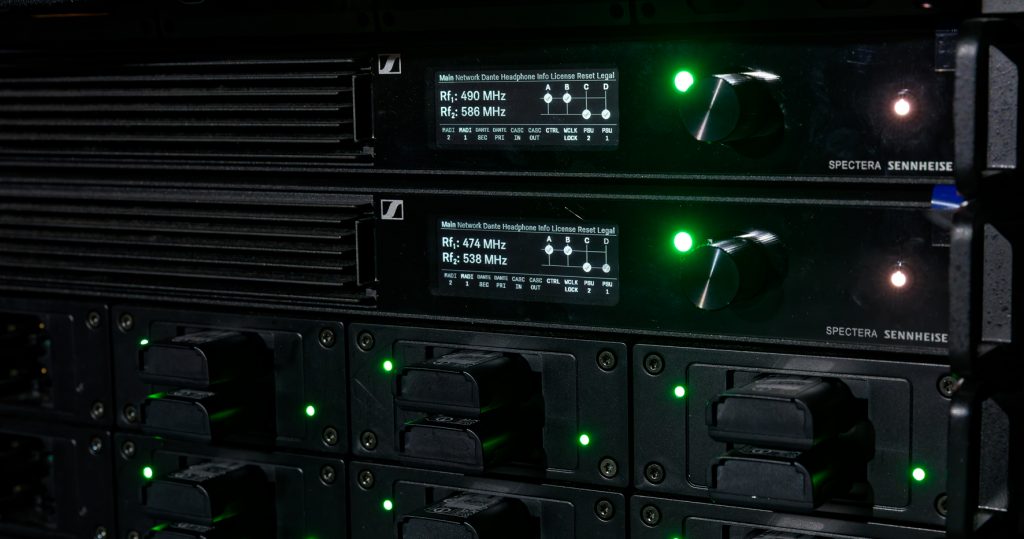
At the centre of this campaign is Spectera, the world’s first wideband, bidirectional digital wireless ecosystem, and yes, that sounds like something built by engineers who drink espresso for breakfast and argue about signal paths for fun. But underneath the technical language is something brilliantly practical. Spectera allows simultaneous audio transmission, system control, and monitoring within a single RF channel. In plain English, it makes wireless setups dramatically simpler while somehow making them more powerful. Traditionally, managing wireless audio for live productions can feel like trying to coordinate an orchestra using walkie-talkies from 1997.
Kevin Gwyther-Brown, Business Development Manager, Sennheiser, says, “We are delighted to return to this year’s PLASA Focus Show and showcase Spectera, our ground-breaking bidirectional wireless system. It’s a fantastic opportunity to connect with both long-standing customers, meet new industry friends, and to demonstrate how Spectera’s bidirectional wideband approach is helping to streamline wireless workflows across live production, broadcast and theatre applications, while also giving visitors a closer look at the wider Sennheiser portfolio for professional live environments.”
Spectera changes that by handling up to 64 channels, split as 32 in and 32 out, of simultaneous audio transmission, monitoring, and control inside a single rack unit. That is an extraordinary amount of work happening in remarkably little space. Less RF complexity means fewer opportunities for things to go horribly wrong, which in this business is practically a luxury. Its bidirectional bodypacks are equally clever, capable of handling both in-ear monitor and mic or line signals at the same time. This means fewer devices, fewer cables, and fewer moments where someone backstage asks, ‘Has anyone seen my transmitter?’ before the show starts. Flexible Audio Link modes also allow users to optimise latency, audio quality, and link performance depending on the production. If you need speed, it delivers speed. If you need precision, it delivers precision. If you need both, well, that is why people pay professionals.
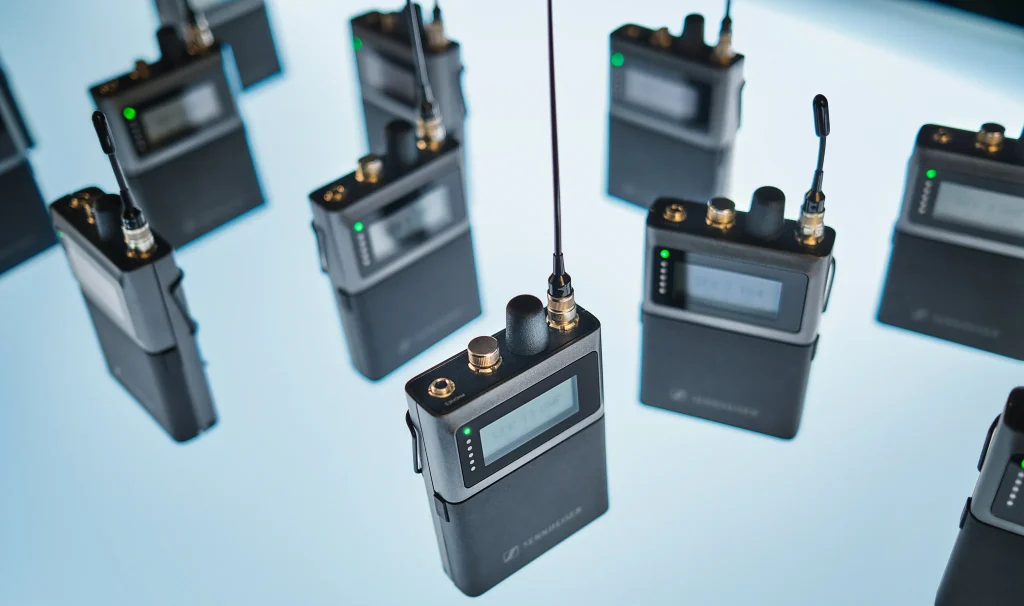
And professionals are already using it. Spectera is not sitting quietly in a lab waiting for approval. It is heading straight into one of the most demanding live productions on earth: the Eurovision Song Contest 2026 in Vienna. Sennheiser, alongside Agorà, is supporting host broadcaster ORF with the largest Spectera deployment to date. This includes manufacturing samples of the soon-to-be-launched handheld transmitter and even a dedicated firmware variant developed specifically for the production’s requirements. If your wireless system can survive Eurovision, it can probably survive anything short of a volcanic eruption. Its growing résumé is equally ridiculous in the best way possible.
Also Read: Bose Launches New Lifestyle Collection Featuring Premium Smart Home Audio
Spectera has already been deployed with artists like Ed Sheeran, Sam Smith, and Sam Ryder, as well as productions including Secret Cinema’s Grease, Arcadia’s Dragonfly at Glastonbury Festival, Lollapalooza Chile, Australia’s broadcast operations, the restoration of Notre-Dame de Paris, and even the broadcast debut of the Spectera handheld at Super Bowl LX. It is the sort of client list that quietly suggests this thing works rather well.
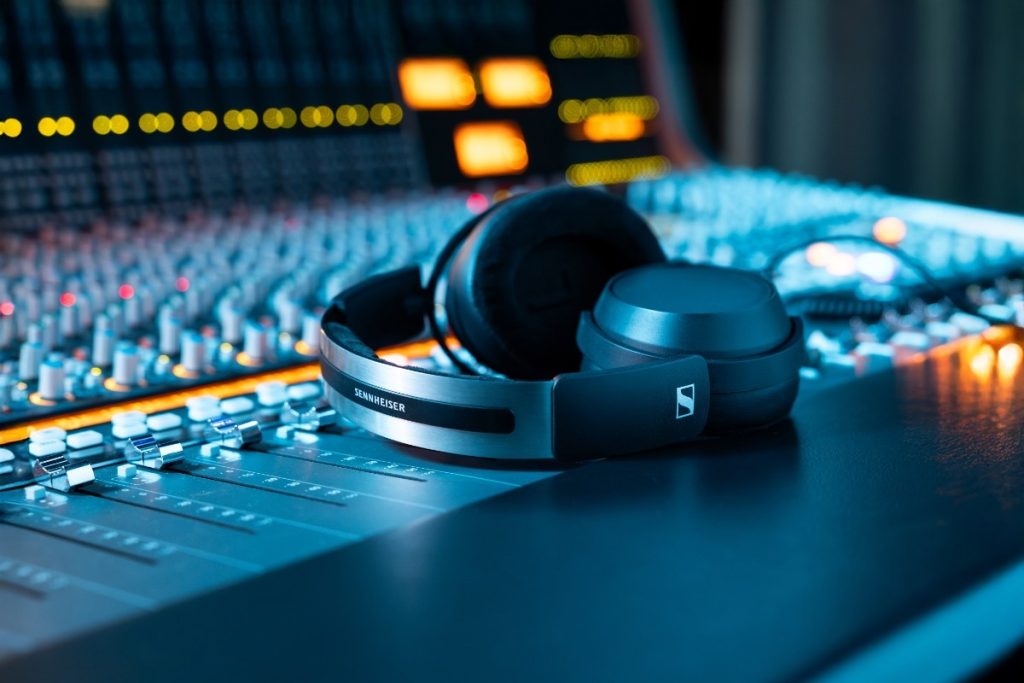
But Sennheiser is not only bringing wireless wizardry to Leeds. Also featured is the newly announced HD 480 PRO, a new closed-back professional headphone designed for the less glamorous but absolutely vital work of critical monitoring. These are not headphones for pretending you are in a music video. These are headphones for people whose job depends on hearing exactly what is wrong.
The HD 480 PRO delivers the isolation benefits of a closed-back design without sacrificing monitoring accuracy, which is rather like designing a racing car that is also comfortable in traffic. It offers precise, reliable low-frequency reproduction, a detailed and transparent sound signature, and the sort of wearing comfort that matters when your “quick session” accidentally becomes eight hours. For recording, tracking, editing, mobile production, and studio monitoring, they are designed to be the dependable colleague who never misses a detail. Visitors can find Sennheiser at Stand N-C00 during PLASA Focus Leeds 2026, with additional solutions also showcased at Leisuretec’s Stand N-C03 on 12th and 13th May. And if Spectera delivers what it promises, there may be one less reason for backstage panic, which frankly might be the most impressive audio innovation of all.