Innovative Chronograph Watches: 6 Models Every Collector Should Own
Most chronographs simply measure time, but a select few challenge the very limits of mechanical engineering, transforming a centuries-old complication into a breathtaking display of innovation, complexity, and pure watchmaking audacity
The chronograph is one of those wonderful inventions that perfectly demonstrates mankind’s inability to leave well enough alone. Someone looked at a perfectly functional watch and thought, “Yes, it tells the time beautifully, but what if it could also measure racing laps, aircraft navigation, horse races, lunar missions and perhaps the duration of an awkward dinner party?” And thus the chronograph was born. For decades, brands competed to make them thinner, faster, more precise and more beautiful. Yet every now and then a watch arrives that doesn’t merely improve the chronograph. It tears up the rulebook, sets fire to it and then builds an entirely new mechanical universe from the ashes. These five watches represent precisely that kind of horological madness.
A. Lange & Söhne Triple Split
Most split-seconds chronographs are already mind-bendingly complicated. They allow two events to be timed simultaneously by splitting one chronograph hand from another. For most people, that’s more than enough engineering wizardry for one wrist. Not for A. Lange & Söhne. The German watchmaker looked at its groundbreaking Double Split and decided it wasn’t ambitious enough. The result was the Triple Split, arguably one of the most astonishing chronographs ever created. It remains the world’s only mechanical split-seconds chronograph capable of measuring intermediate and reference times for durations of up to twelve hours.
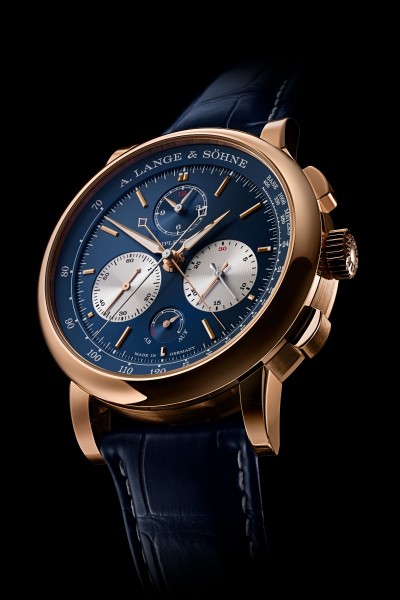
Think about that for a moment. Twelve hours. Not seconds. Not minutes. Hours. The latest version arrives in pink gold with a deep blue dial and rhodié-coloured subsidiary dials, limited to just 100 pieces worldwide. Beneath its elegant appearance lies a mechanical monster capable of splitting not only seconds but also minutes and hours simultaneously. The three rattrapante hands sit perfectly aligned atop their corresponding chronograph hands until activated. Press the pusher at two o’clock and the timing begins. Press the rattrapante pusher at ten and the split hands stop while the hidden chronograph hands continue their relentless march forward. Then there is the flyback function. Press the pusher at four o’clock and every hand instantly returns to zero before immediately beginning a new timing sequence. It is mechanical theatre at its absolute finest, and perhaps the closest thing watchmaking has to Formula One engineering.
Also Read: Minerva Reveals 2026 Novelties: Unveiled Crownless, Secret Editions And Chronograph LE 30
Audemars Piguet Royal Oak Jumbo Chronograph RD#5
Most chronograph buttons feel much the same. You press them. They click. Something mechanical happens inside. Audemars Piguet decided that wasn’t good enough. With the Royal Oak Jumbo Chronograph RD#5, the Le Brassus manufacture completely reinvented how a chronograph should feel. Traditional chronographs use hammers and cams to engage their timing functions. AP threw that system into the bin and replaced it with an entirely new mechanism based on spring-loaded racks that store and release energy with extraordinary efficiency. The result is unlike any chronograph before it. The pushers feel almost digital. Light. Immediate. Crisp. More akin to tapping a modern smartphone than activating a movement containing 379 mechanical components.
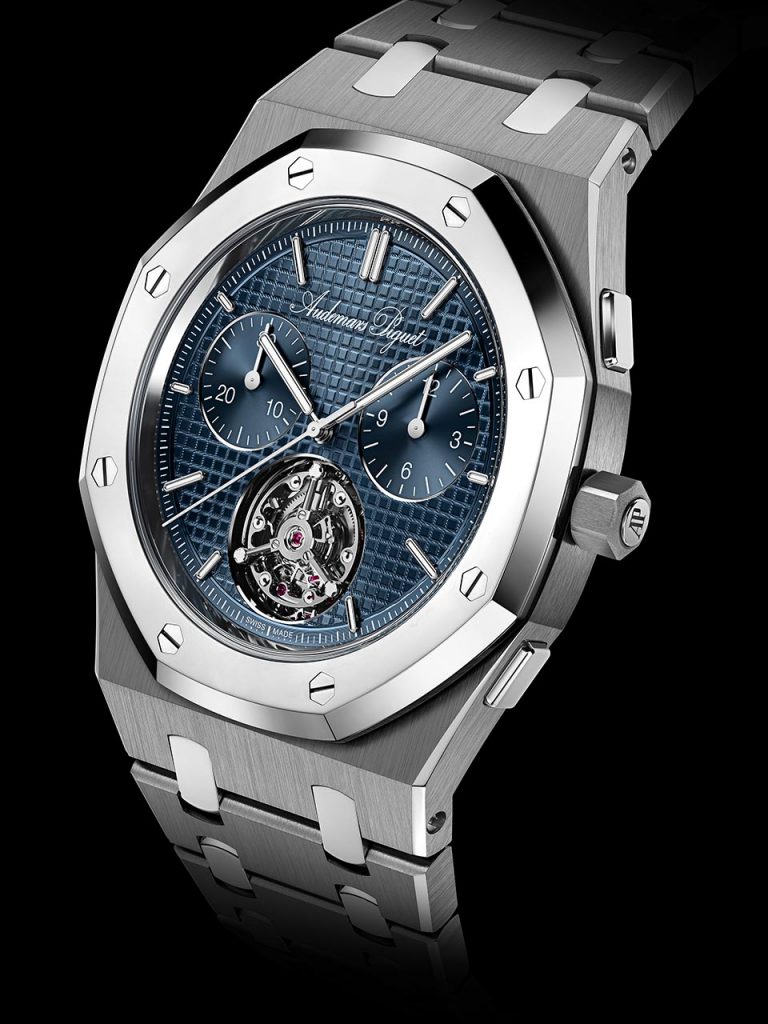
Limited to just 150 pieces and priced at a staggering INR 3 crore (approx.), the 39mm titanium and Bulk Metallic Glass case houses the Calibre AP 8100, an automatic flyback chronograph paired with an exposed flying tourbillon. The Bleu Nuit Petite Tapisserie dial remains unmistakably Royal Oak, but underneath beats one of the most radical chronograph systems ever developed. It isn’t merely evolution. It’s a complete rethink.
TAG Heuer Monaco Evergraph
The Monaco is already one of motorsport’s most recognisable watches. Steve McQueen made sure of that. But the Monaco Evergraph takes the concept somewhere entirely new. At first glance, it appears almost skeletal. Transparent acrylic glass reveals a layered architecture of fine-brushed and sandblasted bridges, creating the impression that the watch has been partially disassembled by a particularly talented engineer. Powered by the COSC-certified TH80-00 movement operating at a high-frequency 5Hz beat rate, the Evergraph prioritises precision and performance. The blue opaline chronograph minute counter at three o’clock and small seconds display at nine are accented with rhodium-plated hands tipped in vivid red lacquer, echoing classic racing instruments.
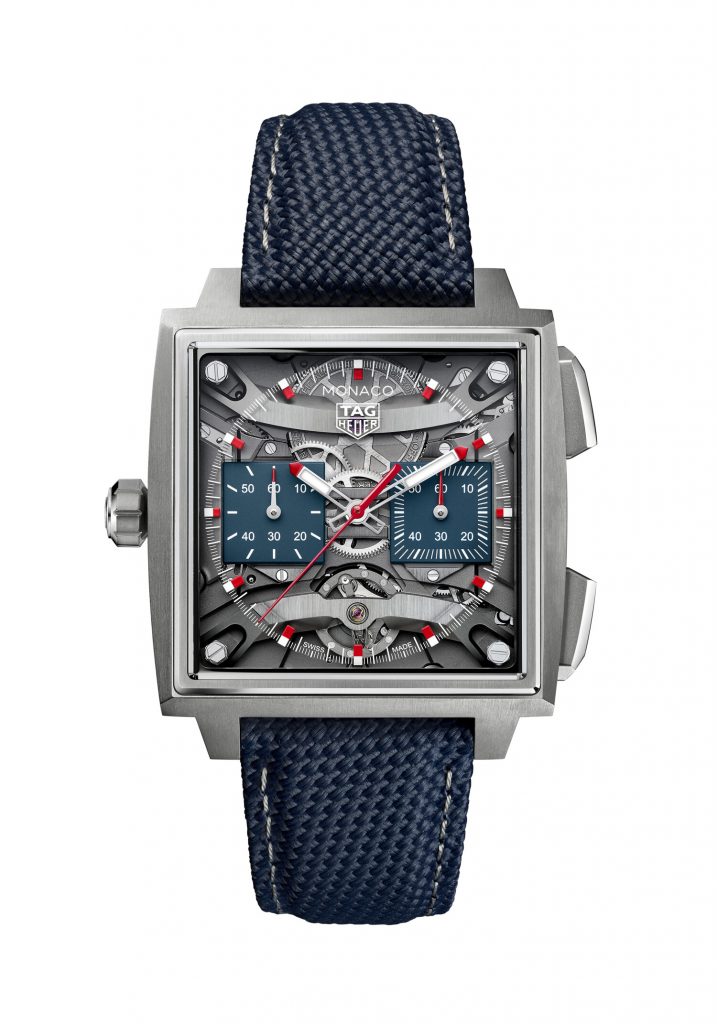
The 40mm Grade 5 titanium case feels wonderfully modern, while the open-worked hands and transparent dial create a sense of depth rarely seen in contemporary chronographs. This is not nostalgia. It is a reinterpretation of the Monaco for a generation raised on carbon fibre, telemetry and hypercars.
Parmigiani Fleurier Tonda PF Chrono Mystérieux
Chronographs traditionally announce themselves loudly. Sub-dials everywhere. Additional scales. Extra hands cluttering the dial like instruments inside a jumbo jet. Parmigiani Fleurier decided to do the exact opposite. The Tonda PF Chrono Mystérieux hides its chronograph entirely until you need it. There are no visible counters. No secondary displays. No visual distractions whatsoever. At rest, five hands remain perfectly superimposed, creating a clean and elegant time display. Activate the chronograph and the hands separate, unfolding across the dial to display elapsed seconds and minutes directly on the primary time scale.
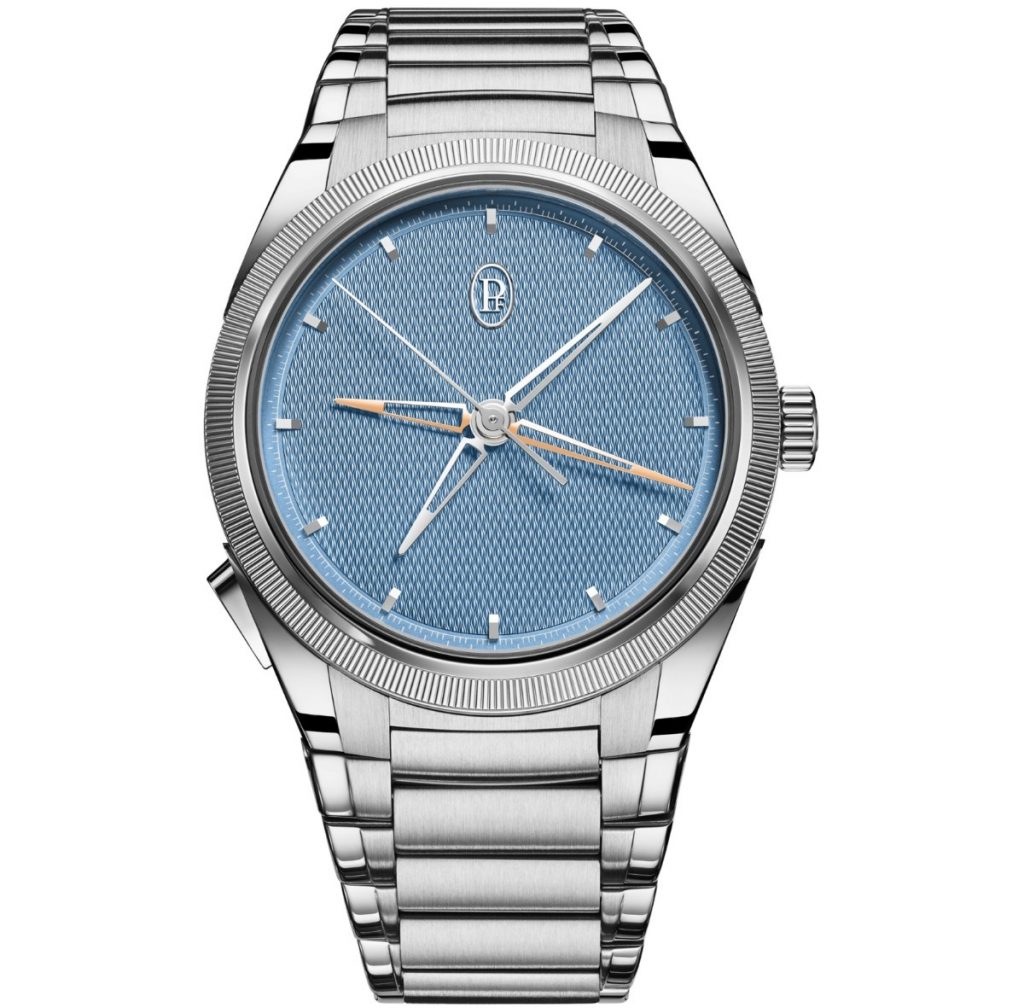
Press again and the timing freezes in perfect clarity. Press once more and everything returns to its original position, disappearing back into the display as though the chronograph never existed. Behind this sorcery sits a highly sophisticated architecture featuring five coaxial hands driven by a triple-clutch system consisting of one vertical clutch and two horizontal clutches. The level of mechanical coordination required is staggering. And yet the wearer sees almost none of it. Which somehow makes it even more impressive.
MB&F LM Sequential Flyback
Most watches have one chronograph, but the MB&F LM Sequential Flyback has two. And then it has a fifth button that changes everything. Known as the Twinverter, this extraordinary pusher operates as a binary switch controlling both chronographs simultaneously. Depending on their status, it can start both, stop both, or instantly switch between them. It sounds complicated because it is. Brilliantly complicated. The two independent chronographs occupy opposite sides of the dial. Each can be started, stopped, reset and flyback independently. But the Twinverter transforms them into a completely new timing instrument capable of measuring sequential laps, simultaneous events and complex timing scenarios that no conventional chronograph could ever manage.
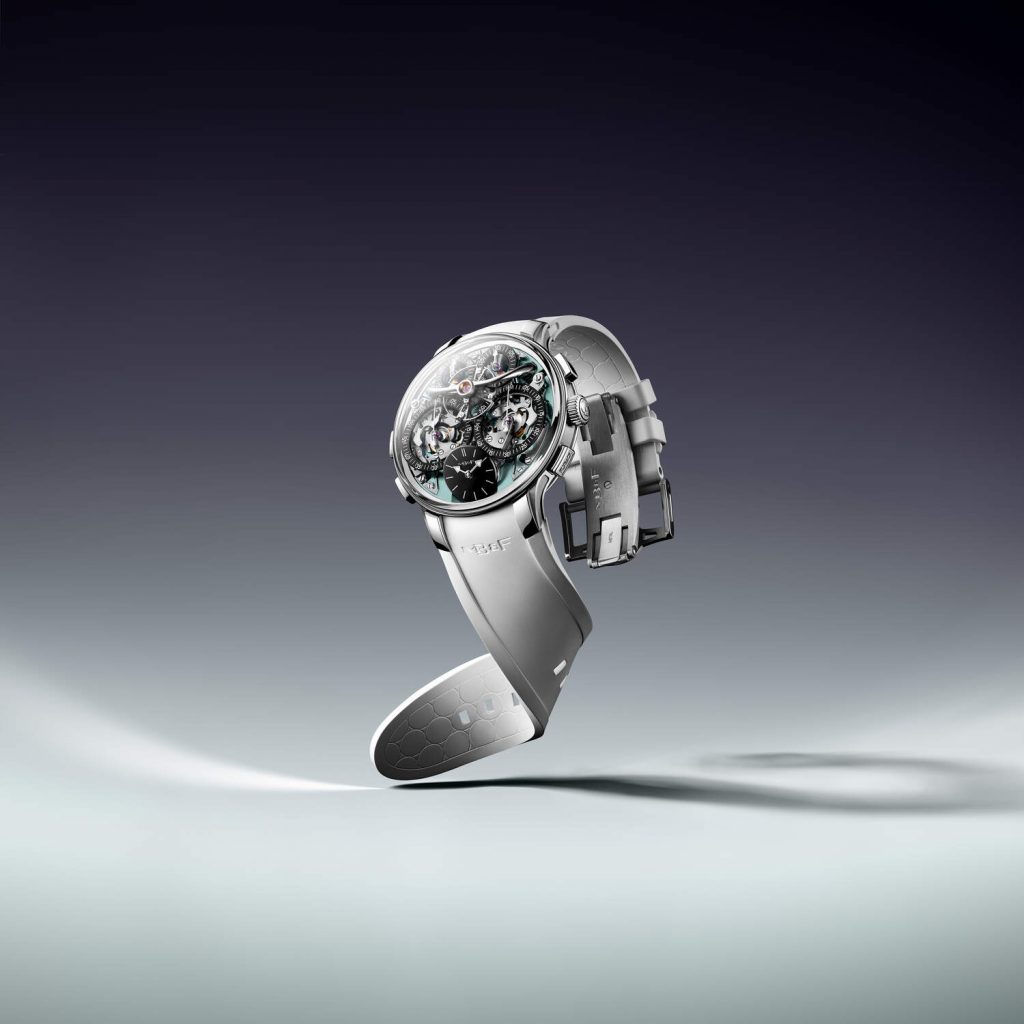
For motorsport timing, endurance racing, aviation and countless other applications, it unlocks possibilities previously unavailable in a wristwatch. Which is precisely what MB&F does best. It doesn’t build watches. It builds mechanical thought experiments. And the LM Sequential Flyback may well be the most ingenious chronograph of the modern era. Together, these five timepieces prove that even after two centuries of development, the chronograph remains one of watchmaking’s most fertile grounds for innovation. Some measure time. These redefine what measuring time actually means.