Moritz Grossmann Unveils Hamatic Silver-Plated By Friction For Founder’s 200th Anniversary
Two centuries of watchmaking legacy are distilled into one extraordinary timepiece, where a rare dial, a revolutionary movement, and deeply rooted heritage come together in the HAMATIC Silver Plated by Friction
Anniversaries in watchmaking are usually polite affairs. A slightly different dial, a commemorative engraving, perhaps a restrained nod to history. But every now and then, something comes along that does not politely nod. It kicks the door open, plants a flag, and reminds you exactly why this craft has survived for centuries. The Moritz Grossmann HAMATIC Silver-Plated by Friction is precisely that sort of machine. Built to mark 200 years since the birth of its founder, it is not just a watch. It is a declaration that tradition, when handled properly, can be every bit as thrilling as innovation.
The Man Who Shaped Glashütte
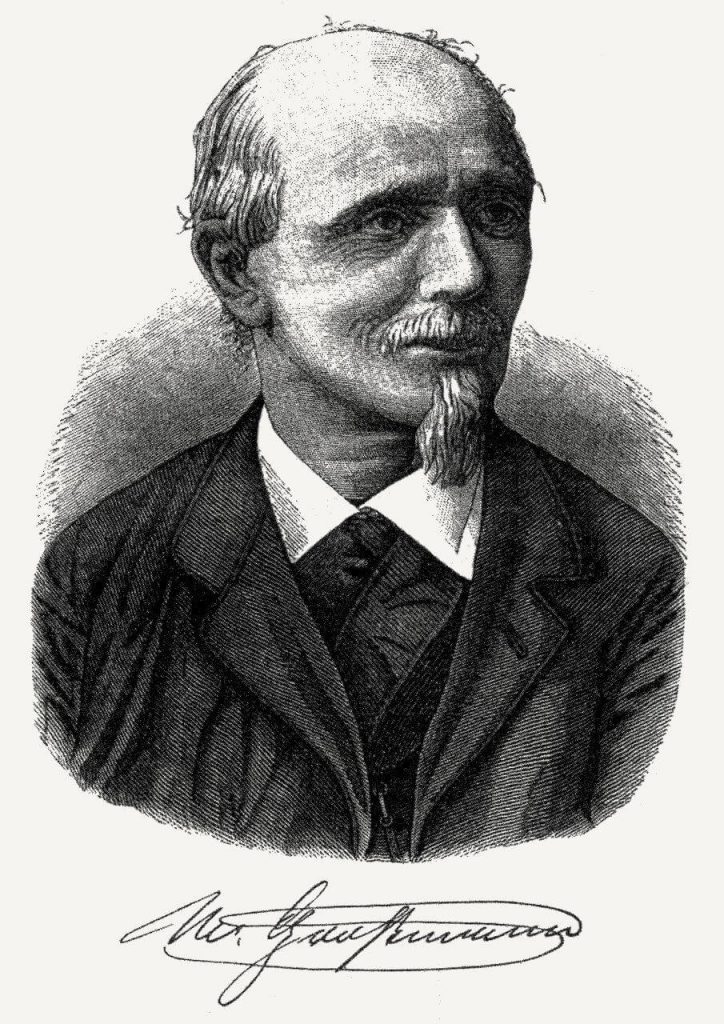
To understand this watch, you have to understand Moritz Grossmann himself. Born on 27 March 1826, he was not merely a watchmaker tinkering with gears and springs. He was a scientist, an author, and quite possibly the most determined man in Glashütte at the time. He founded the German Watchmaking School, helped shape the entire industry in the region, and set standards that still echo through modern horology. In short, without him, Glashütte would not be Glashütte. And without Glashütte, a great many extraordinary watches simply would not exist. So when the modern manufactory decided to celebrate his 200th birthday, it did not simply recreate something old. That would have been far too easy. Instead, it chose to reinterpret his ideas using modern techniques, staying faithful not to the appearance of his work, but to the spirit of relentless innovation that defined it. This is not nostalgia. This is evolution with a memory.
Details That Border on Madness

Look closer, and the details become almost absurdly good. The case, lugs, polished bezel, the crown at 3 o’clock are made of white gold and measures 41mm. Now we come to the dial, and this is where things get properly interesting. The silver plated by friction finish is not something you can churn out on a production line. It is achieved using a historical technique where the surface is hand brushed with pastes and powders until it develops a fine grained, almost velvet like texture. Only a handful of specialists can do this properly, because it requires patience, consistency, and an alarming level of concentration. The result, however, is spectacular. The dial plays with light in a way that feels alive, shifting between soft glow and subtle shadow depending on how you look at it. Add to this the cool blue Arabic hour markers, railway track, along with the vintage “M. Grossmann” logo styled exactly as it appeared in 1875, and you have something that feels both ancient and fresh at the same time. And for the first time, the watch uses Arabic numerals instead of Roman ones, which gives it a slightly more contemporary edge without losing its soul. The hour, minute, and seconds sub-dial placed at 6 o’clock are crafted from steel and then annealed to achieve that perfect blue hue.
At the heart of this watch sits the calibre 106.0, and it is, frankly, a bit unusual. Instead of relying on a conventional rotor, it uses a pendulum style hammer weight for automatic winding. Yes, a hammer. It swings, it clicks, and it winds the watch with remarkable efficiency, which is why the mechanism is known as a hammer automatic. It is an old idea, but here it has been reengineered with almost obsessive precision. The result is a movement that feels both historic and utterly modern. It also comes with a 72-hour power reserve, stop seconds for precise setting, and is regulated in five positions. In other words, it is not just clever, it is seriously competent. With traditional elements such as the large balance wheel, raised gold chatons, and the beautifully structured two thirds plate made of untreated German silver. There is a shock resistant Grossmann balance, a micrometer screw adjustment system, and finishing that includes Glashütte ribbing and double band snailing. Even the balance cock carries a special “1826” engraving, a quiet but constant reminder of why this watch exists in the first place.
A Rare Thing in a World of Many
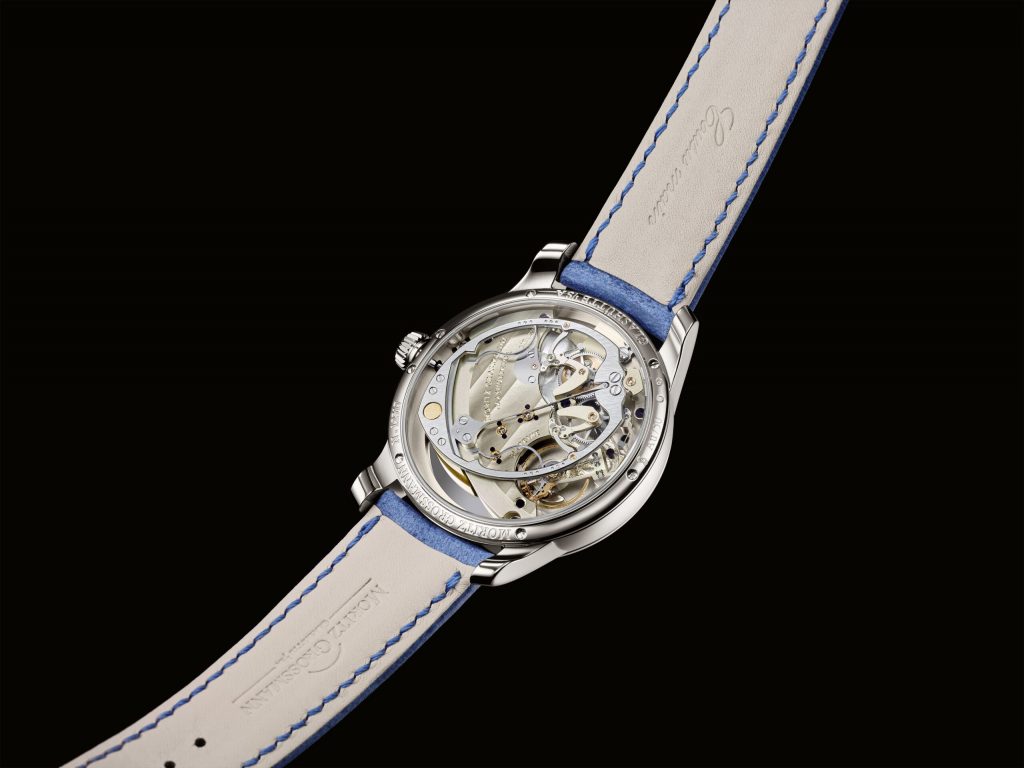
Turn it over, and through the sapphire crystal caseback, you can see all of this mechanical theatre in motion. It is not just engineering. It is choreography. Every component, from the click pawl to the oscillating hammer, moves with purpose and precision. And then there is the strap. Blue kudu leather, hand stitched, paired with a white gold buckle. It is understated, comfortable, and exactly right.

Only 18 pieces of this watch will ever exist, released on 26 March 2026, just in time for the founder’s 200th birthday. Which means that for most people, this will remain something to admire from a distance. But that is rather the point. The HAMATIC Silver Plated by Friction is not about accessibility. It is about possibility. It shows what happens when you take two centuries of knowledge, refuse to compromise, and build something that honours the past without being trapped by it. In a world full of watches that try very hard to be noticed, this one does not need to try at all. It simply exists, quietly brilliant, deeply meaningful, and utterly uncompromising. And in doing so, it proves that true legacy is not about looking back. It is about carrying forward everything that made the past worth celebrating in the first place.