Vacheron Constantin Traditionnelle Twin Beat Perpetual Calendar Now Has An Extended Power Reserve
Vacheron Constantin Traditionnelle Twin Beat Perpetual Calendar now combines innovative dual-frequency technology, platinum craftsmanship and one of watchmaking’s most advanced perpetual calendar movements
In the world of mechanical watches, power reserve has always been the quiet measure of endurance. While a few hours may keep a daily companion alive, watches that run for days, weeks or even months represent something far more extraordinary: the ability to store energy with almost impossible efficiency. After all, a mechanical watch is a miniature machine, and keeping it alive without constant intervention is one of horology’s greatest challenges. Vacheron Constantin has now pushed that idea further with the Traditionnelle Twin Beat Perpetual Calendar, extending its autonomy to an astonishing 70 days while preserving the precision expected from one of Switzerland’s most respected watchmakers.
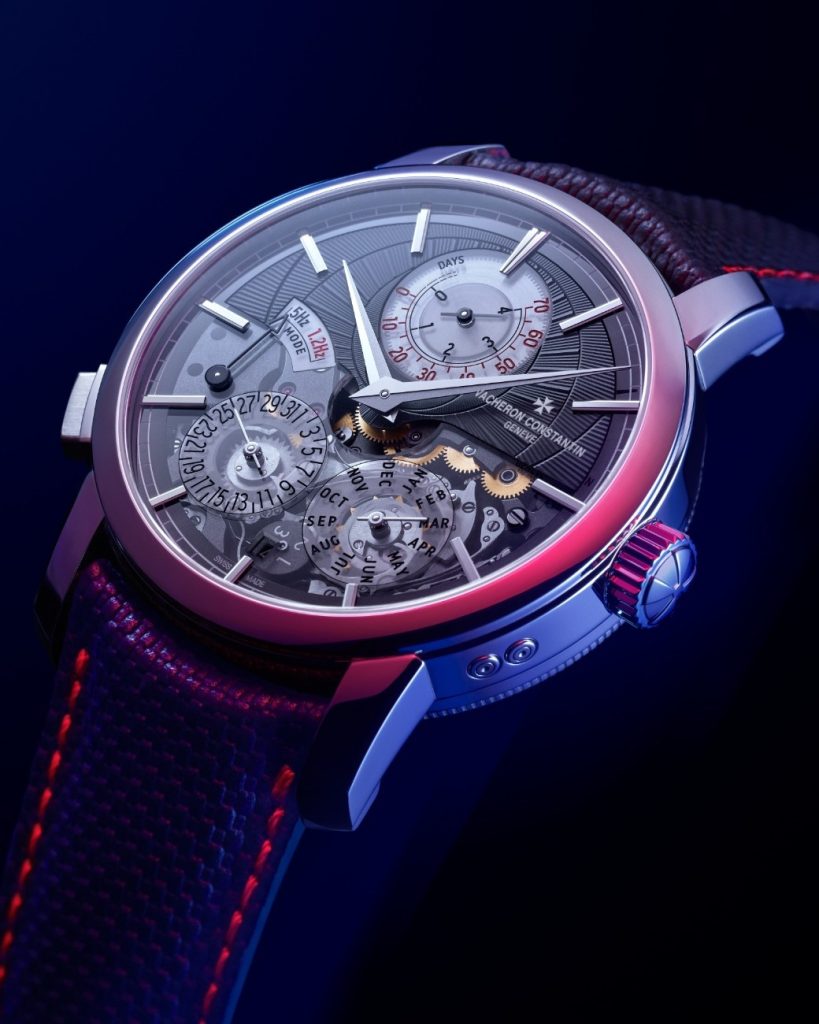
The story of the Traditionnelle Twin Beat Perpetual Calendar began in 2019 when Vacheron Constantin introduced a completely new approach to managing energy in a perpetual calendar watch. Traditionally, such a complication requires the movement to remain constantly powered because its calendar mechanism must continue tracking the irregularities of the Gregorian calendar, including leap years. The original Twin Beat changed this equation by introducing two regulating frequencies, allowing the watch to operate in a high-frequency Active mode when worn and a slower Standby mode when resting. Now, through further refinement of the patented Calibre 3610 QP, the latest version gains an additional five days of autonomy, bringing its Standby power reserve to 70 days.
Also Read: Frederique Constant Unveils Classic Power Reserve Big Date Manufacture
The new Traditionnelle Twin Beat Perpetual Calendar remains a masterclass in traditional elegance wrapped around some seriously clever engineering. Its 42mm case is crafted from platinum, giving the watch a cool, understated presence while maintaining the refined proportions of the Traditionnelle collection. Measuring 12.3mm thick, the case features a slim bezel, rounded profile, and finely shaped lugs that flow naturally into the wrist.

The dial, however, is where the Twin Beat reveals its true personality. Rather than hiding its complexity, Vacheron Constantin embraces it with a contemporary openworked design. The upper section features an 18K gold plate finished in slate grey with a hand guilloché radiating pattern, while the lower sapphire section exposes the NAC-treated movement beneath. A sapphire minute track with engraved railway-style detailing surrounds the display, complemented by applied white gold baton markers and faceted Dauphine hands for the hours and minutes. The perpetual calendar indications remain beautifully integrated, with counters displaying the date, day, and month, alongside the dual-scale power reserve and frequency mode indicators at 12 o’clock.
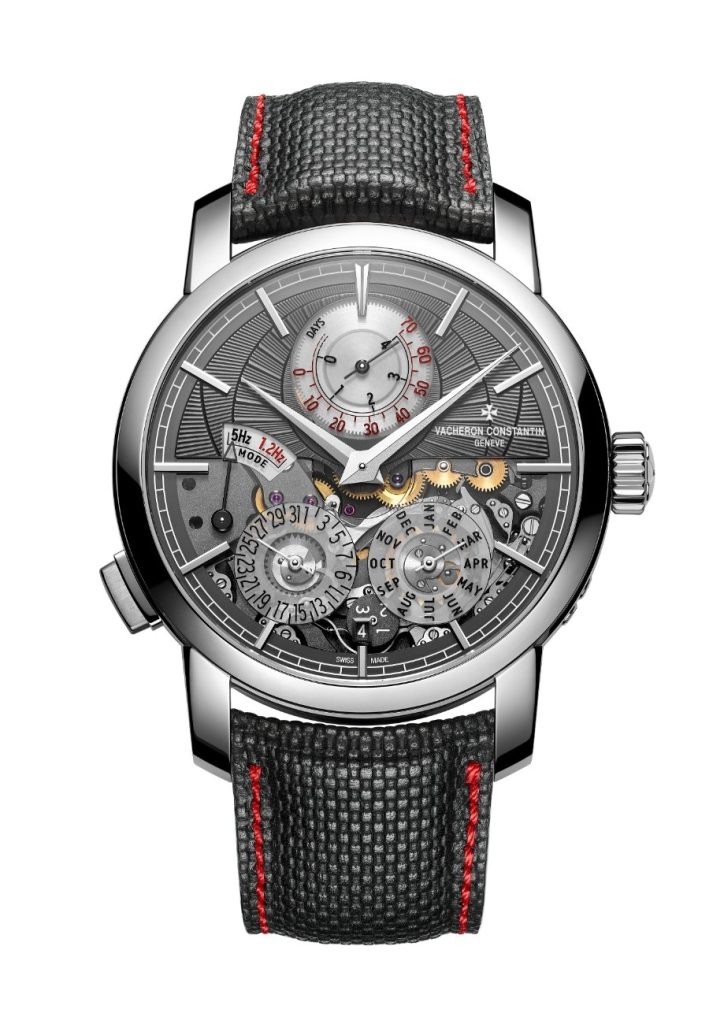
The real magic happens inside with the hand-wound Calibre 3610 QP, a movement entirely developed and manufactured by Vacheron Constantin. Measuring just 6mm thick and containing 480 components, this calibre is a mechanical balancing act between energy efficiency and precision. Its patented Twin Beat system uses two independent gear trains powered by coaxial barrels. The first regulator operates at 5Hz or 36,000 vibrations per hour in Active mode, providing a four-day power reserve for daily wear. When the watch is resting, the second regulator slows down dramatically to 1.2Hz or 8,640 vibrations per hour, reducing energy consumption and extending the autonomy to 70 days.
The genius lies in the transition between these two worlds. A discreet pusher on the case side at 8 o’clock allows the wearer to switch between Active and Standby modes without interrupting the time or calendar displays. Instead of simply slowing down one system, Vacheron Constantin developed a mechanism that stops one balance wheel and activates the other, maintaining a continuous energy flow. The movement also incorporates three differentials, managing everything from the transition between frequencies to energy distribution and power reserve indication.
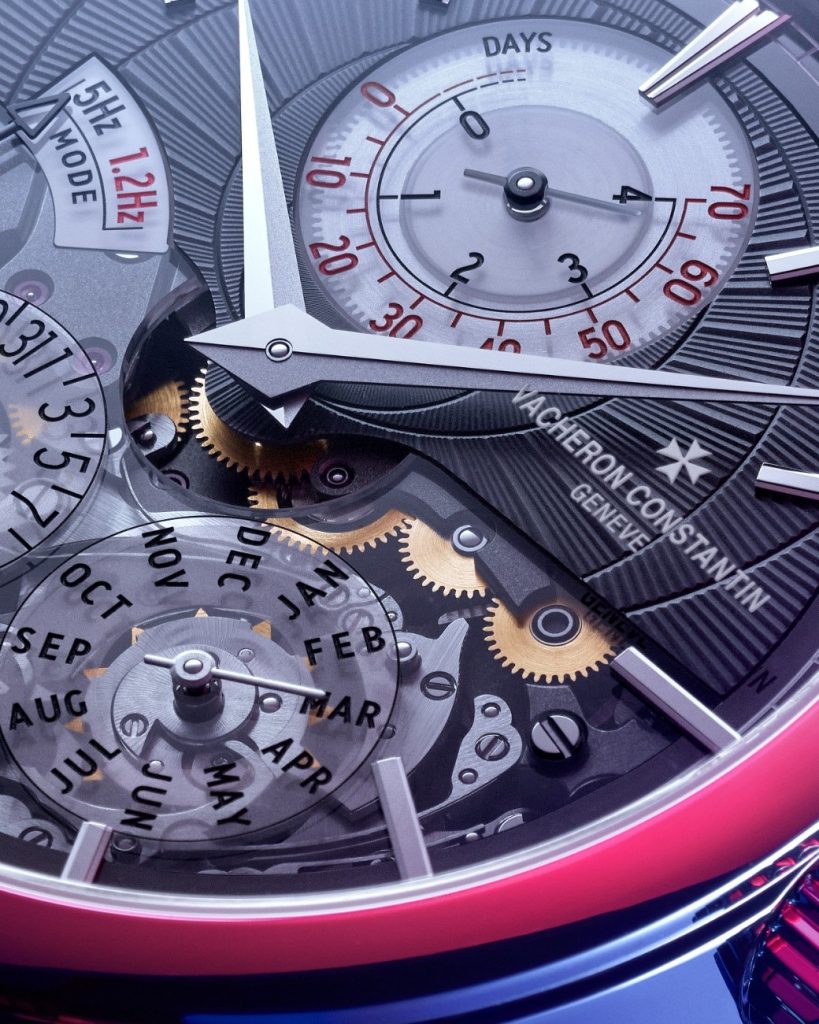
Even the perpetual calendar mechanism has been redesigned for efficiency. Since instant-jump calendar displays usually demand significant energy and can disturb balance amplitude, Vacheron Constantin created a double-gear spring-winding system that requires four times less torque than conventional solutions. This allows the calendar to change instantly while consuming less power, helping achieve the additional five-day gain in reserve.
Also Read: How Watch Testing Has Evolved: Modern Standards for Water Resistance And Power Reserve
Turn the watch over and the movement becomes another display of craftsmanship. The NAC-treated bridges contrast with golden moving components, while hand-bevelled edges, Côtes de Genève finishing and circular satin details showcase the traditional decoration expected from the Geneva Maison. The calibre carries the prestigious Geneva Seal, confirming the quality of both construction and finishing. Completing the watch is a black technical calfskin strap with a textured finish, hand-stitched lining and red thread detailing.
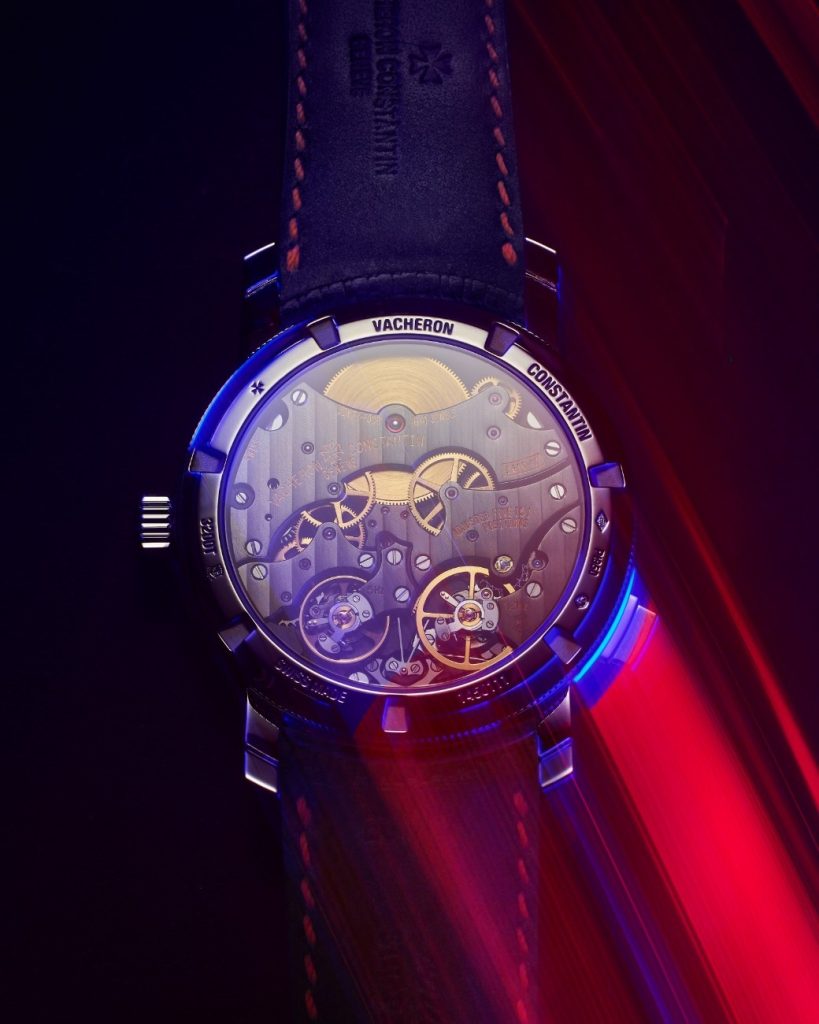
It is secured by a 950 platinum pin buckle, bringing the entire creation together with the same balance of restraint and luxury found throughout the watch. The Traditionnelle Twin Beat Perpetual Calendar is not simply about making a watch run longer. It represents a more thoughtful approach to mechanical timekeeping, solving a centuries-old problem with modern engineering while preserving the romance of traditional watchmaking. In typical Vacheron Constantin fashion, the future arrives quietly, hidden beneath platinum and sapphire.