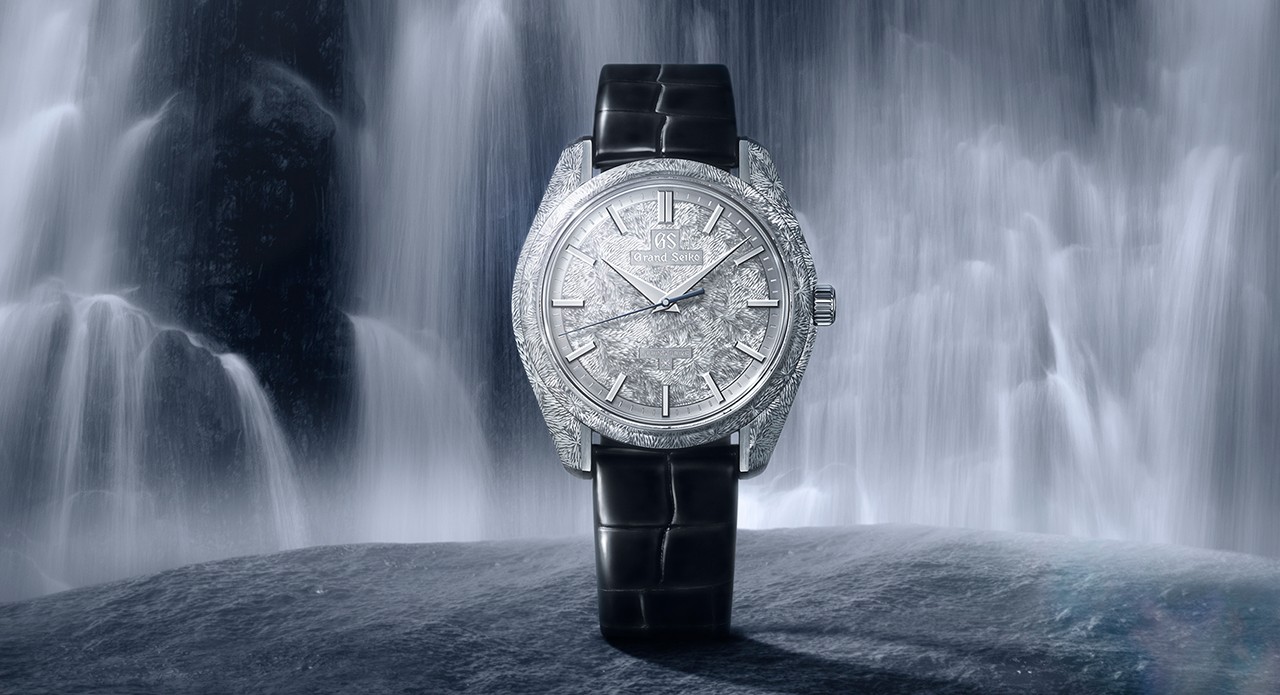


There is something rather dangerous about looking at a Japanese watch in person. From across the room, it may appear perfectly ordinary. A round case, three hands, a date window perhaps, and a dial that seems almost deliberately restrained. Then you get closer. The light moves across the surface. A texture begins to reveal itself. The indices catch the light at precisely the right angle. Suddenly, what looked like a simple dial turns into a miniature landscape. This is where Japanese watchmaking becomes particularly fascinating. Brands such as Grand Seiko have made the dial a defining part of their identity, using texture, colour, light and finishing to create watches that often feel more like objects of contemplation than conventional timekeepers.
Dials Taking Inspiration From Nature

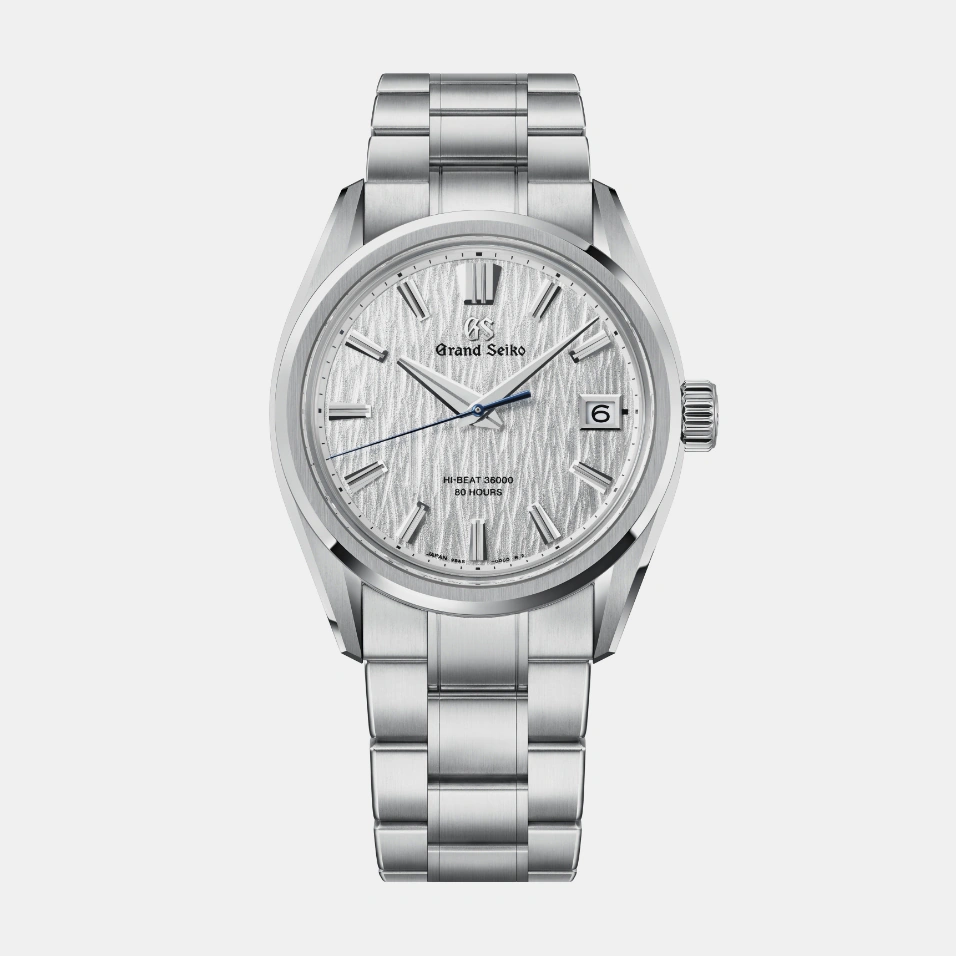
Japanese watchmaking has an unusually intimate relationship with the natural world. The idea is not simply to print a picture of a mountain or forest onto a dial. Instead, nature becomes a source for texture, colour and atmosphere. The Grand Seiko Snowflake is perhaps the most famous example. Its textured white dial evokes freshly fallen snow, while the White Birch takes inspiration from the pale bark of the birch forests surrounding Grand Seiko’s Shinshu Watch Studio. Other Japanese dials have drawn inspiration from seasons, landscapes, flowers, forests and changing light. The clever part is that these inspirations are rarely obvious. You do not necessarily look at a dial and immediately see a mountain or a tree. You feel it. The texture changes as the watch moves beneath the light, creating a sense of depth that a photograph simply cannot reproduce. And that is precisely why these watches demand to be seen in the metal.
The Hour Markers Are Part Of The Dial’s Architecture
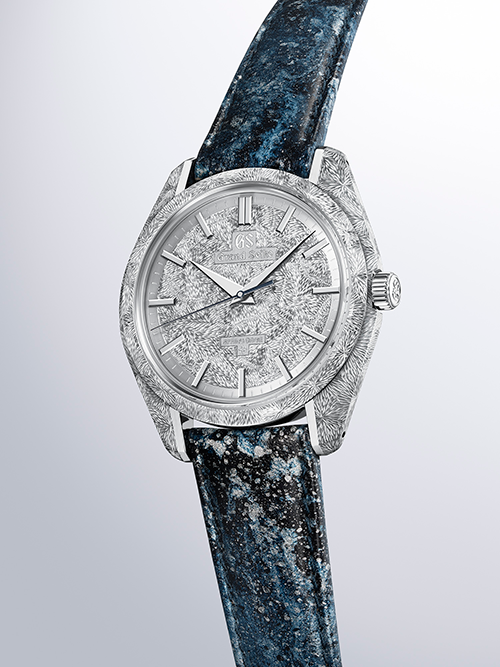
On many watches, hour markers are essentially functional furniture. They tell you where twelve o’clock is and prevent you from being late for lunch. Japanese watchmaking tends to take a rather more serious approach. Applied markers are meticulously finished and positioned to become part of the dial’s architecture. Grand Seiko’s polished indices and hands are famous for their sharply defined surfaces, with facets catching light while maintaining exceptional legibility. The same philosophy extends to the relationship between the markers, hands and dial texture. Nothing should appear to have been placed randomly. The indices need to sit comfortably against the background without disappearing into it, while the hands must interact with the texture without overwhelming it. It is visual engineering disguised as decoration.
Also Read: Did a Japanese Architect Inspire Star Wars? How Shin Takamatsu’s Buildings Shaped Sci-Fi Design
Zaratsu Is Not A Dial Finishing
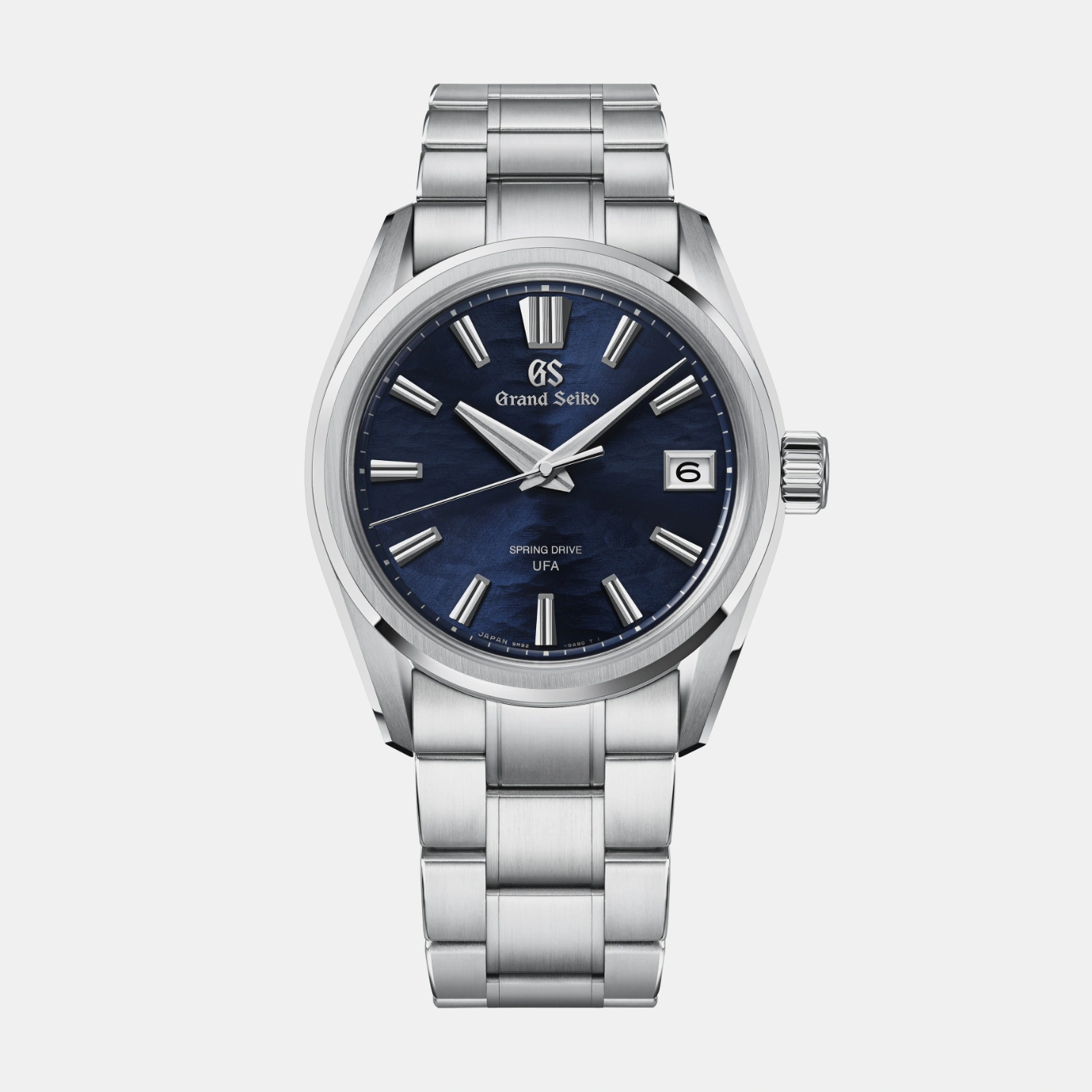
Then there is Zaratsu polishing, one of the most frequently mentioned elements of Japanese watch finishing and one that is often misunderstood. Zaratsu is not a dial finishing technique. It is a highly skilled case and component polishing method associated with Grand Seiko and other Japanese watchmaking traditions. The technique produces the crisp, distortion free surfaces and sharply defined edges that have become a hallmark of the brand. But it belongs in this story for another reason. Zaratsu reflects the same philosophy found on the dial: precision, patience and an almost unreasonable refusal to accept anything less than the intended result. A beautifully textured dial would lose some of its magic if surrounded by poorly finished surfaces. The dial and case therefore become part of the same visual argument.
In Japan, A Dial Is Not Just A Display
This is perhaps the biggest difference. A dial does not merely exist to tell you that it is 10:27. It can communicate place, season, material, craftsmanship and even emotion. It can be tactile, reflective, architectural or deliberately imperfect in a way that still feels controlled. Techniques such as lacquer and enamel further demonstrate this approach. Traditional Japanese crafts have found a natural home in watchmaking, where centuries of expertise in materials and decorative arts can be translated into something only a few centimetres across. And because so much of the work is performed by hand, tiny variations can make individual pieces feel genuinely personal. The result is a distinctly Japanese interpretation of luxury. It is not always loud. There may be no enormous gemstone, outrageous colour or logo shouting from the wrist. Instead, the reward comes from looking closer.
That may ultimately be the secret behind Japan’s fascination with flawless watch dials. Perfection is not necessarily about making something immediately impressive. It is about creating something that continues to reveal itself the longer you look at it. So, which Japanese watch has the best dial? That depends on whether you prefer snow covered landscapes, birch forests, lacquered surfaces or the extraordinary geometry of hand finished markers.