Why Omega Calibre 321 Is One Of The Most Iconic Chronograph Movements Ever Made
Discover why the Omega Calibre 321 is one of the most iconic chronograph movements ever made, from its column wheel architecture to its role in the Speedmaster and the Apollo Moon missions
In the rarefied world of horology, where engineering courts art with unapologetic confidence, few mechanical movements command the reverence accorded to the Omega Calibre 321. It is not merely a chronograph mechanism. It is a chronicle rendered in brass and steel, a testament to mid century ingenuity, space age courage, and the enduring allure of mechanical perfection.
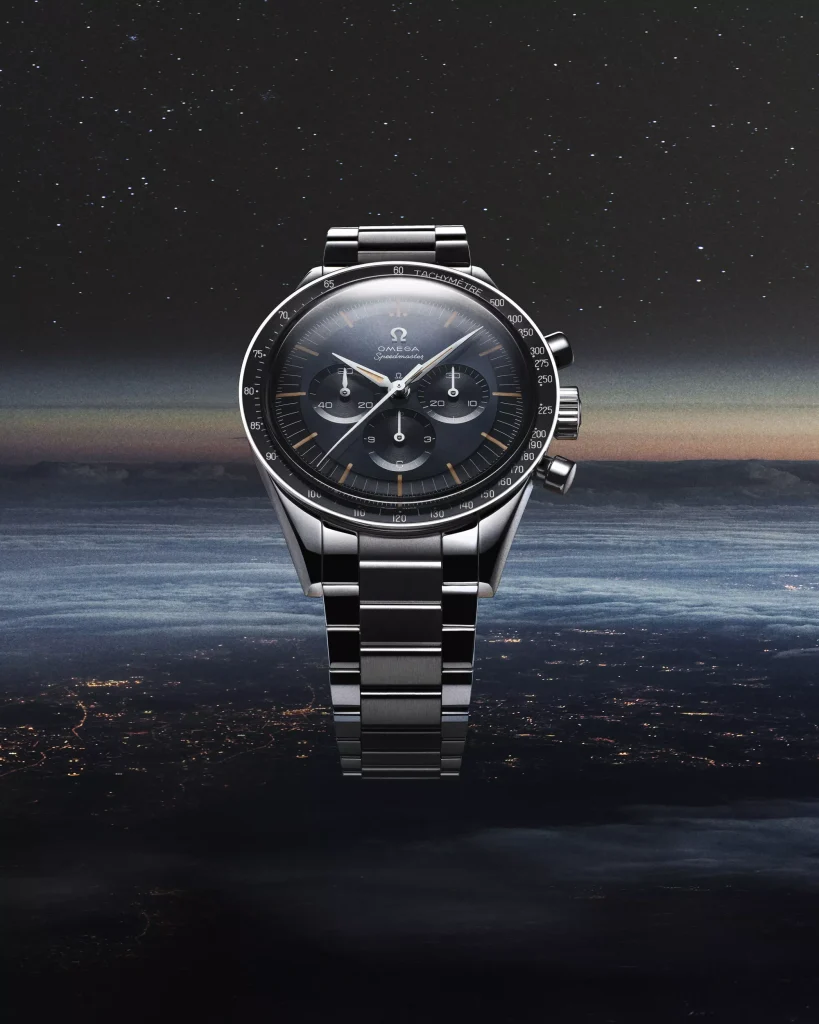
Introduced in 1942, the Calibre 321 was based on a design by Albert Piguet of Lemania, a manufacture whose ébauches quietly powered some of the most storied timepieces of the twentieth century. When Omega adopted and refined this movement, it did more than place gears within a case. It embedded an ethos of uncompromising precision into its chronographs. The result was a calibre that would transcend its technical brief and become an icon in its own right.
The reverence surrounding the 321 begins with its architecture. At its heart lies a column wheel chronograph mechanism, a system celebrated by purists for its mechanical elegance and tactile refinement. Unlike cam actuated chronographs, the column wheel coordinates the start, stop, and reset functions with balletic precision, offering a pusher feel that is crisp and assured. It is the difference between an instrument that performs and one that converses with its wearer.

The movement also featured a lateral clutch system and a Breguet overcoil hairspring, the latter enhancing isochronism and ensuring stable timekeeping across positions. With 17 jewels and a frequency of 18000 vibrations per hour, the 321 was not conceived for brute speed but for deliberate reliability. It belonged to an era when craftsmanship was measured in longevity rather than expediency, and when the unseen mechanics within a watch were treated with as much reverence as the dial that faced the world.
The defining chapter of the Calibre 321, however, unfolded far beyond Earth. When Omega introduced the Omega Speedmaster in 1957, it was powered by the 321. Originally designed as a racing chronograph, the Speedmaster would find a destiny written in the language of exploration. During the rigorous testing conducted by NASA in the 1960s, watches were subjected to punishing extremes of heat, cold, shock, vibration, and vacuum. The Speedmaster endured. At its core, the Calibre 321 continued to beat with steadfast resolve.

During the historic Apollo 11 mission in 1969, the Speedmaster accompanied astronauts into the most consequential theatre of human ambition. While Neil Armstrong left his watch inside the lunar module as a backup timer, Buzz Aldrin stepped onto the lunar surface wearing his Speedmaster. Within it, the Calibre 321 oscillated quietly against the vast silence of space. In that moment, the movement ceased to be merely mechanical. It became emblematic of human daring.
Also Read: Omega Trophy 2025: Abhishek Bachchan On What Makes Timekeeping A Legacy Of Style And Heritage
Its legend is sustained not only by its association with the Moon but also by its relative rarity. In 1968, Omega replaced the 321 with the Calibre 861, a movement engineered for greater efficiency in production. Though technically accomplished, the 861 lacked the column wheel construction that connoisseurs prized. Over time, original 321 powered Speedmasters became the objects of intense collecting, their stepped dials and symmetrical cases suffused with historical resonance.

Recognising the depth of this fascination, Omega undertook the painstaking task of reviving the Calibre 321 in 2019. Using advanced scanning technology to reconstruct the movement from an original example from the Apollo era, the brand reintroduced it in a new generation of Speedmasters. Each modern 321 is assembled by a single watchmaker in a dedicated atelier, a gesture that reinforces its artisanal significance and underscores the brand’s respect for its own heritage.
Why does the Calibre 321 endure as one of the most iconic chronograph movements ever made. Because it stands at the intersection of technical sophistication and historical consequence. It represents a moment when mechanical watchmaking achieved remarkable refinement just as humanity prepared to step beyond its terrestrial boundaries. It is both precision instrument and cultural artefact. In an age defined by silicon chips and instant digital readouts, the Calibre 321 reminds us that greatness can reside in the measured interplay of levers and springs. It timed laps on racetracks and moments in orbit. More importantly, it measured aspiration. With every deliberate oscillation, it captured not only seconds passing but history unfolding.