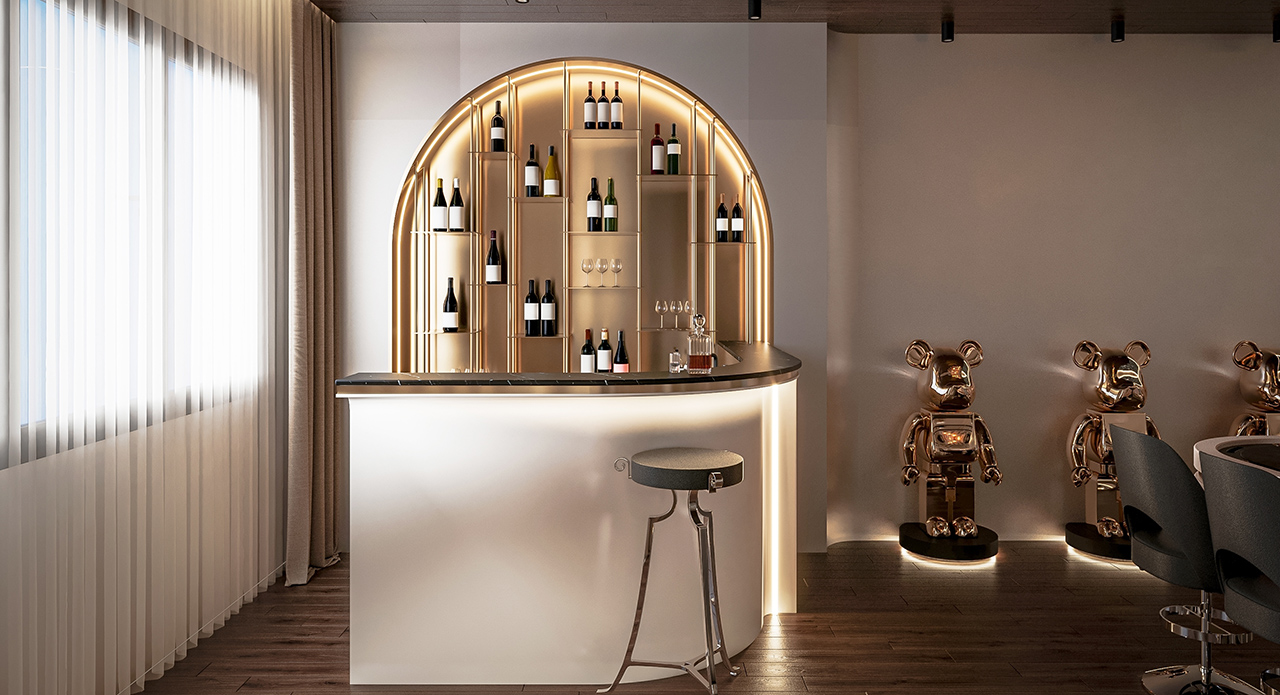


The home bar which originally functioned as a secretive space has evolved into the main social area for Indian upscale parties.
The Great Unlocking: A Cultural Shift
For first-generation Indian homeowners, the bar was often a discreet indulgence hidden away in a lockable mahogany cabinet in the study or concealed behind folding louvres, out of sight from guests. The object served its practical function while people treated it as a shameful thing.
The home bar has evolved into a prominent social hub, driven by a cultural shift sparked by the adoption of global culinary influences, pandemic-era homebound living, and the rise of design-conscious homeowners. In South Mumbai penthouses, Pune’s Koregaon Park villas, and Bengaluru’s Indiranagar high-rises, the bar now doubles as an artistic showcase expressing both refined taste and a spirit of unapologetic indulgence.
Liquid Altars: The Rise Of The Statement Bar
The contemporary Indian home bar has transformed itself beyond its original design. The space now exists as a freestanding altar which creates social boundaries throughout the entire room. Interior architects now speak of the “liquid centrepiece”: a curved, illuminated console in striated onyx, a floating slab of Rouge du Roi marble, or a brass-clad carousel that pirouettes to reveal crystal decanters and rare single malts.
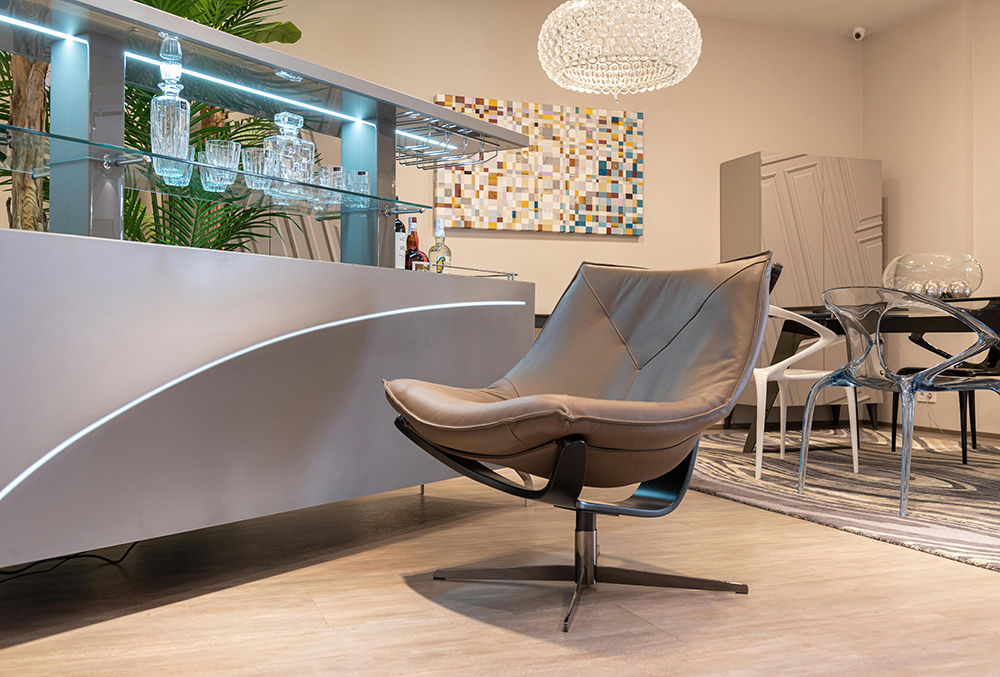
The objects function as kinetic sculptures rather than furniture.
Materials That Whisper (and Shout) Luxury
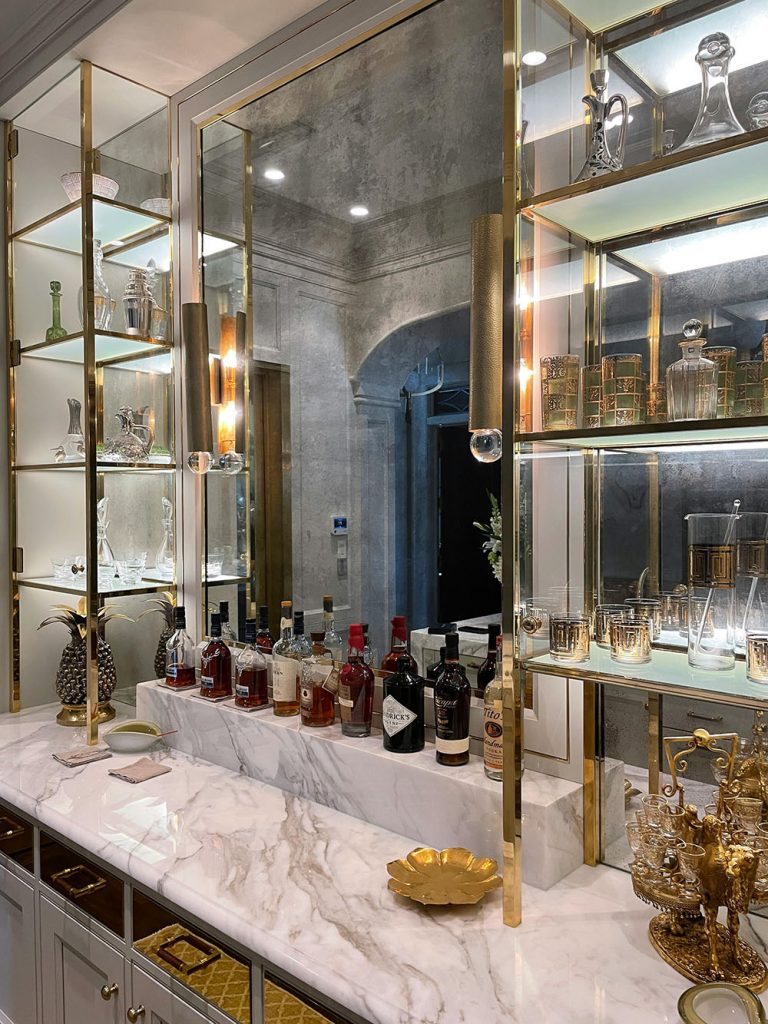
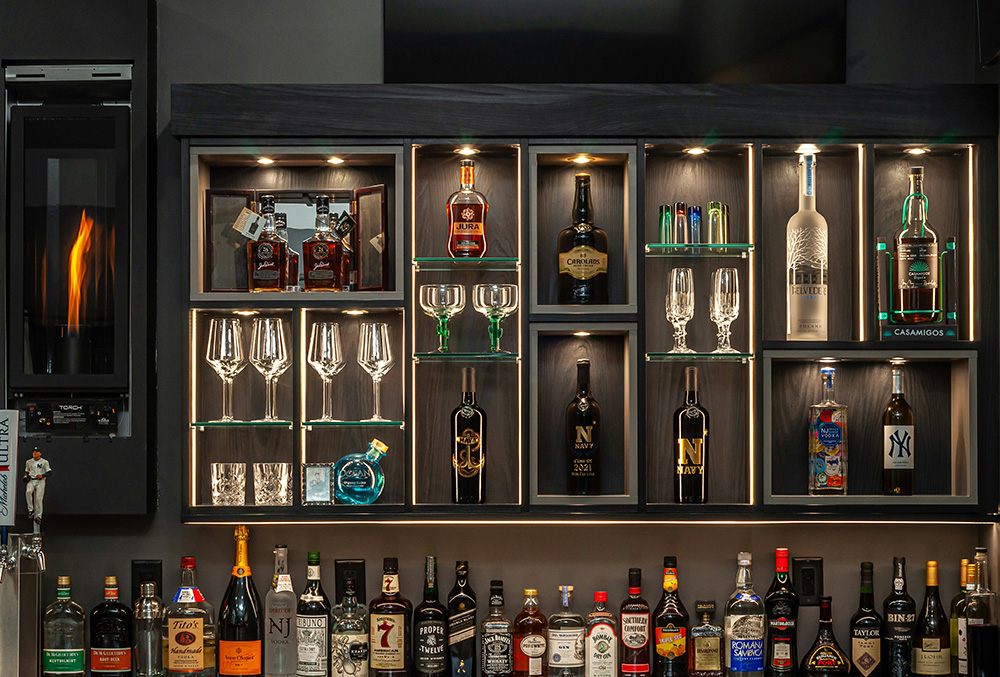
The new Indian home bar uses expensive materials which extend beyond both engineered quartz and laminate materials. The design elements include hand-stitched emerald leather and backlit honey onyx and oxidised silver leaf and fluted macassar ebony. Brass exists in three finishes which include patinated and polished and brushed and it appears together with smoked mirrors to create a dramatic effect.
The country’s top interior design companies are advancing their work through their use of semi-precious stone inlays which include lapis lazuli and malachite and their hand-poured terrazzo system which uses mother-of-pearl chips and their complete bar fronts which feature shagreen and parchment material. The design utilizes concealed storage systems which contain wine-cellar temperature drawers and marble USB ports and under-counter ice makers that produce crystal-clear cubes. The display function holds primary importance. The collection displays Louis Roederer Cristal and Yamazaki 18 and vintage Chartreuse through an installation which uses custom low-heat LED strips to illuminate every bottle.
The Theatrical Detail: From Deco To Digital
The choreography transforms lavish experiences into permanent memory impressions. The sculptural bar design of today creates an active visual display which functions as a performing artwork.
The motorised mirrored cabinet rises slowly yet silently when its motion sensors activate, which allows three spirit-filled tiers to become visible. The wall-mounted bar system operates through an origami mechanism because it uses hinged fluted panels which open to display a mixologist’s equipment and then shut to create a modern art display.
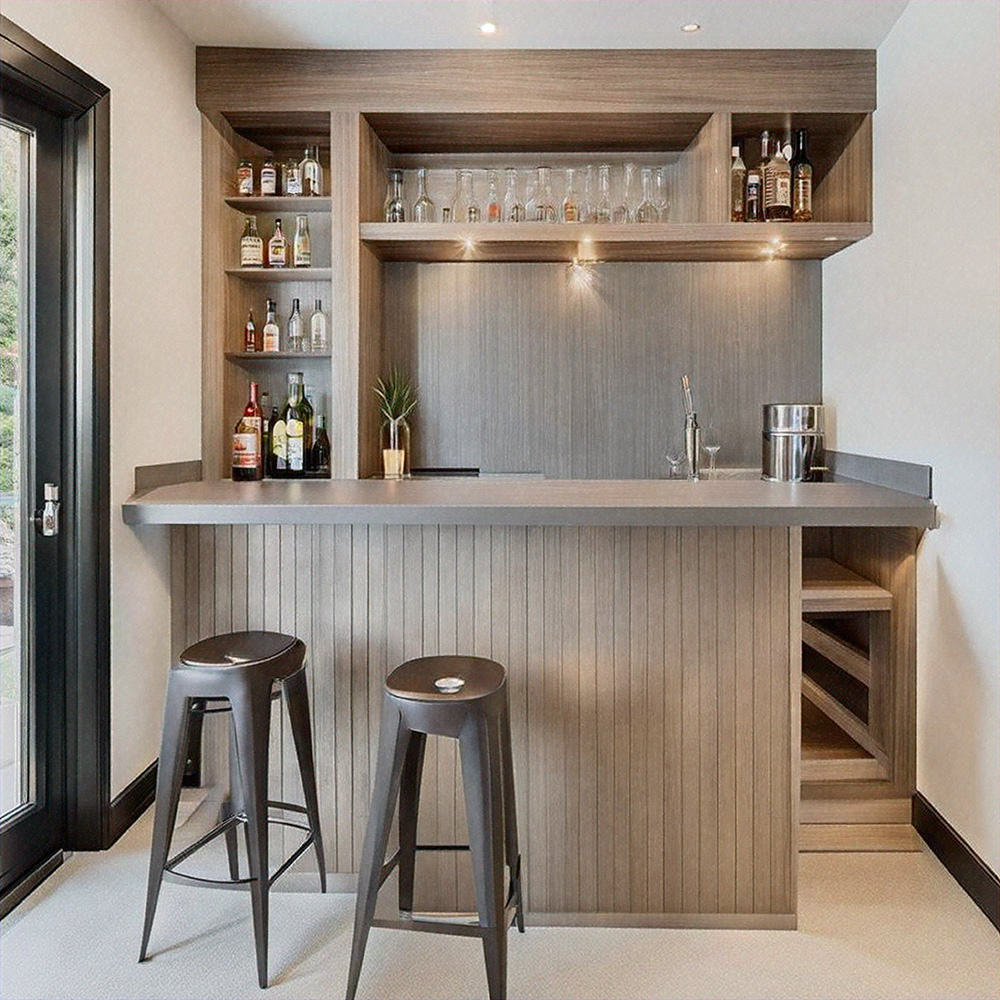
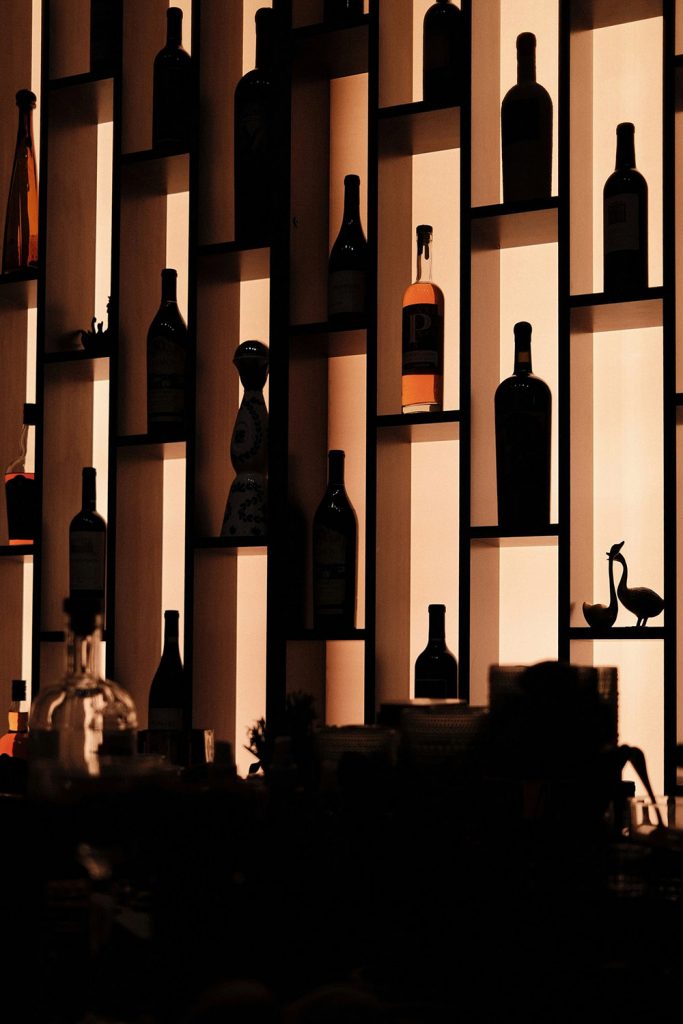
Theatricality now extends to lighting. The backlit onyx material emits an amber glow while the recessed linear lights display the bar’s outline and the miniature spotlights create a halo effect around each bottle. The bar space operates as a performance area because each cocktail prepared there serves as a theatrical show. The practice of concealing performance spaces has reached its ultimate limit.
Beyond The Bottle: Personalisation As Power
Homeowners are commissioning monogrammed decanters from Venetian glassblowers, brass cocktail tools hand-hammered by Jaipur’s karkhanas, and custom enamel signage that reads like a private club’s crest. Some go further: integrating a discrete humidor for Cuban cigars, a chilled drawer for caviar, or a lockable section for Pappy Van Winkle.
I know a Pune farmhouse owner who created a mini bartender library which contains first edition cocktail books and a vintage jigger collection and a brass bound notebook for original recipes. This is not decoration. It is identity poured into form.
Also Read: Celebrating Timeless Heritage: Adaptive Reuse To Create Modern, Sustainable And Luxurious Spaces
The Future: Outdoor Pavilions And Kinetic Marvels
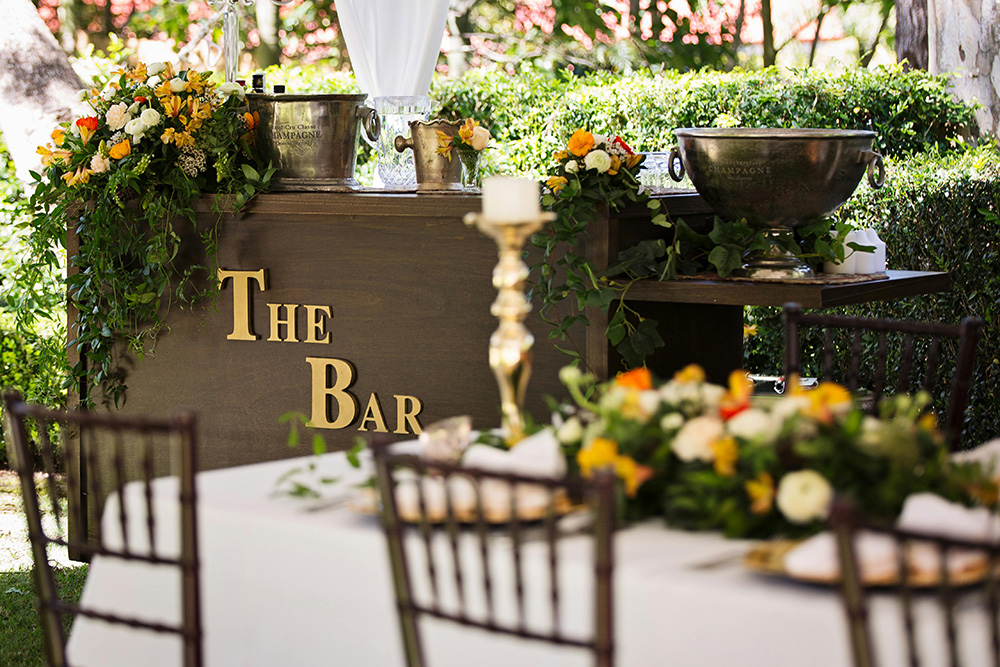
The trajectory is clear: the home bar will only grow bolder. The outdoor bar pavilions which use teak and granite for their construction and include retractable glass roofs and outdoor fireplaces and built-in sound systems will become more common as terrace living and alfresco entertaining continue to increase.
The next frontier of interior design will focus on kinetic elements because bars will rise from floor gaps and walls will slide open to show complete backlit bottle galleries and AI inventory systems will recommend cocktails based on your available ingredients. Drinking has transformed from a once-private luxury into a publicly accepted practice – one that sparks conversation while also serving as a functional design feature.
Gunjan Goel is the Director of Goel Ganga Developments