A decade ago, Ujjwal Dubey emerged as a designer who brought gender-fluid and androgynous silhouettes into the limelight, without compromising on structure. His designs and vision won him many accolades including the Regional Round of the Woolmark Prize in Asia category. His brand Antar-Agni is an expression of Dubey’s fascination for architecture and belief in naturalism. His designs seamlessly balance contrasting elements: structure and flow, natural forms and tailored asymmetry. He describes this philosophy as ‘post-new age X naturalist’.

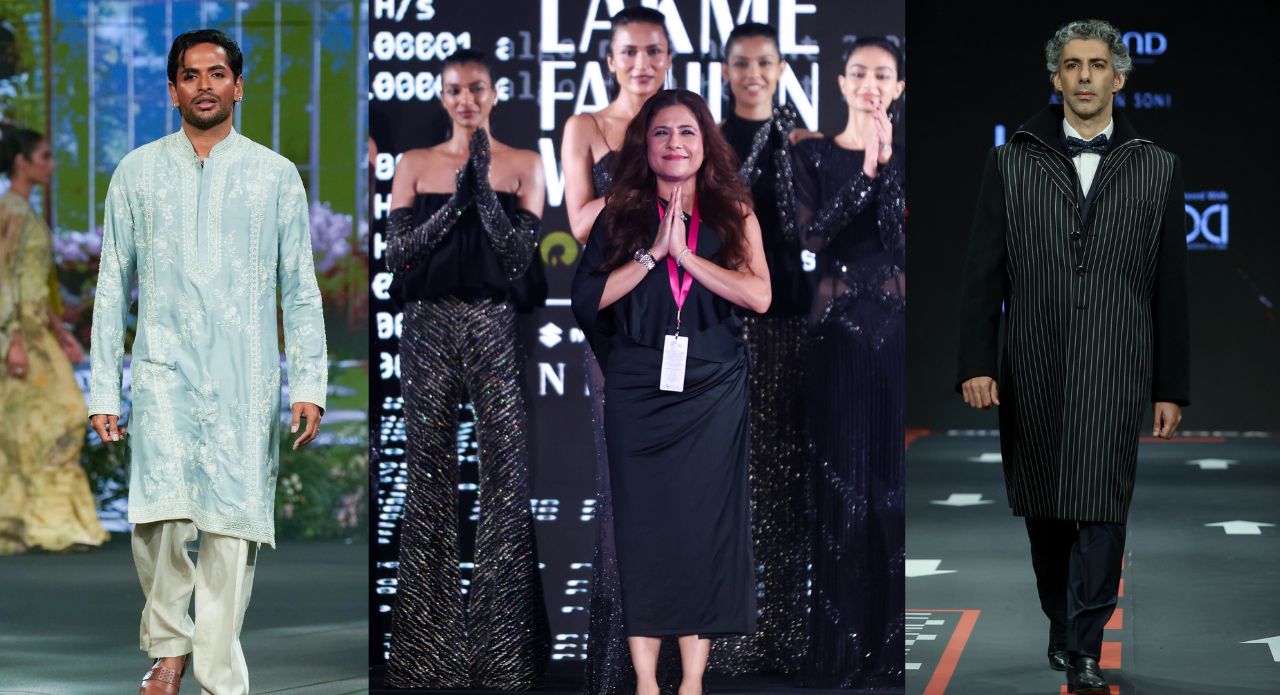
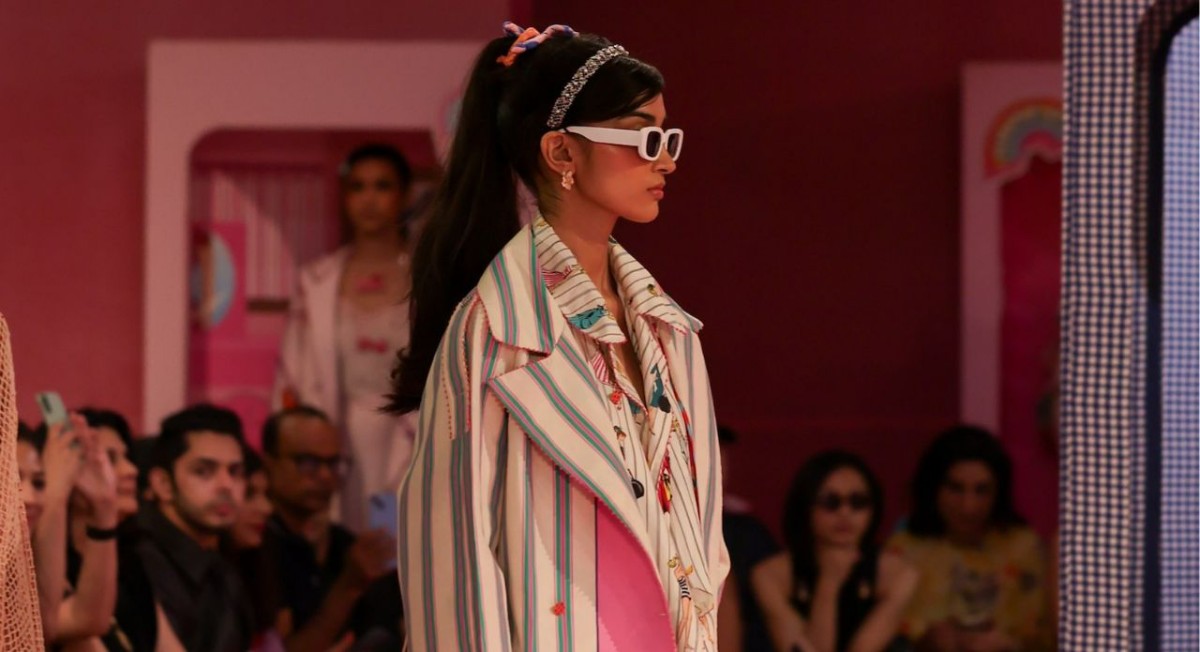
To celebrate Antar-Agni’s 10th anniversary, Dubey launched a new collection, Two-Faced, for Sustainable Fashion Day at the recently concluded Lakme Fashion Week in partnership with FDCI. Presented in three interconnected segments—Render, Wander, and Surrender—the collection was an expression of human experience and the duality of existence. Render featured structured three-piece sets with long trenches and layered Western silhouettes. Wander embraced drapes and monastic visuals, with barefoot models in high-waisted pants symbolising detachment from materiality, while Surrender fused Render and Wander, celebrating expressive headpieces and intricate details.
Expressing his vision and digging deeper into the meaning of fashion, he explored Indian textiles such as hand-woven cotton from Uttar Pradesh, lush Varanasi silks, rich velvets, and cotton-silk blends, along with metallic accents and tissue fabrics that played with light and shadow. The palette of festive hues—charcoal, black, forest green, and aubergine—are just perfect for nighttime glamour, such as the upcoming festive nights.
We spoke to Ujjawal Dubey, Founder and Creative Director, Antar-Agni to understand more about the duality of Two-Faced and his inspiration.
Edited excerpts:
1. Why did you choose duality as a theme for the collection?
Duality resonates deeply with the human experience. We all wear many faces and play different roles in our lives—there’s always a balance we’re trying to strike between opposing forces, whether it’s tradition and modernity, structure and fluidity, or the expectations of the world versus our inner desires. Two-Faced is a way of embracing that contrast and celebrating the beauty in our contradictions. It felt like the perfect theme to mark our 10th year—a reflection of growth, change, and the complexities that define us.

2. How are you challenging the traditional concepts of ornamentation with ‘Two-Faced’?
With Two-Faced, we’ve explored ornamentation as more than just an embellishment—it’s a form of expression. The collection introduces abstract surface manipulations, which challenge traditional notions of adornment. Instead of relying on conventional motifs or heavy decoration, we’ve focused on subtlety and texture. Hand-embroidered motifs inspired by duality add a tactile dimension, while metallic accents and tissue fabrics create an interplay of light and shadow. It’s about creating layers of complexity that elevate the garment’s essence without overpowering it.

3. Though a menswear brand, Antar-Agni’s designs are also gender-fluid, offering alternative style opportunities to women. Is this a conscious thought or something that evolved organically?
It evolved organically. Our designs have always focused on fluidity in form and movement, which naturally lent themselves to being worn by anyone, regardless of gender. We never set out with a strict definition of ‘menswear’ or ‘womenswear’. Rather, the pieces speak to the individual and allow for personal interpretation. The gender-fluid nature is a reflection of how fashion is evolving—moving beyond labels and focusing more on individuality and self-expression.
4. In your 10th year of business, can you reflect on your journey as a designer in and from India?
Our journey has been one of continuous learning and evolution, both creatively and personally. Each year has brought its own challenges and triumphs, shaping us into who we are today. We’ve embraced the fluidity of design and have strived to stay relevant in a constantly changing landscape, always reflecting on our roots while pushing forward.

5. What are the changes you’d like to make in the industry? Share some steps you’ve initiated for the same.
I believe the fashion industry needs to move towards a more thoughtful approach to fashion—one that prioritises conscious choices over fleeting trends. We’ve always operated with a mindful approach, whether it’s through sourcing materials responsibly, reducing waste, or focusing on timeless designs that people can wear for years. Another change is to shift the conversation away from rigid gender norms in fashion, which we’ve been doing through our gender-fluid designs.
6. What are the must-have classics for a festive wardrobe?
For me, the classics include well-tailored bandhgalas, timeless draped silhouettes, a statement trench or jacket, accessories like headpieces or unique brooches that add a personal touch and high-quality fabrics that reflect richness in texture, such as raw silk or tissue.

7. Style or fashion: what appeals to you more and why?
Style, undoubtedly. Fashion can be fleeting, while style is a personal, enduring statement. Style is how one interprets fashion and makes it their own. It’s more about authenticity and less about following trends. It allows you to express who you are, beyond what’s popular in a given season.
8. Your favourite global menswear labels and one USP of them each that appeals to you.
One of my favourite labels is Yohji Yamamoto. What I admire most about his work is its depth and the unique quirkiness he brings to menswear. His ability to blend traditional tailoring with avant-garde aesthetics creates a distinctive and thought-provoking style.