Growing up in Dimapur, a small town in Nagaland (North East India), representation was a rarity. As an impressionable child, I almost never saw Northeast India reflected in mainstream media – print, television, or newspapers. And when we did make the headlines, it was usually for the wrong reasons. That absence wasn’t lost on me. Even then, I knew that someday, in my own way, I wanted to put Northeast India on the national map and start better conversations.
View this post on Instagram
That awareness followed me to Delhi when I moved there for higher studies. In the so-called melting pot of the country, I found myself hesitant to wear my traditional attire to school and college functions. Not because I found it outdated or unfamiliar, but because of the fear of rejection by my peers. People from the Northeast (Arunachal Pradesh, Assam, Manipur, Meghalaya, Mizoram, Nagaland, Tripura, and now our brother state Sikkim) often look different. We eat food that’s different from what other parts of India eat, speak a rich mosaic of indigenous languages, and often dress differently as well. I remember having endless arguments with my older sister, who would often urge me to wear our heritage with pride. I’d counter that I’d stick out in a sea of sarees and kurtas. In hindsight, she was absolutely right.
Also Read: I’ve Survived 17 Delhi Winters And These Are The Wardrobe Staples I Can’t Live Without

Today, after nearly two decades in Delhi, I do exactly what she told me to. I wear the stories of our ancestors with pride every chance I get because representation matters. Starting the conversation matters. And for the generations that came after us, like my 14-year-old niece, that confidence comes more naturally. They wear traditional attire without hesitation. Northeast Indian textiles have finally found global attention, with designers, tastemakers, and celebrities alike reaching for garments that carry history, craft, and meaning.
Also Read: Made In India Worn By The World: 10 Designers Shaping India’s Global Luxury Story
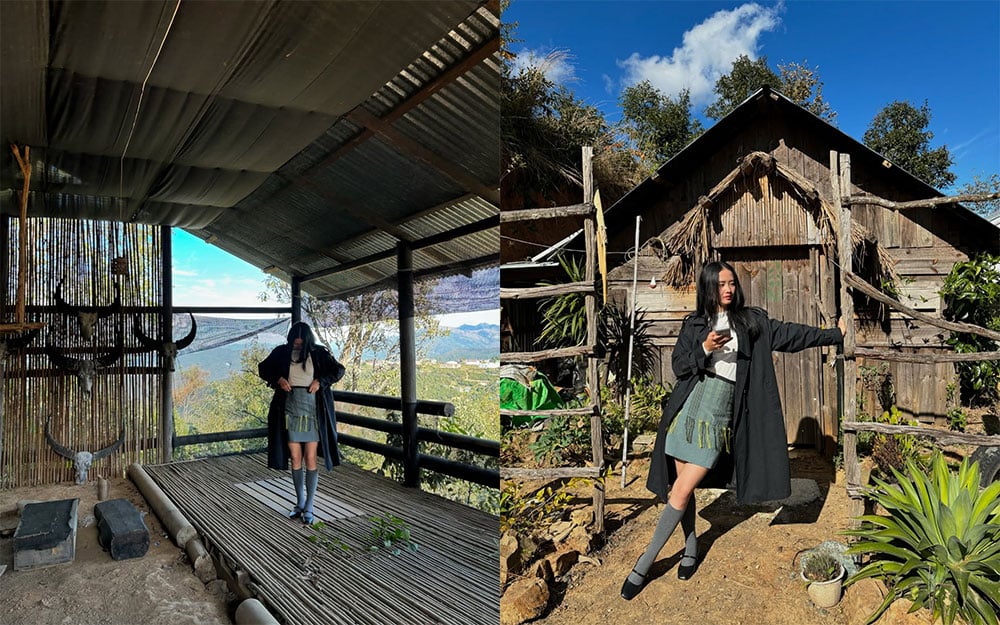
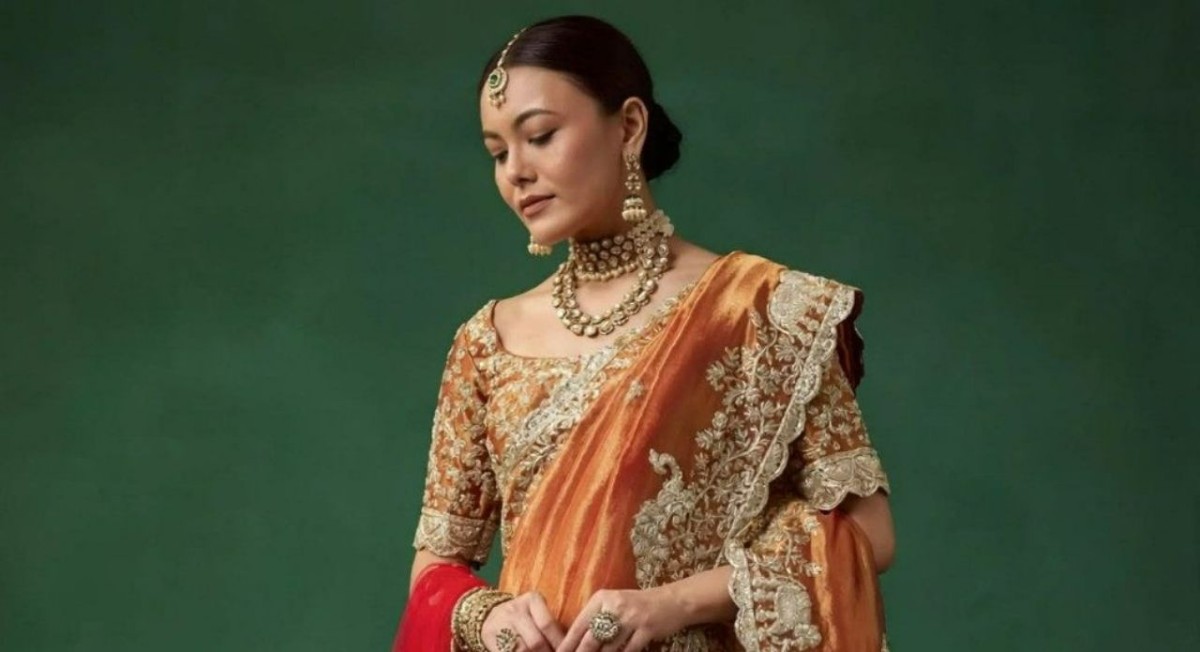
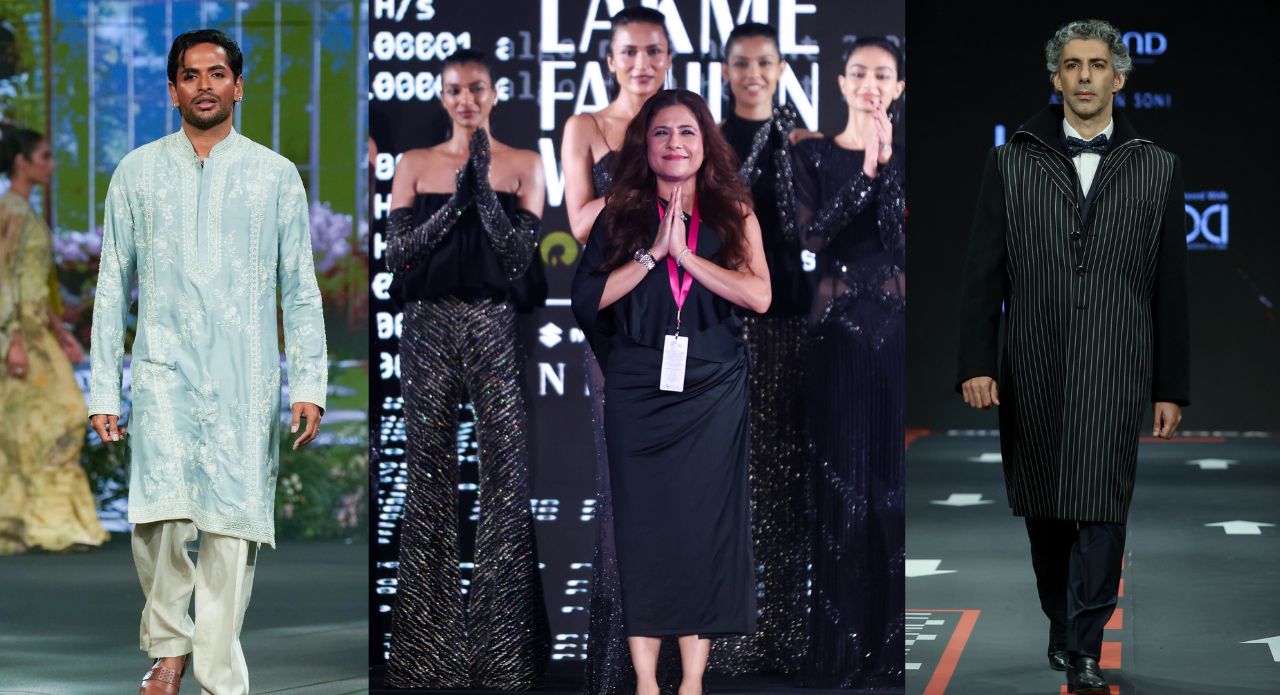
This shift didn’t happen by accident. It is the result of years of silent, determined work by designers like Jenjum Gadi, Sanjukta Dutta, Daniel Syiem, Zosangliani & Elizabeth Darsiempui, Moala Longchar, Hannah Khiangte, Manjushree Saikia, Van Chhangte, and Easternlight Zimik. Armed with talent and an unwavering commitment to their roots, they are redefining Indian fashion, expanding its narrative to include the rich cultural tapestry and deep textile traditions of the Northeast. They’ve pushed boundaries relentlessly, and the results are impossible to ignore.
The way the world views our traditional attire is changing.
Most recently, that change felt especially tangible with the rise of EAST label, founded by designer Easternlight Zimik. The moment arrived when Sonam Kapoor, Bollywood’s undisputed fashion icon and a consistent champion of Indian craft, chose to wear EAST label for an Architectural Digest dinner at her Mumbai home.

Kapoor wore the label’s Tangkhul Kashan–inspired ĀKHA set from the Patron Collection: a wrap-style skirt tied at the back, layered over a black collared shirt, paired with a matching kashan. The focus was the craft. Handwoven on a traditional loin loom, the ensemble spoke volumes without saying a word.

I’ll admit. I hadn’t heard of Easternlight or his work before this moment (a mental note to do better). But once I did, there was no looking back. I read everything I could find, scrolled endlessly through his Instagram, and studied every garment on his page. My amends came late, but as the saying goes, better late than never. I finally sat down with Easternlight Zimik for a free-flowing conversation. Through EAST, he champions the weavers of Manipur. Having worked with design heavyweights like Manish Arora and Gaurav Gupta, he now focuses on transforming indigenous textiles – once reserved for special occasions, into contemporary staples for a new generation of dressers.
And in doing so, he isn’t just designing clothes. He’s rewriting visibility. Easternlight Zimik, who hails from Ukhrul, Manipur, is acutely aware that his journey as a designer demands a different kind of introduction. While designers based in metropolitan centres rarely have to contextualise their origins, Zimik embraces the repetition that comes with visibility from the Northeast, if it leads to awareness. “I don’t mind saying it again and again. I want to make ‘Made in Ukhrul’ go mainstream and beyond. With the lack of awareness among many people in our country, I believe it’s important for us to be vocal about where we come from and what represents us.”

There is no denying that India’s fashion ecosystem has evolved. Talent from the margins is increasingly recognised by decision-makers seated in Mumbai and Delhi and other metropolitans but the shift remains incomplete. While celebrities routinely don couture by Rahul Mishra or Manish Malhotra, Northeastern labels are still far from becoming everyday sartorial choices. Yet, Zimik remains pragmatic and hopeful. “There’s still a long way to go. But at the same time, our own people also need to realize that we can do it in our own way – without waiting for approval from others…I do feel that working in a different direction allows for a unique perspective and authentic expression.”

The moment that brought EAST label into the national spotlight – Sonam Kapoor wearing his design, was both validating and catalytic. Zimik is quick to acknowledge that the foundation was laid long before that evening. “Before that happened, I’m truly thankful to my clients who pushed me this far.” But at the same time, he also recognises the impact of that singular moment of visibility. “I also thank Sonam’s stylist, Manisha Melwani, and Rhea Kapoor for recognising our work. That moment was an important step forward — it brought greater media curiosity and helped mainland audiences take notice of our products. It showed me how powerful visibility through impactful voices can be, and how small acts of support can create real milestones for others.”

When it comes to design philosophy, Zimik resists conventional labels. For him, tradition and modernity are not opposing forces. “I’ve never looked at my work as ‘traditional.’ From the very beginning, I’ve seen how classic our textiles already are — and that’s what makes them modern. For instance, our first collection from three years ago still attracts new customers. I love observing what people wear in the streets — that always inspires the next design instinctively.” And if EAST is described as regional or niche, he is unfazed. “Whatever people call it, I don’t mind. I’m quite happy working in a niche space too. But if we think deeply about how diverse our country is, then our work isn’t niche at all — it’s a reflection of that diversity.”

Working out of Ukhrul, Manipur, Zimik’s practice is deeply rooted in community. His relationship with local weavers goes beyond collaboration – it is collective storytelling. “Since I work at the grassroots level and directly with my weavers in-house, I don’t see it as a ‘collaboration.’ It’s more about creating a shared space where we think beyond the grassroots — where we all see how powerful a simple tool can be, and how unique our traditional techniques truly are.” A conscious designer, firmly opposed to the exploitation of artisanal talent, Zimik prioritises equity and dignity. “We try our best to offer fair wages that reflect our local context, and to show the true power of the tools and traditions these artisans practice every day.”
View this post on Instagram
Encouragingly, he notes a generational shift in perception. Younger consumers are embracing traditional garments in contemporary contexts and choosing labels from the Northeast with renewed curiosity and pride. “Lately, I’ve observed that people — especially the younger generation — are beginning to see our traditional garments differently, embracing them in progressive and modern contexts. That shift itself is a huge step forward. Through national recognition, I hope our backstrap weaving community will continue to see their craft in a new light, with renewed pride and purpose.”

Sustainability, for Zimik, is not a buzzword but a lived reality shaped by context. “For me, sustainability is a complex idea — it means different things to different people depending on their circumstances. For now, providing fair work and meeting the basic needs of our artisans is sustainability. The way we plan our brand to stay relevant and resilient in changing times is also a form of sustainability. Above all, producing only when needed and practicing mindfulness in every process is the truest expression of it.”

While hopeful that Northeast Indian fashion will soon command its rightful place on the global stage, Zimik admits that the continued need for explanation remains disheartening at times. “To imagine that, even within our own country, we still have to strive for recognition, is honestly, kind of sad. I do hope the winds of change will come, though there’s a long way to go. Instead of waiting for others to validate us, it’s better to focus on our own perspective — to continue creating thoughtful, meaningful work in our own way.”

Looking ahead, Zimik is channelling his vision into a deeply personal endeavour. “I’m working hard to bring my dream project — the #EASTPROJECT — to life. It’s an immersive space dedicated to arts and crafts, built with the best working environment and state-of-the-art sensibility. I want our people to recognise the power of soft power, and the importance of preserving traditional skills in a modern world. The goal is to create jobs, nurture talent, and show the world our existence with pride.” He also offers a glimpse into what’s next on the design front: “My next collection explores the story of a dying art form from my community — I want to document and reimagine that narrative through our design language.”

In Zimik’s world, fashion is not just about garment but about memory, heritage, dignity, and visibility. And with EAST, that narrative is only beginning to unfold.