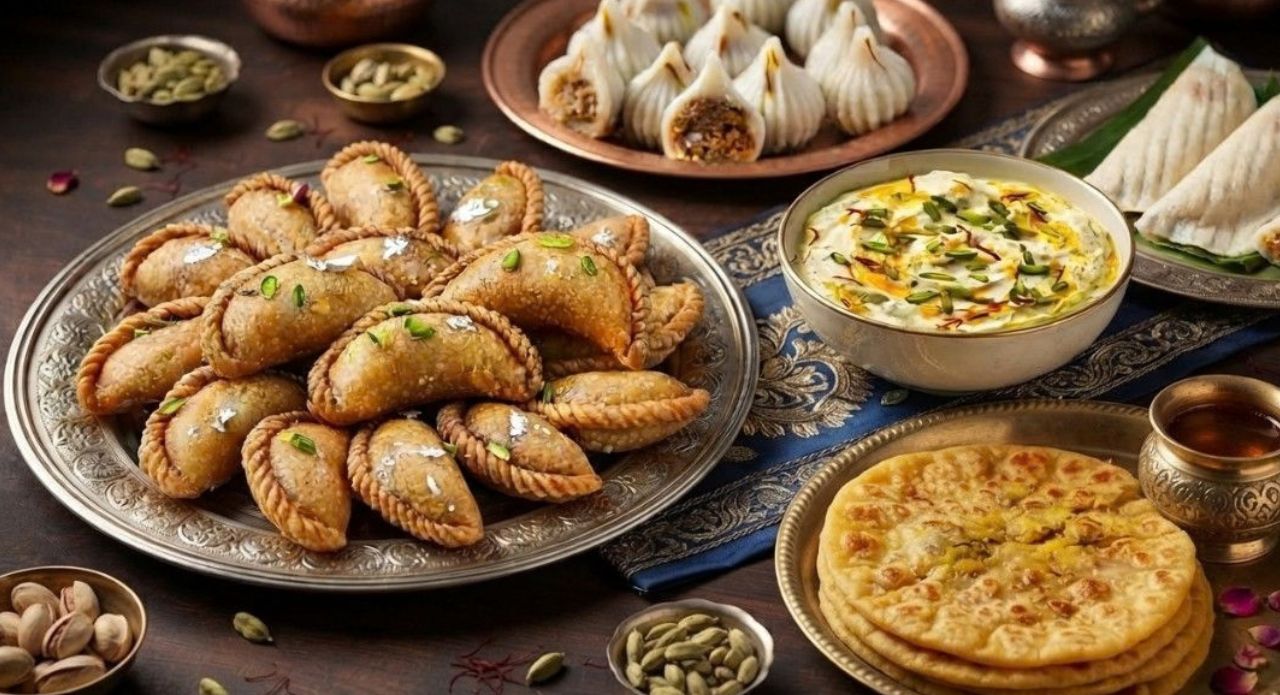


Mumbai’s Ganpati celebrations bring a distinct rhythm to the kitchen, with traditional preparations continuing to appear in homes and at family gatherings. Coconut, jaggery, rice flour, ghee and saffron shape many of the season’s most cherished dishes, with recipes passed through generations and prepared as naivedya before being shared.
Maharashtrian festive cooking places as much importance on technique as ingredients. Rice flour is kneaded into a soft dough, coconut and jaggery are cooked to the right consistency, while cardamom, nutmeg and saffron lend their robust fragrance. Five preparations capture the flavours that make Mumbai’s Ganpati celebrations so distinctive.
Ukadiche Modak
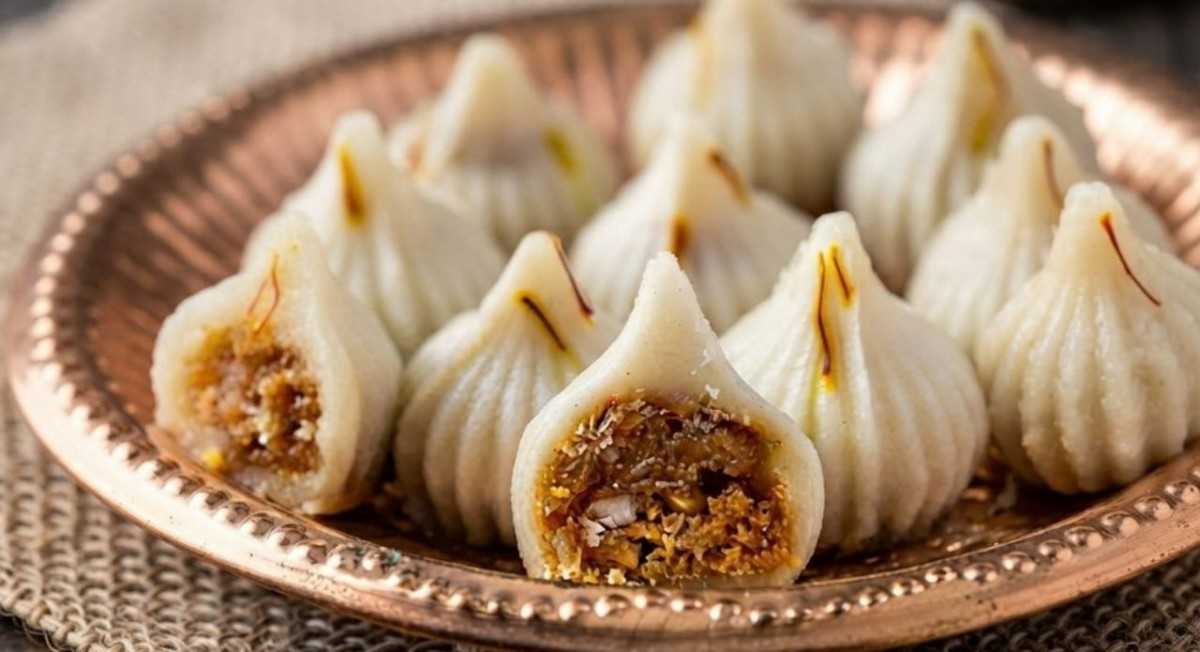
The most recognisable sweet associated with Ganpati, this steamed preparation pairs a soft rice-flour shell with a fragrant coconut and jaggery filling. Freshly grated coconut is cooked with jaggery and cardamom, with nutmeg or poppy seeds sometimes added. Rice-flour dough is prepared with hot water, shaped into small cups and filled before the edges are pleated by hand. The modaks are then steamed until soft.
Also Read: From Spectacle to Supper Clubs: Mumbai’s New Dining Culture
Saffron, pistachios or almonds can lend a more indulgent finish, while the coconut-jaggery filling keeps the recipe rooted in tradition.
Puran Poli
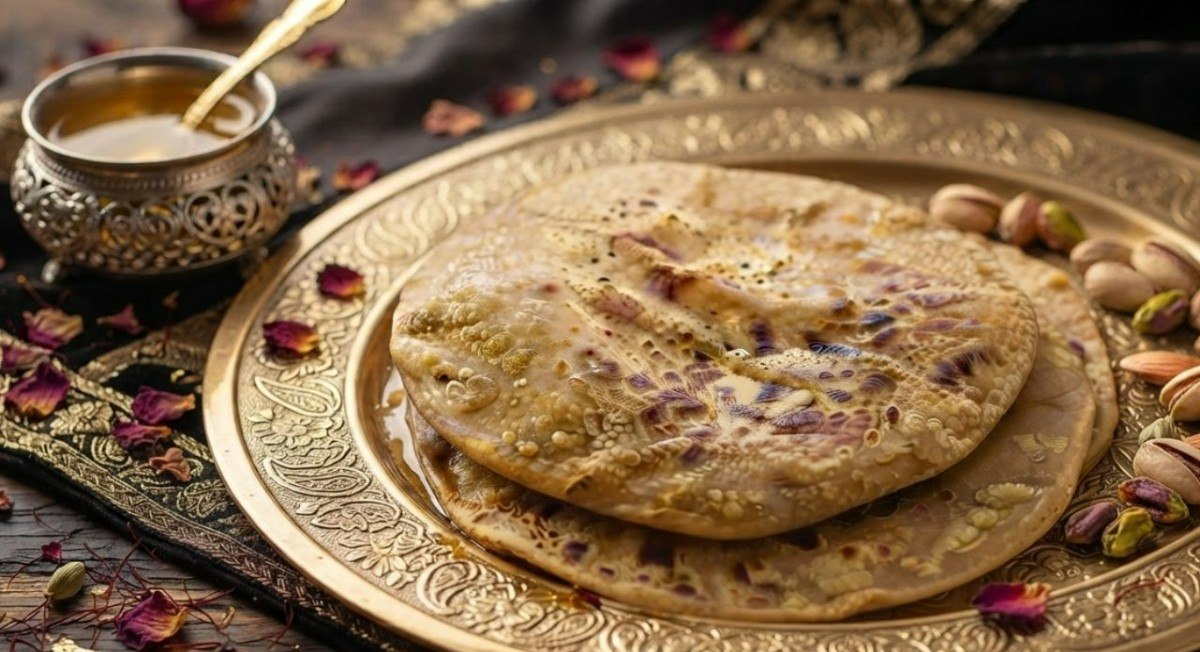
A warm, ghee-brushed flatbread brings a richer note to the festive meal. Cooked chana dal is blended with jaggery, cardamom and nutmeg, then reduced until thick enough to hold its shape. The mixture is enclosed in wheat-flour dough, rolled gently and cooked on a hot tawa. Ghee brushed over the surface gives it a fragrant, golden finish. It is commonly served warm, sometimes with milk or additional ghee.
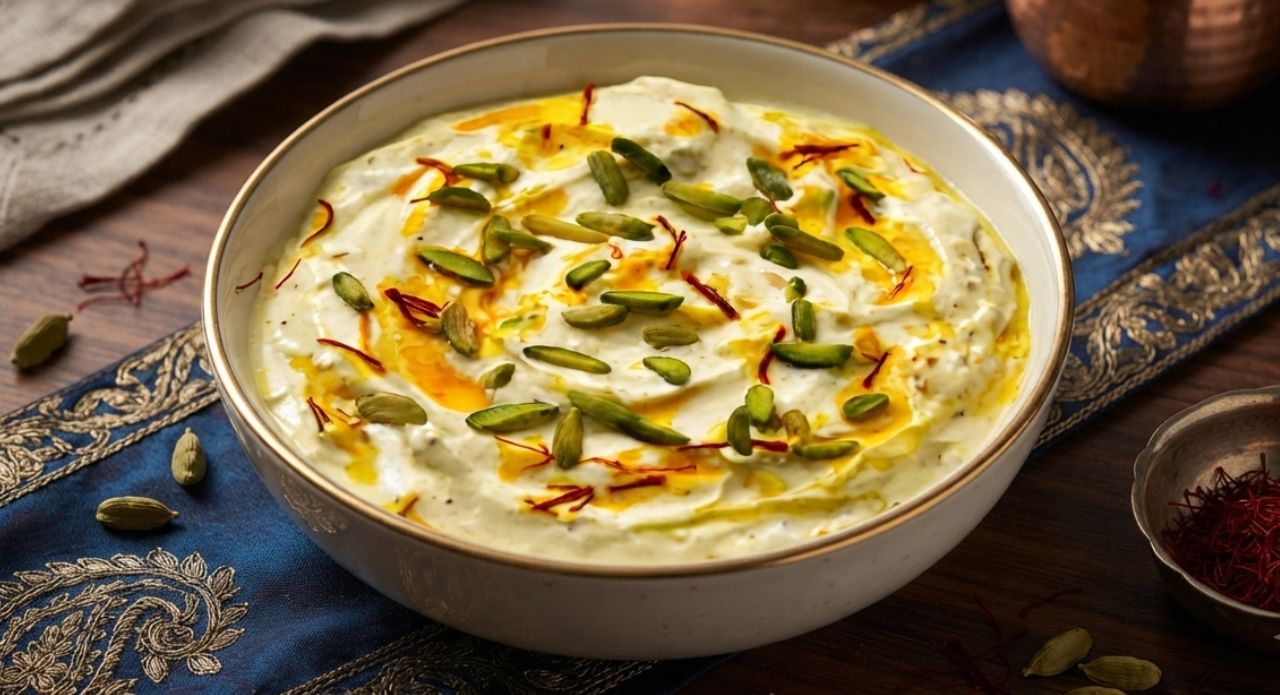
Shrikhand
Cool and creamy, this yoghurt-based dessert offers a refreshing contrast to the richer sweets. Hung yoghurt is strained until thick and mixed with sugar, cardamom and saffron. Slivered pistachios or almonds provide a delicate crunch when used as a garnish.
Its simplicity makes the ingredients particularly important. Thick yoghurt, aromatic saffron and freshly ground cardamom give the dessert its characteristic depth.
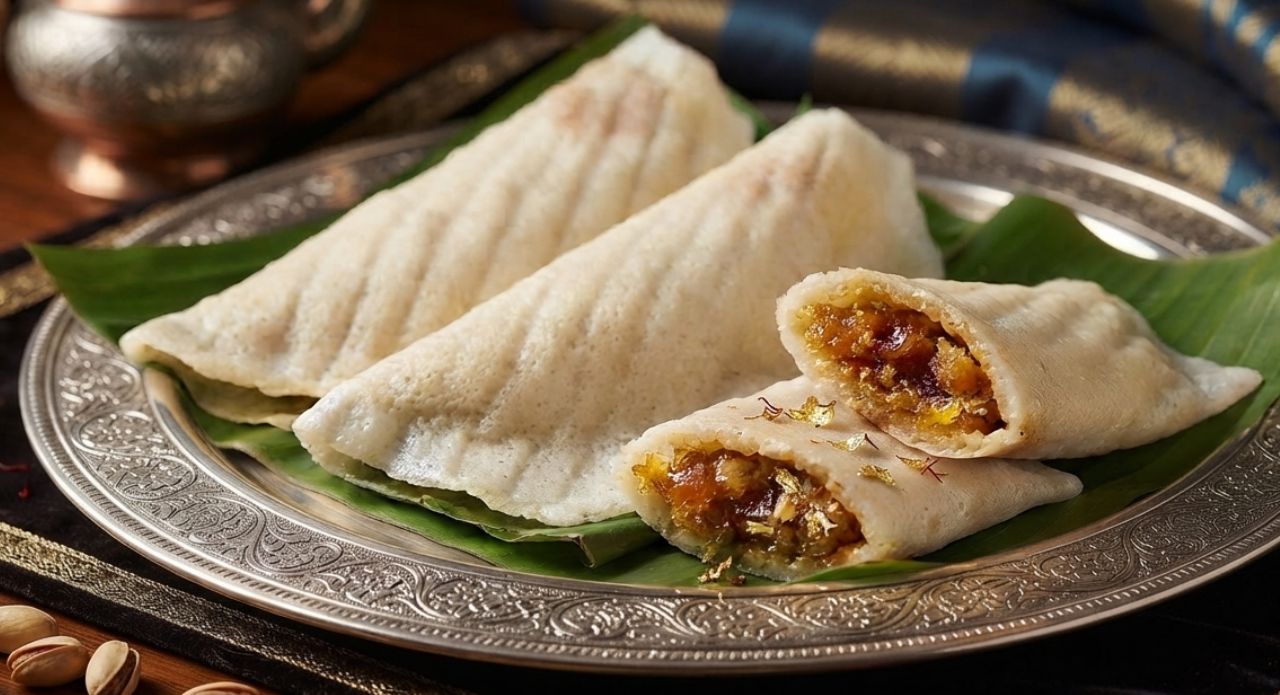
Patoleo
Wrapped in turmeric leaves, this Konkan sweet presents rice, coconut and jaggery in a delicately steamed preparation. Soaked rice is ground into a smooth batter and spread over fresh leaves. A layer of grated coconut and jaggery is added before the leaves are folded and steamed.
The turmeric leaves perfume the preparation as it cooks, giving the soft rice layer a distinctive fragrance. The sweet is closely associated with the Konkan region and remains a notable Ganpati preparation.
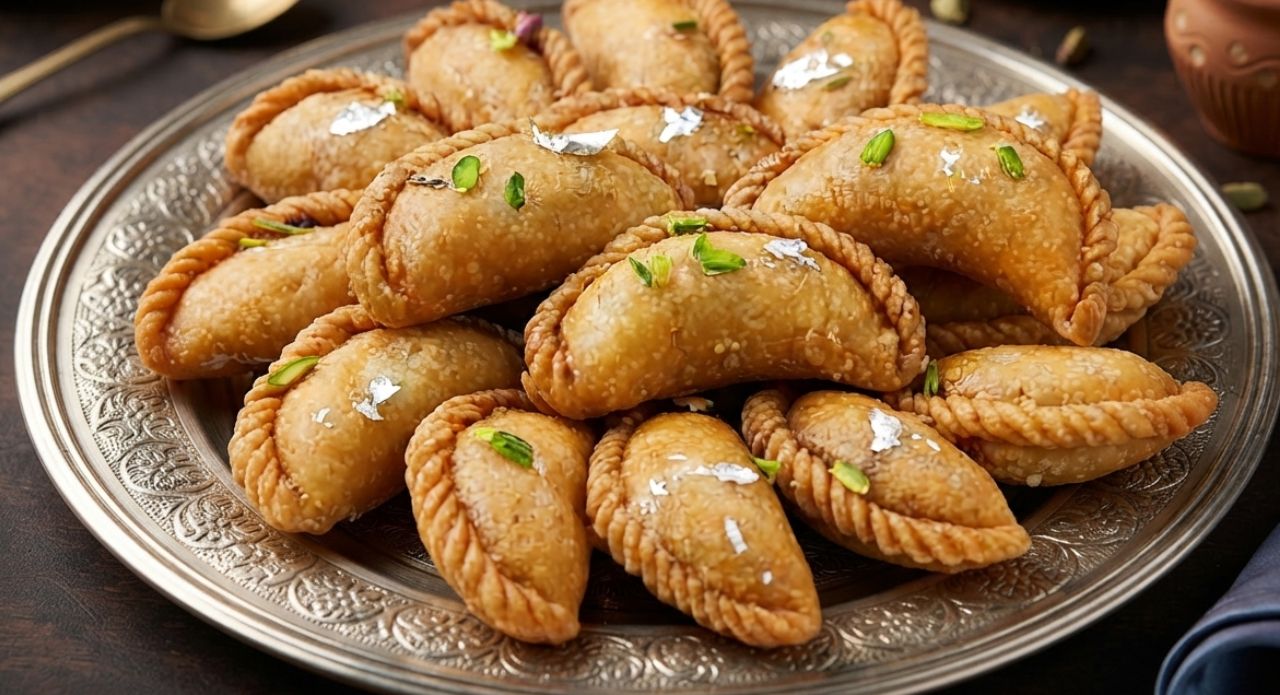
Karanji
For something crisp, these crescent-shaped pastries bring coconut, sugar or jaggery, cardamom and chopped nuts together in a thin shell. The filled dough is folded, sealed and deep-fried until golden. The flaky exterior and fragrant filling make them a natural choice when homes fill with visitors during the celebrations, particularly alongside tea or coffee.
Perhaps that is the charm of Ganpati food in Mumbai. The recipes are familiar, but every home has its own way of making them, whether it is an extra pinch of cardamom in the modak filling or a little more ghee on the puran poli. By the time the plates are cleared, the food has done what good festive food always does: brought everyone back to the table.