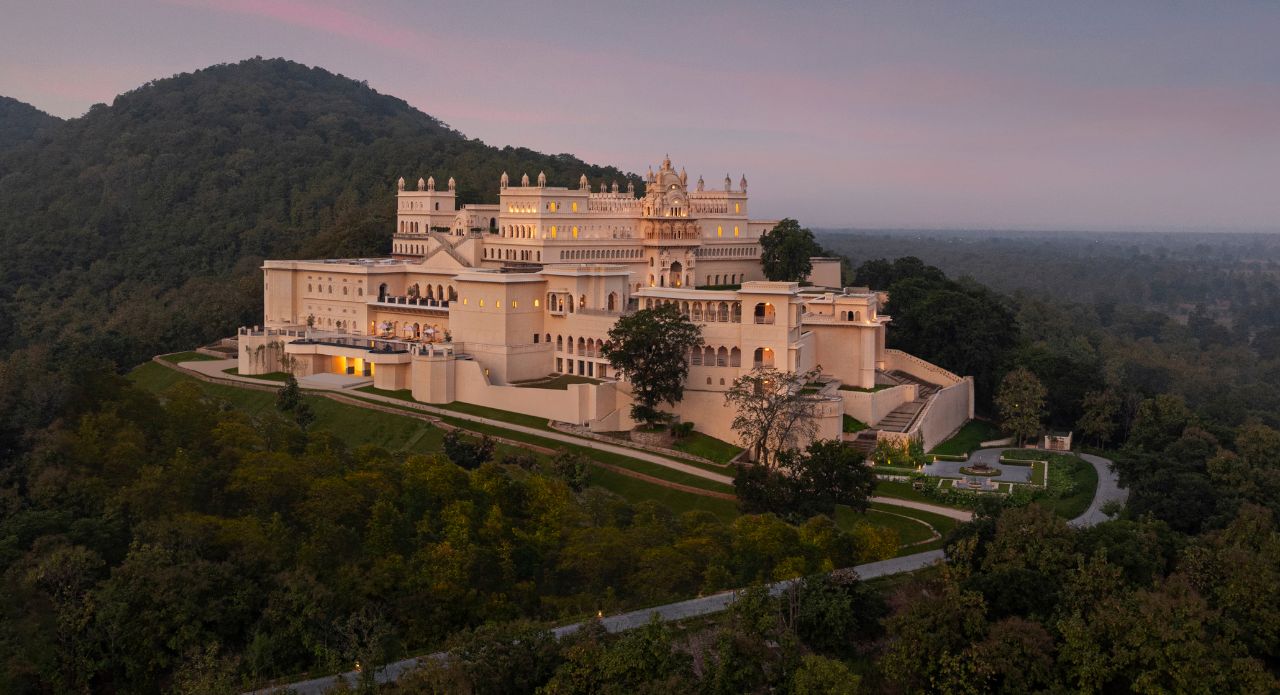


Not every luxury hotel begins with a grand lobby. Some begin with centuries-old fort walls, forgotten corridors and stories waiting to be rediscovered. Perched atop the Maniyagarh Hills in Madhya Pradesh, The Oberoi Rajgarh Palace is one such destination, a 350-year-old Bundela fortress that has been painstakingly transformed into one of the world’s most beautiful hotels. Its recent recognition on the Prix Versailles World’s Most Beautiful Hotels 2026 list is a reminder that India’s architectural heritage continues to captivate the world.
Overlooking forests, a rain-fed lake and the landscape leading to Panna National Park, the palace sits atop the Maniyagarh Hills near Khajuraho. Yet long before welcoming luxury travellers, the sandstone structure served as a strategic military fortress built during one of central India’s most turbulent periods.
Also Read: 8 Best Luxury Hotels In Udaipur With Spectacular Lake And Palace Views
A Fortress Reborn
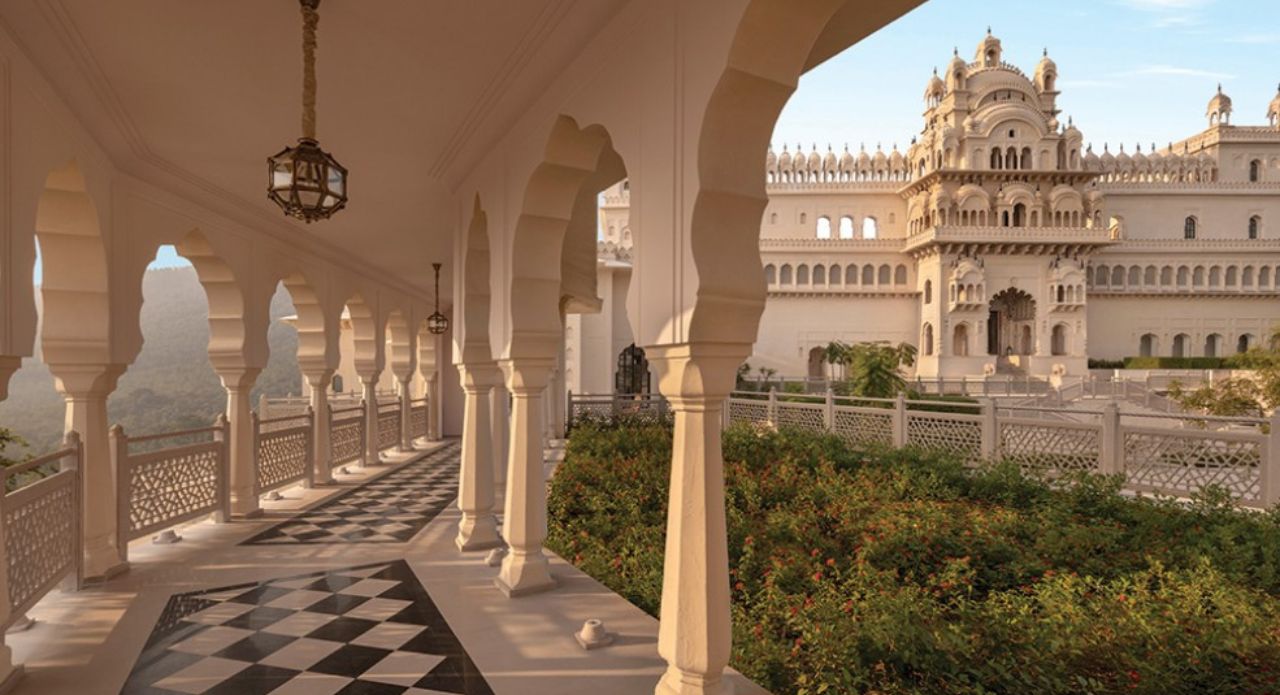
The story of Rajgarh dates back more than 350 years, when Maharaja Hindupat Singh of the Bundela dynasty commissioned the fort as a defensive stronghold. Built on elevated terrain, it offered commanding views of the surrounding region while safeguarding the kingdom during an era of political uncertainty. As the fortunes of the Bundela rulers evolved, the fortress gradually transformed into a royal palace, with ceremonial courtyards, elegant halls and decorative elements complementing its military origins.
Following Independence, like many royal residences across India, the palace slipped into decades of neglect. Its revival began in 1996 when the Government of Madhya Pradesh entrusted the property to The Oberoi Group. Nearly three decades of meticulous restoration preserved original sandstone architecture, frescoes, shrines, ancient pathways and the estate’s natural landscape before the palace finally opened as a luxury hotel in November 2025.
Also Read: The 7 Most Luxurious Swimming Pools In The World
Heritage Meets Luxury
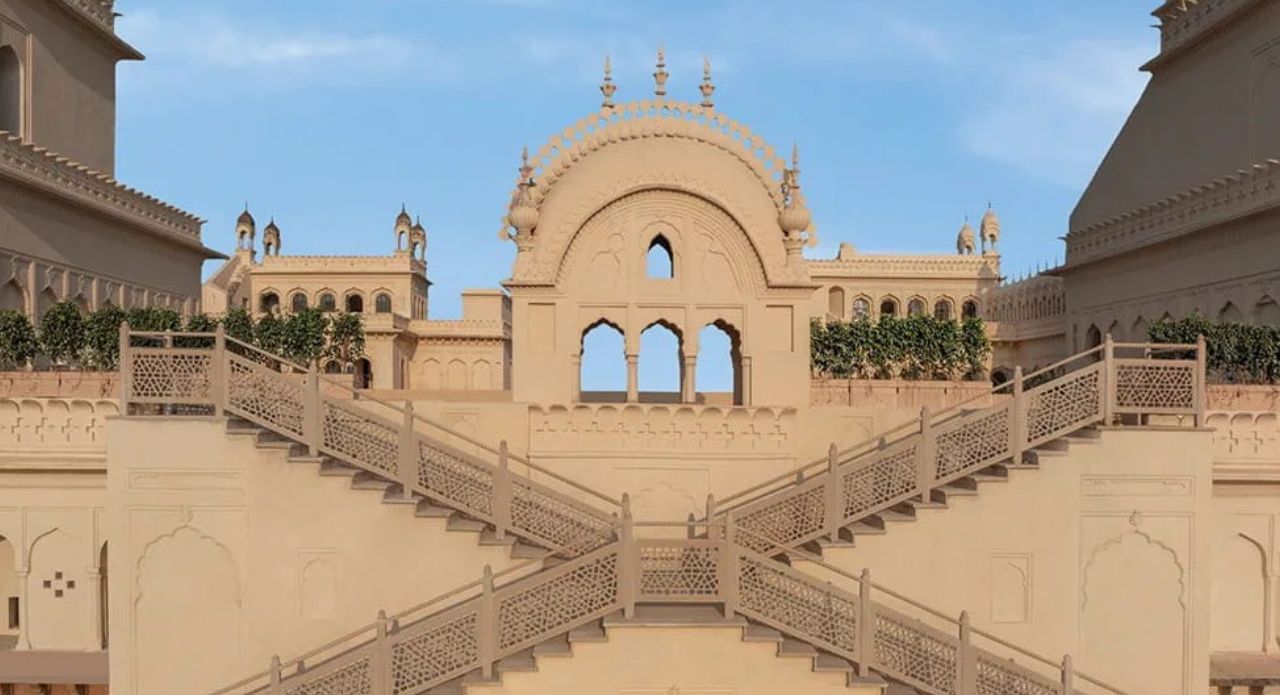
Today, The Oberoi Rajgarh Palace showcases a seamless blend of Bundelkhand craftsmanship and refined hospitality. Sandstone courtyards, carved pillars, hand-painted frescoes and domed pavilions coexist with elegant colonial influences, creating a layered architectural identity that reflects centuries of history.
Spread across a sprawling estate close to both the UNESCO-listed Khajuraho temples and Panna National Park, the palace offers guests an experience where heritage, wildlife and luxury converge. Its inclusion on the Prix Versailles list reinforces India’s growing presence on the global luxury hospitality map.