

When you think of Bhutan as a country, you think of the lofty Himalayas, the Buddhist temples or the meandering roads leading to lofty heights. Punakha, a valley town on the foothills of the Himalayas rarely fits into the typical description. And yet, the town, situated at the confluence of Pho Chu and Mo Chu rivers, with the kind of greenery only a land blessed with the best temperature range and natural water resources can afford, is a sight for sore eyes. Mountain after mountain covered in Bhutan’s indigenous pines make way for vibrant jacarandas, in yellow and purple. During autumn, it is possible to see yellow, red and shades of orange along the Punakha Dzong, one of the most revered dzongs in the entire country. Bhutan’s natural beauty is an eye-opening experience, especially for those weary of the steely grey of cities. It is an experience of the kind of quality of life, thanks to the mountain air and natural bounty, ill-afforded in most other places in South Asia. The Bhutanese culture of protecting natural resources as a tradition has led to the rich foliage that the city is blessed with.
The historic town was the seat of the Bhutanese government for 300 years and served as the spiritual heartland before the capital shifted to Thimpu. Its history is reflected in the rich decoration and stories associated with its ancient temples and monasteries.
En Route Chimi Lakhang and Dochu La
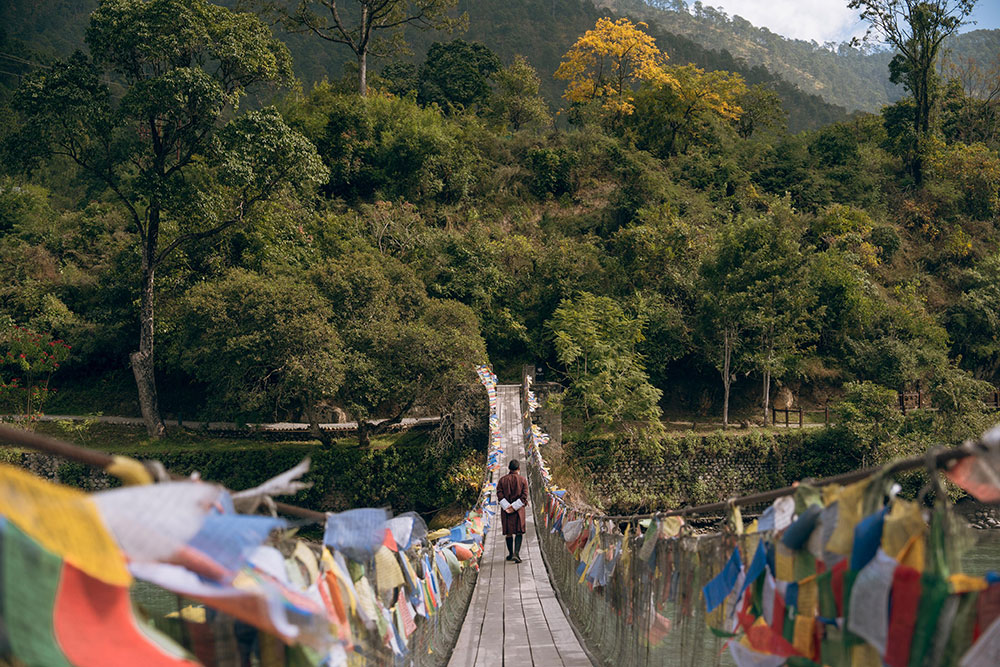
The valley is home to one of Bhutan’s most revered site, the Chimi Lhakhang, also known as the fertility temple, a most unconventional temple due to its history and symbolism associated with it.
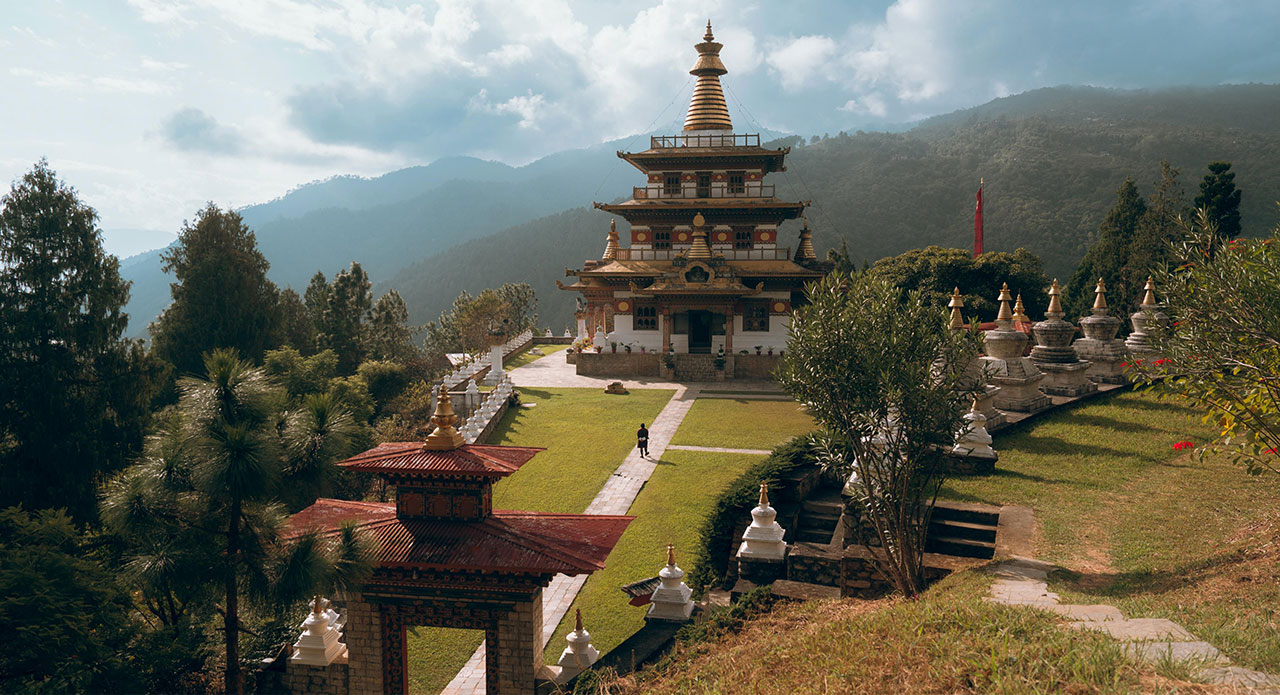
To reach Chimi Lakhang, in the Lobesa Village of Punakha, the Dochu La is to be crossed, which is a site in itself. Situated in between Thimphu and Punakha, it affords a full view of the snow-capped Himalayas, covered in snow during the winter months.
At a vantage point of 3,100 metres above sea level, covered in chortens and stupas, in memory of martyrs, and surrounded by Bhutan’s lush greenery, it is a reminder of the nation’s unique standpoint when it comes to protecting its natural beauty.
The Chimi Lakhang is the temple of the ‘Divine Madman’, a 15th century Buddhist saint with extraordinary mythical powers of the Drugpa lineage, who rejected societal obligations and customs as ‘dishonest’ and challenged orthodoxy to impart Buddhist wisdom. The village around the temple is covered in phallic imagery to ward of evil, in memory of the saint who used to bring fierce demons into submission, according to local legends. Couples visit the temple to pray for children, a popular practice among the locals, who believe the saint blesses them with fertility.
Punakha Dzong
The Punakha Dzong is arguably one of the most important monuments to dot the valley. It was the administrative capital of Bhutan’s government till 1955. Part of the Drugpa lineage, of the Kagyu School of Tibetan Buddhism, it stands majestically at an elevation of 1,200 m amidst the mountains. Built first in 1638, with subsequent architectural additions, it is the second oldest and most majestic of the dzongs built in the country. Built only with stone, timber and compacted earth, it stands as a testament to the architectural expertise of the period. The dzong is elaborately decorated with the life and times of the Buddha in its interiors, the exteriors an example of the superb local architecture and wood carvings that have stood the test of time.
The Lodge at Amankora
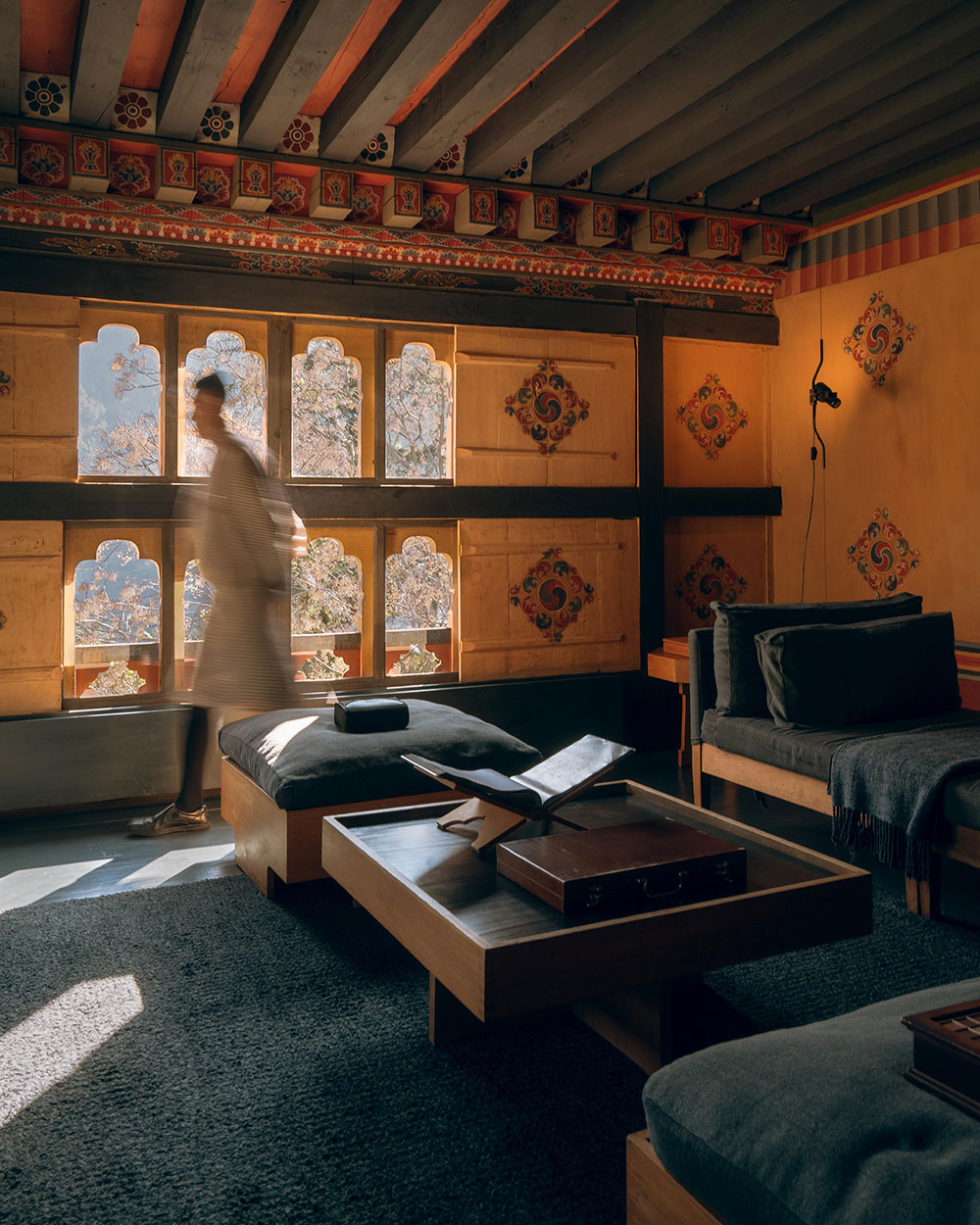
We were staying at Amankora Punakha, which is an oasis in the midst of nature. Every suite is blessed with a view of the lush gardens, surrounded by the multiple fruit trees that dot the property. A true example of nature’s finest, this 15th century converted farmhouse built by a former chief abbot. Amankora Punakha has only 12 suites, with king-size beds, traditional wood-burning stoves, bathrooms with terrazzo bathtubs and twin vanities. The indoor dining and entertainment spaces in the lodge are inside the historical farmhouse, decorated with beautiful antiques and musical instruments indigenous to Bhutan. The outdoor dining spaces offers a view of the rice fields and the property’s infinity pool. My breakfast at the lodge, a perfectly done Eggs Benedict with Bhutan’s famous red chilli paste and bread on the side, with birdsong and the gentle lap of the pool’s waters set amidst a crystal clear sky is a memory that will remain etched in my mind for a lifetime. The evening often has locals visit the property from the neighbouring villages, and sing and dance traditional songs, including the guests in the community rituals, much to the delight of several travellers who experience the joy of cultural immersion.
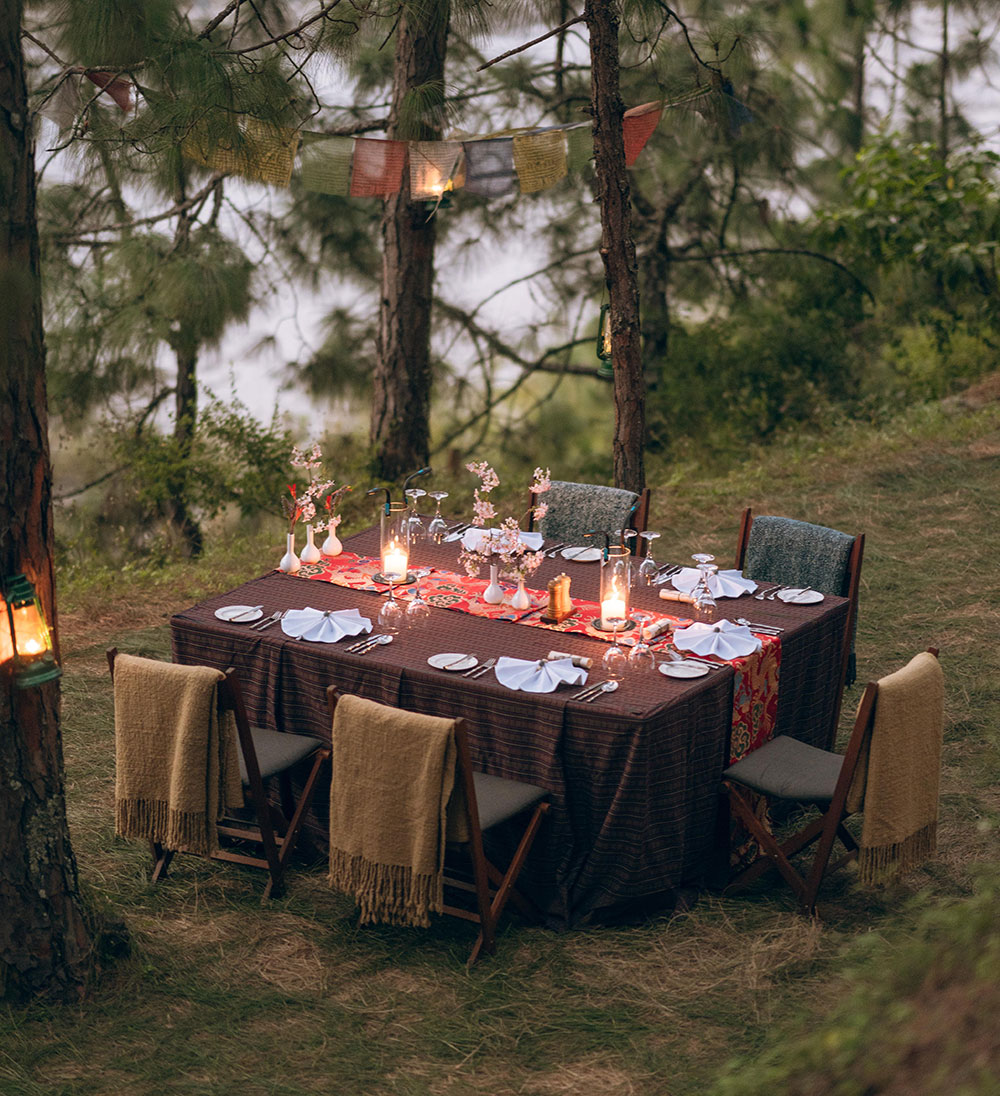
Dining at The Lodge was one of the highlights of my trip. Punakha is one of the most fertile belts of the region, growing most of the country’s vegetables. The showcasing of cuisine at The Lodge follows Bhutan’s ingredient-forward farm-to-table policy, where we tasted a variety of local dishes, from ema datschi to a hearty Jasha Maru (chicken stewed in a light yet flavoursome broth), to puta, a noodles very similar to soba noodles.
While Punakha was only one of the stops on my week-long journey across Bhutan, where I experienced the hospitality of Amankora across three cities, Paro-Thimphu and Punakha, it is a location that will stand out for its richness in heritage, cultural immersion and natural grandeur, which Aman’s properties never fail to highlight.